
Boost Soil Health with Cover Crops: Planting, Growing, and Regional Tips

Planting cover crops at the end of the growing season is becoming more popular, even in small gardens. These plants have seeds that are easy to scatter, and they do the hard work of fixing nutrients in the soil and improving soil conditions over the winter before spring planting. Here’s advice and our charts for planting cover crops by region.
What Are Cover Crops?
A cover crop is ready-to-sow seeds of fast-growing plants—often legumes or grasses—planted in late summer or fall into empty or fallow garden beds. Over the winter, these crops do the hard work of renewing your soil health, adding essential organic matter to the soil, which improves soil structure and builds soil fertility. The legumes also “fix” the nitrogen in the soil. This “green manure” provides a living mulch that protects soils from winter erosion.
Examples include: winter rye, hairy vetch, red clover, oats, buckwheat, forage rye, Italian ryegrass (sown by October), field beans, and forage peas (sown by November). Cover crops literally make a living “cover” to sustain soil life until spring planting.
Cover crops may be used in any size garden—from a 4x4-foot raised bed to a large farm or open field! They’re also a great choice for ground cover, lawn replacement, or adding to a wildflower meadow.
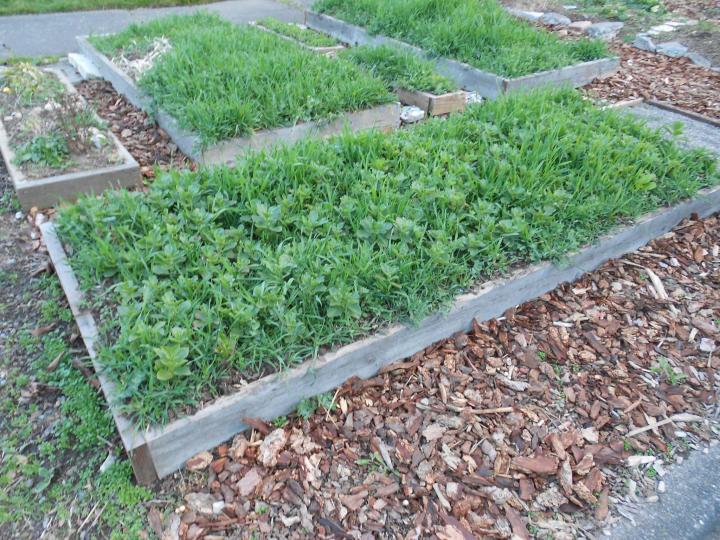
Credit: WSU.edu
Benefits of Cover Crops
Imagine this: While you and your garden rest over the winter, a garden helper is working hard to improve your soil. That’s the role of the cover crop!
Additional benefits of cover crops include:
- Stopping erosion; keeping soil from blowing or washing away. When you remove plants, you remove nature’s way of protecting the landscape and its fertility.
- Add valuable organic matter when dug into the ground, improving the soil for next year’s plants.
- Increasing activity of earthworms and beneficial microorganisms
- Decreasing compaction and improving water, root, and air penetration of soil
- Providing habitat and food (nectar, pollen) for beneficial insects and late-season pollinators
- Creating an aesthetic addition to your garden during winter dormancy
- Some cover crops even smother weeds or exude chemicals into the soil that inhibit weed growth … meaning cleaner beds for sowing or planting in spring!
Some cover crops also attract and nourish pollinators, namely Balansa Clover, Berseem Clover, Yellow Sweet Clover, Sainfoin, Hairy Vetch, and alfalfa. They have small white, pink, purple, and gold flowers that bloom in early spring.
When Do You Plant Cover Crops?
Plant cover crops in the late summer or early fall (after harvest) in Canada and northern parts of the United States, and any time after the harvest in the southern United States.
In most regions, it’s best to plant right after you make your last harvest. The cover crops need at least 4 weeks before a fall frost to get established. Buckwheat can be planted earlier in areas that have already been harvested. In the spring, you pull, cut, or till the cover crops into the soil.

Common Cover Crops
These four cover crops are among the most commonly available through garden centers and mail-order catalogs:
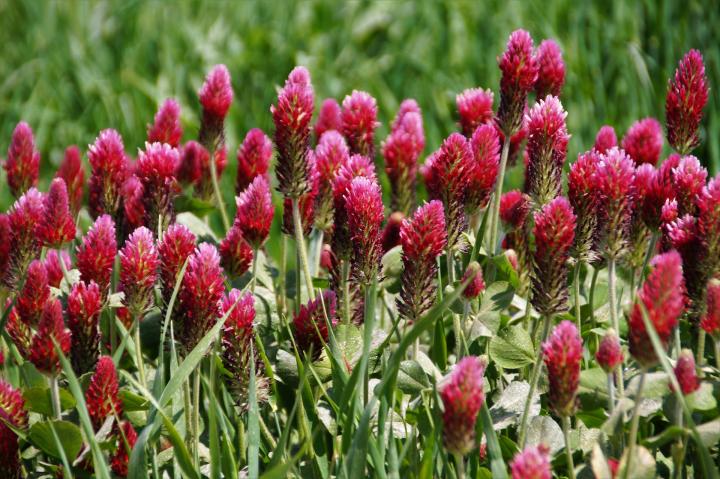
- Red or crimson clover (Trifolium incarnatum) is sown in the late summer or fall and turned in the spring in Zones 6 and higher. it is used as a summer legume in colder areas, where it will usually be killed in winter. Allow it to flower, and the bees will love you.
- Hairy Vetch (Vicia villosa) is a legume used as a cover crop to restore nitrogen to the soil for healthier plants. It grows in Zones 1 to 5 and can be planted in the spring or fall.
- Cereal (winter) Rye (Secale cereale) is a grain and an excellent winter field cover crop because it rapidly produces a ground cover that holds soil in place against the forces of wind and water. Rye’s deep roots help prevent compaction, and because its roots are quite extensive, winter rye also has a positive effect on soil tillage. Annual in Zones 3 to 11.
- Oats are fast-growing, cool-season crops with fibrous roots that loosen tight soil. Both “feed” and “seed” oats are acceptable.
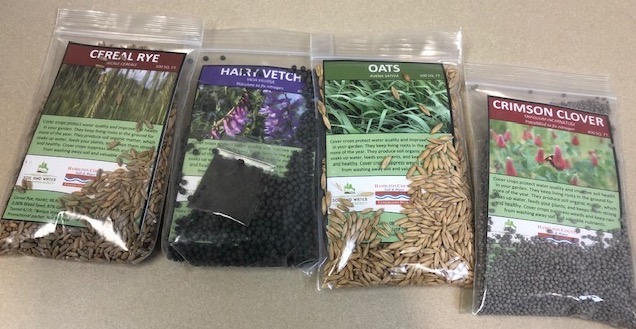
The choice of cover crop depends on the main benefit you are hoping to obtain from the cover crop.
- Do you need to replenish nitrogen? Legumes (like clover, vetch, winter field beans, and soybeans) fix nitrogen, the essential nutrient most lacking in garden soils. Legumes work in harmony with the bacteria that live on their roots. These bacteria take nitrogen from the air and fix it in pink root nodules, adding nitrogen to the soil in a form that plants can absorb. Legumes are a great choice for sowing before nitrogen-hungry plants such as cabbages.
- Is your soil tight or compacted? Oats, barley, or a cereal grain break up tight soil and improve tilth. Remember that their incorporation will make nitrogen in the soil temporarily unavailable to the succeeding crop unless extra nitrogen is added.
- Do you want to suppress weeds? Phacelia does a great job of suppressing weeds and improving soil structure. The flowers attract bees and hoverflies, so consider allowing a small patch to flower.
- Are you looking to attract beneficial insects? Buckwheat will enrich your soil and provide nectar for beneficial insects in spring as well as suppress weeds.
For both nitrogen and organic matter, use a mixture of legumes and cereals. Towards that end, many cover crops sold in the market are mixed with at least one grass and one legume species. For example:
- Hairy vetch (legume) and oats (non-legume)
- Rye (grass) and crimson clover (legume)
Cover Crops for the Home Gardener
For most home gardeners, there are other things to take into consideration. Mainly, cover crops for home vegetable gardens should be easy to work into the soil in the spring.
- Hairy vetch produces so much top growth that it’s very difficult to turn over without a strong mower. Hairy vetch and winter rye are better for field-scale production.
- Perennial cover crops such as red clover (Trifolium pratense) are slow-growing and are best used in orchards and vineyards.
For cool-season cover crops (planted in late summer/fall), annuals are the way to go. They die over the winter or naturally complete their life cycle by the next spring. Also, the home gardener should select crops that can be easily incorporated into the garden. Here are some good cool-season cover crops to explore:
- Oats are a wonderful annual cover crop that prevents erosion and loosens tight soil.
- Field peas, mustard, and barley are also good annual cover crops.
- Berseem clover is a rapidly growing annual legume that will fix nitrogen in the soil.
- Oilseed radish is a rapidly growing annual with large roots that alleviate deep compaction.
- Mustard is quick-growing and produces lots of foliage that can be dug into the soil before winter to help improve its structure.
Cover Crops for Your Region
Of course, cover crops differ by gardening zone and region. Consult the charts below.
| Region | Legume | Grass | For Erosion Control | To Block Weeds |
|---|---|---|---|---|
| Northeast | alsike, red, and sweet clover; hairy vetch | annual ryegrass, Sudan grass, winter rye | clovers, oats, ryes | buckwheat, ryegrass, Sudan grass, winter rye |
| Mid-Atlantic | crimson and red clover, hairy vetch | annual ryegrass, Sudan grass | clovers, cowpeas, ryes | buckwheat, oats, ryes |
| Southeast | crimson clover, hairy vetch, lespedeza, peas | annual ryegrass, rye, Sudan grass | clovers, cowpeas, ryes | cowpeas, oats, rye, wheat |
| Midwest | crimson and red clover, hairy vetch | barley, ryes, Sudan grass | barley, ryes, white clover | buckwheat, oats, rye, wheat |
| Northwest | crimson clover, peas, woolly pod vetch | barley, rye, Sudan grass | barley, ryes, white clover | barley, oats, ryes, wheat, white clover, vetch |
| California | bell beans, fava beans, medic mix, subterranean clover, woolly pod vetch | barley, ryes, Sudan grass | barley, cowpeas, ryes, white clover | buckwheat, ryes, white clover |
| Southwest | spedeza, medic mix, subterranean clover | barley, buckwheat | barley, buckwheat, cowpeas, Sudan grass | barley, buckwheat, cowpeas, medic mix |
Download a Printable Copy of the U.S. Cover Crops Here.
| Region | Legume | Grass | For Erosion Control | To Block Weeds |
|---|---|---|---|---|
| Atlantic Provinces | field peas, red clover | annual ryegrass, barley, oats, winter rye | clovers, oats, ryes | buckwheat, ryegrass, winter rye |
| Quebec | field peas, hairy vetch, red clover | barley, oats, wheat, winter rye | clovers, ryes | buckwheat, oats, ryes |
| Ontario | field peas, hairy vetch, red clover | annual ryegrass, oats, Sudan grass, wheat, winter rye | barley, clovers, ryes | buckwheat, oats, ryes, wheat |
| Prairies | chickling vetch, clovers, fava beans, lupin, medic mix, peas | barley, oats, ryes | barley, white clover, ryes | buckwheat, oats, ryes |
| British Columbia | crimson clover, hairy vetch, medic mix | barley, ryes, wheat | barley, clover, ryes | buckwheat, oats, ryes, wheat |
Download a Printable Copy of the Regional Canadian Cover Crops Here.
How to Plant Cover Crops
Roughly dig the ground over, removing all weeds, particularly perennial ones, then gently firm down the soil with the back of a rake. Broadcast your seeds evenly across the soil surface. Rake them into the soil, tamp them down with the back of your rake, then water them.
Just scatter the seed over the area to be covered at a depth corresponding to the size of the seed. Large seeds should be covered with one-fourth to one-half inch of soil or compost. Small seeds can be left on the surface and lightly raked in. Apply a thin layer of loose straw to protect the area from wind and runoff from heavy rains.
You can also sow winter field beans in rows if you prefer. Prepare trenches about two inches deep, spaced eight inches apart. Plant the seeds four inches apart in the trenches, then cover them with soil.
The amount of seed to plant will vary with the species, but, in general, winter cover crops are seeded at a rate of 2 to 3 pounds per 1,000 square feet.
Note on Inoculating Legume Seeds: If you are planting legumes as nitrogen fixes, you also need to purchase “inoculant.” Use at a rate of at least 1 oz. per 10 lbs. of seed. To help the inoculant adhere to the seed, mix 9 parts hot water (non-chlorinated) with 1 part corn syrup (10% solution), let cool, and add a small amount of this solution to the seeds.
Fertilizing is generally not necessary, especially for established garden beds.
Digging in a Cover Crop
It’s worth leaving a few cover crop plants to flower to feed early beneficial insects, but dig most of your crop into the soil before it begins to flower. At this stage, the stems are still soft and will be easier to cut up and dig in—and quicker to rot down.
You can dig the stems and foliage into the soil or simply cut them down and leave them on the surface as mulch. Lay cardboard over the top if you’re worried about weeds popping up. Dig cover crops in at least a month before sowing or planting.
As mentioned above, some members of the legume family of plants (for example, hairy vetch) actually facilitate the fixing of nitrogen into the soil, doing your fertilizing for you. Following tilling, the cover crop will decompose, and soil microbes will return nitrogen and other elements to the soil for the next crop. It is best to cut the cover crop into small pieces (i.e., shred) so it will break down faster. (For plants that have a large volume of top growth that tends to get tangled in the tiller tines, mow the tops first, then till under.)
Once the cover crop is shredded, it is important to till it into the soil as quickly as possible. If left exposed to the sun, the cover crop will lose nitrogen and carbon very rapidly. The breakdown process will take 2 to 3 weeks. It’s important to hold off on planting your main crops for at least two weeks after tilling for the benefits of nitrogen-fixing and organic matter to set in.



Comments

Hi Roxine, Good question. Most seed sites that sell vegetable seeds should have cover crop seeds. Here are few places we trust:
https://www.ufseeds.com/cover-crops/
https://www.johnnyseeds.com/farm-seed/cover-crop-mixes/
https://www.highmowingseeds.com/cover-crops.html
We would recommend contacting your local Cooperative Extension Service. They will know more about your area and should be able to recommend a cover crop that best suits your soil and any other needs!
Hi Reily, Many times, you can find seed packets that combine two types of cover crops (e.g, legumes for nitrogen and cereals for soil tilth). Or, you can plant multiple cover crops in one plot much the same as you would when planting one crop. Be careful of one outgrowing another, though. Find ones with similar or the same days to maturity. We hope this helps!
- « Previous
- 1
- 2
- …
- 10
- Next »

Careful about herbicide; it could persist in the soil and just end up killing future crops. Could you try to put black plastic sheets over the gardens in the spring? This can cook and stymie the growth of the cover crops.