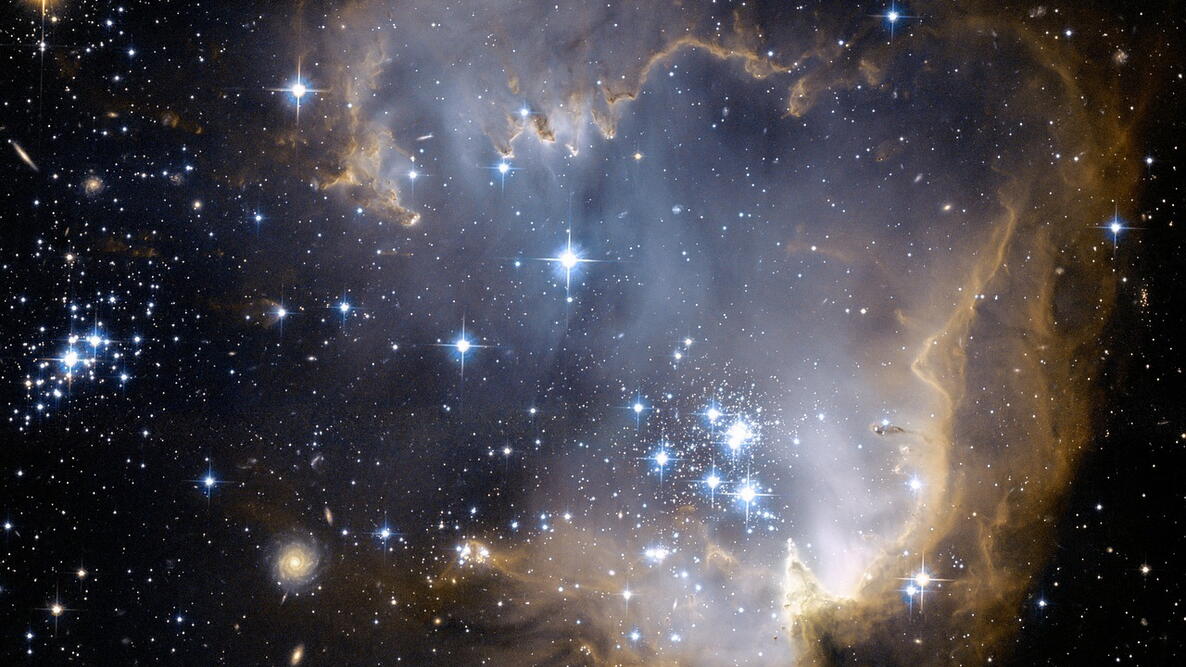

On a clear night, the stars seem to sparkle like tiny diamonds—but have you ever stopped to wonder why they do that? Stars don’t actually twinkle on their own. That familiar shimmer is caused by Earth’s atmosphere bending starlight as it travels to your eyes. Even more curious: while stars flicker, planets usually shine steadily. This simple nursery-rhyme mystery turns out to be a fascinating lesson in physics, weather, and how to read the night sky—just by looking up.
What Causes Stars to Twinkle?
Well, here it is: Stars twinkle because they appear as dimensionless points of light even through the largest telescopes, so that their tiny images are easily bent by passage through our thick atmosphere.
But why do they twinkle some nights and not others? Key point. The answer reveals what kind of air lingers over your head.
How Earth’s Atmosphere Bends Starlight
When light passes through air of a different density (thickness), it changes direction, a process called refraction. You see this when looking at a spoon in half a glass of water. The spoon seems bent because its image goes off in a new direction when passing from thin air to thick water.
Since cold air is denser than warm air, the same thing happens when a star’s pointlike image zooms through atmospheric layers with different temperatures. If those layers are in motion (count on it), then the light zigs and zags. Voilà, twinkling.
Why Stars Twinkle More on Some Nights
So twinkling stars mean the air has uneven temperatures. Not surprisingly, since air (especially dry air) cools quickly after sunset. When the stars don’t twinkle, it’s telling you that the overhead air is more even—a feature of damp or hazy air. Since summertime air has much more water vapor in it, it doesn’t cool as rapidly at night, and this keeps the stars from twinkling!
Low stars pass through thicker horizon air en route to you, so twinkling is usually more exaggerated down near the skyline. That’s when bright twinkling stars can even wildly break up momentarily into separate alternating colors.
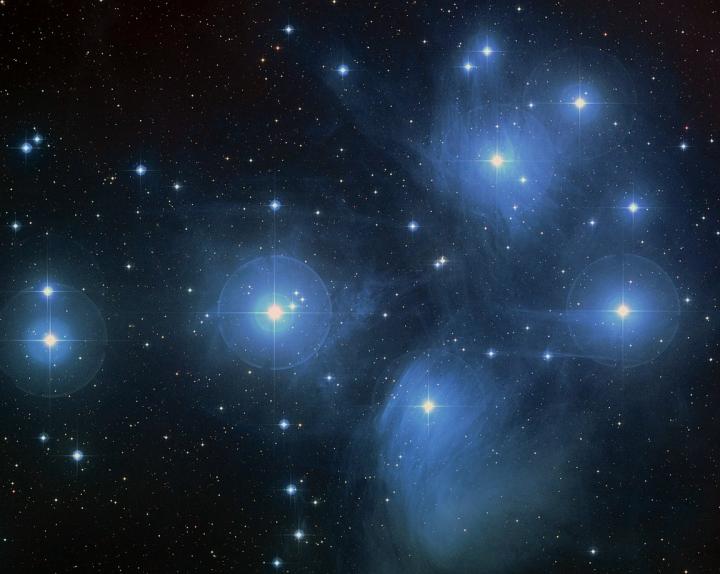
Nights of wonderful clarity, when a million little stars seem to flood the rural sky (actually there are never more than 2600 naked-eye stars), are usually accompanied by rapidly cooling air and twinkling stars. On the other hand, warm, hazy, humid nights strongly tend to have steady, untwinkling stars. That’s the best time to use a telescope on the moon and planets because their images will be sharp, not blurry.
Do Planets Twinkle?
An old proverb says that stars twinkle but planets don’t. This is usually true. That’s because planets have size to them, even if they look like points to the naked eye. Their greater width gives them some immunity against having their whole image twisted by our air. Check it out with Jupiter, which these nights appears high up as the night’s brightest “star.”
Frequently Asked Questions
Why do stars twinkle?
Stars twinkle because their light passes through Earth’s atmosphere, which is made up of moving layers of air with different temperatures and densities. As the light bends (a process called refraction), the star appears to flicker or change brightness.
Why don’t planets twinkle like stars?
Planets usually don’t twinkle because they appear larger than stars, even to the naked eye. Their wider disks average out the atmospheric distortions, making their light look steadier.
Why do stars twinkle more on some nights?
Stars twinkle more when the atmosphere is unstable, such as on cold, dry nights when air temperatures change rapidly. Calm, humid, or hazy air tends to reduce twinkling.
Why do stars near the horizon twinkle more?
Stars close to the horizon shine through a thicker layer of atmosphere than stars overhead. The extra air increases distortion, making twinkling more noticeable and sometimes causing color changes.
Do stars twinkle in space?
No. Stars do not twinkle in space because there is no atmosphere to bend their light. Astronauts see stars as steady points of light.
Can twinkling stars tell you about the weather?
Yes! Rapid twinkling often means dry, turbulent air—common before colder weather. Steady, untwinkling stars usually indicate moist or stable air, which often precedes clouds or precipitation.
Is twinkling the same as scintillation?
Yes. “Scintillation” is the scientific term for the twinkling of stars caused by atmospheric refraction.
So “Twinkle, Twinkle …” provides a physics lesson, lets you gauge atmospheric conditions, shows you what’s a planet and what’s not, and tells you when to use a telescope. Wow. Who would have guessed that a quick look upward can be so … scintillating?

More Like This


Comments