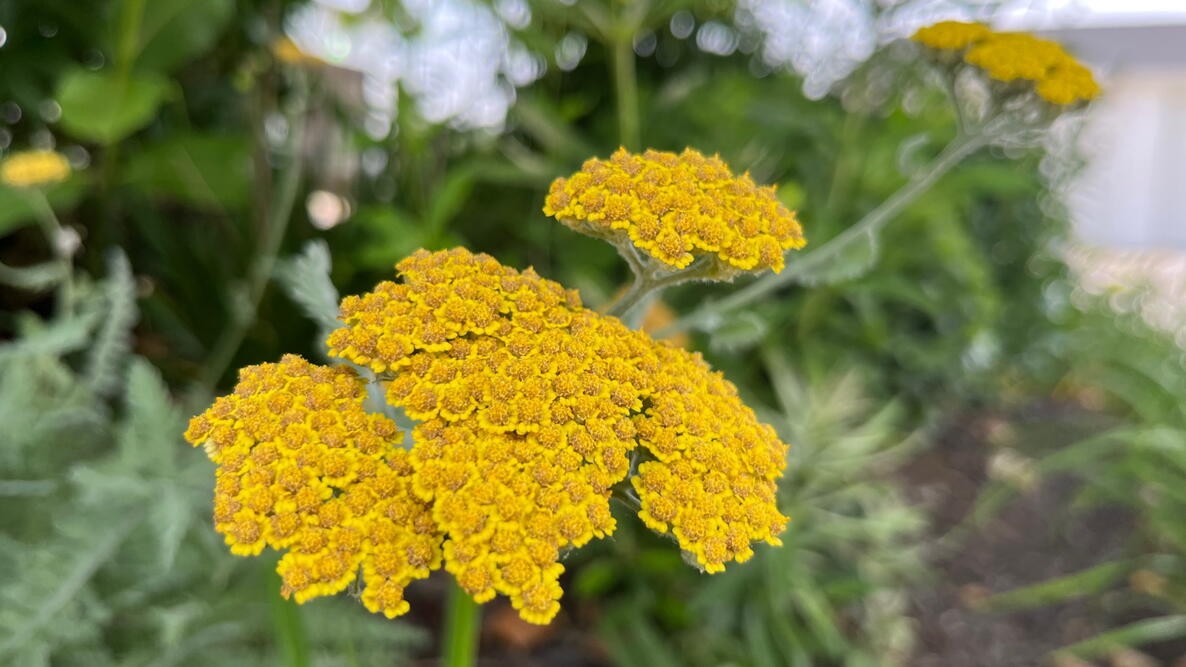
Caption
Yarrow can come in a bright yellow variety, but it can also be red or pink.

Yarrow (Achillea millefolium) is a tough, native North American perennial beloved by pollinators and gardeners alike. With its flat-topped clusters of tiny flowers and ferny, aromatic foliage, yarrow thrives in borders, cottage gardens, pollinator patches, and open meadows. Drought-tolerant and low-maintenance, it’s an excellent choice for sustainable landscapes. Here’s how to grow yarrow successfully in your garden.
Because yarrow is native across much of North America, it’s a valuable plant for sustainable gardens: it supports pollinators and beneficial insects, tolerates lean soils, and fits naturally into meadow plantings and low-water landscapes. If you’re aiming to garden responsibly, consider choosing native or regionally adapted yarrow when possible and avoid planting aggressive spreaders near natural areas.
Yarrow is pest-resistant, drought-tolerant, and highly attractive to butterflies and beneficial insects. The long-lasting blooms are excellent for fresh bouquets and dried arrangements.

Planting
When to Plant Yarrow
- Plant in spring or early summer after the danger of frost has passed. See local frost dates.
- Start from nursery plants, divisions, or tip cuttings in spring.
- Seeds can be started 8–10 weeks indoors before your last frost date.
Choosing and Preparing a Planting Site
- Plant in full sun for compact growth and abundant flowers. In partial shade, plants may become leggy.
- Yarrow prefers well-drained soil and thrives in hot, dry conditions.
- Avoid constantly wet or poorly drained soil, which can lead to root rot.
- Loamy soil is ideal, but yarrow tolerates clay soil if it drains well.
- Loosen soil 12–15 inches deep and mix in 2–4 inches of compost before planting.
- Avoid overly rich soil; too much fertility can cause floppy stems.
How to Plant Yarrow
- Space plants 1 to 2 feet apart to allow for spreading.
- Most varieties grow 2 to 4 feet tall.
- Water well after planting to help roots establish.
Growing
Watering
- Yarrow is very drought-tolerant once established.
- If rainfall is less than 1 inch per week during summer, provide supplemental water.
- Avoid overwatering.
Feeding
- Apply a thin layer of compost each spring.
- Additional fertilizer is rarely necessary.
Deadheading and Pruning
- “Deadhead” spent flowers in mid-summer to encourage a second bloom.
- After flowering finishes, cut plants back to tidy growth and sometimes stimulate fall blooms.
Dividing Yarrow
- Divide plants every 3 to 5 years in early spring or fall.
- Lift clumps, remove woody or dead centers, and replant healthy divisions.
Types
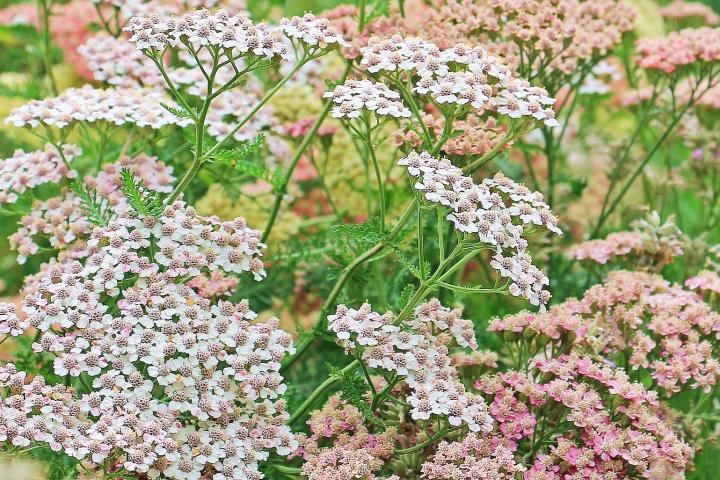
- Native (Wild) Yarrow (Achillea millefolium) – Typically white-flowering and native across much of North America. It’s an excellent choice for sustainable and pollinator-friendly gardens, meadow plantings, and low-water landscapes. To support local ecosystems, look for regionally adapted or straight-species yarrow (rather than heavily bred cultivars), and avoid planting vigorous spreaders near natural areas.
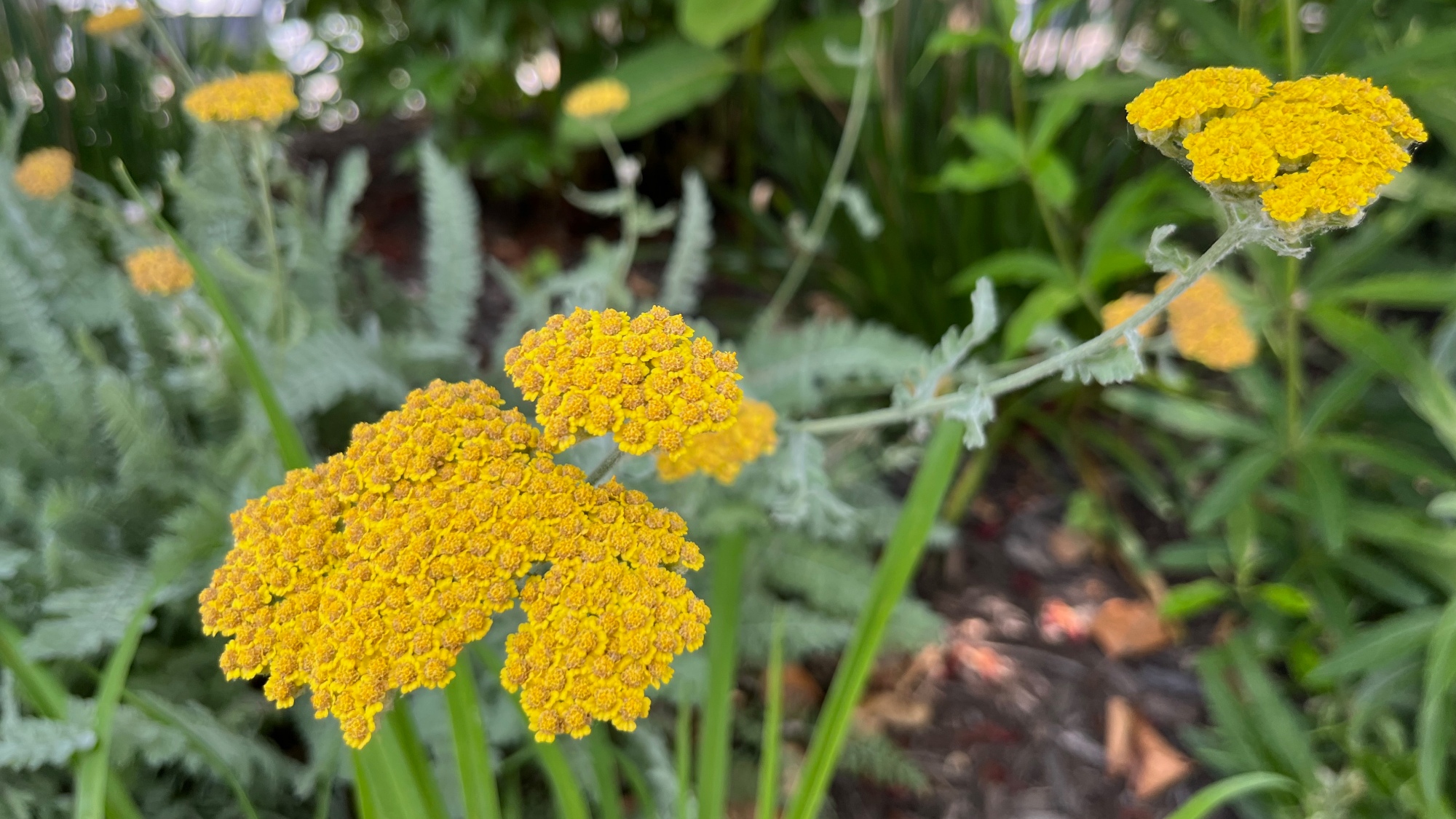
- ‘Coronation Gold’ – Grown for its beautiful mustard-yellow flowers and silvery gray leaves.
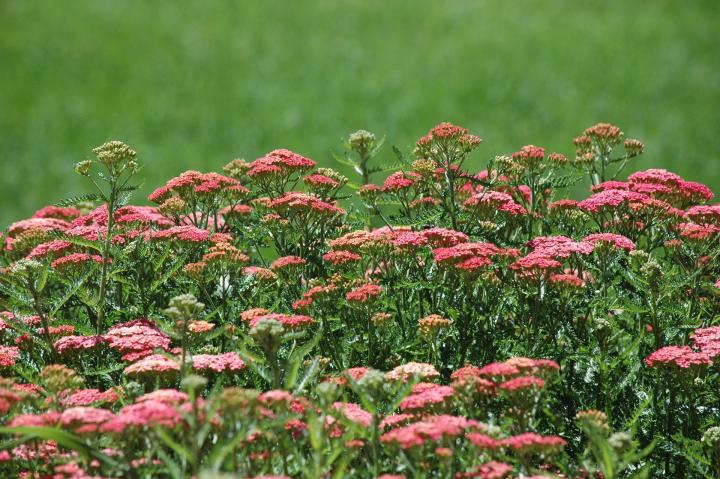
- ‘Fanal’ (or ‘The Beacon’) – Loved for rich red flowers with yellow centers.
- ‘Cerise Queen’ – A bright pink variety that adds vivid color to sunny borders.

Wit and Wisdom
In addition to its ornamental value, yarrow is an aromatic herb with a long history of traditional use in herbal medicine. If growing for herbal purposes, be sure to correctly identify the species and grow it without chemical treatments. See this wonderful article, Yarrow and Its Medicinal Uses.
Some Native Americans used ground yarrow infused in water as a wash to treat sunburns. It is also sometimes used as a remedy for anxiety and stress.
Yarrow is thought to symbolize everlasting love. Find out more flower meanings here.
Frequently Asked Questions About Growing Yarrow
Is yarrow invasive?
Some varieties spread aggressively. Divide regularly and deadhead if you want to limit self-seeding.
Can yarrow grow in containers?
Yes, provided containers have excellent drainage and full sun exposure.
Is yarrow deer-resistant?
Yes, it is typically deer- and rabbit-resistant.
How long does yarrow bloom?
Most varieties bloom from early to late summer, especially with deadheading.

More Like This

Hi, Kris. It sounds like you might need to test your soil's pH. Yarrow prefers a pH between 5.5 and 6.5. You can buy soil test kits or use a DIY method. Check out our page on how to test your soil that includes how to amend it (if necessary).
- « Previous
- 1
- 2
- …
- 10
- Next »

Comments