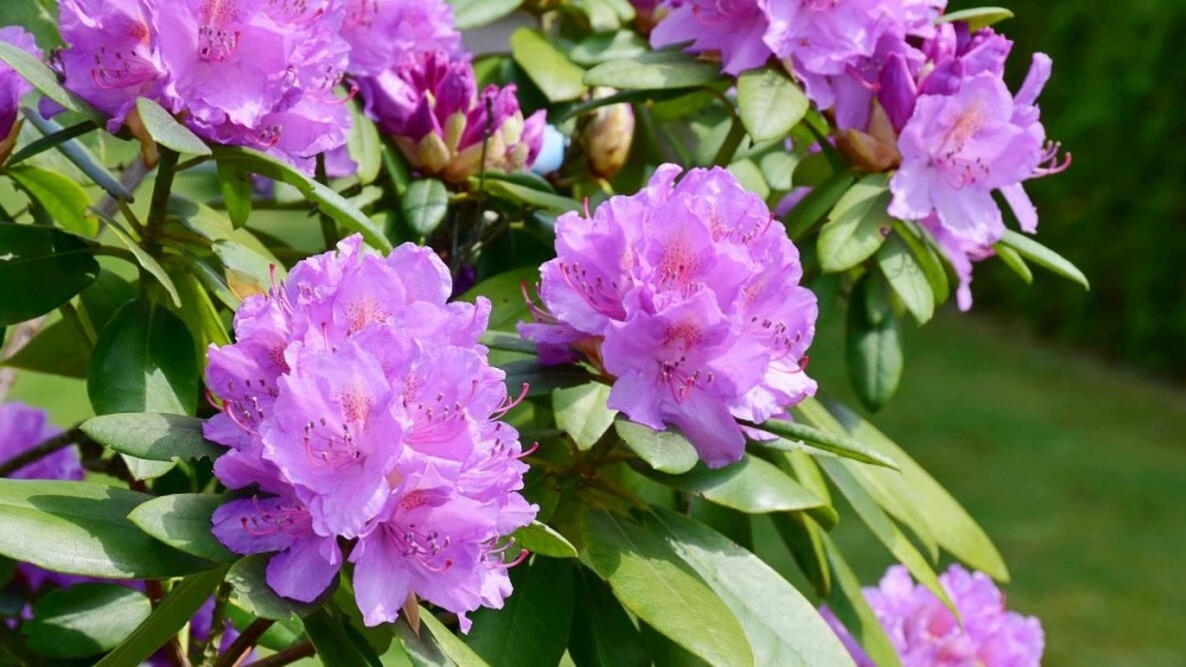
Caption
Rhododendrons are popular among gardeners with their evergreen shrubbery and early blooms.

Planting
Most large-leafed varieties require dappled shade; avoid deep shade or full sun. A sunny spot that receives a few hours of shade is perfect. See regional guidelines below.
Soil should be well-drained, humus-rich, moist, and acidic (pH 4.5–6).
Azaleas and rhododendrons have shallow root systems and need moist soil and mulch to keep them from drying out. Amend planting areas with compost, peat moss, or a substitute, only if your soil is poor. Learn more about soil amendments and preparing soil for planting.
→ Not sure which hardiness zone you’re in? See the USDA map.
Planting in Cold or Temperate Regions (Zones 3 to 6)
- Plant in full sun to increase flowers and avoid mildew problems. Shrubs need a minimum of 6 hours of full sun daily.
- Plant on the sheltered side of a windbreak. If subjected to cold, dry winds, their leaves and buds dry out and die, especially during winter winds.
Planting in Warm or Hot Regions (Zones 7 to 11)
- Plant in a site that receives afternoon shade, especially in hot areas. In tropical zones, azaleas will bloom in full shade.
How to Plant Rhododendron & Azaleas
- Plant in spring or early fall.
- Space plants 2 to 6 feet apart, depending on their estimated mature size. Dig a hole as deep as the root ball and about twice as wide.
- Set new plants so that their top roots are at soil level or slightly below. If you plant them any deeper, the roots and trunks may rot.
- Fill the hole half full with soil, then water it well to settle the soil before filling it with the remainder of the soil.
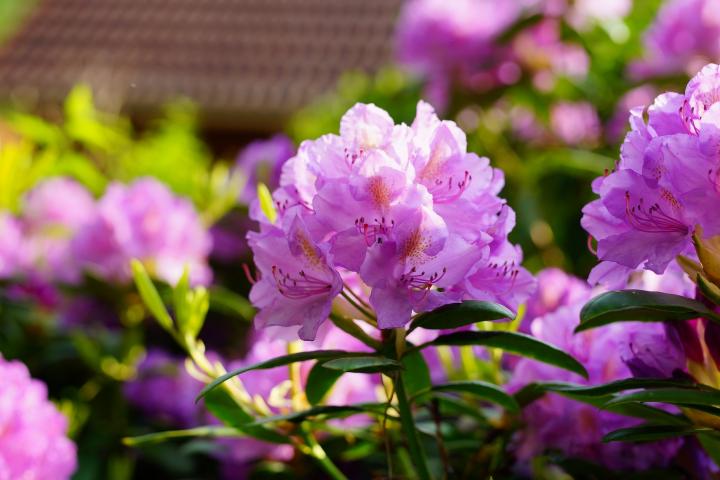
Growing
How to Care for Rhododendron & Azaleas
- Mulch plants every spring with 2 to 5 inches of pine bark chips or pine needles to protect shallow roots and retain soil moisture. A lack of water reduces flower bud formation. Read more about using mulch.
- Tip: A common mistake is to create a so-called “mulch volcano,” where mulch is piled heavily around the trunk of the shrub. In fact, this can keep the trunk too wet and encourage rot. Always leave a few inches around the trunk free of mulch.
- See our guide to using mulch.
- Fertilize azaleas and rhododendrons sparingly and only when flower buds swell in the early spring, even if they are fall bloomers. Heavy applications of fertilizer will burn the plants’ roots.
- Water plants during the summer if rainfall is less than 1 inch per week.
- After flowering, deadhead where practical, to promote vegetative growth rather than seed production. Remove dead flowers from rhododendrons carefully; next year’s buds are just under the old heads and will start to develop shortly after flowering.
- Azaleas and rhododendrons may be transplanted at any time during the growing season, but they transplant most successfully during fall or early spring when they are dormant and temperatures are cool.
Winter Care for Rhododendrons
Rhododendrons are shallow-rooted plants; in cold regions, apply several inches of organic mulch around the base. In regions with severe winters, consider wrapping evergreen rhododendrons with burlap in the fall. Cold, dry winds will cause too much moisture evaporation from the leaves, which will wither and die. To help them recover from cold snaps, deeply water rhododendrons if there are warmer days. In the spring, prune out any dead or damaged branches and leaves.
Pruning Rhododendron & Azaleas
- In general, do not prune spring-flowering shrubs such as azaleas and rhododendrons. If you need to reduce height, prune after flowering in the spring.
- Otherwise, just remove dead, damaged, or diseased branches at any time of year.
- On young and old plants, simply snap off spent flower stalks by bending them over until they break away from their stems. Be careful not to damage growth buds at the base of each flower stalk.
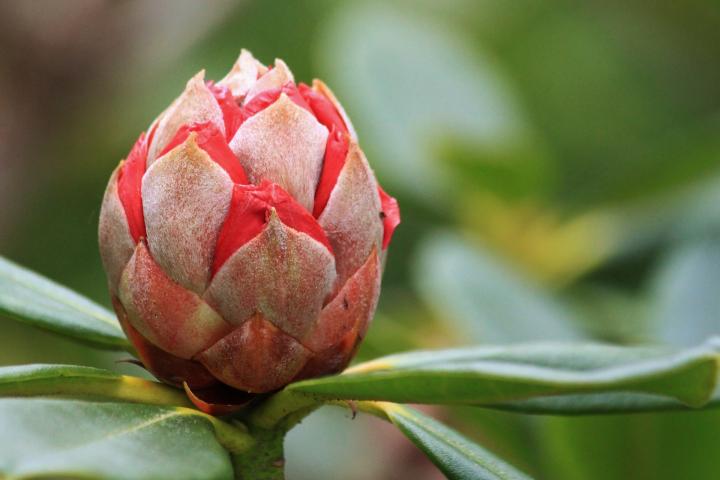
Types
There are more than 900 species in the Rhododendron genus, which vary greatly. It would take a whole book to understand this wide world!
You may be interested in joining the American Rhododendron Society, which runs a database with information on more than 2,000 rhododendrons and azaleas. On an annual basis, the society selects a number of rhododendrons to be awarded the Rhododendron of the Year designation, highlighting the best-performing plants for different regions.
Here is a handful of varieties that we think you’ll enjoy:
- ‘Blue Diamond’ is a dwarf evergreen rhododendron that grows to 3 feet. It blooms mid-season with violet-blue flowers. Zones 7 to 9.
- ‘Cecile’ is a vigorous azalea that grows to 7 feet and produces dark salmon-pink buds in mid-season. Zones 5 to 8.
- ‘Hydon Dawn’ is a low-growing rhododendron that actually tolerates full sun. Pale pink flowers bloom in mid-season. Zones 7 to 9.
- ‘Nova Zembla’ is an evergreen rhododendron that grows 5 to 10 feet tall and bears bright red flowers in late midseason. Zones 5 to 8.
- ‘Rosy Lights’ is an azalea that offers extra cold hardiness. It grows to 6 feet and bears deep purple-pink flowers. Zones 3 to 8.
- ‘Purple Gem’ is a dwarf rhododendron that grows to 2 feet and is an early-season bloomer. It bears small, light purple flowers. Excellent in front of a border or in a rock garden. Zones 5 to 8.

More Like This

Hi Deb,
Since the issue with your rhododendron leaves seem to happen every spring, it sounds like you are dealing with winter injury. Rhododendrons lose water through their leaves in winter during times when it is warm and sunny. Since the ground is frozen, the roots are not able to take up enough water in the soil to make-up for what is lost through the leaves. There are a few ways to prevent winter injury, including adequate watering during the growing season.—about an inch a week—and especially in the fall to give your rhododendrons what they need for the winter. You also want to avoid fertilizing after mid-September because it may delay dormancy.
Periods of high winds can also cause winter injury and protection from winds can help prevent damage.
It really depends on how dry or wet your part of the state has been and is expected to be. If you get plenty of rain in August and September, and temperatures cool off, then the plants should be fine, assuming they are planted in the ground. If they're in containers, they will likely need some extra watering if conditions are dry.
- « Previous
- 1
- 2
- …
- 10
- Next »

Comments