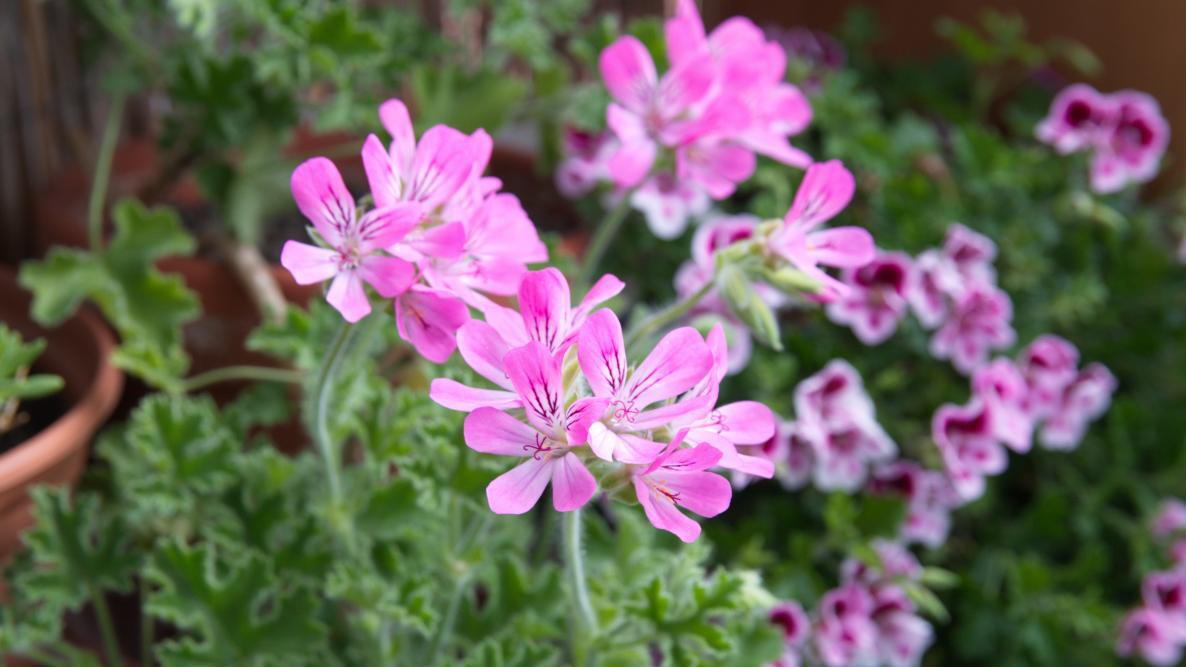

Growing
How to Care for Geraniums
- If planting in the ground, add a light mulch to cover the soil to cool the root zone.
- Allow soil to dry to some extent between waterings, then water thoroughly. Over-moist soil does more damage than under-watering. Do the finger poke; if it’s dry at 1-inch depth, then water. Do not water from overhead nor splash the foliage when watering, or you’ll invite disease.
- Deadheading is important for continuous bloom throughout the summer. Deadhead all spent blooms. Also, deadhead after a heavy bloom or a strong rain. One reader shared a tip, “For continued reblooming, finger pinch just below the spent flower as much as possible. I did, and each of my pelargoniums bloomed from spring into fall year after year.
- To promote bushiness and curtail legginess, pinch back the stems.
- During active growing months, fertilize every 2 weeks or so. Use a water-soluble fertilizer at half-strength. Don’t fertilize in winter, when the plant should be dormant.
- If you’re bringing in the plant for winter, water much less, but do not let the roots dry out entirely. Geraniums do best when given a period of dormancy through the winter months, during which they use less water and do not grow much. See below for more overwintering instructions.
- Geraniums can be repotted in spring to encourage new growth—or, if they need to be refreshed.
Overwintering Geraniums
- Geraniums that have spent the summer outdoors can be kept as houseplants, provided they get lots of sun. In northern climes, the sun may not be strong enough in late winter to stimulate buds on some varieties.
- Before the first fall frost, lift the plants and, using a sharp, clean knife, cut the stems back in a shapely fashion to about 6 to 8 inches. They should not have to support great masses of leaves in the low-sunlight environment they are about to enter. Save a few stems as cuttings to root—an easy way to multiply your plants.
- Transplant the “mother plant” to the smallest pot possible—enough to just fit the roots—using regular potting soil to fill.
- Keep the plants in the shade for a week, then place them in a sunny spot (they need all the sun they can get) and keep them cool.
- During winter, geraniums grow best with night temperatures of 50° to 60°F (10° to 16°C) but will survive if they drop to 32°F (0°C) and/or rise above 80°F (27°C), as long as they are kept relatively dry.
- When new growth appears in the spring, cut off all the old leaves.
The only thing more difficult than achieving new growth is keeping it. And here’s some help with that:
- Water is only available when the leaves show signs of drooping, and only small amounts are provided. Do not fertilize or feed the plants. It is critical that these plants get rest.
- If you want your overwintered geraniums to bloom for Memorial Day, pinch them back in February. Once warm weather returns and all danger of frost has passed, take the plants outdoors and transplant them to beds or pots, as you wish.
Types
- Interspecific: zonal and ivy hybrids; nonstop flower producers
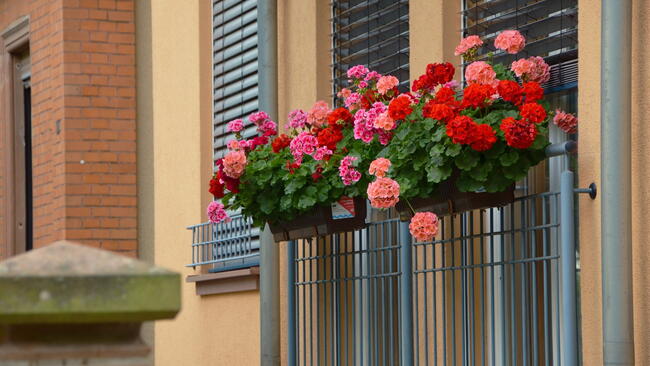
- Ivy (Pelargonium peltatum): named for a trailing habit and ivy-like foliage; single, semidouble, or double flowers; colors include bicolor, burgundy, pink, purple, red, salmon, and white. Very popular for hanging baskets, window boxes, and containers.
- Regal, aka ‘Martha Washington’ (P. x domesticum): bicolor burgundy, lavender, pink, and white blooms; fussy—prefers cool, wet, climate conditions to hot, humid, and/or sunny; inappropriate conditions will reduce flower production; often a houseplant
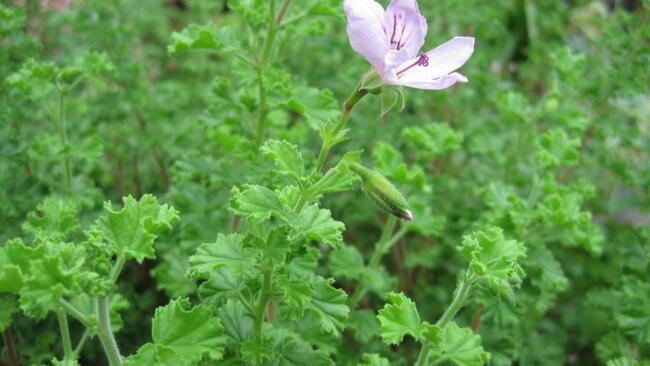
- Scented: foliage yields scent (cedar, lemon, lime, mint, orange, and rose) when brushed or rubbed; note that ‘Citronella’ does not repel mosquitoes; pink or white flowers are smaller than those of zonals. It can be addictive to collect them all. Learn more about scented geraniums.
- Seed: similar to zonals; propagated by seeds; slower-growing, shorter, more compact than zonals; smaller but more numerous flowers than zonals; flowers “shatter” (are shed naturally)
- Variegated: a form of zonal; bi- or tricolor foliage; tends to have fewer flowers than other zonal types
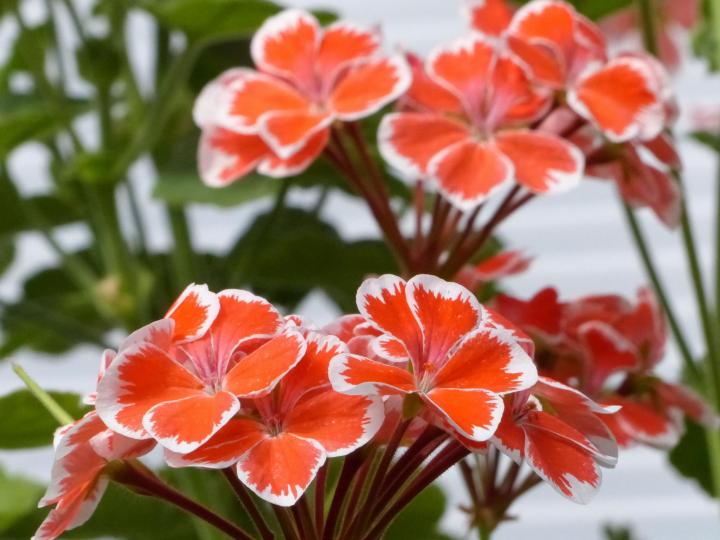
- Zonal (P. x hortorum): the most common form; “zonal” refers to patterns on the leaves that darken with maturity; propagated by cuttings; single or double flowers; colors include bicolor, orange, purple, red, salmon, and white. These thrive in containers (as well as outdoors).


Hi Carol,
It sounds like there could be a number of pest or disease issues going on with your geraniums, and it could be more than one thing based off the symptoms you listed. While it is great that you have been bringing them in each fall for the winter, it might be time to consider getting new plants at this point considering what has happened this year.
If you truly want to save these specific plants, you could try cutting them all the way back and repotting in new potting mix, removing as much of the old mix as possible in an effort to avoid bringing anything indoors for the winter. You will still run the risk of introducing a disease or pest into your home, and if you have a lot of other plants indoors, it might not be the best idea.
Hi, Susan. We wonder if you are in any of the areas of the country that are experiencing record high heat at the moment. Geraniums will suffer, and leaves may turn brown, when the heat gets to be too much for them. If the browning is mostly on the lower leaves, this could mean a bacterial disease. The brown leaves could also be from over-fertilizing.

Donna-
Squirrels can be such a pest! Check out this link for ideas to keep the squirrel population at bay.
- « Previous
- 1
- 2
- …
- 10
- Next »

Comments