
Planting
When to Plant
Dahlias will not tolerate cold soil. Plant tubers when the soil has warmed to about 60°F (16°C) and all danger of frost has passed. Depending on where you live, this may be well after your last frost date.
As an easy rule of thumb, plant dahlias a few days after you plant tomatoes outdoors.
You can check the soil temperature with a garden or meat thermometer, but I prefer to leave the thermometer in the kitchen for Thanksgiving. At my farm in Zone 8b, I typically start planting around Mother’s Day. Your timing will vary, so wait for the soil to warm.
Want a head start? Start dahlia tubers indoors in pots about a month early. Before planting the young dahlias outside, gradually get them used to outdoor conditions over several days—a process called hardening off.
Planting a cutting or seedling? Wait until all danger of frost has passed before putting out any dahlia that already has leaves; freezing temperatures can badly damage the foliage.
Where to Plant
Plant dahlias in full sun, where they will receive at least 6 to 8 hours of direct sunlight each day. Too much shade can produce tall, scraggly plants with fewer flowers. I learned this the hard way after tucking extra tubers into the shady landscaping around my house.
Choose a spot with well-draining soil and enough room for the plants to mature. Dahlias can grow in the ground, in raised beds, or in containers.
If your soil needs improvement, work in compost before planting.
How to Plant
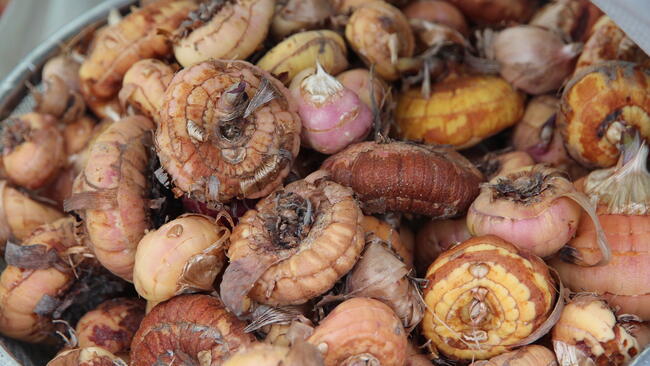
Before planting, check your dahlia tubers. Look for firm, healthy tubers with a visible eye or sprout. Discard tubers that are rotten or badly damaged.
How to Plant Dahlia Tubers
- Dig a hole 4 to 6 inches deep.
- Lay the tuber horizontally with the eye or sprout facing up.
- Cover the tuber with soil and gently firm the soil over it.
- Do not water right away unless the soil is very dry. Dahlia tubers contain enough moisture to begin growing, and too much water before they sprout can cause rot.
- Add support now for tall dahlias. Place the stake beside the tuber at planting time so you won’t accidentally pierce the tuber later. You’ll tie the stems to it as the plant grows.

How far apart should dahlias be planted? Spacing depends on the size of the plant and how you are growing it. Medium-size garden dahlias are often spaced about 2 feet apart, while compact bedding dahlias can be planted 9 to 12 inches apart. On my flower farm, I plant cut-flower dahlias about 1 foot apart in dedicated rows, where the plants help support one another.
Optional grower tip: Write or stamp the variety name on the tuber before planting. If your plant label disappears during the season, the name may still be readable when you dig the tuber in fall.
Planting Dahlias in Containers
Medium and dwarf dahlias grow well in containers. Choose a large pot with drainage holes and fill it with a well-draining potting mix.
Plant the tuber at the same depth as you would in the garden, with the eye or sprout facing up. Larger dahlias need larger, heavier containers to support the mature plant.
Growing
How to Care for Dahlias
Watering
Wait to water newly planted dahlias until the shoots have emerged a few inches above the soil, unless the soil is very dry. Once plants are established, a useful starting point is to water deeply 2 to 3 times a week during dry weather, then adjust for your soil, climate, and rainfall.
Dahlias are a bit like Goldilocks: They don’t like too much or too little water—they want an amount that’s “just right.” Sandy or dry soil? Growing in a pot or raised bed? Water more often. Clay soil? Water less often, and improve the drainage if possible.
You don’t need a special irrigation system. A good old garden hose will do the job. When I had just a few hundred dahlias, I loved watering at the base of each plant because I found it relaxing and it gave me a chance to check on the health of individual plants.
On our farm, we now use an overhead irrigation system early in the morning. On exceptionally hot days, we may also run it when the foliage is drooping from heat stress—confession: I’ll sometimes sit under the sprinklers with the dahlias!
Fertilizing
For an easy choice, buy a fertilizer labeled for flowers or blooming plants. On the package, you’ll see three numbers, such as 5-10-10. For dahlias, look for a fertilizer with a lower first number than the other two.
The first number represents nitrogen. Too much nitrogen encourages dahlias to produce lots of leafy growth instead of flowers, so avoid fertilizers with a high first number, such as those made for lawns.
Prefer an organic option? I’ve had good results with liquid fish emulsion, an organic fertilizer sold at garden centers and nurseries. Mix and apply it according to the label. The aroma leaves something to be desired—the word “pungent” comes to mind—but it feeds both the plant and microorganisms in the soil, which is a win-win!
If you want to fine-tune your fertilizing, you can also have your soil tested to find out which nutrients it already contains.
Staking, Pinching, and Deadheading
Staking Dahlias
Tall dahlias, especially varieties with large, heavy flowers, need support to keep their stems upright and prevent breakage. I will never forget the way my stomach dropped when I watched one of my favorite dahlias, ‘Yvonne’, fall over because I hadn’t put in support.
If you’re growing just a few plants, a stake and twine or a tomato cage works well. For a stake, place it next to the tuber at planting time, then gently secure the stems to it with soft twine or plant ties as the dahlia grows. Bamboo poles, sturdy garden stakes, rebar, and hardwood stakes can all work.

Keep an eye on plants before and after heavy rain or wind. Large, open blooms can fill with water and become surprisingly heavy, bending or breaking stems.
Growing a row of dahlias? I prefer a simple corral system: Place posts along the row and run taut twine around the plants. Start with a lower line of twine and add another higher line as the plants grow. The twine and the dahlias work together to keep the row upright.
Pinching Dahlias for More Blooms
Perhaps the most counter-intuitive step of growing dahlias is pinching the plant. Pinching, or removing the top of the central stem, encourages branching, which results in more flowers. It also keeps the center stalk from becoming as thick as a broom handle, helps prevent the plant from becoming top-heavy, and creates an overall bushier plant.
Once your dahlia has about four sets of leaves, pinch out the top sprout on the main stem. You can remove it with your fingers or floral snips.

Want larger flowers? Try disbudding: Remove the two smaller side buds next to the central bud in a flower cluster. This directs the plant’s energy into fewer, larger blooms.
Deadheading Dahlias
Remove faded blooms regularly to keep dahlias producing flowers. Cut the stem well below the spent bloom rather than simply removing the flower head. Cutting deeper encourages new growth with long, strong stems.

It’s tempting to remove just the flower head or make a shallow cut, but this can result in weaker stems. I stopped feeling guilty about deadheading when I saw for myself how much healthier my dahlias looked.
If you want to save dahlia seeds, leave a few faded flowers on the plant instead of deadheading them so they can form seed pods.
Overwintering Dahlias
In cold-winter climates, dahlia tubers need to be dug out and stored indoors for winter. In milder climates, they may be able to stay in the ground.
Leaving Dahlia Tubers in the Ground
Gardeners in Zone 8 and warmer may choose to leave dahlia tubers in the ground over winter. I have several dahlias in my landscaping that I haven’t dug up for years. Not sure of your zone? Find your USDA Hardiness Zone.
Tubers left in the ground can eventually become crowded, resulting in less vigorous plants. They can also rot during exceptionally wet or cold winters.
When and How to Dig Up Dahlia Tubers
For many gardeners, the first frost marks the end of the dahlia season and signals that it’s time to lift the tubers. Frost turns the plants dark and limp, so label your dahlias before cold weather arrives if you want to keep track of the varieties.

When you dig, lift out the entire tuber clump—you don’t need to separate the individual tubers. Keep the tubers attached to the crown until you decide whether to store the clump whole or divide it.
- Cut back the stalk with clean clippers, leaving a few inches above the ground.
- Dig well around the plant with a garden fork, giving the tuber clump plenty of room so you don’t slice into it.
- Gently lift the entire clump from underneath. Don’t pull it out by the stalk, which can damage the tubers.
- Brush off loose soil and inspect the clump for damaged or rotten tubers.

How to Store Dahlia Tubers
Store dahlia tubers somewhere cool, dark, and well ventilated for winter. I store mine at about 40°F to 50°F (4°C to 10°C).
After digging, you have two basic options:
- Store the clump whole. Brush off loose soil, let the clump dry, and leave some soil around the tubers to help keep them from shriveling.
- Wash and divide the clump. Wash away the soil, let the clump dry, and then separate it into individual tubers before storage.
If you divide the tubers before storage, make sure each piece has a crown with an eye, an unbroken neck, and a firm body. Discard rotten tubers or those with broken necks, disinfect your clippers between clumps, and let the divided tubers dry before packing them away.
Prefer to divide in spring? You can store the clump whole and divide it before planting, when the eyes may be easier to see. See Unpacking and Dividing Stored Dahlia Tubers.
Clean tubers can be stored in a material that holds a little moisture without keeping them wet, such as vermiculite, peat moss, or wood shavings. Boxes, bags, bins, and bulb crates can all work; if you use a plastic container, leave it slightly open for ventilation.

Check your stored tubers occasionally during winter. Remove any that begin to rot so the decay doesn’t spread to healthy tubers.
Storage tip: Don’t place stored tubers directly on concrete, which can wick moisture from them. I lost many tubers this way in my early growing years! If concrete is your only option, put down a tarp first.
If digging and storing tubers feels like more work than you want—or you don’t have a suitable cool storage space—you can also grow dahlias as annuals and start with new tubers in spring.
Harvesting
When to Harvest
Cut dahlias when the blooms are about 90 percent open. If the petals on the back are starting to brown or wilt, the flower is past its prime. Harvest in the morning before the heat of the day.
How to Harvest
Cut stems about 12 to 18 inches deep into the plant, just above a set of nodes, and place them in a bucket of water as you harvest. Remove foliage and unopened side buds to help extend vase life. The more you cut dahlias, the more they’ll bloom!

How to Keep Cut Dahlias Fresh
Dahlias make stunning cut flowers, with bold colors and beautiful forms for bouquets, outdoor tables, and gifts.
Keep cut dahlias in fresh water in a cool spot out of direct sunlight. Remove any leaves below the water line and check the water daily. Vase life is usually about 4 to 7 days.

Saving Dahlia Seeds
If you want to save seeds, leave a few flowers on the plant instead of deadheading them. The spent blooms will develop green seed pods that turn brown and papery as they ripen.
Every dahlia grown from seed produces a new, genetically different dahlia, so the flowers may not look like the parent plant. That’s part of the fun of growing your own varieties.
Harvest seed pods when they are fully brown and papery. Since I prioritize cutting flowers, I often don’t let my seed pods develop until late in the season. If frost arrives before they are fully ripe, I cut the stems and bring them indoors, placing them in jars of clean water until the pods turn brown. Then I stop adding water and let them dry.

The more you cut dahlias, the more they’ll bloom! For a bouquet, cut stems in the morning before the heat of the day and put them into a bucket of cool water. Remove the stems’ bottom leaves and place the flowers into a vase of water. Place the vase in a cool spot and out of direct sunlight. Check the water daily. Vase lifespan is about 7 days.
Pests and Problems
Use the symptoms below to troubleshoot common dahlia problems, pests, and diseases—and find the most likely cause and what to do about it.
Common Problems
- Lots of leaves but few flowers: Too much nitrogen or not enough sun may be the cause. Make sure dahlias receive at least 6 hours of direct sun, and avoid fertilizers with a high first number.
- Plants are drooping: Check the soil. If it is dry, water deeply. Dahlias may also wilt temporarily during the hottest part of the day.
- Tubers rot or fail to sprout: The soil may be staying too wet. Avoid watering newly planted tubers unless the soil is very dry, and make sure the planting site drains well.
Common Pests
- Flower buds, leaves, or stems disappear overnight: Deer may be browsing your dahlias. Dahlias are not reliably deer-resistant. Repellents may help, but fencing or another physical barrier offers the most dependable protection.
- Tender new growth is chewed or full of holes: Check for slugs and snails, especially at night. They can be particularly destructive as new dahlia shoots emerge. Hand-pick them, use a labeled slug-control product, or try an old Almanac trick: Set out a shallow dish of beer to attract and trap slugs.
- Leaves are curled, sticky, speckled, or yellow: Check for aphids or spider mites. A strong spray of water can remove many of them; insecticidal soap can also help when needed.
- You find holes or tunnels in the tubers: Wireworms—the larvae of click beetles—may be feeding underground. They can persist in soil for several years. Beneficial nematodes and potato traps are two ways to manage them. Learn how to identify and control wireworms.
Fighting bugs with bugs is my favorite strategy. Beneficial insects can help keep aphids, spider mites, and other pests under control naturally.
Companion plants can help too. I plant sweet alyssum near my dahlias because it attracts beneficial insects that like to snack on aphids—and it smells heavenly!
Plant Diseases
Virus and disease are a disheartening reality of growing dahlias, but there are preventive measures you can take to keep your garden healthy.
- Leaves develop a white, powdery coating: Powdery mildew is likely. Improve airflow and remove badly affected foliage. Once my dahlias are about 3 feet tall, I strip the bottom 6 inches of foliage to increase airflow and remove easy access for pests.
- Leaves develop pale rings, unusual patterns along the veins, or distorted growth: A dahlia virus may be responsible. Infected plants cannot be cured and should be removed and discarded so disease does not spread to other dahlias.

- You see unusual, lumpy or fused growths on the crown of a tuber: Crown gall or leafy gall may be the cause. Inspect tubers before planting and again when you dig them in fall. Affected plants and tubers should be discarded rather than replanted.
Disinfect your clippers as you move from plant to plant. Cutting an infected dahlia and then using the same clippers on a healthy one can spread disease. I carry multiple pairs of snips and rotate them through a cup of disinfectant as I work—while I’m cutting one plant, the others are disinfecting and ready for the next. A bleach solution or horticultural disinfectant such as Virkon S can be used; follow the product directions.
Control sap-sucking insects too. Aphids and thrips can spread dahlia viruses as they feed. Beneficial insects, insecticidal soap when needed, and regular weeding can all help keep their populations down.
Types
Dahlias come in many shapes and sizes, but their basic growing needs are much the same.
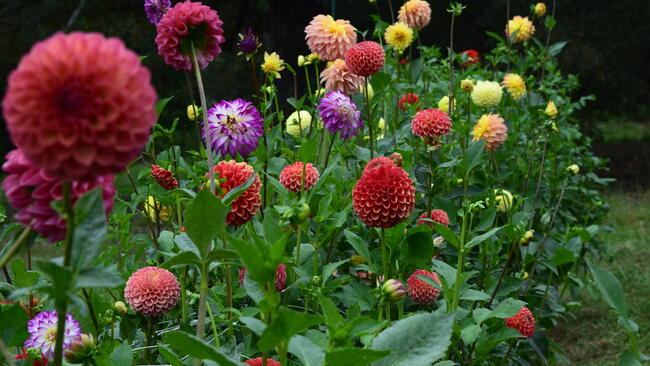
- Ball and pompon—Round, tightly packed blooms that are excellent for cutting.
- Decorative—Full, layered flowers in sizes ranging from small to enormous.
- Cactus and semi-cactus—Dramatic blooms with narrow, pointed petals.
- Anemone and collarette—Open-centered flowers that are especially attractive to pollinators.
For help choosing by flower form, size, and garden use, see my article on Choosing Dahlias for Your Garden: A Flower Farmer’s Advice.

More Like This


Hi Molly, it sounds to us like it's time to get some new plants; dahlias sprout after 2 to 4 weeks and it's been two months since Easter. Best of luck, —The Editors
Hi Barbara,
You could try soap or Neem oil at this stage; here is Almanac.com's complete guide to dealing with scale.
—The Editors
Hi Eva,
There could be a few reasons why your dahlia buds are not opening. The first thing would be to examine your watering practices. Waterlogged roots from excessive water can affect the buds' ability to open. Also, if your dahlia was planted in poorly draining potting mix or a container that holds water it can lead to too much water that will hinder your buds from turning into flowers. A lack of water can also be an issue, as container planted dahlias need consistent watering because the potting mix dries out a lot faster than those planted in the ground.
If your watering schedule is consistent, it could be an underlying pest issue. If the stems and leaves appear normal but buds are not opening, check them for small holes to determine if thrips or earwigs have punctured or chewed them. Buds that have been repeatedly affected by these pests might not open properly.
Another issue could be excess fertilization in the form of too much nitrogen. If the plant is overfertilized, it will grow luscious foliage at the expense of flowers.
Hope this helps!
Hi, Subia. We are sorry to hear about your dahlias. They can be fickle plants in hot climates, as they prefer warm days and cooler nights. Here are a few things to try to revive your plants: Add organic matter to your containers. Keep watering (do not soak), and try adding some mulch on top to cool them down. Also, if your dahlias are in full sun, move them so that they get some shade. If all else fails, we highly recommend looking into getting a heat-tolerant variety. They may perform better in your climate.
Hi Dollie,
Dahlias certainly are beautiful. You definitely want to wait until it has finished blooming, but it is best to wait until the first frost has hit or the leaves have turned brown. At that point, you could transplant your tuber to a new container with fresh potting mix and store indoors in a cool, dark room for the winter. But it would probably make more sense to simply remove the tuber from the current container and store it as outlined above for the winter before then putting the tuber in a new container in the spring. That way you don't have to lug the new, larger container (which will be heavier) in this fall and out again next spring.
Good luck!
- « Previous
- 1
- 2
- …
- 10
- Next »

Comments