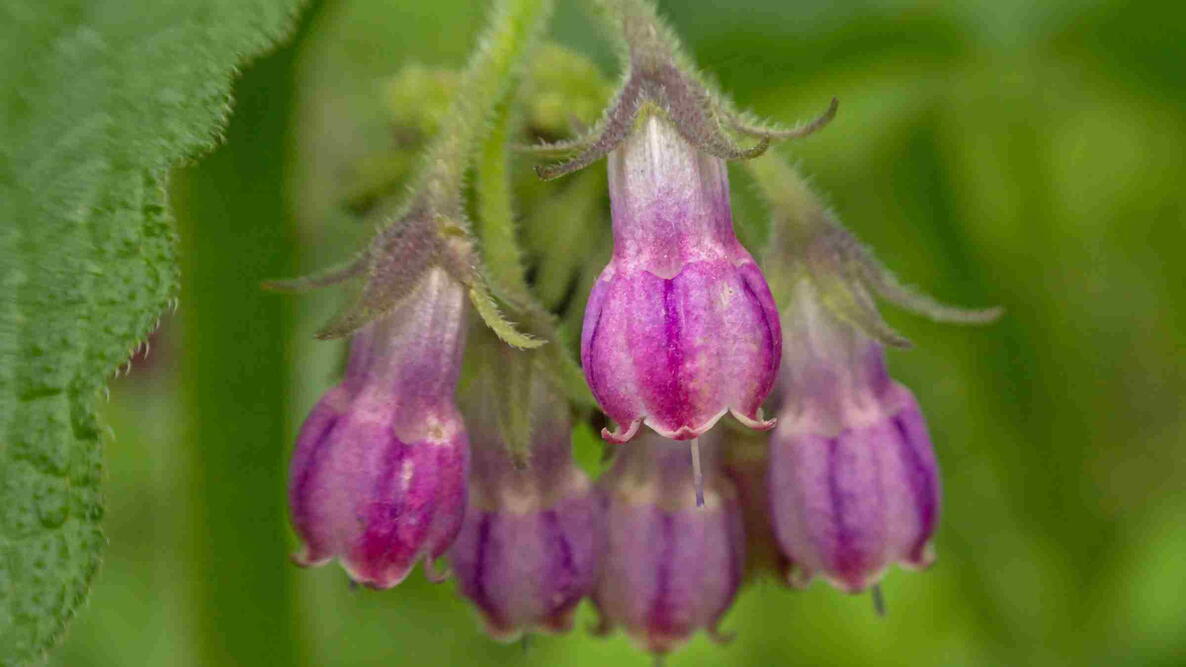
Caption
Comfrey (Symphytum officinale) produces clusters of purple, bell-shaped flowers that attract bees and other pollinators.

Comfrey may not look like a miracle plant, but it may just heal your garden! Not only does this unassuming perennial appeal to pollinators, but its leaves make a fantastic organic fertilizer and compost additive. Further, it was traditionally used as a medicinal plant. If you’re looking for an overachieving perennial that’s attractive and useful, here’s why comfrey is an excellent choice and growing tips to keep it comfy in your garden.
There are around 40 to 60 species of comfrey, which are mostly native to Europe and Asia. These plants all belong to the borage family and are closely related to borage, oyster plants, and forget-me-nots. However, common comfrey (Symphytum officinale) is the most well-known type and grows up to 3 feet tall. It is easily recognized by its large, slightly hairy leaves and clusters of bell-shaped flowers that are highly appealing to bees, butterflies, and other beneficial insects.

For centuries, comfrey was widely grown as a medicinal plant to treat wounds, broken bones, and a range of other ailments. But today, comfrey is mostly cultivated as an ornamental, and it’s a fine choice for cottage gardens, pollinator habitats, medicinal herb beds, and more. I personally love growing comfrey with plants like coneflowers, phlox, and black-eyed Susan that also appreciate full sun and moist soil. Just keep in mind that comfrey is an aggressive and potentially invasive plant and is not recommended for every garden.
Aside from its beauty, comfrey also has several practical uses and can improve garden soil over time. Packed with nutrients like potassium, magnesium, phosphorus, and nitrogen, comfrey leaves can be dug directly into garden beds to feed plants like tomatoes. They can also be chopped and added to compost piles as a compost accelerator. You can even steep comfrey leaves in water for about six weeks to create an all-natural liquid fertilizer for indoor and outdoor plants!
Growing

Comfrey can grow aggressively, so I like to plant it in raised beds to control the spread of its roots. Combining this with deadheading the flowers before they drop seed should manage comfrey’s spread; however, it’s best to avoid growing comfrey near plants that it can easily overwhelm or crowd out. Eradicating unwanted comfrey is difficult, as these plants can regrow from a small section of root left in the soil.
Once established, comfrey has a long bloom time with flowers lasting from May to September. I find this plant looks particularly appealing when grown in groups near the rear of my flower beds or in wide spaces where these vigorous growers can spread out. Comfrey’s large roots make it hard to keep in containers, but these plants can be maintained in 5-gallon pots if needed.
Types

If you find a plant labeled as simply “Comfrey” at a plant nursery, there’s a good chance it’s common comfrey. But as you can see, there are lots of other fantastic comfrey varieties to try.
- Common Comfrey (Symphytum officinale): The most popular type of comfrey, common comfrey grows up to 3 feet tall and produces pinkish-purple flowers from spring to early fall.
- Wild Comfrey (Cynoglossum virginianum): A rare comfrey that’s native to central North America, this plant produces pale blue flowers.
- Caucasian Comfrey (Symphytum caucasicum): Also known as blue comfrey, this stunner produces color-changing flowers that shift from pink to blue as they age.
- ‘Bocking 14’: This sterile comfrey cultivar doesn’t self-seed and is a good choice if you’re concerned about comfrey’s invasive tendencies. These plants can still spread by their roots, though!
You can prompt these plants to flower more prolifically by trimming the plant’s stem to 6 inches above the soil line during the plant’s first year. Pruning after this point is optional and only necessary to control the size and spread of comfrey plants.
If you don’t want comfrey to grow aggressively, deadhead the flowers when they fade. Comfrey leaves can be harvested with pruners or scissors several times throughout the growing season if you want to use comfrey for compost or fertilizer. That said, you may want to wear gloves when harvesting comfrey, as the leaves can be a skin irritant for sensitive individuals.
Propagation
Comfrey is a prolific self-sower and will naturally spread by its roots and seeds when left to its own devices. You can also divide comfrey using the following steps to create more plants for your garden.
- Dig up a section of comfrey plants in March to April just as the plant’s shoots are emerging from their winter snooze.
- Use a knife or a garden spade to cut the plant’s crown into divisions, each with healthy stems and roots.
- Plant the divisions 3 inches deep as soon as you can and water regularly until your new comfrey plants start growing!

More Like This


Comments