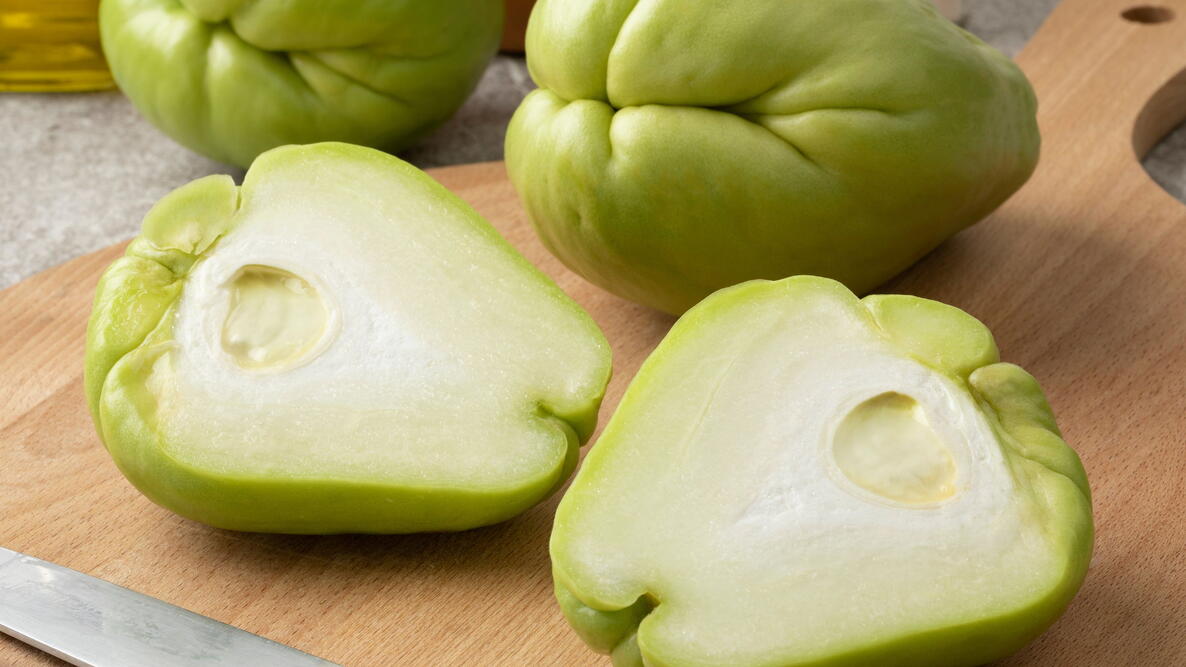

Mirlitons, also known as chayote, chou chou, or christophene, are one of the South’s most beloved—and surprisingly easy—vegetables to grow and cook. With their mild flavor and tender texture, mirlitons are perfect for a variety of recipes, from savory stuffed dishes to baked breads and puddings. In this guide, we’ll explore everything from what mirlitons are to tips for cooking, serving, and even a classic stuffed mirliton recipe to try at home.

What Is a Mirliton?
No matter what you call it—mirliton, chou chou, xuxu, christophene, and most commonly known as a chayote—the crop remains the same. This pear-shaped vegetable is one of the most versatile vegetables used in recipes. The mild-tasting, pale green squash—grown in tropical areas all over the world—is extremely easy to manage and grow, and the perfect addition to pies, breads, or puddings.
“People had said that mirlitons were the lazy man’s vegetable. They take care of themselves. You plant them, they grow, and you stand underneath until one falls on your head. You don’t have to weed or spray it, and you don’t even have to pick it.” – Lance Hill
Classic Southern Recipe: Stuffed Mirlitons
If you are in the south, a New Orleans favorite is to serve them stuffed—check out our recipe adapted from “The Plantation Cookbook” for our Garden Guide below!
Ingredients
- 5 medium merlitons
- ½ cup butter (1 stick), ham fat, bacon grease, or oil, divided
- 1/3 cup minced onions
- 2/3 cup chopped scallions
- 3 cloves garlic, minced
- ¼ cup chopped flat-leaf parsley
- ½ cup chopped ham
- ½ cup peeled, deveined, and chopped raw shrimp
- ¾ cup bread crumbs, plus more for sprinkling
- ¾ teaspoon salt
- ½ teaspoon freshly ground black pepper
- 1 pinch hot red pepper flakes or 2 dashes hot sauce
- 1 egg, beaten
Instructions
- Put the mirlitons into a large saucepan, cover with water, and boil for 30 to 45 minutes, or until tender. Drain, set aside to cool, and then cut each in half lengthwise. Discard the seed and large center strings. Scoop out the large center pulp into a bowl, leaving a ¼ inch shell. Turn the shells upside down to drain.
- Preheat the oven to 375°F. In a large skillet, melt ¼ cup of butter, add onions, scallions, garlic, and parsley and sauté for 5 minutes, or until the onions are translucent. Add ham and shrimp and cook, stirring, for 3 minutes. Add mirliton pulp, bread crumbs, salt, black pepper, and hot red pepper flakes and cook, stirring, for 10 minutes. Add remaining butter, in whole or in part, if the mixture looks dry. Remove skillet from heat and stir thoroughly. Add egg, return skillet to heat, and cook for 1 minute.
- Arrange mirliton shells in a baking dish and fill each with mixture. Sprinkle with bread crumbs. Bake for 10 to 15 minutes, or until the bread crumbs have just browned. Serve immediately. Stuffed mirlitons may be prepared ahead of time and reheated.
Makes 10 servings.
Tips for Cooking and Serving Mirlitons
Mirlitons (chayote) are incredibly versatile and easy to prepare, but a few tips can help you get the most flavor and texture from this mild squash. First, always peel and remove the large seed before cooking; the flesh cooks faster and has a smoother texture without the tough center. Mirlitons can be boiled, steamed, baked, or sautéed—boiling is great for stuffing, while sautéing or roasting brings out a slightly nutty flavor.
For stuffing, scoop out the flesh gently, keeping a thin shell to hold the filling. Pair mirlitons with complementary ingredients like shrimp, ham, cheese, or bread crumbs, and season with garlic, onions, herbs, and a pinch of spice for extra depth. Serve stuffed mirlitons as a side dish, a holiday centerpiece, or even as a light main course with a fresh salad. Leftovers can be reheated gently in the oven or microwave, making them a convenient option for entertaining or meal prep.
Frequently Asked Questions
How do you prepare mirlitons for cooking?
Wash the mirliton thoroughly, then boil, steam, or bake it until tender. For stuffed recipes, cut it in half, remove the seed and strings, and scoop out the pulp for filling.
Can I eat the skin of a mirliton?
Yes, the skin is edible, though some people prefer to peel it for certain recipes, especially if the squash is older and the skin is tougher.
How do mirlitons taste?
Mirlitons have a mild, slightly sweet, and crisp flavor, often compared to a zucchini or cucumber. They take on the flavors of the ingredients they are cooked with, making them perfect for stuffing or seasoning.
Are mirlitons healthy?
Yes! They are low in calories, high in fiber, and contain vitamins C and B6, potassium, and antioxidants.
How do I store mirlitons?
Store mirlitons in a cool, dry place or in the refrigerator for up to 4 weeks. Avoid storing them near ethylene-producing fruits like apples or bananas, which can cause them to spoil faster.
Can I grow my own mirlitons?
Absolutely! Mirlitons are easy to grow in warm climates and require little maintenance. Plant them in well-draining soil with full sun, and they’ll produce squash that’s ready to harvest in about 4 to 5 months.


Comments