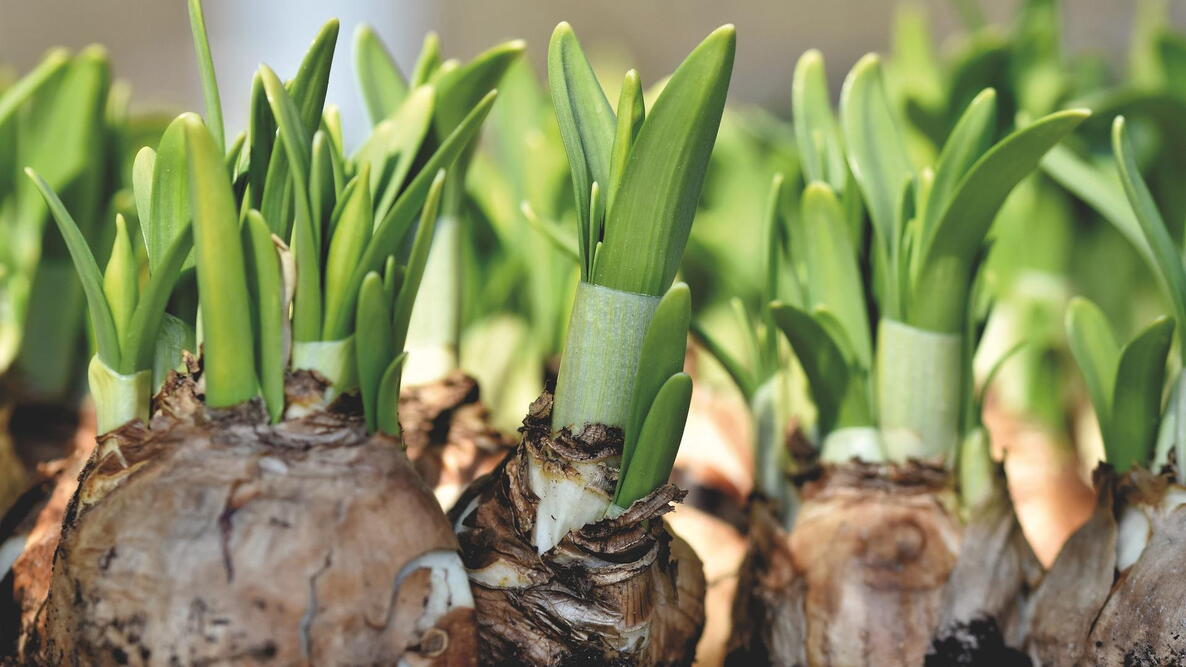

September may feel like the garden’s “last call,” but don’t put away your tools just yet! As plants wind down photosynthesis and nights grow cooler, it’s the perfect time to plant spring-flowering bulbs, settle in new trees and shrubs, and move your houseplants inside before the first frost. A little work this month means a brighter, healthier garden come spring!
Order Spring-Flowering Bulbs
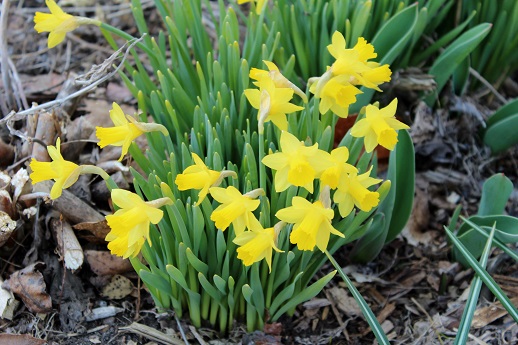
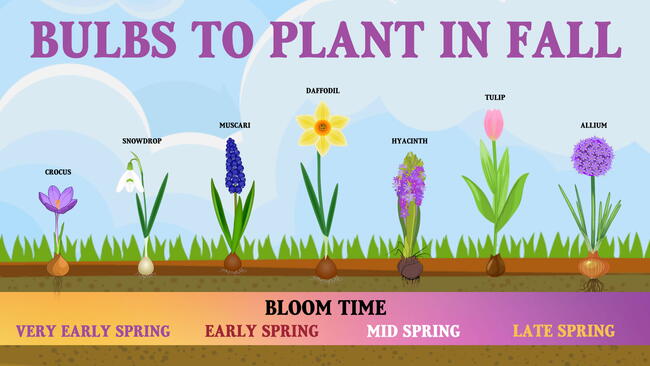
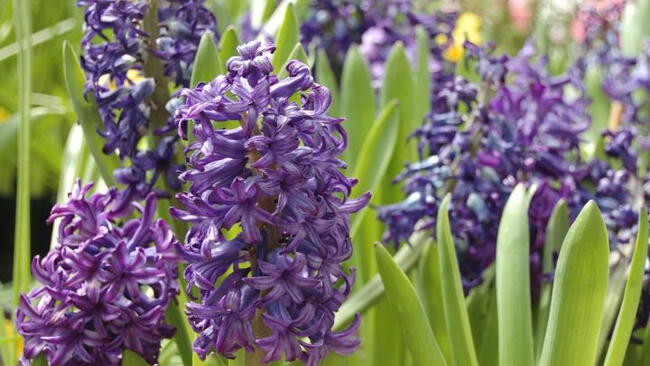
Buy or order bulbs now for the best selection. You can plant daffodils, hyacinths, lilies, and tulips up until the ground freezes solid in late fall. Here’s a list of spring-blooming bulbs to plant in the fall.
If you can dig a 6-inch-deep hole, you can plant bulbs! Last year, I found tulip bulbs I forgot to plant and was able to get them in the ground even after Christmas, despite a foot of snow. They bloomed this spring.
Speaking of bulbs, don’t forget about garlic! Fall is the time to plant those garlic cloves. Read all about planting garlic here.
Select Your Trees and Shrubs
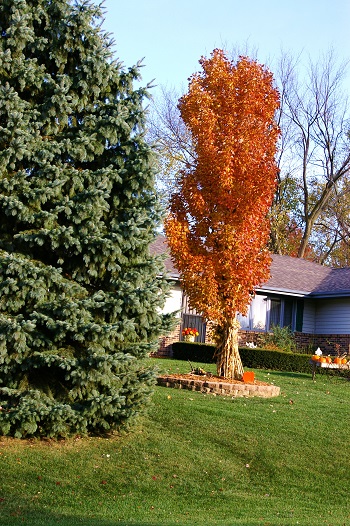
Are you thinking about planting shrubs or trees? In Illinois, fall planting typically occurs from September to mid-October. Wherever you live, wait until the temperatures are moderate to cool, as this is easier for the plants and reduces the risk of stress on the trees from extreme heat. When the air temperature is cooler than that of the soil, new root growth is encouraged without new top growth. The result is a stronger, better-developed root system for the next spring when the plant begins to grow. Mulching with wood chips helps to retain the soil’s required moisture.
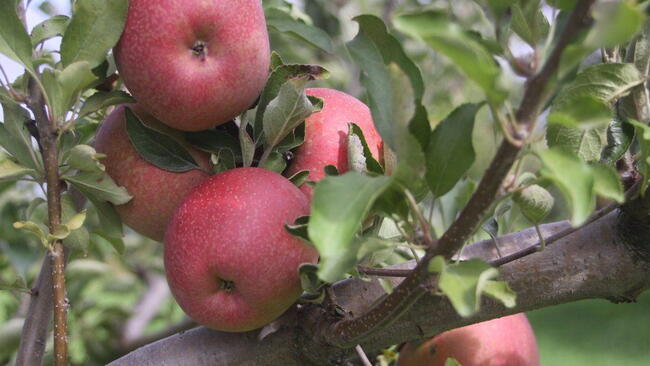
Trees that can be successfully planted in the fall include alder, ash, buckeye, catalpa, crabapple, hackberry, hawthorn, honey locust, elm, Kentucky coffee tree, linden, maple, sycamore, pine, and spruce. Most deciduous shrubs can easily be planted in the fall too. Here’s a list of six of our favorite shrubs that offer brilliant fall color!
Slow-to-establish species are best planted in spring, however. These include American hornbeam, bald cypress, ginkgo, hemlock, larch, magnolia, sweetgum, tuliptree, and willow. Also, broad-leaved evergreens such as rhododendrons and narrow-leaved evergreens such as yews prefer spring planting. In general, plants with shallow, fibrous root systems can be planted more easily in the fall than those with fewer, larger roots.
Here are a few tree-planting factors to consider:
- Identify the right tree: Do you want shade, quick growth, color, screening, or fragrance? Determine what type of soil you have. Wet or dry areas are better for different species.
- Find the right place for the tree: Look at how much sunlight the site receives. Most trees like full sunlight, but many need shade. Make sure the tree is away from aboveground hazards like electrical wires and underground hazards like sewer pipes. Check that it is far enough away from permanent structures (sheds, fences, etc.). Make sure the tree will have plenty of space to grow 10, 20, or even 30 years from now.
- Proper planting methods: Dig a hole four to five times the width of the root ball. Plant the tree trunk so that it is 1/2 inch higher than the ground around it to prevent water from collecting next to the base of the trunk, which causes rot. Water is important, though. Newly planted trees need to be watered 20 to 30 minutes a day (unless it rains) until the ground freezes. This helps the tree establish a root system in a short time. After planting, mulch with 1 to 3 inches of shredded hardwood or leaves. Keep mulch an inch or two away from the tree trunk to avoid rot.
Be Houseplant-Savvy
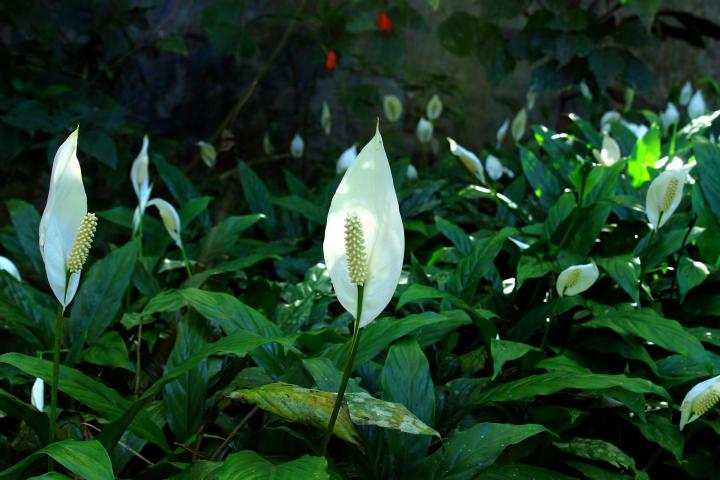
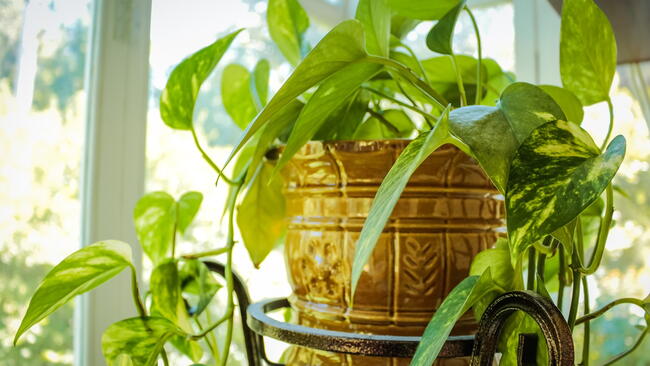
As cooler nights approach, remember that houseplants need to be moved inside. A general rule is to move them in when nighttime temperatures shift below 55°F. Only the healthiest plants will survive inside, so inspect your pots carefully. Also, make sure you clean the pots and check for insect pests. One trick is to soak the pot in a tub of lukewarm water for 15 minutes. If there are unwanted pests hiding in the soil, they will come to the surface. If you see an entire colony emerge, it’s time to repot! It’s also prudent to spray the foliage with insecticidal soap a few days before you bring the plant inside. You do not want spider mites or other pests in your home.
Remember that the winter home is often a shock:
- Heating makes our indoor air drier, warmer, and less humid. It’s often best to group plants together to increase relative humidity. When you bring plants inside, avoid drafty areas too.
- Plants that need full sun should be placed near south-facing windows. Plants that prefer partial sun should be placed in an east- or west-facing window.
- Keep in mind that some plants will lose leaves when first moved indoors due to stress; they will generally recover and replace their dropped leaves.
- Avoid overwatering once indoors; wait until the soil is dry to the touch.
National Indoor Plant Week is typically held during the third week of September, with good reason. Now is the time to look for houseplants at garden centers!
Of course, September is the time to start thinking about garden cleanup too, to prepare for a better start to spring. See these 10 fall cleanup tips.
Want more tips? Check our Monthly Gardening Tips by Region.
What are you doing in the garden this month?

More Like This


Comments