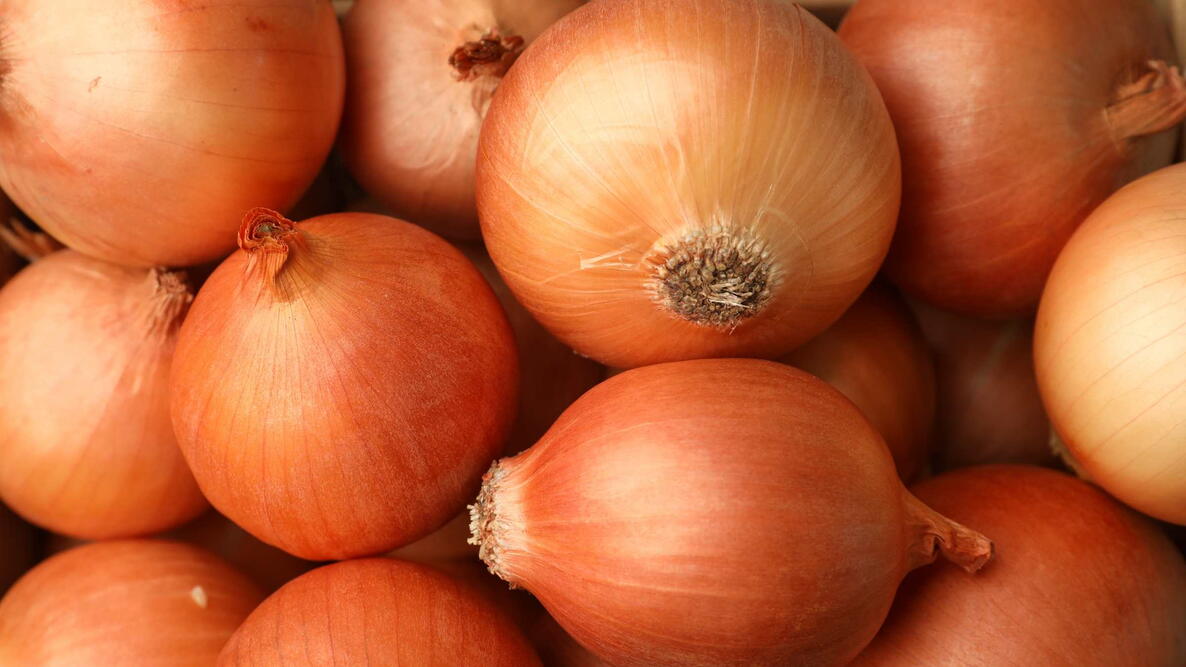

Planting
When to Plant Onions
- Onion sets (recommended): Plant sets directly in the ground in early spring as soon as the ground can be worked and the danger of hard freezes has passed. This is typically 2 to 4 weeks before your last spring frost date.
Seeds: Onion seeds can be started indoors 8 to 10 weeks before your last spring frost. However, some gardeners start them even earlier to get larger transplants. Either way, onion seedlings should be hardened off and transplanted outside in April in most areas, or 2 weeks before the last spring frost when the risk of extreme cold is over for the season.
If you want to plant a late crop of onions too, sow seeds outdoors 4 to 6 weeks before frost is expected in your area. Seeds should lie dormant during the cool season and sprout in spring.
Where to Plant
Onions need full sun and should not be planted in areas where they’ll be overshadowed by other veggies. The more energy onions can get from the sun, the larger their bulbs will grow! For best results, make sure the soil at your planting site is well-draining and loose with a slightly acidic to neutral pH, and blend some aged manure or compost into the ground before sowing onion seeds or sets.
How to Plant Onions
- Starting seeds (indoors): Fill a shallow tray to the top with seed starting mix, sow onion seeds 1/4 to 1/2-inch deep, lightly water, and then set the tray in a warm and brightly lit location. When the seedlings sprout, thin out the weakest seedlings using fingernail scissors, and harden off and transplant the remaining seedlings outdoors when the weather starts to warm.
- Starting seeds (outdoors): Prep your planting spot by removing weeds and blending compost or aged manure into the earth. Sow the seeds 1/4 to 1/2-inch deep in rows spaced 12 to 18-inches apart, and thin out the weakest seedlings when they’re a few inches tall so the remaining plants are spaced 3 to 4-inches from each other. Keep in mind that outdoor sowing can lead to patchy planting efforts, so you may want to overseed if you go this route.
- Planting onion sets (outdoors): Prep your soil as above, then plant onion sets — pointy ends up — 1 to 2-inches deep. Space the sets 3 to 4-inches apart in rows that are 12 to 18-inches from each other, and cover the space between planting rows with a layer of straw mulch to stifle weeds. Don’t cover onions as they grow with more soil as this can interfere with the bulbing process.
Harvesting
When to Harvest
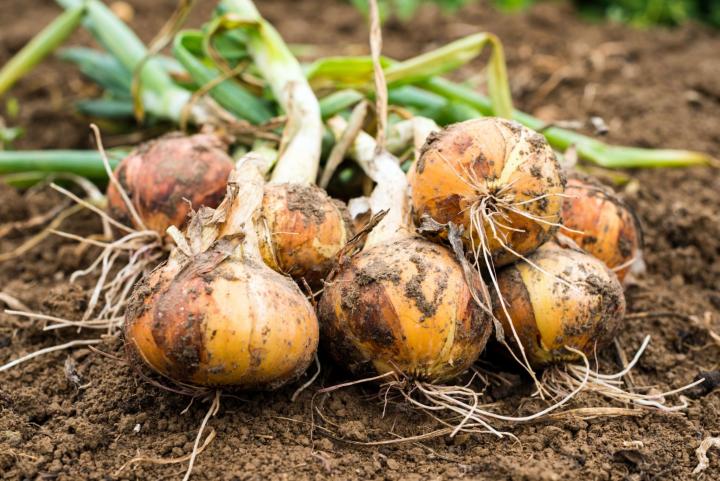
Spring-planted onions are usually ready for harvesting by mid- to late summer. You’ll know it’s time to pull in your crop when the onion tops begin to yellow and fall over. When this occurs, you can speed up the ripening and harvesting process by bending the remaining leaves down to the soil.
How to Harvest
Make sure to harvest onions in dry weather. Wet-harvested onions don’t cure well and are more likely to rot in storage!
To harvest, use a shovel or gardening fork to loosen the soil around onion bulbs and encourage drying. Just be careful that you don’t damage the bulbs while you work. Then, grasp the onion tops and pull them carefully from the ground to avoid bruising.
Tip: Any onions that send up flower stalks should be harvested ASAP. Flowering means the bulbs have stopped growing. These onions won’t store well and should be used right away.
Storage and Preservation
To keep onions fresh, cut the roots back and trim the tops to 1 or 2-inches in length. You can leave the tops in place if you’re planning to braid the onions later on.
This done, lay the trimmed onions on dry ground for a few days to cure if the weather permits. Or place them in a protected and well-ventilated spot that’s shielded from the rain — such as a garage or covered porch.
Once cured, hang onions in a mesh bag or nylon stocking, spread them up to two layers deep in a box, or braid and hang them in a cool, dry, well-ventilated area. A root cellar where temperatures stay between 40 to 60°F is ideal. Although many of us do it, onions don’t keep well in refrigerators as they often run too damp!
To make onions taste milder, soak them in milk or pour boiling water over the slices and let them stand for 20 minutes. Then, rinse with cold water.
Check out this video to learn how to harvest and store onions.
Types
Onions are divided into “short day,” “long day,” and “day-neutral” categories, and it’s important to select the right onion variety for your specific growing location. Local seed companies and plant nurseries usually offer onion varieties that are well-suited to local areas, but you may also want to look into these popular picks!
Long-day varieties:
- ‘Yellow Sweet Spanish’: A long-day variety, these onions are prized for their large and rounded, yellowish-white bulbs.
- ‘Ailsa Craig’: An heirloom plant with pale yellow skin and mild, sweet bulbs, ‘Alisa Craig’ onions are named after a Scottish island and grow up to 8-inches in diameter.
Short-day varieties:
- ‘Stuttgarter’: Typically sold in sets, this early maturing variety produces yellow bulbs with a slightly flattened shape.
- ‘Red Burgundy’: A good slicing onion, this variety has a mildly-favored, sweet white interior, but its shelf-life is relatively short.
Day-neutral or intermediate varieties:
- ‘Candy’: Jumbo, golden bulbs with thick-flesh set ‘Candy’ onions apart from the rest. They also store well!
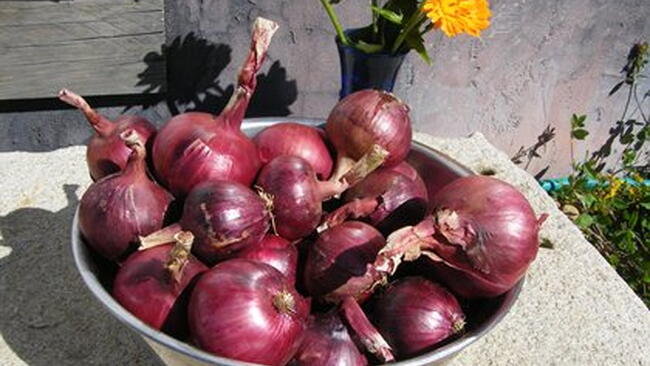
- ‘Purplette’: A mini onion variety, ‘Purplette’ bulbs max out at around 1-1/2-inches across and have glossy, burgundy red flesh when raw, which turns a pretty pastel pink when cooked or pickled.
More Like This

Hi Cathy,
Sorry to hear about the issues with your onions. First off, you should pull and discard any of the onions that are showing signs of rot or mushy layers. Make sure to throw them away and never put them in your compost. There are a few reasons why some of your onions could be turning to mush. One could be too much water this late in the growing season. If you did not amend your soil prior to planting, your soil may be too compact and leading to drainage issues as the growing season went along.
There are also a number of diseases that can affect onions during the growing season. If you planted onions in the same location last year, disease may have been able to overwinter in that area and is now affecting this year's crop. It would be best to practice crop rotation next year and plant your onions in a different garden bed.
If your soil is in good growing condition and not oversaturated disease should be suspected. If your onions seem mature at this point (or close to it) it would be best to harvest them a little early to avoid any possible diseases from spreading to onions that are salvageable. Follow the instructions above for harvesting and drying before storage.
Hope this helps!
Great tip! Thanks for sharing your personal recommendations, Kimberly!
- « Previous
- 1
- 2
- …
- 10
- Next »

Comments