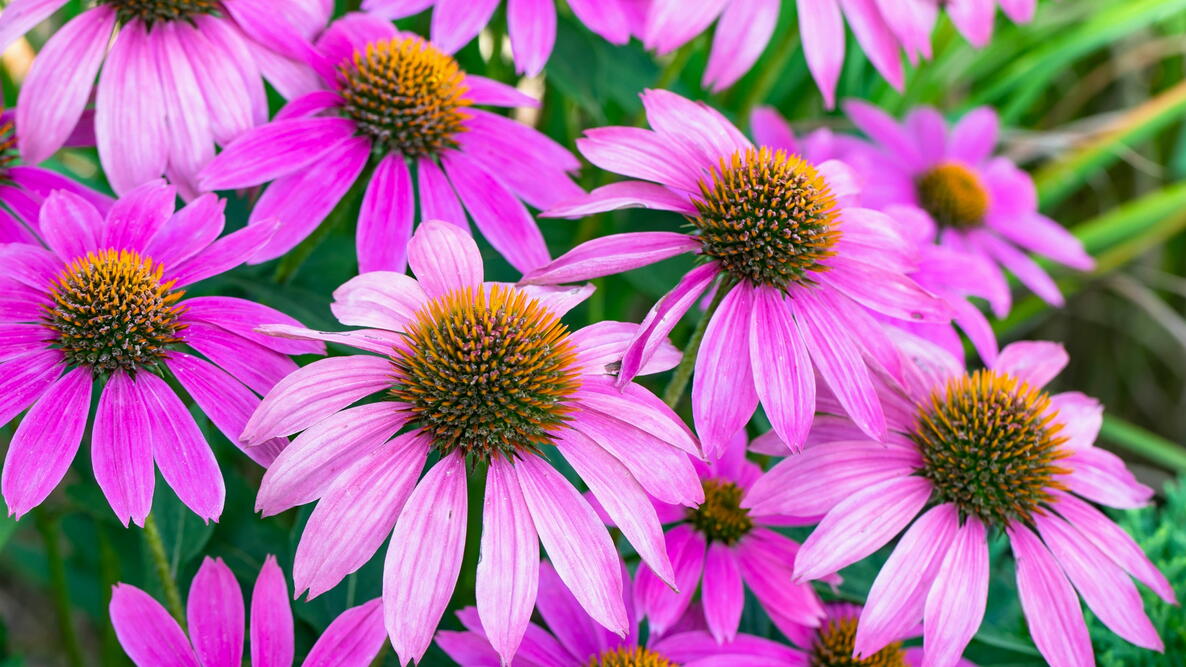

Looking for a flower that’s tough, pretty, and pollinator-friendly? Coneflowers (aka Echinacea) are native wildflowers that bring color, charm, and goldfinches to your garden, with barely any fuss. Let’s get growing! Learn more about growing coneflower and coneflower care—from planting to pests to deadheading.
Echinacea are tough perennials in the daisy family (Asteraceae) and hardy in Zones 3 to 9. They are native to the eastern and central United States, blooming in midsummer and continuing to flower sporadically until frost.
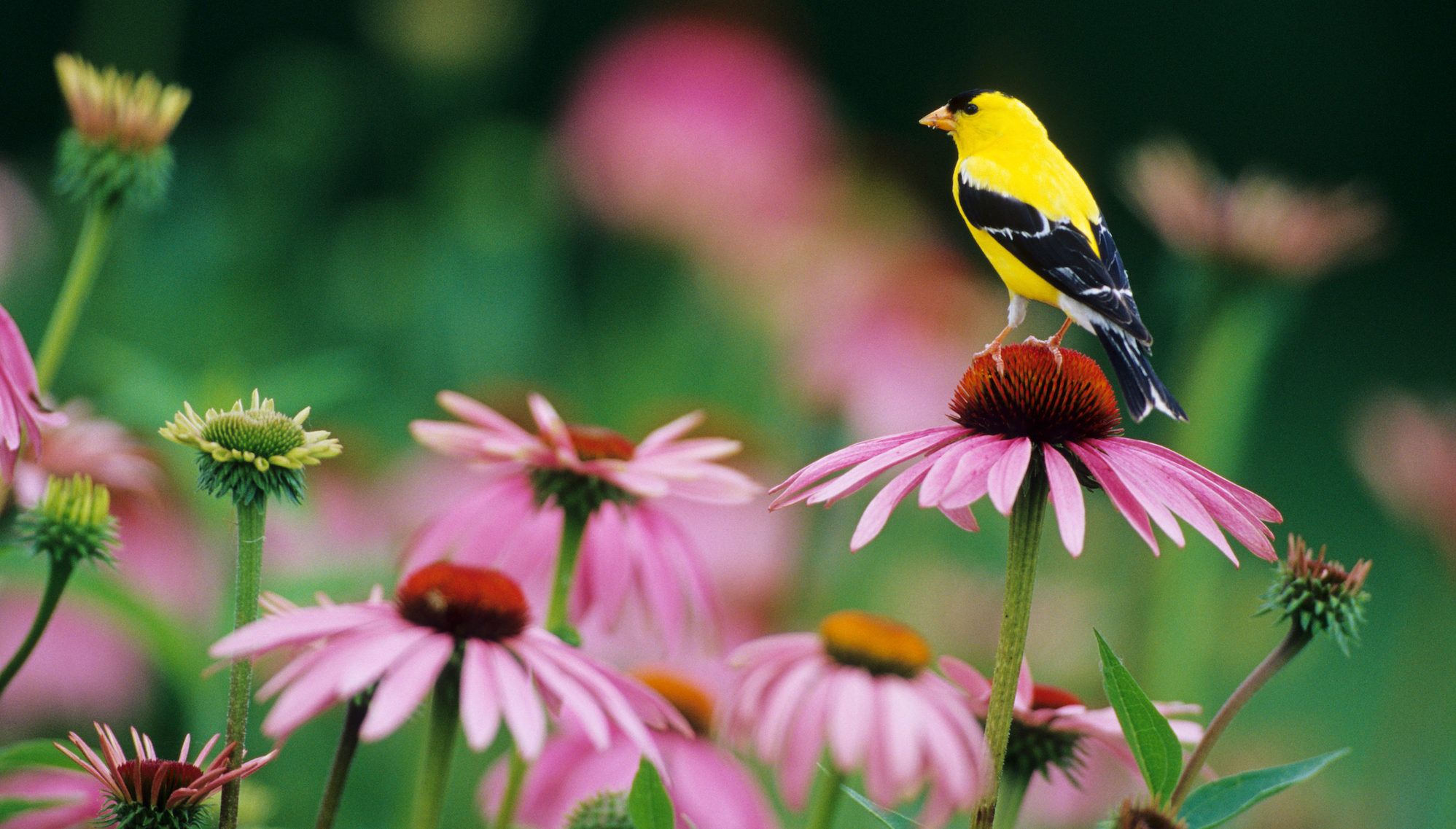
Of course, this plant is good for humans, too, with many medicinal properties; today, it’s especially popular as an herbal tea to strengthen the immune system.
Do Coneflowers Spread?
This is not an aggressive plant, but it will naturally self-seed and spread, which you can encourage if you wait to cut back until late winter (or prohibit self-seeding if you deadhead the flowers right after they fade). Hybrids will not self-sow; most are sterile (they do not produce viable seeds). Hybrids aren’t of much interest to birds, either.
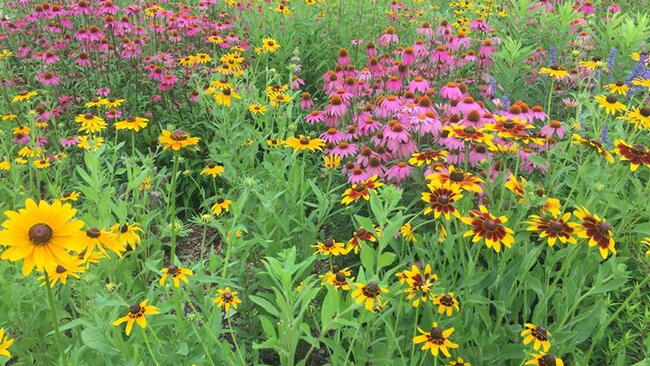
Coneflowers are striking when planted in masses, especially as a mix of various colors. They are trouble-free once established in a traditional garden or wildflower meadow. They are commonly seen in perennial flower gardens.
Growing
- Coneflowers are drought tolerant, but new plants need water occasionally—and more often if the spring season is especially dry.
- Native in-ground coneflowers seldom need fertilizer.
- To delay blooming for fall enjoyment (and compact growth), cut back stems 1 foot when plants come into bloom. For staggered bloom heights and times, cut only a few stems.
- Beneficial, wasplike soldier beetles may appear in August. They feed on insect eggs and larvae, and they pollinate plants. Do not harm them. Learn more about insects that help out around the garden.
- In late fall, lightly spread mulch in colder regions.
- Cut the stems back to soil level when they wither or after frost.
- Divide or transplant coneflowers in spring or fall.
Deadheading Coneflowers
Should you deadhead coneflowers? There are pros and cons. Deadheading right after a flower fades prolongs blooming and prevents reseeding. However, if you can wait until late winter, your birds—especially goldfinches—will enjoy those seedheads. Plus, coneflowers self-seed prolifically, so where you had only one, you’ll have multiple places in the garden with lovely blooms that attract butterflies and bees.
How to deadhead coneflowers? After the flowers fade, cut back stems to a leaf near a new flower bud or a set of leaves. Use sharp, sterilized shears, as coneflowers are too thick to snap back the spent flower head with your fingers.

Growing Coneflowers in Pots
We tend to grow coneflowers in the ground as perennial plants, but you can certainly grow them in pots if the containers are deep enough for the plant’s taproot.
- Use 2- or 3-gallon (or larger) pots with drainage holes. Spread crushed gravel in the bottom of the pots for drainage.
- Fill the pot halfway with the potting mix. Tamp down. Plant the root ball an inch below the rim of the container, spreading out the roots. Add soil slowly until it is even with the top of the root ball, tamping down lightly. Water deeply.
- Keep pots in partial shade for 2 to 3 days, then place in full morning sun and partial afternoon shade.
- Always water deeply at the soil level, and when the soil is dry to the touch. Water on leaves can cause fungal disease.
- Fertilize every couple of weeks with a water-soluble 10-10-10 product.
- Deadhead just below the base of the flower for continued bloom.
- To overwinter, prune plants to soil level when plant growth slows in fall.
- Move to a cool (40º to 50ºF) area, with low to moderate indirect light.
- Check the soil every couple of weeks and water lightly when the top 3 inches are dry.
- When new growth appears in spring, move to a brighter, warmer (60º to 70ºF) area. Moving the plant helps to prepare it for living outdoors in the spring and summer.
- Do not water leaves from above, as this can encourage fungal disease on leaves. Instead, water at the soil level. Use an insecticidal soap or neem oil solution spray if you see any aphids or pests.
- Every 3 to 4 years, in spring, after new growth has started, divide and repot echinacea plants.
Types
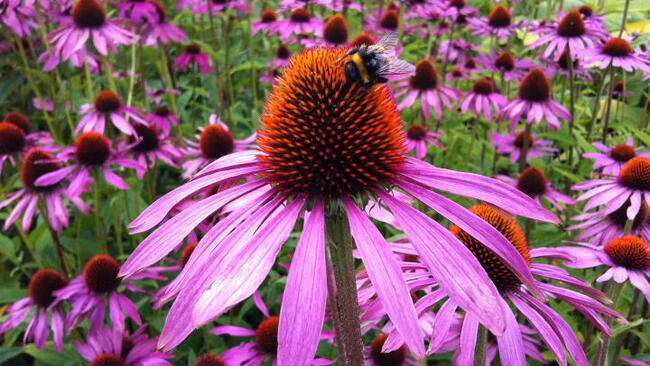
The purple coneflower (Echinacea purpurea) is the most common and readily available. The flowers measure 2 to 4 inches in diameter and have a mounded, brown, central cone of disk flowers surrounded by long, light purple rays that droop down the center cone. Up to nine naturally occurring echinacea can also be found in purple shades or yellow (E. paradoxa). They have dark green lower leaves 4 to 8 inches long.
Read about our favorite coneflower varieties here!





Typically, you can productively plant coneflowers in the fall. The key is to allow at least six weeks, more if possible, for the plant to establish its roots before the first frost.

It is fine to place a few spent flowers on the ground nearby if you are just passing through and find a few blossoms that need deadheading. If you have a lot of deadheading to do, however, one consideration is that in certain cases, the plant debris may harbor insects/diseases, or encourage them, so it might be best to dispose of the spent flowers elsewhere, such as in the compost pile (unless the flowers are obviously diseased), or, if you have access to a wilder area such as a woods or meadow, you can place the spent flowers there for wildlife to enjoy. Also, if you place on the ground cut flowers that have already formed seeds, you may find volunteer seedlings popping up the next growing season (although newer varieties may have sterile seeds). Hope this helps!
Thanks, it takes a village!
- « Previous
- 1
- 2
- …
- 10
- Next »

Comments