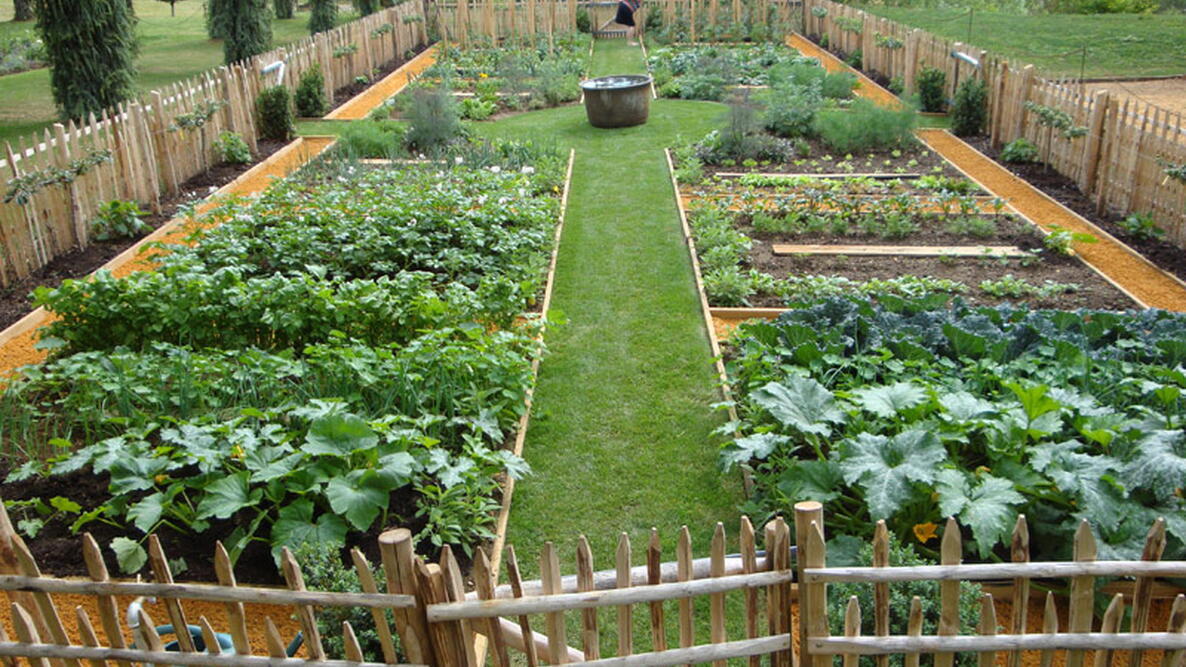
Learn how to garden like it’s 1776 with a traditional colonial kitchen garden. In the 13 American Colonies, these compact plots supplied households with herbs, vegetables, and flowers—and many of the same simple methods still work just as well today.
If you’re looking for a practical, space-saving way to grow more at home, this time-tested approach is a good place to start.
Gardening in 1776
As patriotic fever spiked in the spring of 1776, gardeners in the 13 American Colonies went about their traditional work: cultivating the soil, fertilizing, sowing seeds, and weeding.
Sound familiar?
Home gardeners today have gained a few advantages—perhaps the most important being the garden hose, which provides water at the flick of a faucet. Otherwise, hoes, spading forks, and other garden tools have changed very little, and we are as much at the mercy of the weather as ever.
Even modest homes—and larger, more established gardens—had a kitchen garden: a sunny plot not far from the kitchen door, holding the most frequently used herbs, vegetables, and flowers.

These kitchen gardens formed the heart of the colonial garden. They were usually planted, tended, and harvested by women, who were the cooks, pharmacists, herbalists, cleaners, and comforters of the household.
The Layout of a Colonial Kitchen Garden
In the New World, settlers re-created their gardens from home in a new way. Diaries, letters, early seed catalogs, and other 18th-century sources show that kitchen gardens followed a simple, practical plan.

A typical colonial kitchen garden included:
- Rectangular beds divided by paths of marl (a mix of clay and crushed limestone or shells) or pebbles
- Rail fences to protect crops from livestock
- A nearby well for easy access to water
- Separate plots outside the fence for fruit trees and berry bushes
It’s a compact, utilitarian plan—one that feels surprisingly modern today. Flowers, herbs, and vegetables were often mixed together to make the most of limited space.
Gardeners made efficient use of every inch within the kitchen garden:
- Spring peas were grown on simple stick fences or tripods tied at the top
- Pole beans used the same supports later in the season
- Onions and other shorter crops were typically interplanted
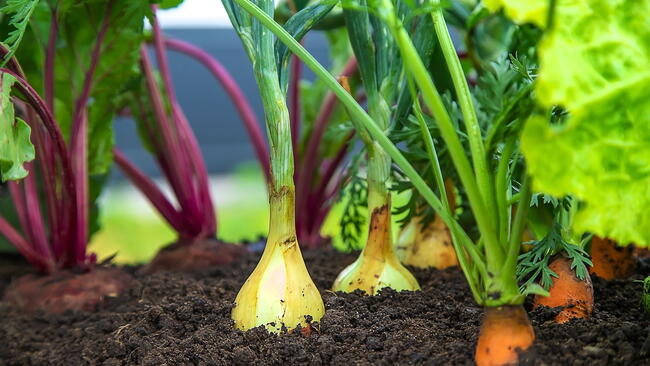
- Tiny-seeded plants like carrots and radishes were often mixed with a handful of sand and sown together in rows
The radishes emerged first and were pulled to be eaten, making space for the slower carrot roots to grow without much thinning.
Beyond the Kitchen Garden
The larger and more sprawling vegetables—including cucumbers, gourds, pumpkins, squashes, and turnips—grew under and alongside corn, barley, and other field crops outside the kitchen garden.
Certain essential but “vigorous” (invasive) plants like tansy—once strewn on floors to repel insects and neutralize odors—likely grew outside the kitchen garden, where they had more room to spread.
What Wasn’t in the Garden—Yet
In the 18th century, turnips were the major root crop for feeding both people and livestock. For most Americans, potatoes were still in the future, since they were not widely adopted until the 19th century.
Tomatoes, another nightshade, were viewed with some suspicion, even though they were called “love apples.”
Plants with Many Uses
A plant could have several uses. Common kitchen garden plants served both practical and medicinal purposes:
- Parsley was valued for its culinary use, as a traditional treatment for gout, rheumatism, and kidney stones, and as a breath freshener. Curly or “doubled” parsley was a curiosity; the flat-leaf Italian variety was the default in 1776.
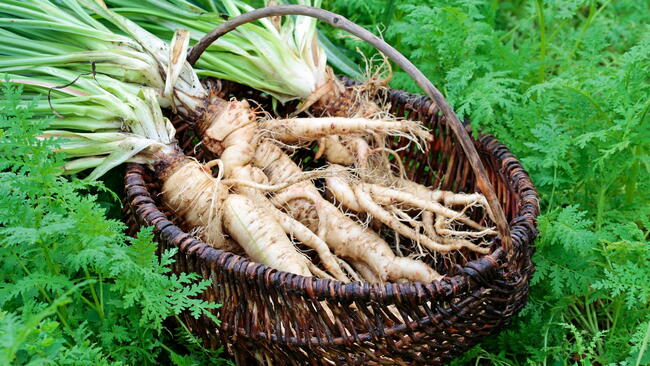
- Horseradish, a deep-rooted perennial, was commonly grown as a condiment and for medicinal purposes. It was dug each fall, with only one division replanted in the kitchen garden.
- Skirret (Sium sisarum) was described by herbalist John Gerard in The Herbal (1597) as “sweet, white, good to be eaten, and most pleasant in taste.” Like a short, skinny parsnip, it keeps well and is delicious roasted or cooked in stews. Once established, it can be propagated each spring by taking slips from the mother plant. Seeds—once common in 18th-century gardens—are now found in specialized catalogs in the United States and Canada.

What Grew in a Colonial Kitchen Garden
Lacking a convenient garden center, the 1776 gardener started nearly every annual plant from seed on a schedule determined by both Old World tradition and New World realities.
Here are some of the kitchen garden staples of 1776, in the words of garden historian Ann Leighton, “for use or for delight.”
Sallet
Sallet herbs were what we now call salad: anything green and edible—much appreciated after a long winter diet of root vegetables.
Favorite spring greens in 1776 included lettuces (planted every 2 weeks for a steady supply), pea shoots, and any other greens available, including beet tops, chard, chives, dandelions, mustard, spinach, various mints, and peppery “Indian cress,” known today as nasturtium.

Culinary Cornerstones
Peas were the first crop planted as soon as the ground could be worked, and all varieties needed support.
When the first crocuses bloomed, gardeners sowed cabbage seed thickly so that the early leaves (called coleworts) could be harvested for salad, making room for cabbage heads to form.
Beans—from French (actually a New World bean) and semi-bush snap beans to kidney beans and many varieties of pole and runner beans—were eaten fresh whenever possible or allowed to dry for winter use.
They were planted when the pea vines came down and the soil had warmed.
Roots Aplenty
Nearly everyone grew beets, carrots, horseradish, parsnips, and turnips and often interplanted them with radishes, described by Virginia colonist Richard Bradley in 1718 as “a Root which might be sown promiscuously among other Roots.”
It was widely believed that radishes had to be pulled by 10 a.m. and kept in a cool cellar until dinner.

Some turnips were sown in the kitchen garden for family use, while the rest were grown in the field for livestock.
The favored carrot of 1776, the ‘Horn’, was similar to today’s ‘Danvers Half Long’.
Parsnips (and skirrets!) were prized for their nutty sweetness and hardiness. All modern parsnips are scaled down from their sturdy colonial ancestors, which could reach nearly 3 feet in length.
An Allium a Day
Leeks and especially onions were considered essential for both culinary and medicinal use, and in the 18th century, they were generally raised from seed, not sets.

Garlic was rarely used in cooking but was grown for its medicinal properties; it was believed to cure everything from rabies to corns on the feet.
Garlic was (and is) planted in the fall, while perennial chives were among the first plants to emerge in spring.
Healing Herbs
garden herbs for their scent, flavor, and curative or preventive qualities.
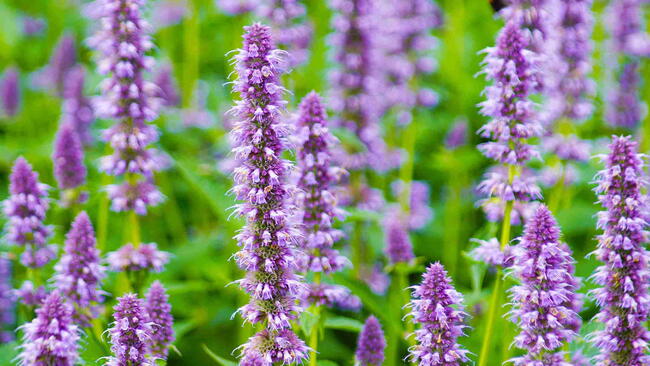
Other Old World and North American mainstays of 1776 included anise hyssop, chamomile, comfrey, lavender, lemon balm, lemon verbena, marjoram, the many mints, and native bee balm (also known as Oswego tea).


A New World Flowering
In addition to flowering herbs, kitchen gardeners tucked in spring bulbs, calendula (pot marigold), feverfew, clove pinks (gillyflowers), Sweet William, violets, primroses, and other beloved flowers for use and delight.

Roses—especially Damask and Apothecary’s rose—were grown for both beauty and medicinal value.
These plantings may have crowded the utilitarian bounds of the kitchen garden, but in a new country perched on the edge of a vast wilderness, they felt like a homecoming.
More Like This

Comments