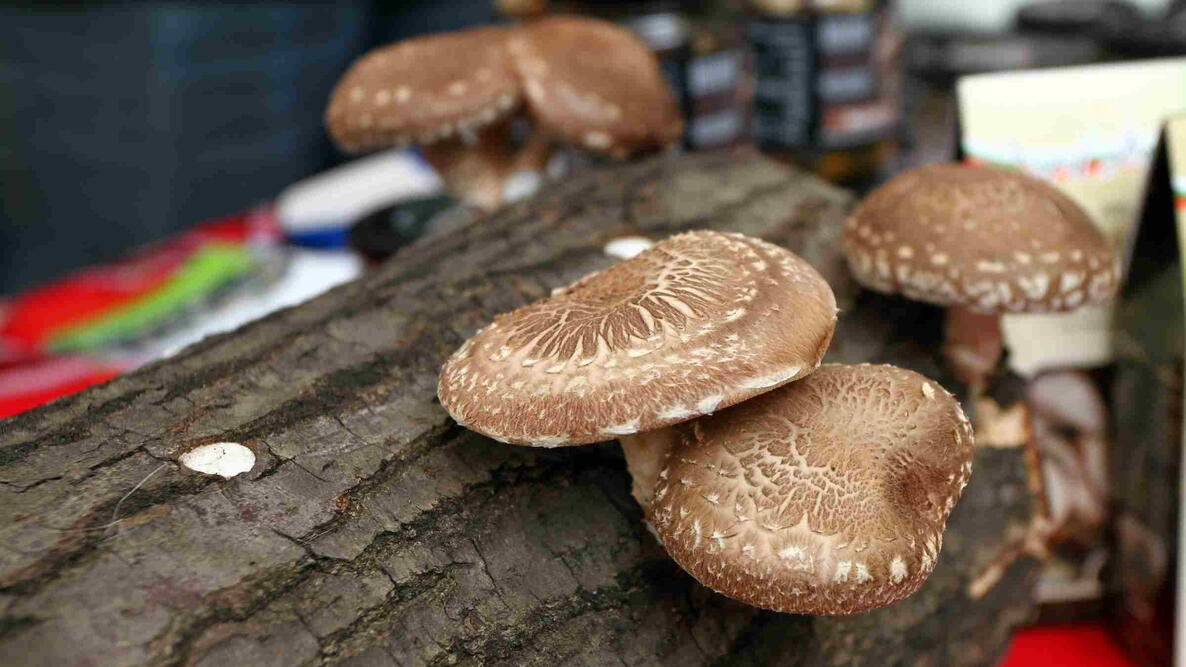
Caption
Shiitake mushrooms growing right from oak logs!

You don’t need mush‑room to grow mushrooms—especially when a simple log can do the work for you. While indoor kits are fun, growing mushrooms outdoors on logs or stumps is an easy, affordable way to produce them over a longer period. Over the years, I’ve grown a variety of culinary mushrooms this way, and in this beginner‑friendly guide, I’ll share my best tips and a step‑by‑step how‑to so that you can, too.
In recent years, the mushroom‑growing hobby has become increasingly popular, with many folks purchasing premade indoor kits for shiitake, oyster, and lion’s mane. But if you want a method that costs less per harvest or makes good use of a shady corner of your yard, growing mushrooms on logs or stumps is a simple, long‑lasting option worth trying.

Steps for Growing Mushrooms on Logs
Indoor mushroom-growing kits typically consist of sterilized bags of substrate pre-inoculated with mushroom spawn or mycelium. But if you want to grow mushrooms outdoors, you should be able to get all the items you need from seed catalogs and suppliers that specialize in all things mushrooms.
As with indoor growing, you can find premade kits for outdoor mushrooms that consist of small plugs that have been inoculated with mushroom spawn, plus sealing wax, and a wax applicator. But if you can’t find premade kits, just purchase the inoculated plugs; use soy, beeswax, cheese wax, or another food-safe wax and a small paintbrush to seal the plugs; and grab a small hammer and drill while you’re at it, too!
1. Selecting Mushroom Spawn
Online suppliers offer a variety of edible and medicinal mushroom spawn for outdoor growing. However, some types of mushrooms grow better on certain logs than others, so the type of mushroom that’s best suited for you will depend on the mushrooms you enjoy cooking with, as well as the tree species you have in your area.

Some popular types of mushrooms that you may want to try growing include:
- Oyster mushrooms. Arguably the easiest mushroom to grow at home, oyster mushrooms come in a variety of colors and have a sweet and slightly earthy flavor that pairs well with many veggies and meats. Not only do these mushrooms grow on most hardwoods, but their short incubation period means you may be able to harvest them during their first year of growth.
- Shiitake. Meaty and earthy shiitake mushrooms are a staple in Asian cooking, and they dehydrate well for long-term storage. Like oysters, shiitake mushrooms grow on most hardwoods and are beginner-friendly, but you’ll need to wait a year or two to harvest them.
- Lion’s mane. Lion’s mane have a uniquely shaggy look and a mild, crab-like flavor that makes them surprisingly good vegan substitutes for seafood of all sorts. These shrooms take 1 to 3 years to reach a harvestable size, and they grow proportionately to their logs, so a minimum 10-inch-diameter log is recommended!
- Maitake or hen of the woods. Named for their clustered caps that are said to look like a nesting hen, maitake mushrooms have a delightfully peppery and earthy flavor. Compared to other mushroom varieties, maitake are slightly more finicky about their care and only grow on oak logs in damp conditions.
- Reishi. Grown more for medicinal than edible use, dried reishi mushrooms are often dried and ground to make a homemade tea. You can expect reishi to fruit in their second year, but they require lots of humidity and only grow on oak and plum.
2. Choose and Harvest Logs
Many hardwood trees are good for mushroom growing, but some mushroom varieties grow on specific tree species, so it’s important to choose the right logs for your shrooms. Be sure to use only healthy, rot-free logs and tree stumps that were cut within the last 4 weeks and that still have their bark firmly attached. Older, rotted logs may harbor bacteria and other fungi that can affect mushroom growth and ruin your harvest.

Although logs can be harvested at any time of the year, I’ve had the best luck growing mushrooms on logs that were cut in cold weather. After all, dormant trees have a higher sugar content and thus more fuel for a larger crop of shrooms! Just avoid using logs from softwood and conifer trees, as these porous woods are more vulnerable to contamination, and conifer sap can inhibit mushroom growth.
As far as log size goes, log length and width can vary, but the logs should be small enough that you can still move them around when needed. Smaller logs colonize faster than large ones, but larger logs can be harvested longer and produce more shrooms overall. I usually cut my logs to about 3 to 4 feet long by 3 to 10 inches in diameter, but you can switch this up a bit to suit your space.
3. Drill the Holes
Once you’ve harvested your mushroom logs, the next step is to drill the holes for the mushroom plugs. If you purchased a premade kit, check the instructions for the recommended drill bit size. If no drill bit size is included, a 5/16” bit should work for most mushroom plugs.
For easier drilling, use masking tape to mark a 1-inch mark on your drill bit to keep track of how deep to drill, then drill a row of holes spaced 6 inches apart down the length of your log. Staggering the drill holes, drill a second row of holes 2½ inches below the first, and repeat this process until you’ve drilled all the way around the log in a diamond-like formation. A single 3-foot log should support about 30 to 50 mushroom plugs when drilled in this manner.

4. Add the Plugs
For convenience, I’ll usually drill my mushroom plug holes at once and then add the plugs all in one go. To do this, I position a plug over the drilled hole, lightly tap the plug into the hole with a hammer until the top of the plug is flush with or slightly below the log bark.

Then I work my way around the log, filling all the holes. It usually takes me about an hour to sink 100 plugs, but the work goes faster with a partner!
5. Seal with Wax
The biggest threat to mushroom growing is contamination, so it’s critical to seal the mushroom plugs with wax once you’ve installed them. Just slowly warm any food-safe wax in an old pot on your stove until it’s fully melted and dab a light layer of wax over each mushroom plug with a small paintbrush or wax applicator. When you’re done, each hole should be completely covered with wax, and the dowels shouldn’t wobble.
6. Tend the Shrooms
Most of your work is done once the plugs have been sealed in, but like plants in your garden, mushrooms still need tending to help them grow.
For starters, select a growing location that stays shady, damp, and humid and has good airflow—like on the side of your home or under a few trees. If possible, place the logs near an easy water source, as they will need watering!
Once you’ve found a good growing spot, position the logs one by one directly on the soil, or stack pairs of perpendicular logs on top of each other to form a small tower, and cover the logs with a cloth or tarp to lock in humidity. If the logs are in a sunny spot, you may want to cover them with shade cloth to prevent them from drying out.
During the growing season, water the logs 1 to 2 times a week for 10 minutes when the weather is dry, and shield them from direct sun. Remember, mushroom mycelium won’t survive if it dries out! If you live in a cold area where temperatures stay below freezing for long periods, move the logs into an unheated garage or shed during the winter and return them to the outdoors when the weather warms.

7. Harvest Mushrooms!
Many types of mushrooms take 1 to 2 years to start fruiting, but mushroom logs can remain productive for 6 to 7 years when they do.
You’ll know your mushroom logs have been successfully inoculated when you start to see white mycelium around the ends of the logs and the drilled holes. If you don’t see any signs of mushrooms or mycelium within 12 to 18 months, however, it may mean the mushrooms haven’t taken and you’ll need to start again with a fresh log.
Mushroom season can stretch from spring to fall, depending on the types of mushrooms you’re growing, and is usually triggered by damp weather. During this time, keep a watchful eye on your logs as mushrooms grow incredibly quickly. I’ll often harvest my logs every few days when they start producing, as overly mature mushrooms turn woody and tough fast!
I find that oyster mushrooms taste best when picked while their caps are still curled, not fully straight. Shiitakes get harvested when the caps are still closed and about 2 inches wide. To avoid breaks, I use a sharp knife to do my harvesting, gather the mushrooms in a basket or bowl, and use them within a week of harvest. If I can’t use my mushrooms in time, some varieties like shiitake dry beautifully too.


Tip: If your logs are slow to fruit, you can speed up fruiting by “shocking” the logs about 6 to 9 months after inoculation. To do this, strike the ends of the logs hard a few times with a hammer to simulate a tree falling, or soak the log in a stream or pool of cold water for 24 hours. This short period of stress tells mushrooms that their host tree has fallen and it’s time to start growing!
Mushroom & Log Species Compatibility Chart
Mushrooms can grow on a wide variety of tree species, including oak, poplar, willow, maple, beech, and birch. However, some types of mushrooms are pickier about their care and only grow on a single type of tree. Selecting the right log species for the mushrooms you want to grow is essential for a large harvest!
Shiitake | Most hardwood logs, but particularly oak, sugar maple, and red maple |
Lion’s Mane | Poplar, maple, beech, elm |
Oyster Mushrooms | Most hardwood logs, but particularly beech and white birch |
Maitake or Hen of the Woods | Oak |
Reishi | Oak and plum |
FAQ
What are the best mushroom spawns to use?
Shiitake and oyster mushrooms are some of the best mushroom spawns for home growing, as they’re easy to find and undemanding to keep.

When is the best time to inoculate mushroom logs?
The best time of the year to inoculate mushroom logs is after the last frost of spring; however, mushroom logs can be started at other times too.
Can I grow mushrooms on logs in my backyard?
Yes, you can grow mushrooms on logs in your yard just as long as a section of your yard provides the damp and shady conditions that mushrooms love!


More Like This

Comments