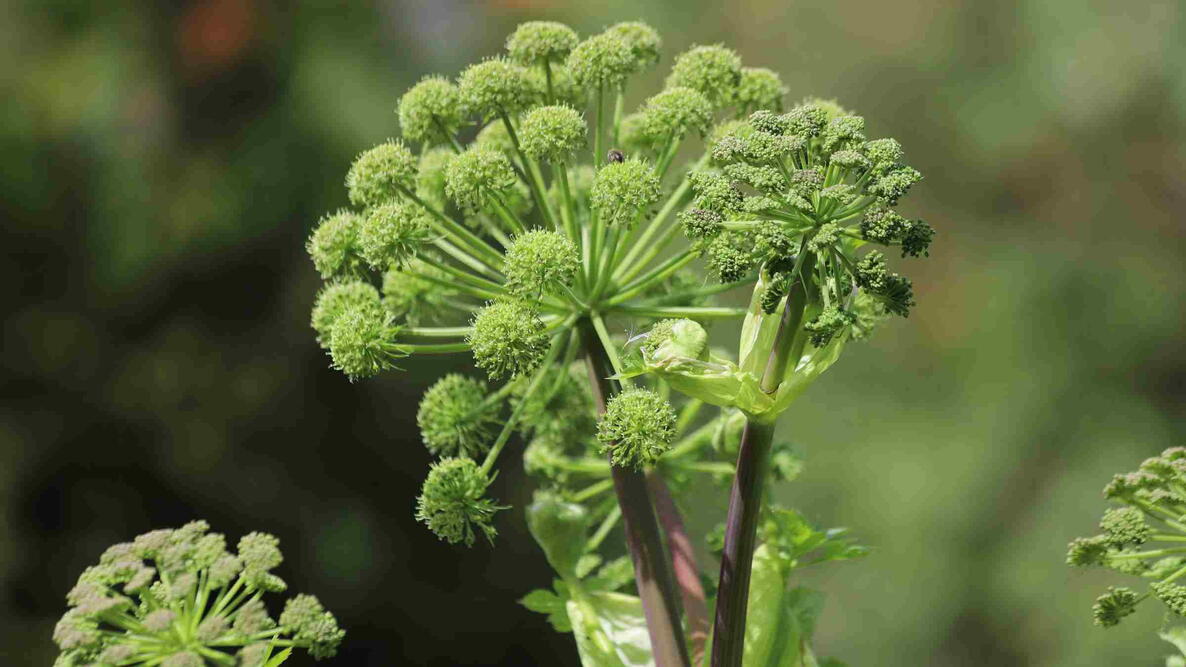
Caption
Angelica in full “heavenly” bloom, with its foamy flower heads rising above the garden.

Angelica may have a heavenly look with its foamy flowers and purplish stems, but you don’t need divine intervention to keep it happy in the garden! Not only is this down‑to‑earth, moisture‑loving herb popular with pollinators, but it’s also cold-hardy, deer- and rabbit-resistant, and perfectly suited to rain gardens and other damp spots.
Whether you want to grow angelica as an edible herb, a medicinal plant, a pollinator favorite, or purely for its ornamental drama, here are all the growing and design tips I’ve learned through years of keeping it in my garden—plus propagation tricks, fun lore, and more.

Depending on the species, angelica can be a biennial or a short‑lived perennial. Most have a tall, structural look, with greenish‑purple stems that reach 1 to 6 feet high and large, serrated, slightly feathery leaves.
Planting
Like closely related carrot plants, angelicas have a long tap root, which makes them hard to transplant and difficult to grow in pots. For this reason, angelica plants are usually grown from seed, and it’s best to directly sow those seeds where you want your plants to grow!
When to Plant Angelica
Most types of angelica are native to cold regions and germinate best if the seeds are exposed to a period of cold, moist weather before spring. You can accomplish this by directly sowing angelica seeds in your garden in the fall, or by cold-stratifying the seeds in your fridge for 4 to 6 weeks before planting them indoors in pots.
Where to Plant Angelica
In the wild, angelica grows in wet meadows, marshes, and other damp areas. In the garden, it thrives in rain gardens, poorly draining spots, and consistently moist soil. Tall species make excellent accent or backdrop plants in pollinator habitats and cottage gardens, while smaller types work well along borders.

How to Plant Angelica
- For fall planting: Prep your planting area by removing weeds and blending some compost into the soil before the ground freezes. Once the ground is frozen solid, evenly scatter angelica seeds over the soil and don’t cover them up as they need light to germinate. When spring returns, begin watering the angelica patch and thin out the seedlings when they’re a few inches tall, spacing the remaining plants about 1 foot apart.
- For spring planting: Cold-stratify angelica seeds in your fridge, then surface-sow pairs in pots filled with damp seed-starting mix. Water regularly, keep the seeds in bright light, thin out the weakest seedlings when true leaves form, and harden off and transplant the seedlings outdoors when soil temperatures are above 50°F and the seedlings are 4 inches tall or taller.
Growing
Tall angelica species can be grown toward the rear of garden beds to add height and interest to mixed plantings, while smaller varieties can be tucked in just about anywhere.

For healthy plants, make sure to space angelica at least 1 to 3 feet apart and thin out patches as your plants grow to ensure your plants continue to receive plenty of light and air.
Taller types of angelica may also need staking as they mature; however, you may be able to work around this by growing your plants near a garden wall or fence that provides shelter from strong winds.
Most types of angelica are biennials that only flower in their second year and then go to seed and die. These plants are excellent at self-sowing, though, and will usually produce lots of new baby plants when they go to seed as long as you don’t deadhead the old flowers.
Types
Angelica plants range in size, flower color, and bloom time, but some of the most popular varieties for gardens include:
- Garden angelica (Angelica archangelica): The most common type of angelica used in cooking and traditional medicine, garden angelica is native to Europe and grows to 3 to 6 feet tall.
- American angelica (A. atropurpurea): For a native option, look no further than American angelica. These plants are native to the Eastern and Central United States and produce greenish-white flowers atop towering purple stalks.

- Purple angelica (A. gigas): Also known as Korean angelica, this showy plant is native to Asia and produces striking purple flowers and stems that can reach up to 6 feet in height.

Propagation
Leaving angelica flowers in place in the fall should allow these plants to naturally self-sow without you needing to lift a finger. However, you can deliberately propagate angelica by collecting the seed by hand!
- Wait for angelica seeds to dry out and turn brown on the plant.
- Shake the seeds into a container to collect them, then plant the seeds in a prepared planting spot in late fall.
- If you’d like to overwinter the angelica seeds before planting, shake them off the dried flower head, allow the seeds to dry for a few days on a tray, and then store them in labeled and dated paper envelopes until spring.

More Like This

Comments