
–People have been abuzz about bees lately, and for good reason—our plants rely on pollinators to grow, bloom, and fruit! Bees are busy little pollinators, flitting from flower to flower, and if you want to keep them coming back to your garden, choosing the best flowers is key.
If you want to bee the hero for these amazing pollinators and improve the growth of your garden, growing plants that attract bees is one of the best ways to help. From colorful blooms to fragrant favorites, here is a list of 30 standout flowers that are especially effective at drawing bees and enriching your outdoor space.

Bees in the Garden
Not only are bees positively adorable and some of our most important pollinators, but bee populations have also been on the decline in recent years due to pesticides, habitat loss, and other factors. This has direct implications for gardeners everywhere, as many of our plants rely on pollinators to grow, bloom, and fruit!
Plants like squashes, cucumbers, and many fruit trees rely on insects to pollinate their flowers, and they just won’t fruit without them. But aside from these edible crops, many ornamental plants, shrubs, and trees also rely on pollinators to reproduce and to conserve the natural genetic diversity that helps plants adapt to a changing climate, pest invasions, and more. Most of the pollination is carried out by native pollinators—including beetles, butterflies, flies, and moths—but native bees are the unsung heroes. (Note: Honeybees are non-natives and not as important for widespread pollination.)
Today, it’s estimated that there are more honeybees than ever due to the increased interest in backyard beekeeping and the use of honeybees in large-scale agriculture. However, honeybees are not native to North America, and native North American bees are declining fast. This includes carpenter bees, bumblebees, and sweat bees, which are particularly efficient at pollinating plants. In fact, one study found that in a 10-hour day, a single bumblebee can pollinate upwards of 6,000 flowers—pretty impressive for a creature that’s just about the size of a dime!
Attracting bees to your garden with food and sheltering plants that bees love can make all the difference for these pollinators as they face increasing threats. Focusing your efforts on growing native plants specifically will often give you the biggest bang for your buck. But as you’ll see below, non-native plants can benefit bees, too.

Plants That Attract Bees
Ever dealt with the frustration of seeing blossoms fall off your vegetable plants because they have not been pollinated? Attract native bees!
Bees feed on the nectar and pollen of flowering plants, but solitary native bees also use the hollow stems of certain plants for winter shelter and as nesting sites for their young. Including a variety of plants that bloom at different times and that offer both sheltering and food options can make your garden that much more appealing to bees of all sorts. Some bees are specialists, like the squash bee that prefers only squash, pumpkin, and gourd blossoms. Even if you don’t have much space for a bee garden, adding just a few well-chosen plants to a window box or planter can create an important way station for hungry bees on the search for food!

Annual Flowers
Annual flowers grow for a single season and then die away when winter hits. These plants often produce the showiest flowers and are commonly kept in planters and pots, but they can also be interspersed throughout flower beds or used as companion plants in veggie gardens to attract bees and other pollinators.
Some of the annual plants on the list below can be grown as perennials in warm climates, but are usually kept as annuals in cold climates and replaced each year. Because they grow quickly, annuals are often easy to start from seed—which can be much more affordable than buying pre-started plants from the local nursery!
Plant Common Name: | Scientific Name: | Exposure: | Bloom Time/Season: | Color: | North American Native? | Zone: |
Cosmos | Cosmos bipinnatus | Full sun | Summer to fall | Pink, white, red, orange, yellow | Yes | 2–11 |
Zinnia | Zinnia elegans | Full sun | Spring to fall | Red, pink, orange, yellow, white, purple, green | No | 2–11 |
Sunflower | Helianthus annuus | Full sun | Summer to fall | Yellow, orange, burgundy, white | Yes | 3–11 |
Borage | Borago officinalis | Full sun | Summer to fall | Blue, purple | No | 3–10 |
Snapdragon | Antirrhinum majus | Full sun to partial sun | Spring to fall | Red, purple white, yellow, pink, orange | Yes | 2–11 |
Calendula | Calendula officinalis | Full sun to partial sun | Spring to fall | Orange, yellow, white | No | 2–11 |
Sweet Alyssum | Lobularia maritima | Full sun to partial sun | Spring to fall | White, purple, pink | No | 5–9 |
Bachelor Button | Centaurea cyanus | Full sun | Spring to summer | Blue, purple, pink, white | No | 2–11 |
Globe Amaranth | Gomphrena globosa | Full sun | Summer to fall | Purple, red, orange, white, pink | No | 2–11 |
Lantana | Lantana camara | Full sun | Spring to fall | Red, orange, yellow, pink, purple, white | No | 3–11 |

Perennial Flowers
Perennials offer the highest quality nectar and pollen but there are exceptions. Unlike annuals, perennial plants come back year after year, which can make them more affordable in the long run. When selecting perennials for your garden, look for plants native to your region and choose ones with a range of flower colors and bloom shapes. Plants with broad, open flowers serve as excellent “landing pads” for bees and other pollinators, but plants with cup-shaped or wide, tubular flowers can also be ideal for attracting native bees!
Plant Common Name: | Scientific Name: | Exposure: | Bloom Time/Season: | Color: | North American Native? | Zone: |
Bloodroot | Sanguinaria canadensis | Partial sun to full shade | Spring | White | Yes | 3–8 |
Goldenrod | Solidago spp. | Full sun to partial sun | Summer to fall | Yellow, white | Yes | 3–9 |
Aster | Symphyotrichum spp. | Full sun to partial sun | Summer to fall | Purple, pink, white, blue, red | Yes | 3–9 |
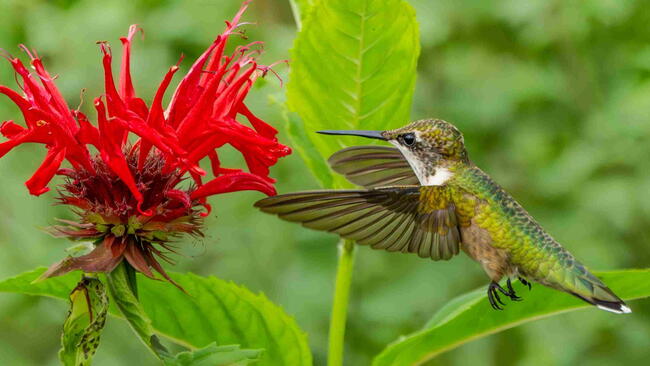
Bee Balm | Monarda spp. | Full sun | Summer to fall | Purple, red, pink, white | Yes | 3–9 |
Mountain Mint | Pycnanthemum spp. | Full sun to partial sun | Summer to fall | White | Yes | 3–8 |
Boneset | Eupatorium perfoliatum | Full sun to partial sun | Summer to fall | White | Yes | 3–8 |
Milkweed | Asclepias spp. | Full sun to partial sun | Spring to summer | Pink, purple, white, orange, yellow | Yes | 3–10 |
Turtlehead | Chelone glabra | Full sun to partial sun | Summer to fall | White, purple, pink | Yes | 3–8 |
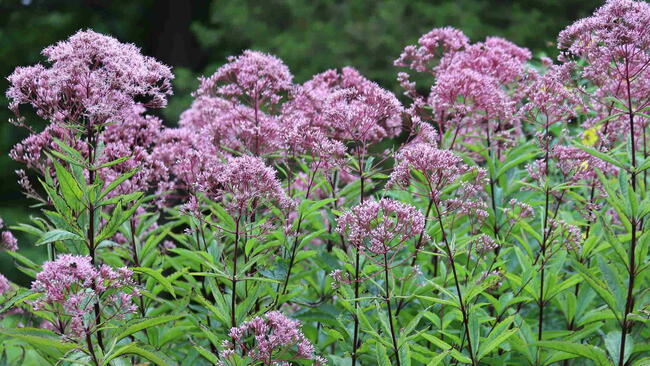
Joe Pye Weed | Eutrochium purpureum | Full sun to partial sun | Summer to fall | Pink, purple | Yes | 3–9 |
Blazing Star | Liatris spp. | Full sun to partial sun | Summer to fall | Pink, purple | Yes | 3–9 |

Shrubs
When most growers think about plants for bees, they envision small perennial and annual flowers. But larger shrubs, especially native ones, can also provide important food and sheltering resources for native bees!
Plant Common Name: | Scientific Name: | Exposure: | Bloom Time/Season: | Color: | North American Native? | Zone: |
Blueberry | Vaccinium spp. | Full sun to partial sun | Spring to summer | White | Yes | 3–10 |
Buttonbush | Cephalanthus occidentalis | Full sun to partial sun | Summer to fall | White | Yes | 4–10 |
Spirea | Spiraea spp. | Full sun to partial sun | Spring to fall | Pink, white, purple | Yes | 3–9 |
Shrubby St. John’s Wort | Hypericum prolificum | Full sun to partial sun | Summer to fall | Yellow | Yes | 3–8 |
New Jersey Tea | Ceanothus americanus | Full sun to partial sun | Summer | White | Yes | 4–9 |
Purple Flowering Raspberry | Rubus odoratus | Full sun to full shade | Summer | Purple | Yes | 3–8 |
Chokeberry | Aronia melanocarpa | Full sun to partial shade | Spring to summer | White, pink | Yes | 3–9 |
Lilac | Syringa vulgaris | Full sun | Spring to summer | Purple, white | No | 3–7 |
Viburnum | Viburnum spp. | Full sun to partial shade | Spring to fall | White, pink | Yes | 2–9 |
Winterberry | Ilex verticillata | Full sun to partial shade | Spring to fall | White | Yes | 3–9 |

Factors To Consider When Choosing Flowers
While many flowering plants provide some benefits to bees, some plants are especially beneficial to bees and other pollinators. When selecting flowers for your garden, here are a few tips that will help you choose the very best plants for bees!
- Select plants that are rich in nectar and pollen that bees feed on. Plants with hollow or pithy stems will offer shelter to solitary bees, too.
- Choose plants with broad and flat or wide, tubular flowers. Bees love the colors white, blue, yellow, and purple the most! Look for plants that bloom at different times throughout the year as well.
- Hybrid plants with double-bloom or pollen-free flowers don’t offer as many benefits to bees as heirloom and native plants.
- Plants that are grown organically or that you start from seed yourself are less likely to have come in contact with harmful pesticides.
Native bees need more than pretty flowers to survive. We need to provide water, shelter, and nesting sites. Banish pesticides and other poisons from your yard. When shopping for plants, look for organically grown ones. Systemic insecticides can make the whole plant toxic—nectar and pollen included!
Frequently Asked Questions
Which flowers attract the most bees?
Bright, fragrant blooms like zinnias, sunflowers, and Joe Pye weed are bee magnets. Think colorful, nectar-rich flowers that are easy for bees to land on.
Are all bees good for my garden?
Absolutely! While non-native honeybees get most of the attention, native bees, bumblebees, and even sweat bees are the hardest-working pollinators to help your plants thrive.
How can I help declining bee populations?
Plant a variety of native flowers, avoid pesticides, provide water, and leave some natural spaces in your garden. Every little buzz counts!
Can I grow bee-friendly flowers in small spaces or containers?
Yes! Many pollinator favorites like marigolds, lavender, and sunflowers grow beautifully in pots, making small patios or balconies a bee oasis.
What time of year is best for planting pollinator flowers?
Early spring is perfect for most annuals and perennials to establish before the busy season for bees. Fall is also good for many perennials, bulbs, and native plants, giving roots time to settle for vibrant blooms the following year.
More Like This

Comments