Caption
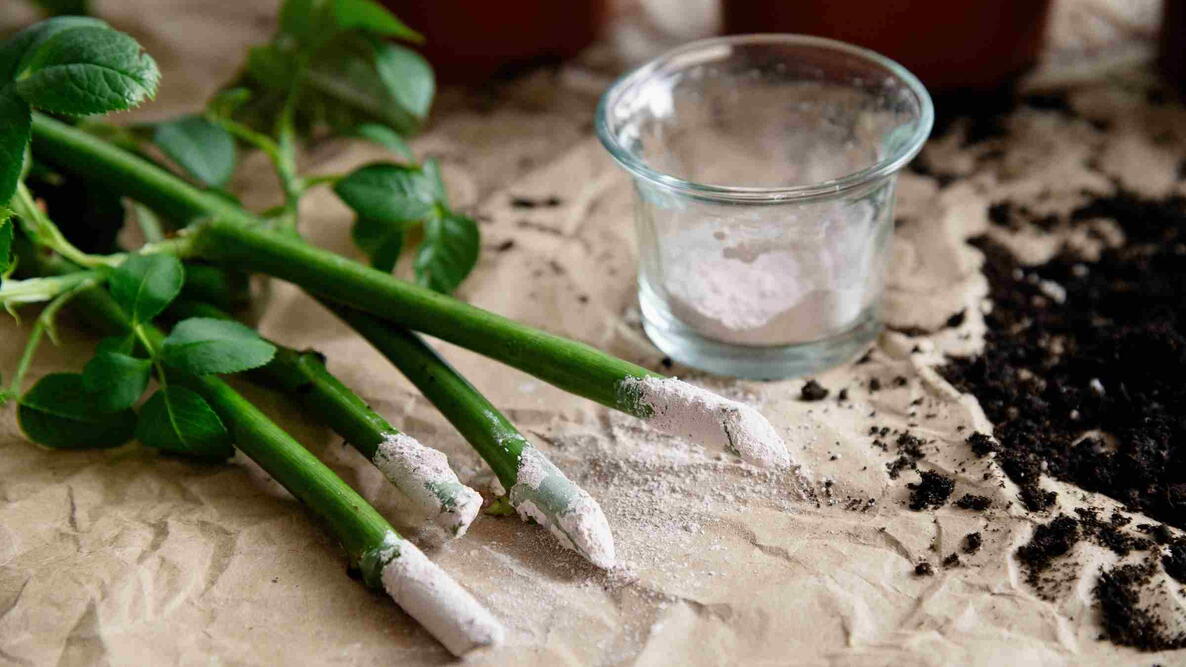
Preparing plant cuttings with rooting hormone.

When it comes to plant propagation and growing new plants from stem or leaf cuttings, we’re all rooting for success. But if you’ve ever struggled with cuttings that didn’t root or rotted before they grew, it may be time to try a rooting hormone!
Perfect for hard-to-propagate indoor or outdoor plants, rooting hormone helps cuttings root faster, better, and more reliably. It’s also an easy way to reduce the risk of rot and can be used with soil or water propagation. Over the years, I’ve experimented with a number of store-bought and DIY rooting hormones, and here are some of my favorite picks, plus tips on how to use rooting hormone effectively.

Introduction to Rooting Hormones
Like humans, plants have naturally occurring hormones that regulate their growth, and one of these hormones is known as auxin. Auxin signals plants when and where to produce roots and is usually found in root tissue.
Rooting hormone products, both synthetic and DIY, simulate auxin and can be applied to stems or leaves to encourage root formation where it would not normally occur.
Rooting hormones don’t just trigger root growth. Many products also contain ingredients that reduce rot by slowing microbial growth. While not always required—cuttings can root without them—rooting hormones increase propagation success, especially for slow-growing plants and woody cuttings that are otherwise difficult to root.

Types of Rooting Hormones
Most growers rely on store-bought rooting hormone, but there are also several DIY options that are easier on your budget and suitable for organic or edible plants. Here’s a look at the types of rooting hormones I’ve used and what makes each stand out:

Synthetic Rooting Hormone
When gardeners refer to rooting hormone, they usually mean store-bought products, available in powder, liquid, or gel form. These are easy to use on houseplants or garden plants, but most are not approved for edible or organic plants.
Most synthetic rooting hormones contain indole-3-butyric acid (IBA), a chemical that mimics auxin and stimulates rooting when applied to stems or leaves. Some products may also include antifungal or antibacterial additives that reduce the risk of rot.

Willow Water Tea
If you want to use rooting hormone on edible or organic plants, DIY options are usually best—one of the most effective is willow water. Willow is also a natural source of salicylic acid, which keeps fungi and bacteria from growing on cuttings.
I’ve made willow tea for rooting cuttings a few times. Here’s how:
- Gather growing tips from willow twigs in spring.
- Remove leaves, cut twigs into small pieces, and pound into pulp.
- Cover 1 part willow pulp with 2 parts boiling water and let it brew for a few days.
- Strain solids and use immediately to root your cuttings.
One of the great things about willow water tea is that it’s one of the few rooting products that can be used in soil or water propagation!

Honey
Honey is well-known for its natural antimicrobial properties; however, it also promotes cuttings to grow and root more quickly. However, don’t apply honey to your cuttings as is. Instead:
- Mix 2 tablespoons of honey with 2 cups of boiling water.
- Stir until fully combined and cool completely before applying to cuttings.

Cinnamon
Cinnamon powder is another natural rooting hormone with antifungal properties and is even easier to track down than willow tea!
The trick with cinnamon is that cuttings need to be dipped in water for the cinnamon powder to stick. Cinnamon is very easy to apply, and it can be used in conjunction with willow water or honey for even better rooting results.

How to Use Rooting Hormones
Most rooting hormones can be applied to stem, leaf, or root cuttings and used in soil propagation. However, these products are applied differently depending on the cuttings you’re working with and the type of rooting product you’re using.
Preparing the Cutting
- Stem cuttings: Often the most reliable method of propagating plants, stem cuttings should be taken from healthy stems using a sharp, sterilized knife. Take cuttings that are a few inches long with healthy leaves at the top, and then strip away any leaves on the base of the cutting that would interfere with planting. When possible, choose tender rather than woody stems for propagating!
- Leaf cuttings and root cuttings: Only certain plants can be propagated from leaf or root cuttings, so be sure to do your research. Using a sharp, sterilized knife is also key here.
- Succulents: Most succulents can be propagated from stems or leaves, but I like to break the leaves off with my fingers rather than cut them. This keeps the base of the leaf intact, making propagation easier. Then, I place the cuttings to the side for a few days in a warm, dry spot to callus over.

Applying Rooting Hormone
Once the cuttings are ready, apply the rooting hormone according to the instructions on the packaging, or use the following tips. If you’re working with a synthetic hormone, wear proper safety gear, as some products can be eye or skin irritants.
- Powders: Whether you’re using a synthetic or natural rooting powder, dip the cut stem, root, or leaf end in water and then dab it into your rooting powder of choice to the depth that you intend to plant the cutting.
- Gels: Cuttings can simply be dipped in gels and planted—no water needed!
- Liquids: As with gels, cuttings are usually dipped in rooting hormone liquid and planted. However, if you’re using a natural rooting hormone, like honey or willow water tea, soak the cut stems in the rooting liquid for a few hours before you plant them. If you’re using willow tea in water propagation, dilute the tea by half with water before use!
Planting the Cutting
- Immediately after applying rooting hormone, tap off any excess hormone product.
- Plant stem cuttings about 1 to 2 inches deep in pre-poked holes in a soilless potting or seed-starting mix.
Succulent leaves, however, are usually placed on the soil surface, and just the base of the leaf is lightly buried.

Checking the Roots
- After planting, keep cuttings evenly moist and in bright, indirect light until they root.
- Many cuttings benefit from being covered with clear plastic during this process, but this isn’t recommended for succulents or cactuses.
- For the water propagation method, check the water level regularly and refill as needed to keep the stem ends submerged and the rooting water nice and fresh.
- You’ll know roots have formed when you visibly see them, or cuttings are difficult to lift from the potting mix you’ve planted them in!
Tips for Success
If you’re new to plant propagation, here are a few more tips to keep in mind.
- Use a different vessel. Pour a small amount of rooting hormone into a separate vessel before you apply it. This keeps the rest of the product fresh and reduces contamination risk.
- Apply in moderation. Always tap off excess rooting hormone before planting. Too much rooting powder makes it harder for cuttings to absorb water.
- Don’t propagate plants while they’re flowering. Plants that are in bloom don’t have as much energy for other types of growth and are usually harder to propagate.

More Like This

Comments