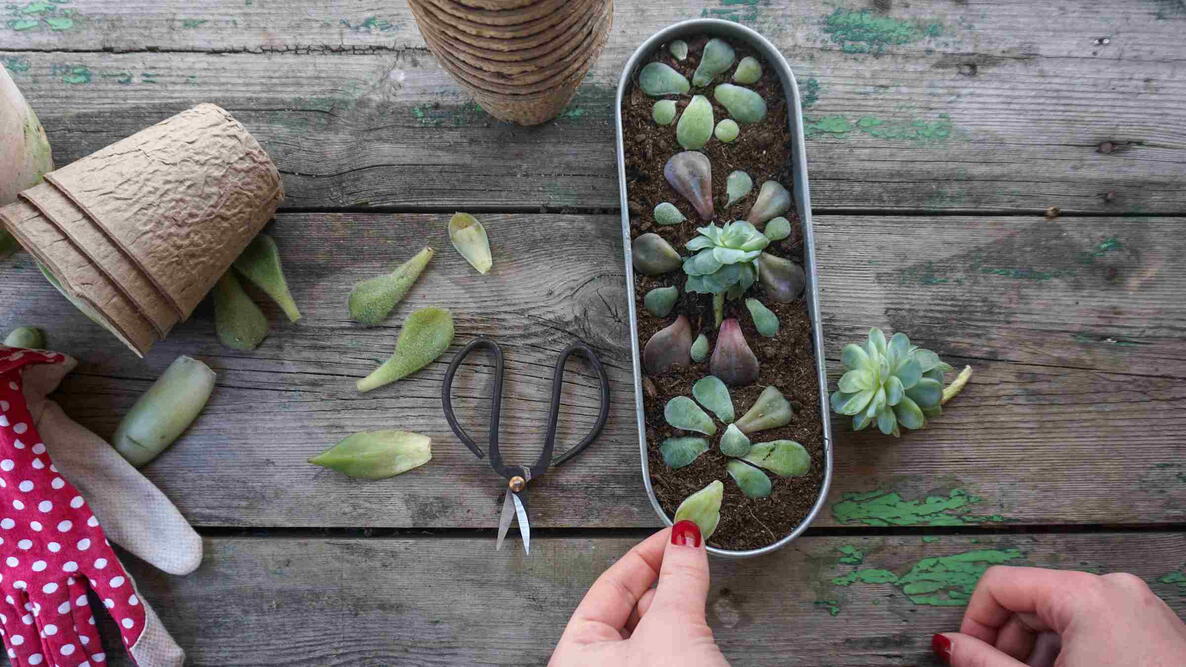

If you’re a sucker for succulents but don’t want to keep buying new ones—or need to rescue a broken stem or fallen leaf—you’re in luck. Succulents like jade, aloe, and echeveria are some of the easiest plants to multiply at home. With just a single cutting or leaf, you can grow a brand-new plant—no special tools or green thumb required!
I learned how to propagate succulents a few years ago because I wanted to expand my collection without spending more at the garden center. But succulent propagation is useful for more than just making new plants. It’s also a great way to fix leggy or overgrown succulents and save damaged ones that might otherwise be tossed.
In this beginner’s guide, I’ll walk you through three methods for growing new succulents, providing step-by-step instructions.

3 Easy Ways to Propagate Succulents
There are a few different ways to grow new succulents, depending on the type of plant you’re working with:
- Stem Cuttings – Ideal for jade, sedum, echeveria, and elephant bush. Snip a healthy stem and root it in soil after letting it callus.
- Leaf Cuttings – Perfect for echeveria, sedum, and burro’s tail. A single, intact leaf can sprout roots and a new baby plant.
- Pups or Offshoots – Some succulents, like aloe vera and haworthia, naturally produce baby plants (called pups) that can be separated and repotted.

Choose a Healthy Parent Plant
Whether you’re growing succulents indoors or out, it’s important to choose healthy succulent stems and leaves for propagation. It’s totally fine to propagate overgrown, leggy, or broken plants, but the cuttings or leaves you select should look plump and have a healthy color to increase your chances of success.
It’s also wise to avoid propagating plants that are flowering or have pest issues, as they may not have enough energy to produce new roots! Succulent propagation works best when the source plant is actively growing and pest-free.
Succulents You Can Propagate
Jades, echeveria, and hens and chicks can all be propagated from stem or leaf cuttings. But you can also propagate other common succulents like:
- Aloes – typically propagate from pups
- Sedums – root easily from both leaves and stems
- Haworthia – often produces pups at the base
- String of pearls
- Kalanchoe
- Burro’s tail
- Elephant bush (Portulacaria afra)
Try a few different types if you’re new to propagating succulents—it helps to see what works best in your space and conditions.

How to Propagate Succulents
Propagation techniques vary slightly between different types of succulents, but most follow the same basic steps. Some succulent cuttings can be propagated in water, but most root best in a soilless potting media.
In general, it’s best to take cuttings from plants when they’re actively growing in spring or summer. However, you can propagate damaged or broken plants at other times of the year.
Whether you’re propagating stems, leaves, or larger sections of leggy plants, here’s a step-by-step look at how to propagate succulents—and what tools you’ll need for the job.
Tools and Materials for Succulent Propagation
- Healthy succulent plant
- Sharp knife or pruning shears
- Rubbing alcohol (to sanitize blades)
- Small pots or seed-starting trays
- Succulent and cactus potting mix
- Rooting hormone (optional, but can help)

Step 1: Take a Cutting
- If you’re propagating a stem cutting, sterilize your knife with rubbing alcohol. Then, cut a healthy stem from the parent plant at a leaf node. Ideally, your cutting should be at least 2 inches long with a few leaves attached. If you’re propagating a broken stem, trim off the broken stem end with a smooth, clean cut.
- If you’re dealing with a leggy succulent, cut the leggy top off the parent plant, leaving 1 to 2 inches of stem and some leaves attached to the base. Trim off any leggy bits from the top section of the stem you removed and return the rooted bottom of the plant to a spot that receives bright, indirect light so it can regrow.
- If you’re propagating a succulent leaf, gently twist or pull the leaf from the stem, making sure the base of the leaf stays intact. Leaves that are cut off the parent plant generally won’t propagate well.
- For offshoots or pups, remove the entire plant from its pot and gently separate the baby plant from the base of the mother plant, or trim it away with your knife. This is the easiest way to propagate plants like haworthia and aloes!

Step 2: Prep for Planting
After you’ve collected your cuttings or leaves, don’t plant them right away. Instead, place them on a clean plate or paper towel in a warm, dry, shaded spot for a few days. This allows the cut end to callus over, which helps prevent rot when the cutting is planted in soil. For leaves, you can just set them out flat. For stems, you might prop them upright in an empty pot or tray to dry.
If rooting is slow, you can place a heating mat under the tray to speed things up. Just don’t rush it—some succulent varieties take longer than others.

Step 3: “Plant” the Cutting
Once the cuttings have had a chance to callus, it’s time to plant.
- Stem cuttings: Dip the cut end in rooting hormone (optional) and insert it about 1 inch deep into premoistened cactus and succulent potting mix.
- Leaves: Fill pots or a seed-starting tray with a succulent potting mix. Lay the leaves out flat on the surface of the soil so they aren’t touching. Don’t bury them.
- Pups and offshoots: You don’t need to wait for them to callus. These usually come with small roots already. Simply plant them in individual pots with a cactus and succulent potting mix—like any small plant.
Choose shallow trays or small pots with drainage holes and use a well-draining mix designed for cacti and succulents.

Caring for Newly Propagated Succulents
Once you’ve “planted” stem cuttings and leaves, move them into a section of your home that receives bright, indirect light—not full sun. Mist or water them lightly when the top 1/4 inch of soil feels dry.
You can also add a heating mat beneath your pots or seedling trays if you want them to root a little faster. Just don’t cover the cuttings with a humidity dome or plastic—excess humidity can make succulent cuttings rot!
Rooting takes time. Stem cuttings often root within a few weeks. Leaf cuttings will first grow tiny “pups,” followed by roots. You’ll know a cutting has rooted when it starts growing again or resists a gentle tug.
What to Do Once Your Succulents Root
- Stem cuttings: Once rooted, repot them into well-draining pots filled with succulent potting mix (if needed).
- Leaf pups: Let the baby plants grow on the surface of the soil for a month or two. During this time, the pups feed off the original leaf, but you should mist them lightly if the soil feels dry. Once they develop roots, you can plant them (leaf and all) into their own pots.
Be gentle during this process. Plantlets are delicate, and they’ll establish faster with minimal disruption.

Ongoing Care for Established Succulent Plants
Once your propagated succulents are established, treat them like mature plants:
- Bright, indirect sunlight
- Water sparingly (only when soil dries out)
- Fertilizer is not always needed. Optional: Lightly fertilize with a diluted, liquid organic fertilizer in spring.
Succulents are low-maintenance, but newly propagated plants may need a bit more babying until they’re rooted and growing.
Troubleshooting Common Issues
Although most succulents are relatively easy to propagate, you may still run into a few issues when growing them.
- Rot: Occurs when cuttings are kept too damp or in high humidity. Let cuttings dry thoroughly before planting and avoid overwatering.
- No roots: Some cuttings take longer. Be patient, and try adding bottom heat or rooting hormone.
- Shriveled leaves: If a leaf cutting shrivels up before rooting, try again with a fresher, plumper leaf and be sure to let it callus.
I find that taking more cuttings than you think you’ll need is a good idea—propagation is a numbers game.

Succulent Propagation FAQ
Here are some of the most common questions I receive about succulents!
Can I propagate succulents in water?
Some succulents (like jade) will root in water, but most prefer a dry start and do best in a well-draining potting mix. Water can increase the risk of rot if not carefully managed.
How long does it take for succulent cuttings to root?
It depends on the type of succulent and your environment. Stem cuttings often root within 2 to 4 weeks. Leaf cuttings can take a bit longer—especially before pups appear.
Do I need rooting hormone to propagate succulents?
Nope! Rooting hormone is optional. It can speed things up, especially for tougher cuttings, but many succulents root just fine without it.
Can I propagate succulents in winter?
You can, but success rates are higher during the plant’s active growing season (spring and summer). In winter, growth slows down, and rooting may take longer.
Summary: Practice Makes Plants
From aloes to ZZ plants, there are so many succulents to choose from and plants to propagate. Don’t worry if your first attempt doesn’t work perfectly. Practice definitely makes perfect. If your first propagation attempts don’t produce viable plants, try again with new cuttings or leaves. Sooner than you think, you’ll have a few new succulents on your hands—and a new skillset in your pocket!
I’d love to hear: What’s your favorite succulent? Have a propagation trick that worked—or a cutting that didn’t? Leave a comment below. I’d love to hear what worked for you—and help troubleshoot if it didn’t!

More Like This




Comments