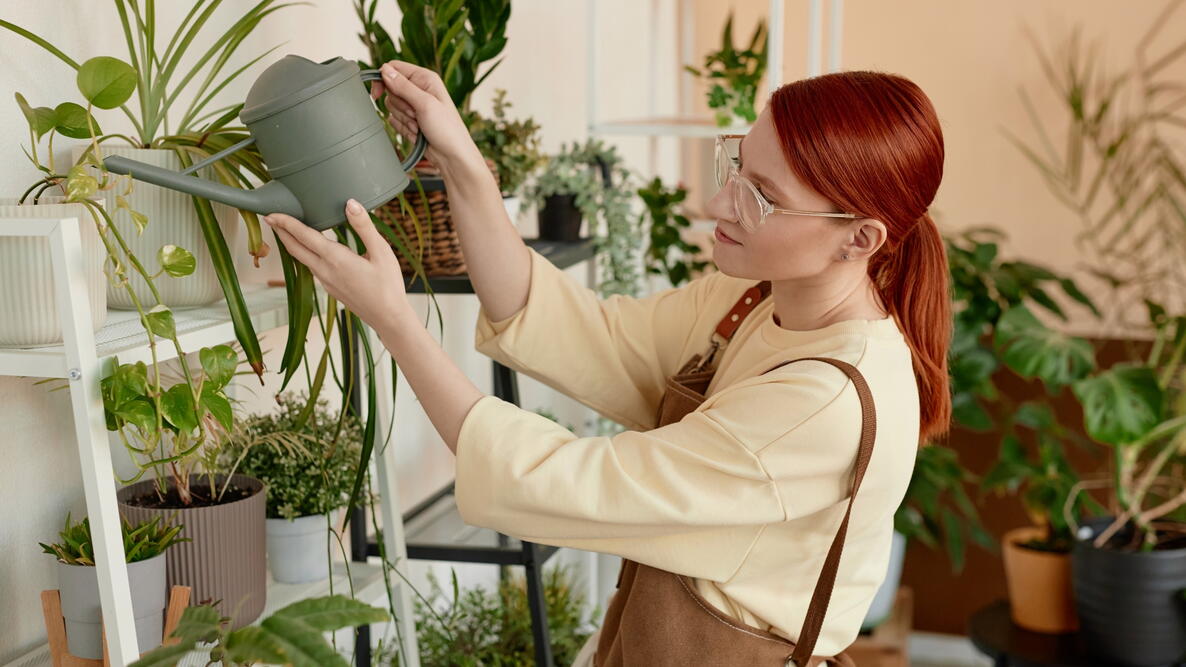

Watering houseplants seems simple—until your peace lily starts sulking or your pothos looks parched. The truth is, watering is both an art and a science. Too much, and you’re basically giving your plants soggy feet. Too little, and they’ll give you the cold (and crispy) shoulder. Here’s how to strike the perfect balance and keep your leafy roommates lush, hydrated, and happy.
Why Houseplants Need Water
If you do an online search for “the number one reason why houseplants die,” you’ll see that just about every top result points to a single culprit: overwatering. If you’re blushing with recognition right about now, you’re not alone.
First, let’s talk about why houseplants need water in the first place.
- Photosynthesis, the process by which plants make their food from the sun’s energy, requires both water and air to create the glucose that provides energy to the plant.
- Water helps transport the nutrients and sugars produced by photosynthesis, as well as nutrients from the soil, to every part of the plant.
- Water evaporates through the leaves (in a process called transpiration) to help keep the plant cool.
Plants are up to 95 percent water, and that water is key to strong, healthy cell structure.

Overwatering vs. Underwatering
So, all of this may leave you thinking, since water is so important, more is better, right? Not quite.
- Too much water can prevent oxygen from moving through the soil to reach the plant.
- If that happens, roots may begin to rot and, ironically, can no longer deliver the moisture the plant so desperately needs.
- Eventually, the roots will die—and the plant along with it.
Of course, there’s also such a thing as underwatering (also called, let’s face it, forgetting to water). Without moisture, all the important processes mentioned above can’t happen. The result? The plant stops growing, the leaves turn dry and brown, the stem becomes brittle, and the plant will eventually die.
Houseplants can be especially susceptible to underwatering in the summer when they’re growing faster, there’s more light, and the surrounding temperature is higher—all of which translates into water disappearing more quickly from the soil through use and evaporation.
How to Tell if You’re Overwatering or Underwatering
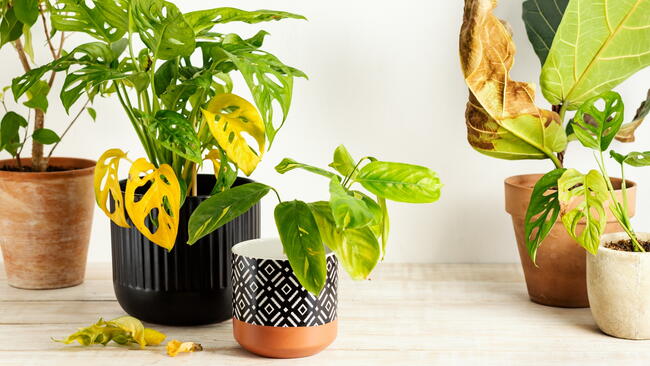
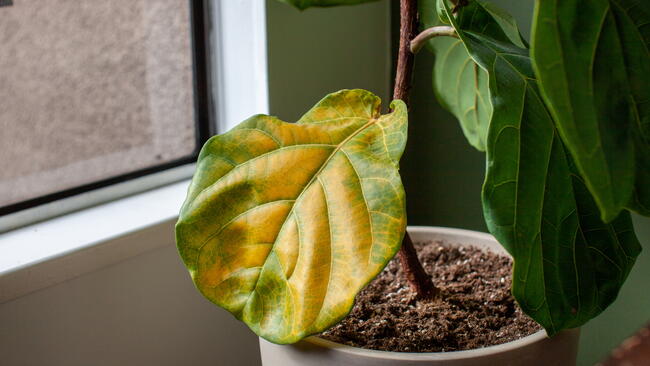
- Signs of overwatering include droopy and/or yellowing leaves, leaves (even young ones) that fall off, mushy-feeling stems near the base of the plants, and soggy soil.

- Signs of underwatering include leaves that droop (but perk up after watering), turn brown, begin to curl, and/or even get a bit crispy. You may also notice a gap between the dry soil and the inside of the pot.

How to Water Your Houseplants Just the Right Amount
Lots of people water their indoor plants every week on the same day, but while that may make it easier to remember, it’s not the best approach for your plants.
See, your houseplants don’t all use water at the same rate. Some may be thirstier than others, depending on the size of both the plant and pot, the amount of sun it gets, whether or not it’s actively growing, how hot and dry the room is, etc. That being said, it’s fine to choose one day a week as the check-in-on-your-plants day to see if they need watering!
Fortunately, the best way to ensure your houseplants get the right amount of water is the same.
- Every few days, stick your finger into the soil. Generally, if the top inch of potting mix (2 inches for succulents) is dry, it’s time to water. You can also lift the pot to feel how heavy it is–if it feels oddly light, it’s time to water.
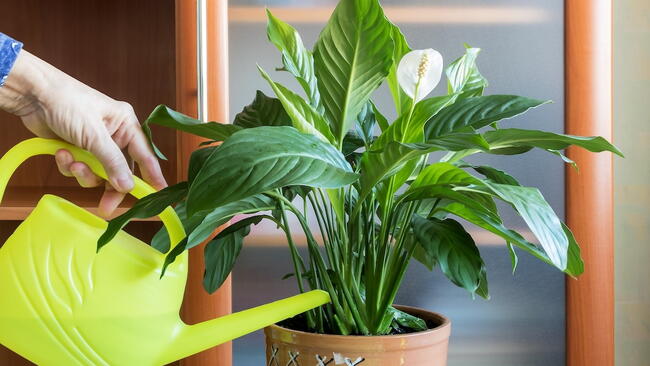
- Using room-temperature water (not too cold!), water the soil evenly around the base of the plant until water begins to run out of the drainage holes in the pot—make sure you have a saucer underneath. (If there are no drainage holes, water until the soil is well moistened, then switch to a pot with holes the next time you repot in containers.)
- It’s fine to use tap water, but if you live in an area with heavily chlorinated water, let it sit out uncovered overnight before using it to allow the chlorine to evaporate. Better yet, use water from your rain barrel.
Frequently Asked Questions
How often should I water my houseplants?
It depends on the plant type, pot size, and environment. Most houseplants need watering every 7–10 days, but always check the soil first. If the top inch of soil feels dry, it’s time to water. For succulents, wait until the top 2 inches are dry.
How do I know if I’m overwatering my plants?
Signs of overwatering include yellowing or droopy leaves, soggy soil, mold growth, and mushy stems. If your pot doesn’t have drainage holes, overwatering can happen easily—switch to one that does.
What does underwatering look like?
Underwatered plants have dry, curling, or crispy leaves that may droop but perk up after watering. You might also see soil pulling away from the edges of the pot.
Is tap water safe for houseplants?
Yes—most houseplants tolerate tap water just fine. However, if your water is heavily chlorinated, let it sit out overnight before watering so the chlorine can evaporate. Rainwater or filtered water is even better.
Should I mist my indoor plants?
Misting can help raise humidity, especially for tropical plants like ferns or calatheas. Just avoid misting succulents or fuzzy-leaved plants, which can develop rot.
What’s the best time of day to water houseplants?
Morning is ideal. It gives plants time to absorb moisture before the day’s warmth increases evaporation. Plus, any excess water on leaves will dry before night, helping prevent disease.
Can overwatered plants recover?
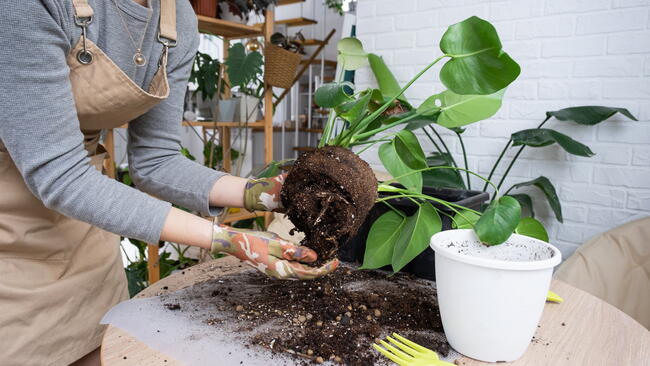
Yes—if caught early. Remove the plant from soggy soil, trim away any rotted roots, and replant in fresh, well-draining potting mix. Then, water sparingly until it bounces back.
See? It’s a pretty straightforward path to keeping your houseplants happily hydrated. Now, what about keeping your green friends nourished with food? See advice about how and when to fertilize houseplants.
For more expert advice on growing houseplants, check out our Tips for Keeping Indoor Plants Happy and Healthy Year-Round.

More Like This

Comments