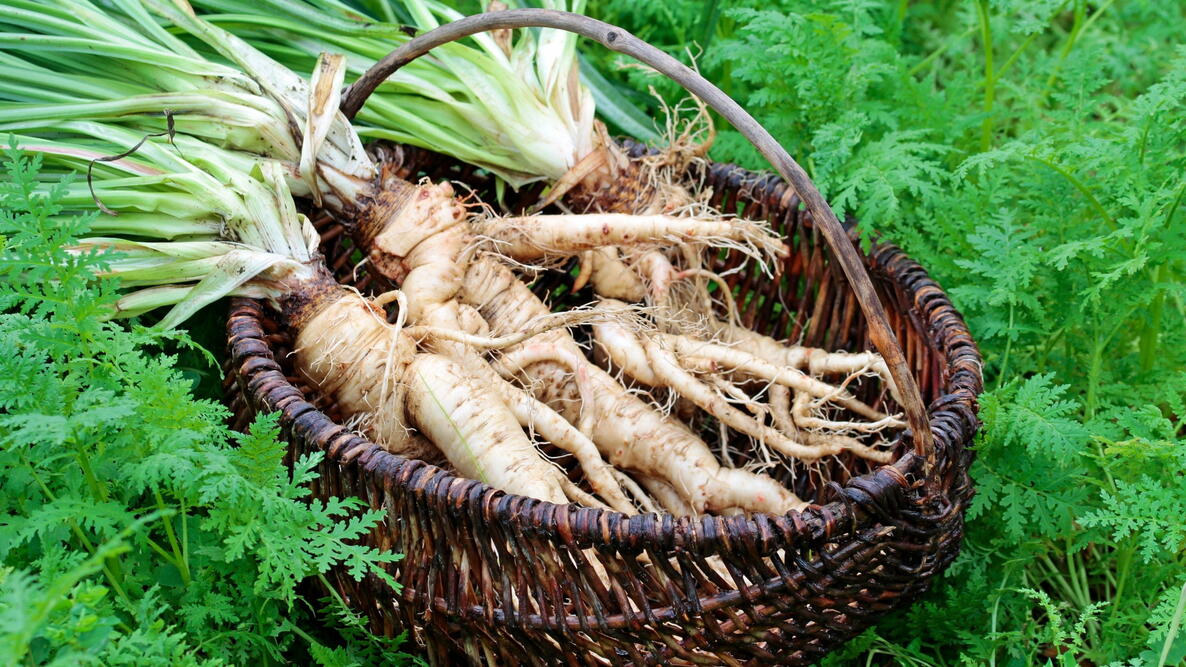

Ever heard of a veggie that tastes like oysters but grows like a carrot? Meet salsify, your garden’s next great conversation starter! With its creamy, savory flavor (some say artichoke; others say oyster!), this quirky root was once a kitchen staple in colonial gardens. Not only is salsify delicious and long-storing, but it also puts on a floral show with starry purple blooms that could charm any pollinator. If you’re craving something a little different this season, it’s time to dig into growing salsify—the forgotten root with a flair for flavor and flowers!
For those unfamiliar with salsify (Tragopogon porrifolius), this root vegetable has an off-white color and creamy white flesh. It’s also known as the “oyster plant,” as some folks find it tastes a bit like an oyster. Others liken salsify’s flavor to artichoke hearts.
Salsify is a hardy biennial in the dandelion family, and in fact, the root looks much like the dandelion taproot you’d dig from your lawn. Salsify roots are typically 8 to 10 inches long and about an inch in diameter. They have green tops, which are also edible—sweet and tender enough for a salad.
These tasty vegetables were more popular before the global food trade, when they were prized for their taste and long-keeping ability. They were common in Thomas Jefferson’s day!
You may have trouble finding them in the grocery store, but they are easily grown in the garden if you have a little space. Planted in early spring, salsify is harvested in the fall through early winter, depending on your climate.
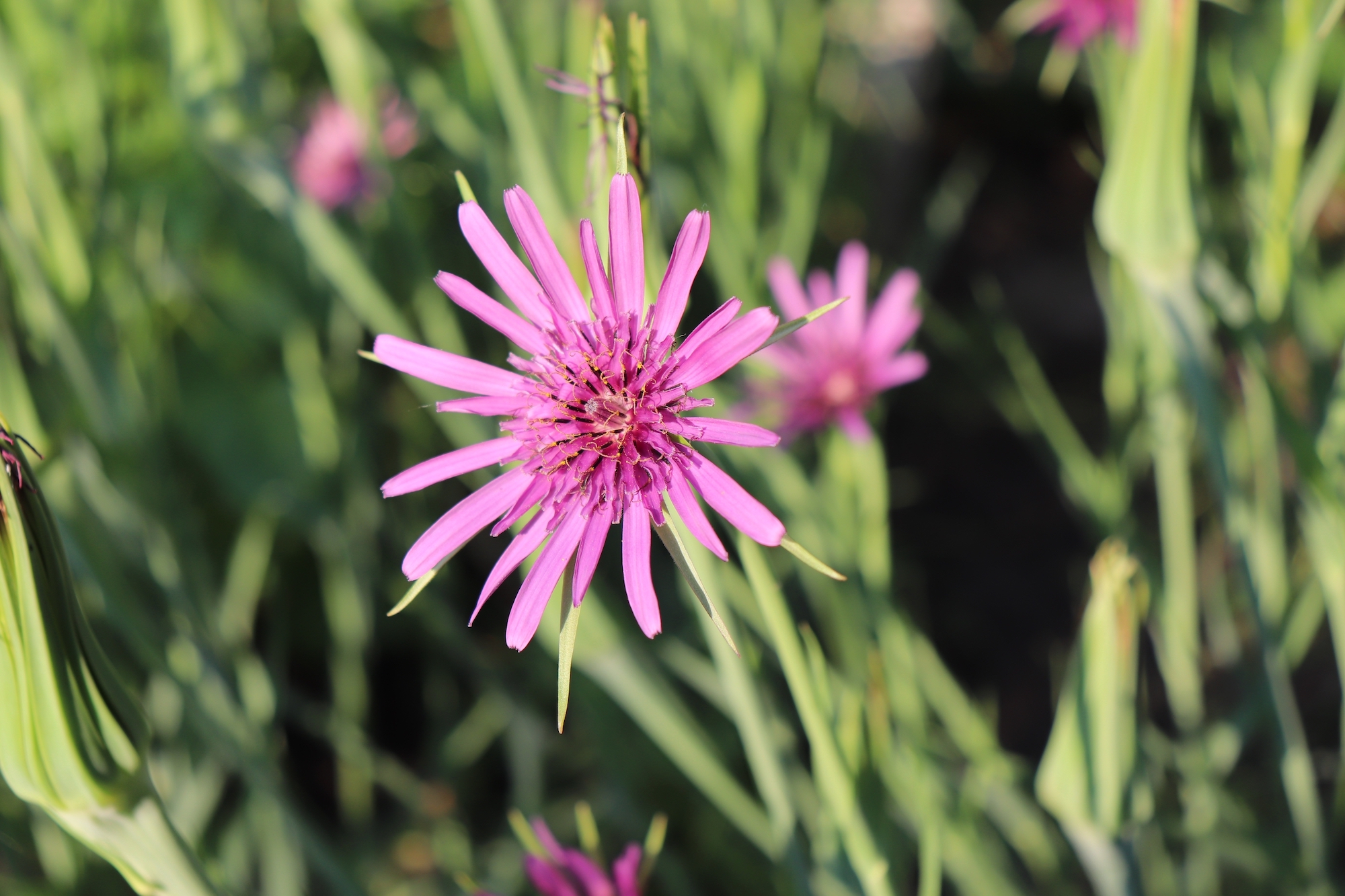
Salsify is also an ornamental flowering plant with blossoms that add beauty to your garden beds and bloom from spring through fall; they also look good in meadows.
Types
Pay attention to the botanical name. Tragopogon porrifolius, also known as purple or common salsify, is what you want. Tragopogon dubius, also known as yellow or western salsify, is an invasive species in many areas.
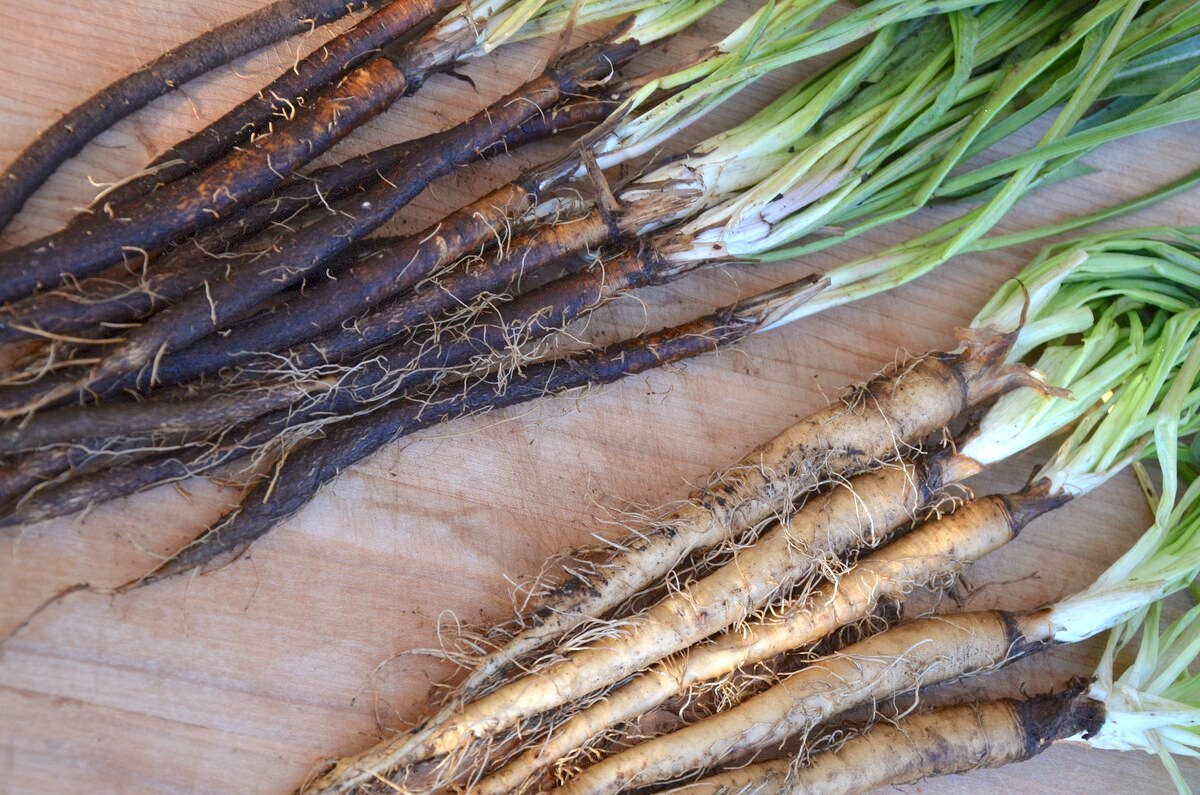
A similar plant is scorzonera (Scorzonera hispanica), also known as black salsify or Spanish salsify. Black on the outside and white on the inside, scorzonera has smaller, skinnier roots. Interestingly, even though it’s often called salsify, the plants are technically unrelated.
Here are a few excellent varieties to start from seed:
- ‘Mammoth Sandwich Island’ has large roots, as the name implies. Tasty greens and delicious roots.
- ‘Hoffman’s Schwarze’ is a black salsify variety perfect for simmering in soups and stew. It’s a perennial in Zone 5 and warmer.
- ‘Fiore Blu’ is a medium-sized root with a mild flavor—a reliable self-seeder for permaculture gardens.

More Like This

It is indeed! Here's a link to some additional infornation from the Montana extension service: https://www.montana.edu/extension/invasiveplants/documents/publications/extension_publications/Western%20Salsify_revised%202017.pdf

Comments