
Caption
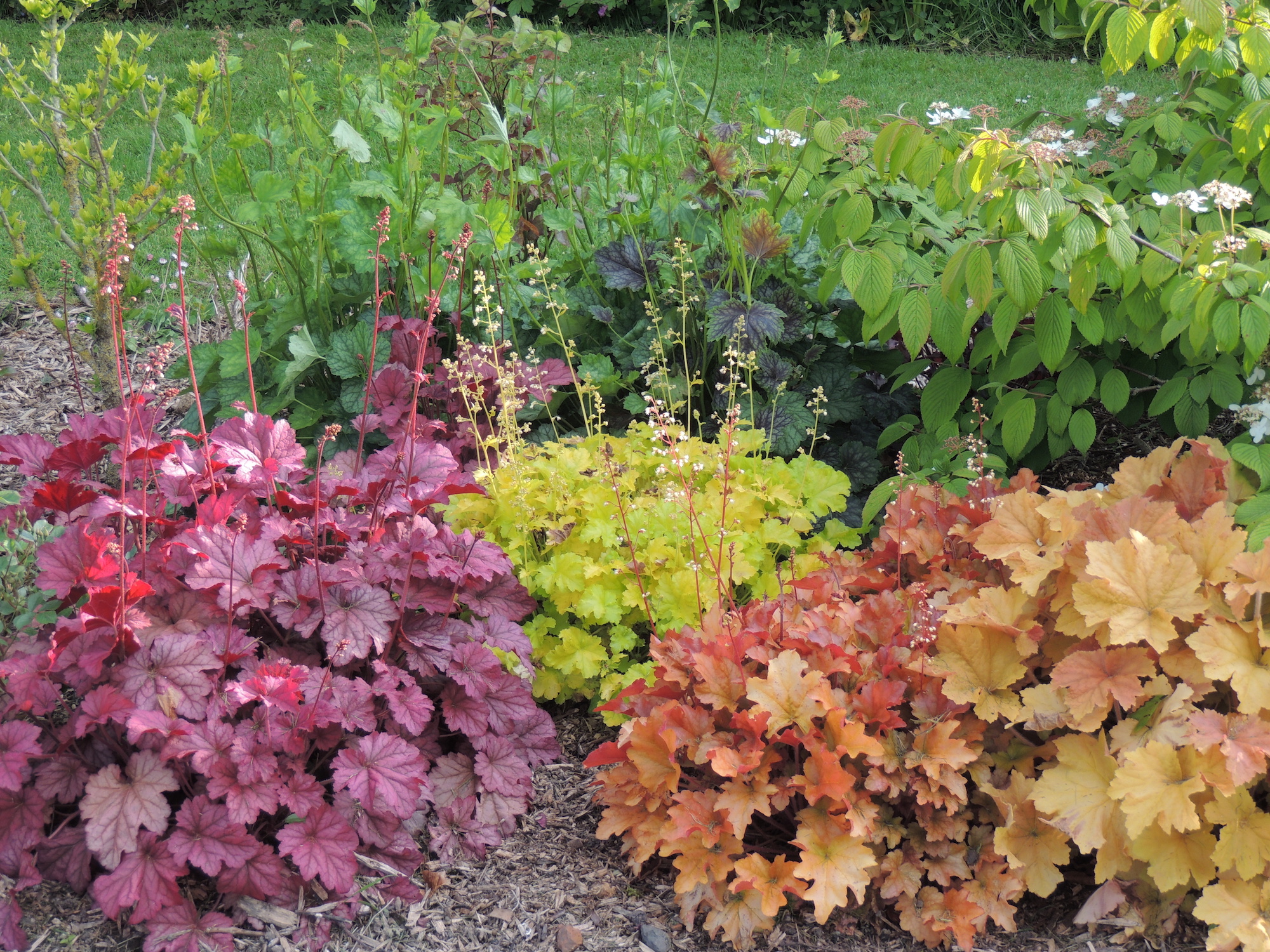
Coral bells (Heuchera) are grown for their vibrant foliage and thrive in part shade.

Coral bells (Heuchera) are colorful, low-maintenance perennials that brighten shady gardens with foliage in lime, burgundy, silver, purple, and nearly black. Deer-resistant and adaptable to a range of soils, they’re a favorite for borders, containers, and woodland beds. Here’s how to grow and care for coral bells.
Coral bells are small, mounding perennials that stay evergreen in warm climates and may be semi-evergreen in colder regions. While many types produce airy flower spikes that attract hummingbirds and pollinators, coral bells are grown primarily for their striking foliage. Plants are typically hardy in USDA Zones 4–9 and tolerate a range of light and soil conditions as long as drainage is good.
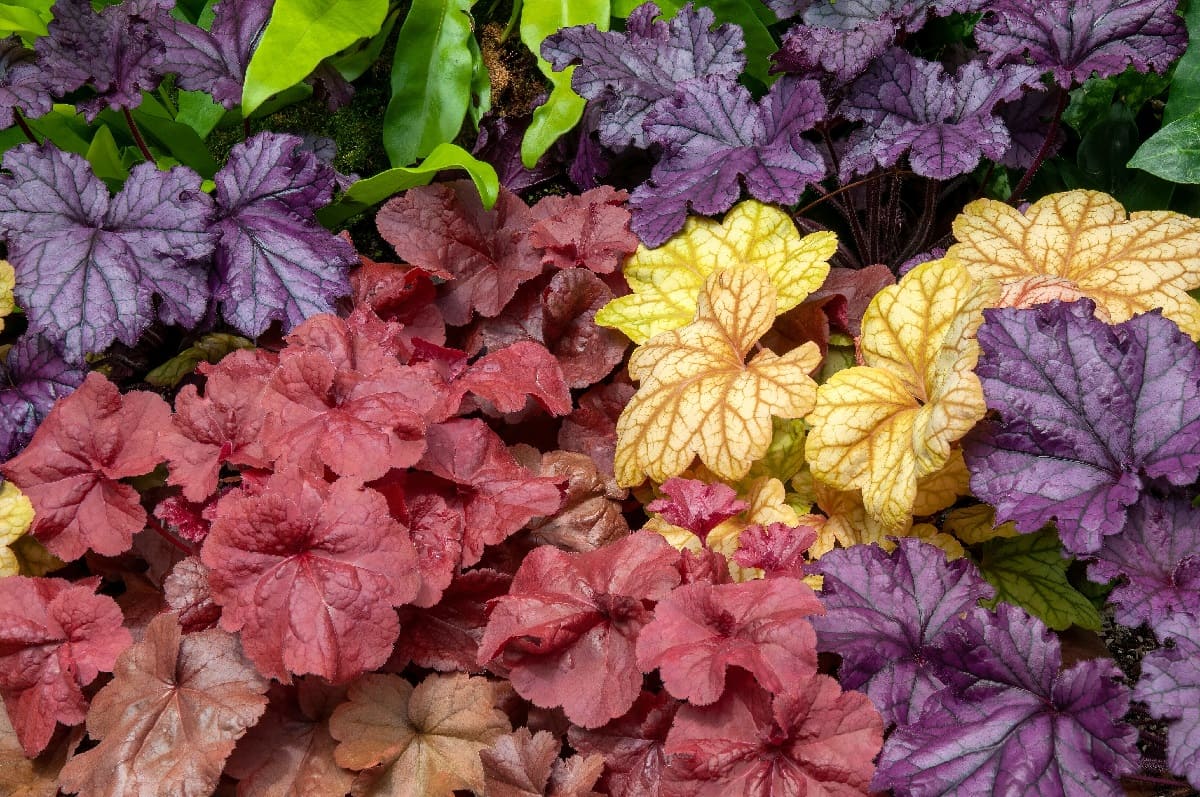
Most varieties grow 6–12 inches tall and spread 1–3 feet wide, forming tight rosettes. Leaves may be smooth or ruffled and come in an incredible palette—chartreuse, pink, burgundy, purple, and near-black—often with contrasting veining or multicolored patterns.
In the landscape, heucheras mix well with other shade-loving plants. Match them with hostas, astilbes, ferns, and hellebores. Mix them in a partially sunny spot with your geraniums, ornamental grasses, and daylilies. They look best planted in small groups. As they’re on the small side, plant them toward the front of a border garden.
Coral Bells Care at a Glance
- Light: Part shade is best; morning sun, afternoon shade
- Soil: Rich, well-draining soil; avoid soggy sites
- Water: Keep evenly moist while establishing; drought-tolerant in shade once rooted
- Feeding: Minimal; light feeding for containers
- Maintenance: Remove ragged leaves; divide every 3–4 years
- Best feature: Foliage color (flowers are a bonus)
Are Coral Bells Deer-Resistant?
Coral bells are generally deer- and rabbit-resistant because the leaves are slightly astringent and unpalatable. That said, no plant is completely deer-proof—hungry animals may still browse during drought or winter.
Do Coral Bells Grow in Salty Soil?
Many coral bells tolerate a range of soils, including slightly salty conditions, but they perform best where the soil drains well and is improved with organic matter. If you garden near the coast, focus on building drainage and sheltering plants from drying winds.
Planting
Where to Plant
Coral bells grow best in part shade to partial sun. Aim for 4–6 hours of gentle light—morning sun and afternoon shade is ideal. In hot climates, protect plants from strong afternoon sun, especially bright-lime or pink varieties that can scorch.
Choose soil that is moist but well-draining. Heavy clay or low spots that stay wet can lead to root rot. If drainage is poor, amend with compost, plant on a berm, or use a raised bed.
When to Plant
- Spring: Plant after the last frost; harden off nursery plants before transplanting.
- Fall: Plant at least 6 weeks before the ground freezes so roots can establish.

How to Plant
- Dig a shallow hole slightly wider than the pot and loosen the surrounding soil.
- Set the plant so the crown sits at ground level (not buried).
- Backfill with native soil (amended if needed) and gently firm.
- Space plants 12–24 inches apart, depending on mature width.
- Water thoroughly and keep evenly moist for the first few weeks.
Planting Coral Bells in Containers
Coral bells do very well in pots. Use a high-quality potting mix, ensure drainage holes are open, and water when the top 1–2 inches of soil feels dry. Container plants benefit from light feeding during active growth.
Growing
Coral Bells Care
Light
Part shade produces the best color and the least leaf scorch. If leaves bleach, brown at the edges, or crisp in summer, move plants to more afternoon shade.
Soil
Provide fertile, well-draining soil that’s slightly acidic to neutral (about pH 5.5–7.5). Improve poor soil with compost; avoid consistently wet sites.
Water
Water regularly after planting. Once established, coral bells are somewhat drought-tolerant in shade, but they look best with even moisture. Let the top couple inches dry slightly between waterings and avoid waterlogged soil.
Temperature and Humidity
Coral bells thrive across Zones 4–9. In very hot regions, extra afternoon shade and consistent moisture help prevent stress and leaf scorch.
Fertilizer
In-ground plants usually need little to no fertilizer if the soil is reasonably fertile. For containers, feed lightly once a month during the growing season with a balanced fertilizer diluted according to label directions.
Pruning and Deadheading
Remove tattered or winter-damaged leaves in early spring to make room for fresh growth. You can deadhead spent flower stalks for a tidier look and potential rebloom.
Dividing and Transplanting
Coral bells often become woody or thin in the center after a few years. Divide clumps every 3–4 years in spring (or early fall in mild climates) to rejuvenate growth.
- Dig up the clump and gently shake off loose soil.
- Pull or cut the plant into smaller sections with healthy roots and crowns.
- Replant divisions promptly with the crown at ground level, and water well.
Overwintering
In Zones 4–9, coral bells typically overwinter outdoors. After the first hard frost, apply 2–4 inches of mulch (straw or shredded leaves) to reduce freeze-thaw heaving that can lift shallow roots. In spring, pull mulch back and remove dead leaves.

Design Ideas and Companion Plants
Where Coral Bells Shine
- Front-of-border edging
- Woodland and shade gardens
- Container combinations for season-long color
- As a hosta alternative in deer-prone areas
Companion Plants for Coral Bells
- Hostas
- Astilbes
- Ferns
- Hellebores
- Hardy geraniums
- Ornamental grasses
- Daylilies (in part sun)
Types
With so many cultivars available, choose plants based on light levels, foliage color, and texture. Here are a few standouts:
- ‘Black Pearl’: Deep purple-black ruffled foliage with airy white blooms.
- ‘Green Spice’: Green and silver leaves with purple veining; compact and bright in shade.
- ‘Lime Marmalade’: Neon chartreuse frilly leaves that light up darker beds.
- ‘Paprika’: Vivid orange foliage that pops against darker companions.

More Like This

Comments