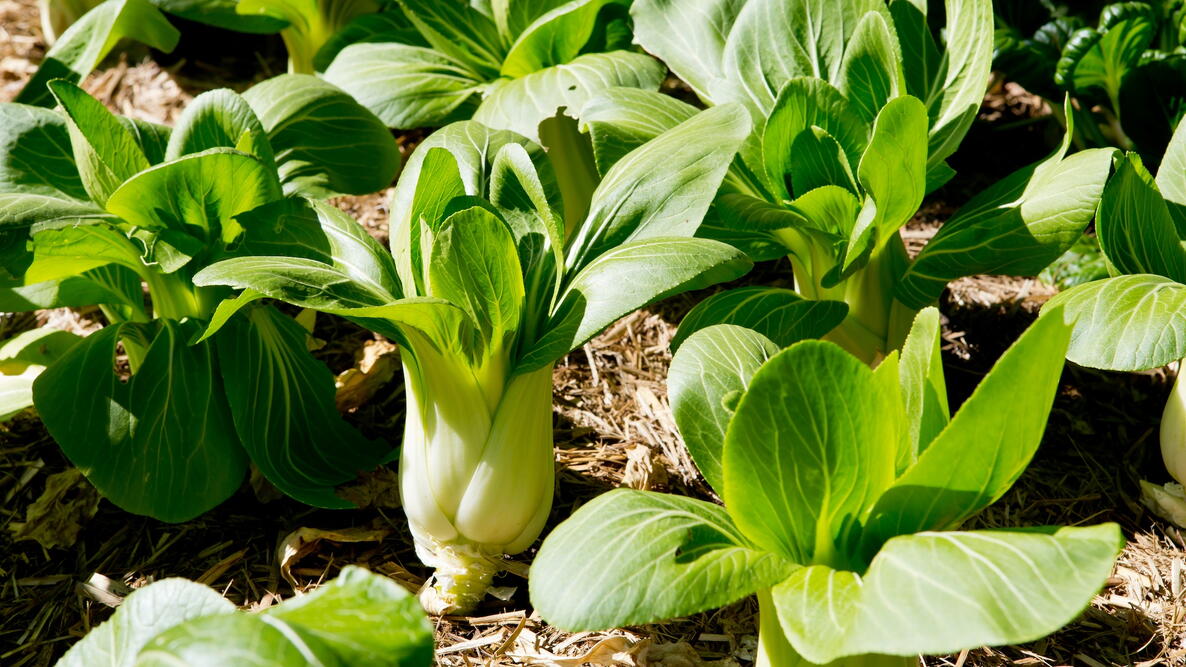

Planting
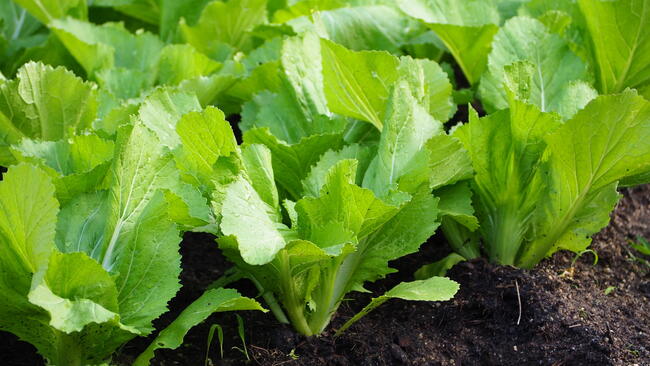
Bok choy is great news for gardeners who struggle to find enough sunny spots to plant all their veggies. While it grows well in full sunshine, bok choy will also grow well in partial sun, about 3-5 hours daily.
In hot climates, planting in a spot with morning sun and afternoon shade helps to delay bolting. Save those super-sunny sites for your tomatoes or sweet corn!
Fertile, rich soil and a neutral pH is ideal for these heavy feeders. Work a generous amount of compost into the soil before planting. Leave space for succession plantings to extend your harvest.
With its quick growing time and tolerance for light frosts, bok choy can be planted in your garden where earlier maturing crops are already finished.

When To Plant Bok Choy
Bok choy is not a fan of hot weather, so gardeners typically grow two crops, one in spring and another in fall. For spring plantings, start seeds indoors 4 to 6 weeks before your last spring frost date. Count backward 50 days from your first frost and direct seed for fall harvests.
If you garden in a frost-free or nearly frost-free zone, your bok choy growing season may be autumn through winter and into the spring until high temperatures arrive.
How To Plant Bok Choy
Bok choy is usually started from seed, but transplants can be bought in the spring at garden centers. Sow more every 2 weeks throughout spring and again in fall to achieve a long, continuous supply of these delicious plants.
To start bok choy indoors:
- Sow 1-2 seeds per cell in standard trays or use soil blocks.
- Sow seeds about a ¼-½ inch deep.
- After germination, thin to one seedling per cell.
- Snip the extras; don’t pull them, or you might damage the roots of the remaining plants.
- Harden them off before transplanting them into the garden beds.
- They can be transplanted outside once a set of true leaves has been established and soil temps outside are 50°F (10°C).
To direct seed after the last frost in spring or in late summer:
- Prepare the bed with compost.
- Sow seeds ½ inch deep, about 3 inches apart, in rows 18 inches apart.
- Once plants are 4 inches tall, thin to a spacing of 6–9 inches apart, eat the ones you remove!
Types
- ‘Mei Qing Choi’ is a hybrid that is tolerant of heat and slow to bolt.
- ‘Joi Choi’ is a beautiful, lush plant with vibrant green foliage and crisp white stems.
- ‘Win-Win Choi’ is a smaller variety, topping out about 12 inches tall. Great for baby bok choy or gardeners who don’t want a full-size plant.
- ‘Black Summer’ has dark green leaves and pale green stems. Slow to bolt and great for full-sized harvest.

More Like This

Hi, Dan. It would be best to grow your bok choy in a container that is 20 inches deep with a width of at least 12 inches.
Thanks, Cheryl!
Check out this article about storing fresh veggies.

Comments