
Summer 2026 weather predictions from The Old Farmer’s Almanac are in—and much of North America is in for a hotter-than-normal summer. Temperatures are expected to run above normal across both the United States and Canada, while rainfall patterns vary widely by region. Here’s what to expect where you live.
- Hotter-than-normal temperatures across much of North America
- In the United States, it’s not just hotter—it’s often drier too, with widespread dry conditions across many regions
- Some areas trend wetter, including parts of the Heartland, Gulf Coast, Lower Lakes, southern Intermountain, and much of southern Canada
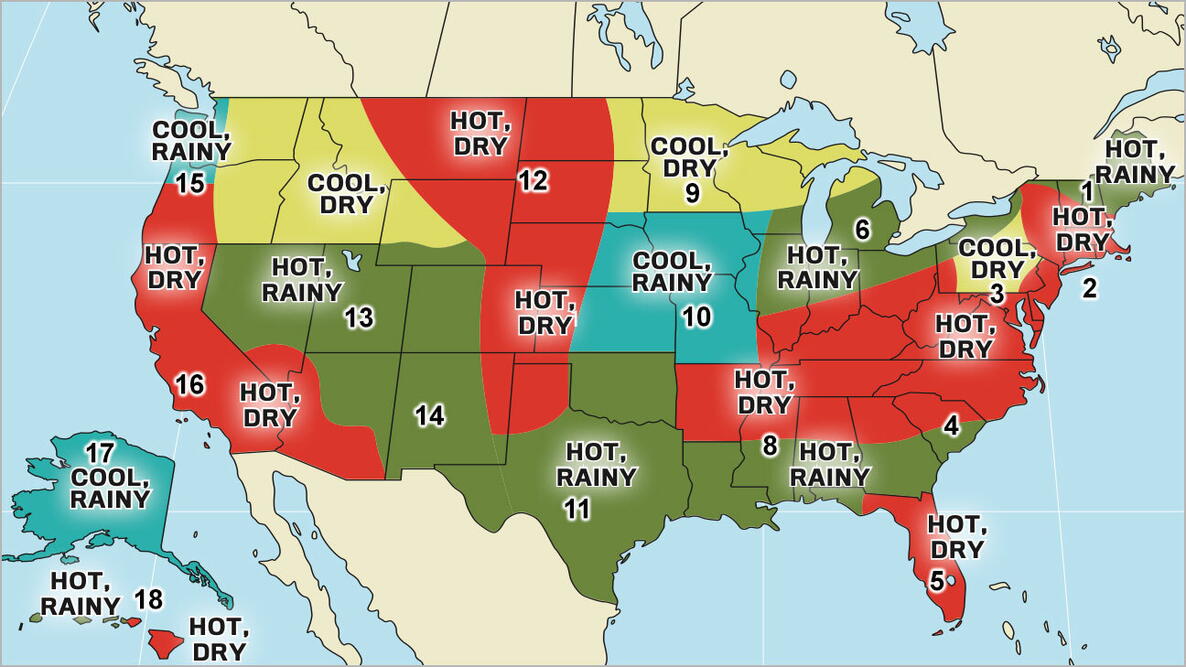
Summer 2026 U.S. Forecast Map
This map shows where temperatures and rainfall are expected to be hotter or cooler, wetter or drier than normal across the United States. Each area is grouped into one of four patterns: hot and dry, hot and rainy, cool and dry, or cool and rainy.

Please cedit: Almanac.com/summer-forecast
Note that long-range predictions are meant to show the seasonal outlook, not day-to-day weather forecasts. Local conditions will vary, but the map highlights the dominant patterns expected. Learn how The Old Farmer’s Almanac predicts the weather.
What Does the Almanac Predict for Summer 2026?
As the U.S. map and regional chart reflect, much of the United States is trending hotter than normal, especially across the southern part and eastern portion of the country. However, some areas—including the Upper Midwest and Heartland—are expected to be cooler than normal or to feature more mixed patterns.
Rainfall predictions are less uniform but lean drier overall. Many regions, particularly across the East, High Plains, and interior West, are expected to see below-normal precipitation. In contrast, wetter conditions are forecast in the Heartland, along the Gulf Coast, and in portions of the Pacific Northwest, with several regions showing a mix of wet and dry patterns.
Overall, the forecast points to a summer defined by widespread warmth, with regional contrasts in both temperature and rainfall shaping local conditions.
With above-average temperatures expected across much of the country, plan for periods of extended heat, especially during peak summer months. For more tips, see our guide to staying safe in hot weather.
How Summer 2026 Weather Will Change
While some regions may begin summer closer to typical early-season conditions, above-normal heat is expected to build as the season progresses. In other words, temperatures are likely to run hotter than average for much of the summer.
The biggest temperature departures are most likely in July and August, when unusually warm conditions become more widespread across North America.
Summer 2026 Weather Predictions by Region (U.S.)
Here’s how temperature and rainfall are expected to vary across all 18 long-range regions this summer.
| Region | Temp | Rainfall | Pattern |
|---|---|---|---|
| 1. Northeast | Hotter | North wetter / South drier | Mixed |
| 2. Atlantic Corridor | Hotter | Drier | Hot & Dry |
| 3. Appalachians | North cooler / South hotter | Drier | Mixed |
| 4. Southeast | Hotter | North drier / South wetter | Mixed |
| 5. Florida | Hotter | Drier | Hot & Dry |
| 6. Lower Lakes | Hotter | Wetter | Hot & Wet |
| 7. Ohio Valley | Hotter | Drier | Hot & Dry |
| 8. Deep South | Hotter | North drier / South wetter | Mixed |
| 9. Upper Midwest | Cooler | Drier | Cool & Dry |
| 10. Heartland | Cooler | Wetter | Cool & Wet |
| 11. Texas-Oklahoma | Hotter | Wetter | Hot & Wet |
| 12. High Plains | Hotter | Drier | Hot & Dry |
| 13. Intermountain | North cooler / South hotter | North drier / South wetter | Mixed |
| 14. Desert Southwest | Hotter | East wetter / West drier | Mixed |
| 15. Pacific Northwest | North cooler / South hotter | North wetter / South drier | Mixed |
| 16. Pacific Southwest | Hotter | Drier | Hot & Dry |
| 17. Alaska | Cooler | Wetter | Cool & Wet |
| 18. Hawaii | Hotter | East drier / Central and West wetter | Mixed |
Summer 2026 Canada Weather Predictions
In Canada, this summer is expected to trend warmer than normal across much of the country, including southern Quebec, the Prairies, and southern British Columbia. Northern regions—including Yukon and the Northwest Territories—are also likely to see above-average warmth, while parts of southern Ontario are likely to see more mixed temperature patterns.
Rainfall patterns are more varied than temperature trends, creating a mix of wetter and drier conditions across the country. Wetter conditions are expected across Atlantic Canada, southern Ontario, the southern Prairies, and southern British Columbia, while other regions—including parts of the North and interior—may see a mix of above- and below-normal precipitation.

Please cedit: Almanac.com/summer-forecast
Summer 2026 Canada Weather by Region
The regional breakdown below focuses primarily on southern Canada—along with select northern regions—while the map above reflects broader trends across the country.
| Region | Temp | Rainfall |
|---|---|---|
| 1. Atlantic Canada | Cooler | Wetter |
| 2. Southern Quebec | Warmer | East drier / West wetter |
| 3. Southern Ontario | East cooler / West warmer | Wetter |
| 4. Southern Prairies | Warmer | Wetter |
| 5. Southern British Columbia | Warmer | Wetter |
| 6. Yukon | Warmer | Drier |
| 7. Northwest Territories | Warmer | North wetter / South drier |
Tropical Storm and Hurricane Outlook for Summer 2026
The Old Farmer’s Almanac also notes potential tropical activity during the 2026 summer season. As always, exact timing and impacts can vary, but these outlooks highlight periods to watch.
Watch for:
- Atlantic Corridor: Tropical storms in late June and mid-August
- Appalachians: A tropical depression in late June
- Southeast: A tropical storm in late June and a hurricane in mid-August
- Florida: A tropical storm in late June and a hurricane in mid-August
- Deep South: Tropical storms in early June and late August
- Texas-Oklahoma: A tropical storm in late August
Summer 2026 Weather Predictions FAQs
Is summer 2026 going to be hot?
Yes. The Old Farmer’s Almanac predicts a hotter-than-normal summer across much of the United States and southern Canada, with the most widespread heat expected in July and August.
Will summer 2026 be hotter than normal?
Yes, overall. Forecasts suggest above-average temperatures across much of North America. While some regions may begin closer to average, heat is expected to build as the season progresses.
Will summer 2026 be rainy or dry?
It depends. Many regions, especially in large areas of the western United States, may experience drier-than-normal conditions. However, some areas—such as parts of the Midwest, the South, and most of southern Canada—may trend wetter than what’s typical.
When will summer 2026 be the hottest?
The hottest conditions are most likely in mid- to late summer. While July and August are typically the hottest months, this year is expected to be hotter than average for that time of year.
How the Summer Weather Impacts You
These forecast patterns influence your yard, garden, and landscaping.
- Hot & Dry: Increased water stress—mulch, water deeply but less often, use drip irrigation, provide light shade during extreme heat, and consider drought-tolerant plants
- Hot & Rainy: Rapid growth but higher risk of fungal disease and insects—improve airflow, avoid overhead watering, and remove affected leaves early to prevent spread
- Cool & Dry: Slower growth and delayed ripening for heat-loving plants—water as needed and expect a longer time to harvest
- Cool & Rainy: Higher risk of rot—improve drainage (raised beds or mounded rows), add compost, avoid compacted soil, space plants for airflow, water less, and use lighter mulch
Looking Ahead
We hope this summer forecast helps you make the most of the season—whether you’re tending a garden, planning trips, or just watching the skies.
Before you know it, the next edition of The Old Farmer’s Almanac will be here. To make sure you don’t miss it, you can pre-order now on Amazon.

More Like This

Thanks for this question. In the short term at least, we don't expect the changes at NOAA to have much effect on our forecasts. Much of what we rely on NOAA for is long-range data that will still be available to us. That said, this is a situation we are watching closely and are certainly concerned about. NOAA's work is important well beyond its impact on our yearly forecasts, and I hope appropriate funding will be restored as soon as possible.
Hi, Emily,
We're glad that you have found the Almanac's forecasts useful! From what I understand from NOAA and elsewhere, experts are expecting the ENSO to be neutral throughout the Northern Hemisphere at least through the summer months, after which there is a slight chance of a La Nina taking over, although the chances are still more likely that neutral conditions will continue.
During a neutral ENSO state, it is harder to predict trends, as the patterns of a La Nina or El Nino are less prominent, allowing other influences to take over. In general, the trend would tend to be average rainfall for the summer in the Northeast, but that depends on what other factors are in play at the time. Consequently, there might be major variations in rainfall between areas of the Northeast, with some drier than normal and other places wetter than normal.
Thank you for your interest in The Old Farmer's Almanac.
Best,
The Almanac Editors
- « Previous
- 1
- 2
- …
- 10
- Next »

Comments