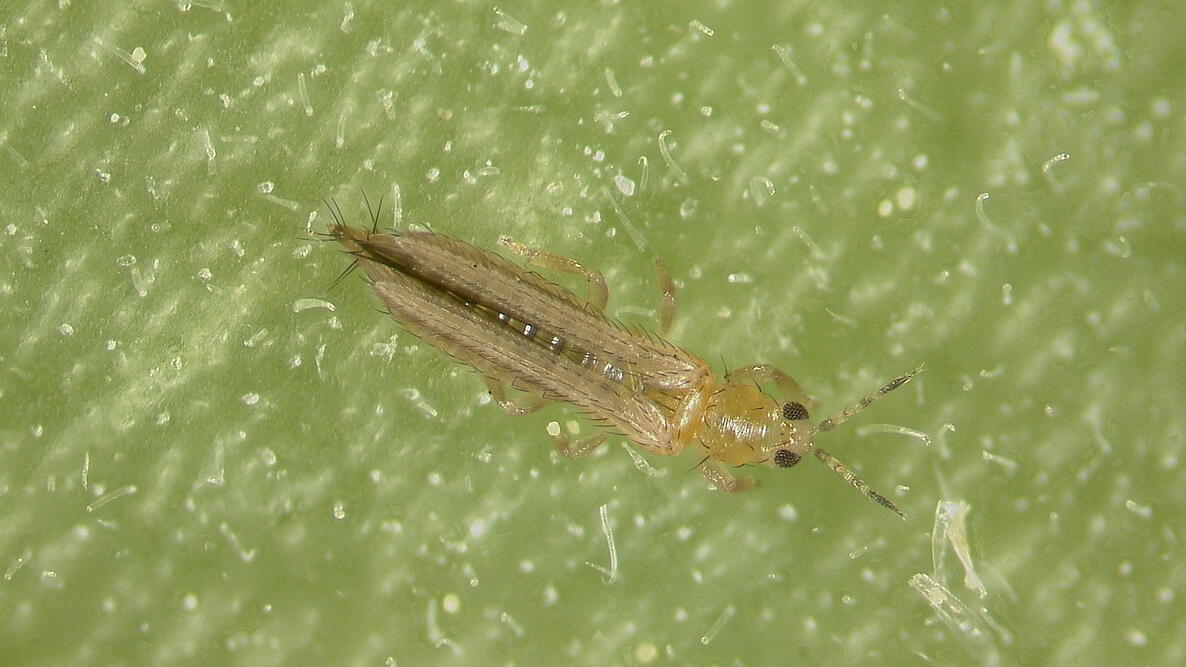
Caption
The Western flower thrips is one variety of thrips that can cause extensive damage on over 500 species of plants.

Identification
Identifying Thrips
Adult thrips are slender and tiny, at 1 / 50- to 1 / 25-inches long. Their colors can be anywhere from yellow to brown or black, and if you try to get close to them, they will probably leap or fly away. They have narrow, fringed wings. The nymphs look like even smaller adults, though they tend to be light green or yellow rather than darker colors. Their wings are also not fully developed, and they sometimes have red eyes.
Thrips appear to be tiny dark slivers on your plants. It is hard to see their bodies well without a magnifying glass, but up close, they look a bit like lobsters. Shake them onto a white background in order to see them well.
Thrips Damage
Thrips damage includes streaks, silvery speckling, and small white patches. This happens because the thrips suck plant cells from many garden plants, flowers, fruits, and shade trees. If you have a major infestation of thrips, your plants might be stunted with damaged flowers and fruit. The damage that you notice might instead come from the virus that the thrips spread (usually tomato spotted wilt virus).
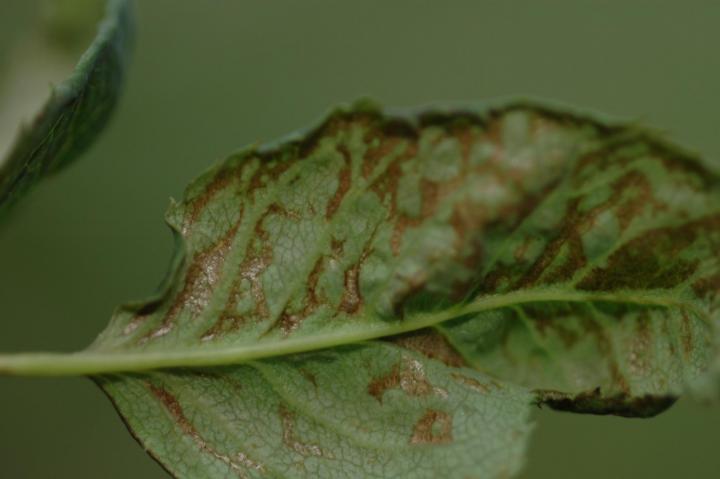
Photo Credit: University of Florida.
Control and Prevention
How to Get Rid of Thrips
- To keep thrips populations under control, try using yellow or blue sticky traps.
- Shaking branches to remove the thrips and catching them on a cloth underneath is one easy way to quickly remove the thrips from your plants.
- For onion thrips: Take a dark piece of paper into the garden and knock the onion tops against it; if thrips are present, you will spot their tan-colored bodies on the paper. A couple of treatments with insecticidal soap kills them. Follow the package directions. Spray the plants twice, three days apart, and the thrips should disappear.
- For fruit trees: Spray dormant oil on the trees.
- As a last resort, dust the undersides of leaves with diatomaceous earth.
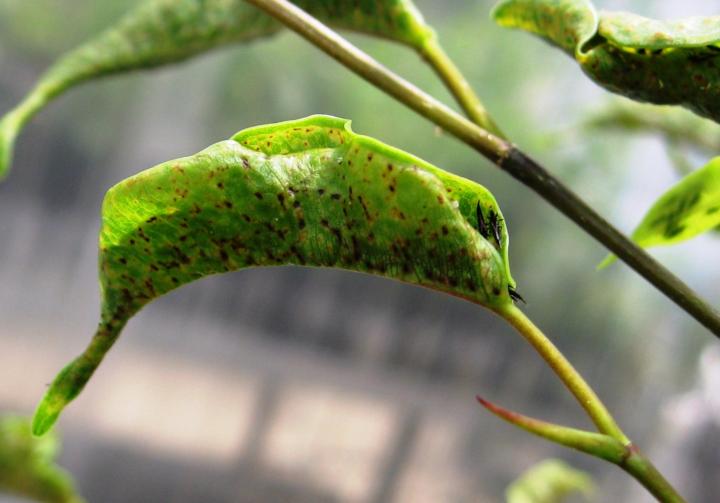
Photo credit: Steven Arthurs/University of Florida.
How to Prevent Thrips
- For flower thrips on gladiolus: Mix 1 tablespoon Lysol household cleaner with 1-gallon water. Soak gladiolus corms in the liquid and plant while still wet to prevent thrips.
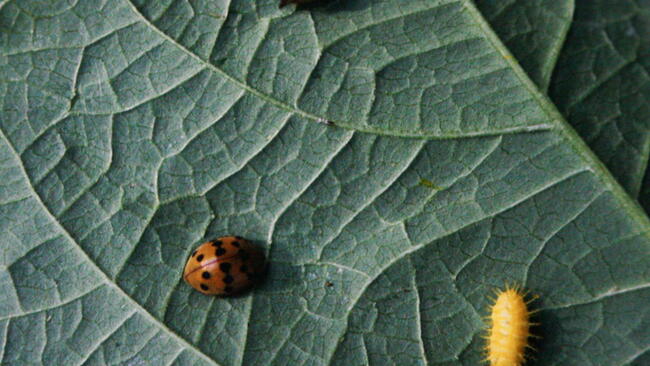
- You can plant various flowers to attract beneficial insects that are natural predators of thrips. Some good predators include pirate bugs, lacewings, and ladybugs. Learn more about attracting those predators.
- For onion and western flower thrips, try releasing minute pirate bugs or the predatory mite Amblyseius cucumeris.
- Reflective mulches can help to hide your plants from thrips.
- If there is a very big thrips problem in your area, some plants have resistant varieties.
- Try not to overfertilize plants, as this can lead to more thrips damage.
Do you have more tips for controlling thrips? Let us know below!



Hi, Jo An,
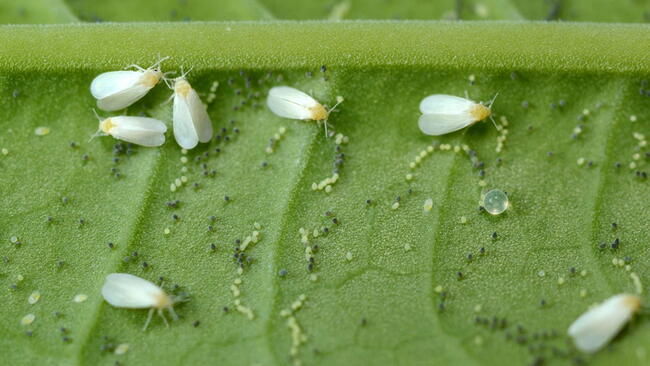
For best control, try to identify what species these black and white tiny flies are; your county's Cooperative Extension might be able to help you.
https://www.almanac.com/cooperative-extension-services
Adults of many whitefly species are white, but the nymphs can be different colors, such as black.
However, if the flies have both black and white markings, could these be fungus gnats? These grayish black gnats feed on organic matter and are a common pest of houseplants (including plumerias). They are especially troublesome if the soil does not dry out between waterings (dry to a depth of about 1 to 2 inches deep), or if water remains in a saucer underneath the pot. The flies will lay eggs in the soil, and the larvae will feed on organic matter, algae, and fungus, and will also nibble on roots; they'll mainly inhabit the top 2 or 3 inches of soil. Fungus gnat larvae are of special concern for young plants but can sometimes be a nuisance for established ones. The adults do not feed on plants (or bite humans), but the numbers of flies flitting around the plant can be irritating. For more about this pest and its control, see:
https://www.almanac.com/pest/fungus-gnats
Some controls/preventions include: Place yellow sticky traps around the plant to catch adults so that they can't lay eggs. Repotting with new soil, cleaning the pots, isolation, etc., are all good things to try to control these pests. (Plants outside, however, can pick up more fungus gnats and other pests, so be sure to inspect them and their soil before bringing them indoors.) Be sure that pots have drainage holes and a well-draining potting mix. You might also try adding about a 3/4- to 1-inch-deep layer of horticultural sand on top of the potting soil to deter adult flies from laying eggs in the soil. Keep the soil free of debris, such as fallen leaves.
Hope this helps!
Hi Helen,
You will want to soak your gladiolus bulbs in the Lysol/water solution for 3 to 6 hours. Hope this helps!
Hi Blanche,
Sorry to hear about your thrips issue.
Try applying an insecticidal soap. Make sure leaves, flowers, and growing tips are well covered with the spray. You may need to apply the spray frequently until the problem is under control. You can also try a horticulture oil spray, which can help control thrips as it suffocates the insects. Just make sure to follow label directions to avoid damage to some plants that may be sensitive.
After you have applied control measures, keep plants moist and increase humidity. Plants that are kept too dry are more likely to be damaged by thrips.
- « Previous
- 1
- 2
- …
- 10
- Next »

Comments