

Take a look at the next Full Moon—it shines like a flawless, glowing coin in the sky. But here’s the cosmic secret: our Moon isn’t perfectly round at all! Like Earth (and even Saturn), the Moon is a little “squished,” making it an oblate spheroid. So why do big space objects like the Moon, Earth, and stars become round, while asteroids and comets stay lumpy? The answer lies in gravity’s quiet but powerful sculpting hand.
Why the Moon Looks Round
Why do we care if the Moon is perfectly round? Well, perfect circles are actually pretty rare in nature.
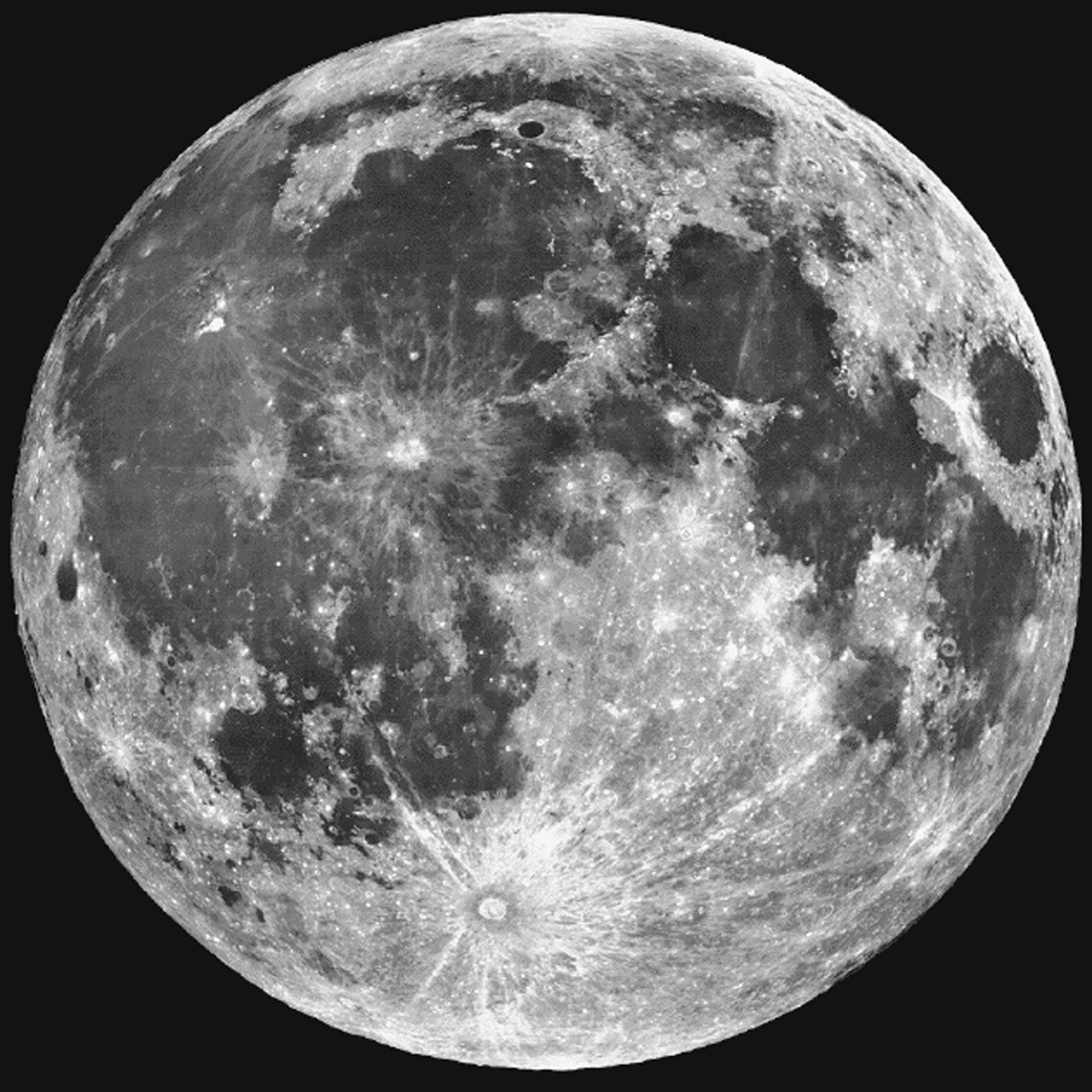
Take a look at the Moon the next time it’s a full Moon. See our Full Moon Calendar. It’ll appear as a flawless disk to the eye. In truth, the Moon is just 4 miles “out of round” in its 2,160-mile diameter. One part in 500. Absolutely imperceptible, visually.
What is an Oblate Spheroid?
A perfect circle would be similar to a big ball with every point on its surface equidistant from its center. Technically, the Moon is an “oblate spheroid,” meaning it has the shape of a beach ball that is slightly flattened.
Through the ages, the circle was considered nature’s “perfect shape.” All parts of a ring lie at the same distance from the center, with no sharp angles, so the figure seemed infinite. That belief still lingers with us in the exchange of wedding rings.
Interestingly, almost all big astronomical objects are spherical (or nearly spherical). There are far more spheres than any other geometric shape.
- Earth is also an oblate spheroid. Our planet has an equatorial diameter of 12,756 km and a pole-to-pole diameter of 12,712 km.
- The Sun and all stars are round. They don’t look like the five-pointed “stars” our teachers stuck on our papers.
Yet meteorites—those chunks of stone and metal—are never round. The same goes for comets and asteroids, which also have irregular shapes.
Gravity and Celestial Shapes
Why are the stars, planets, and moons round, when meteorites and small objects aren’t?
Why are small objects irregular while big ones are balls? The answer is simple: Gravity. When massive objects form in space, they are either gaseous or molten, and their atoms attract each other by simple gravity. So, a celestial body will pull itself inward to the most compact figure possible, which is always a globe or spherical shape. However, some parts will be too high and will be pulled down, displacing material beneath them, which will cause areas that are too low to push outward, so it’s not usually an oblate sphere.
This is complicated by the fact that celestial objects are spinning through space, so locations at the equator feel less pull compared to locations near the pole. The faster an object spins, the more you’ll see this effect. For example, Saturn is less of a perfect sphere than Earth.
You discovered in childhood how a sphere has the smallest surface. When you played with clay, you could pat it into a thin piece with an enormous surface, or you could roll it into a little ball between your palms. A ball was always the tiniest you could make it. Then it had the smallest surface area and needed the least amount of paint when it dried.
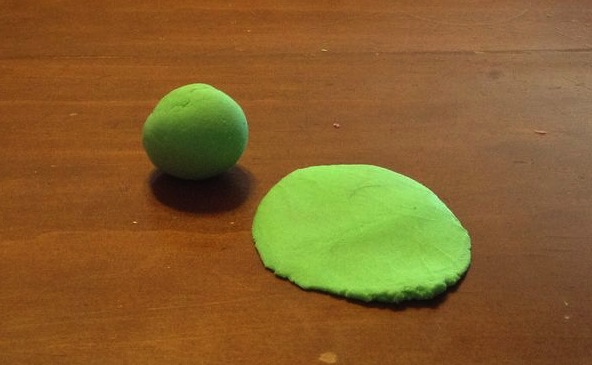
Only objects with too little gravity can’t become perfect balls. This is why celestial bodies below a certain mass, like asteroids and meteors, are irregular shapes.
But stars? Ours is a universe made of great balls of fire!
FAQs About the Shape of the Moon
Is the Moon perfectly round?
No, the Moon is not a perfect circle or sphere. It’s an oblate spheroid, meaning it’s slightly flattened at the poles. The difference is only about 4 miles across its 2,160-mile diameter—so to the human eye, it looks perfectly round.
Why does the Moon look like a perfect circle during a full Moon?
The Moon appears perfectly round during the full Moon phase because we see its illuminated face head-on. The shape of this object remains undetectable to human eyes until scientists use their instruments for examination.
What does “oblate spheroid” mean?
An oblate spheroid is a sphere that’s slightly flattened at the poles and wider at the equator. Both Earth and the Moon have this shape due to their rotation and gravity.
Why are planets and moons round, but asteroids and comets are irregular?
Planets and stars and moons have strong gravity that pulls material inward, forming a round shape. The gravity of smaller objects such as asteroids and comets, remains insufficient to create smoothness, so they maintain their irregular shapes.
Is Earth also round like the Moon?
Yes! Earth is also an oblate spheroid. It has an equatorial diameter of 12,756 km and a pole-to-pole diameter of 12,712 km. Like the Moon, it’s very close to spherical but slightly flattened at the poles.
Which planet is the least spherical?
Saturn is the most “squished” planet in our solar system because of its fast rotation. Its equatorial diameter is about 10% larger than its polar diameter.
How round are stars?
Stars, including our Sun, are very close to perfect spheres because of gravity. The objects lack both sharp corners and abnormal shapes, which distinguish them from smaller space rocks.

More Like This




Comments