
Easy garlic growing tips—from choosing varieties to planting cloves and harvesting tasty bulbs

Read Next
Planting
Garlic thrives in full sun, so select a planting site that receives 6 to 8 hours of sunlight per day.
Feed the soil with compost or aged manure. For bigger bulbs, we also love to add an organic amendment such as bonemeal or a higher-potassium fertilizer.
It’s very important that garlic doesn’t sit in wet soil. If your garden soil is high in clay or drains poorly, garlic grower Robin Jarry of Hope, Maine, suggests growing in heavily mulched raised beds instead. “I plant in raised beds for good drainage and then mulch with about 6 inches of old hay after the ground freezes. I never water my garlic—I like low-maintenance vegetables!” Raised beds should be 2 to 3 feet wide and at least 10 to 12 inches deep.
When to Plant Garlic
Probably the most important factor in growing bigger bulbs is when you plant.
Plant cloves in the late fall, about one or two weeks after the first killing frost. See timing in the chart below.
Garlic does best if it can experience a “dormancy” period of colder weather—at least 40˚F (4°C)—that lasts 4 to 8 weeks. When planted in the fall, garlic bulbs have time to develop healthy roots before temperatures drop and/or the ground freezes, but not enough time for the garlic to form top growth. Then, by early spring, the bulbs “wake up” from their dormancy and start rapidly producing foliage, followed by bulbs, before the harshest heat of summer stops their growth.
You can plant garlic cloves in mild climates as late as February or March, but the resulting bulbs won’t be as large. However, you can still enjoy the garlic scapes during the summer. (Scapes are the plant’s tender green shoots with a mild garlic flavor. Enjoy on eggs, in salads, as a pizza topping, or in stir-fries!) If you plant in the spring, wait until after the soil can be worked, and it crumbles apart easily.
| Hardiness Zone | When to Plant Garlic |
|---|---|
| Zones 1 to 6 | Early October |
| Zones 7 and 8 | Late October to November |
| Zones 9 and 10 | November to Early December |
| Zones 10+ | Put Cloves in Fridge for 10 Weeks Before Planting |
How to Plant Garlic
- Immediately before planting, work a couple of tablespoons of 5-10-10 complete fertilizer, bonemeal, or fish meal into the soil several inches below where the base of the garlic cloves will rest.
- Select large, healthy cloves that are free of disease. The larger the clove, the bigger and healthier the bulb you will get the following summer.
- Don’t break apart until one or two days before planting—crack open on the day of planting whenever possible. As soon as the cloves are separated from the root plate, they begin to deteriorate. We keep the husks on; some gardeners take the husks off, but we haven’t seen that it matters too much.
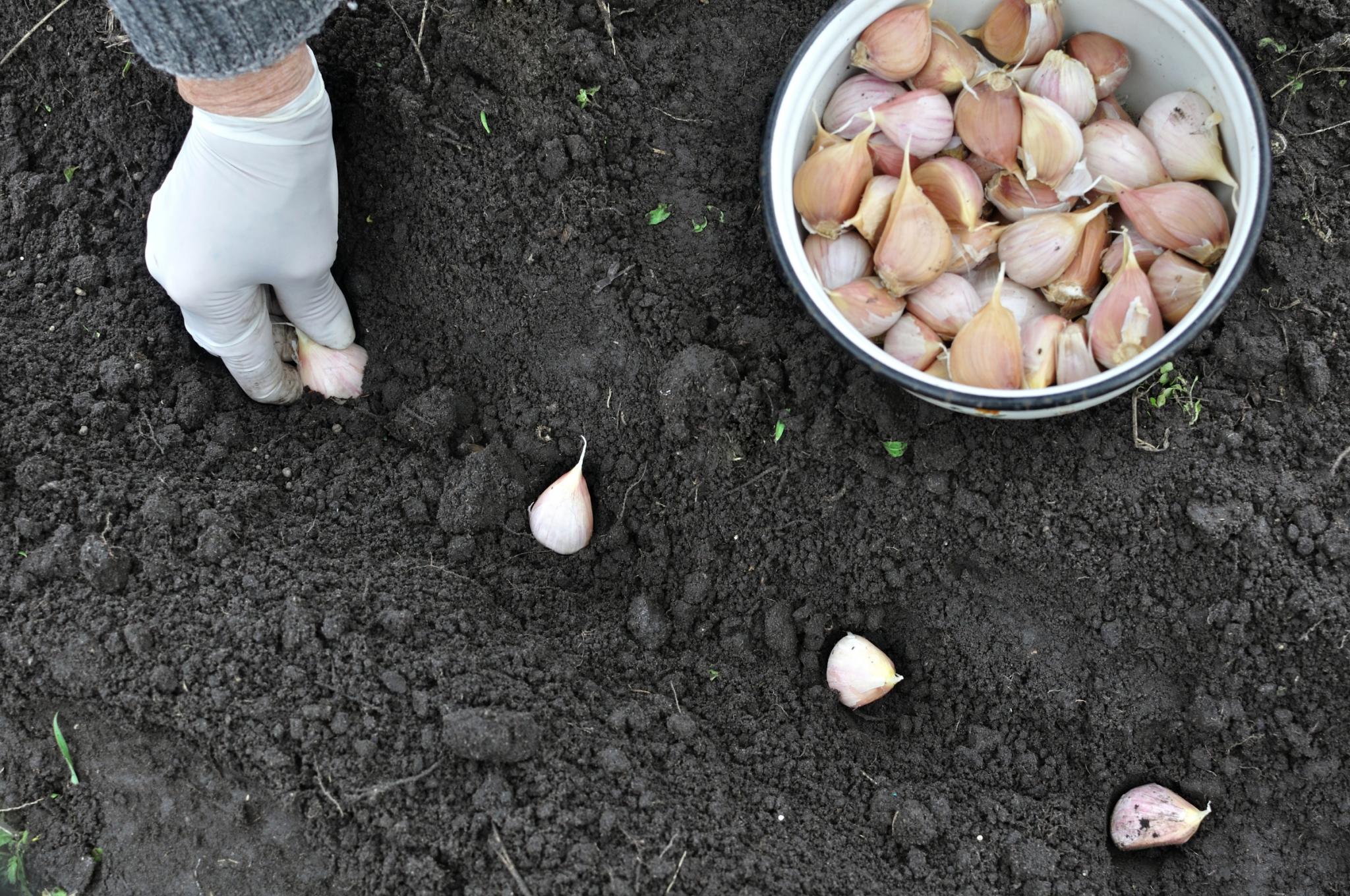
- Plant cloves 4 to 8 inches apart and 2 inches deep in their upright position (with the wider root side facing down and the pointed end facing up).
- Plant in rows spaced 6 to 12 inches apart. Depending on the variety, a 10-foot row should yield about 5 pounds of the fragrant bulbs.
Growing
- Gardeners in areas where the ground freezes should mulch garlic beds heavily with straw or leaves to ensure proper overwintering. Read our mulching guide for more info!
- Mulch should be removed in the spring after the threat of frost has passed. (Young shoots can’t survive in temps below 20°F/-6°C on their own. Keep them under cover.)
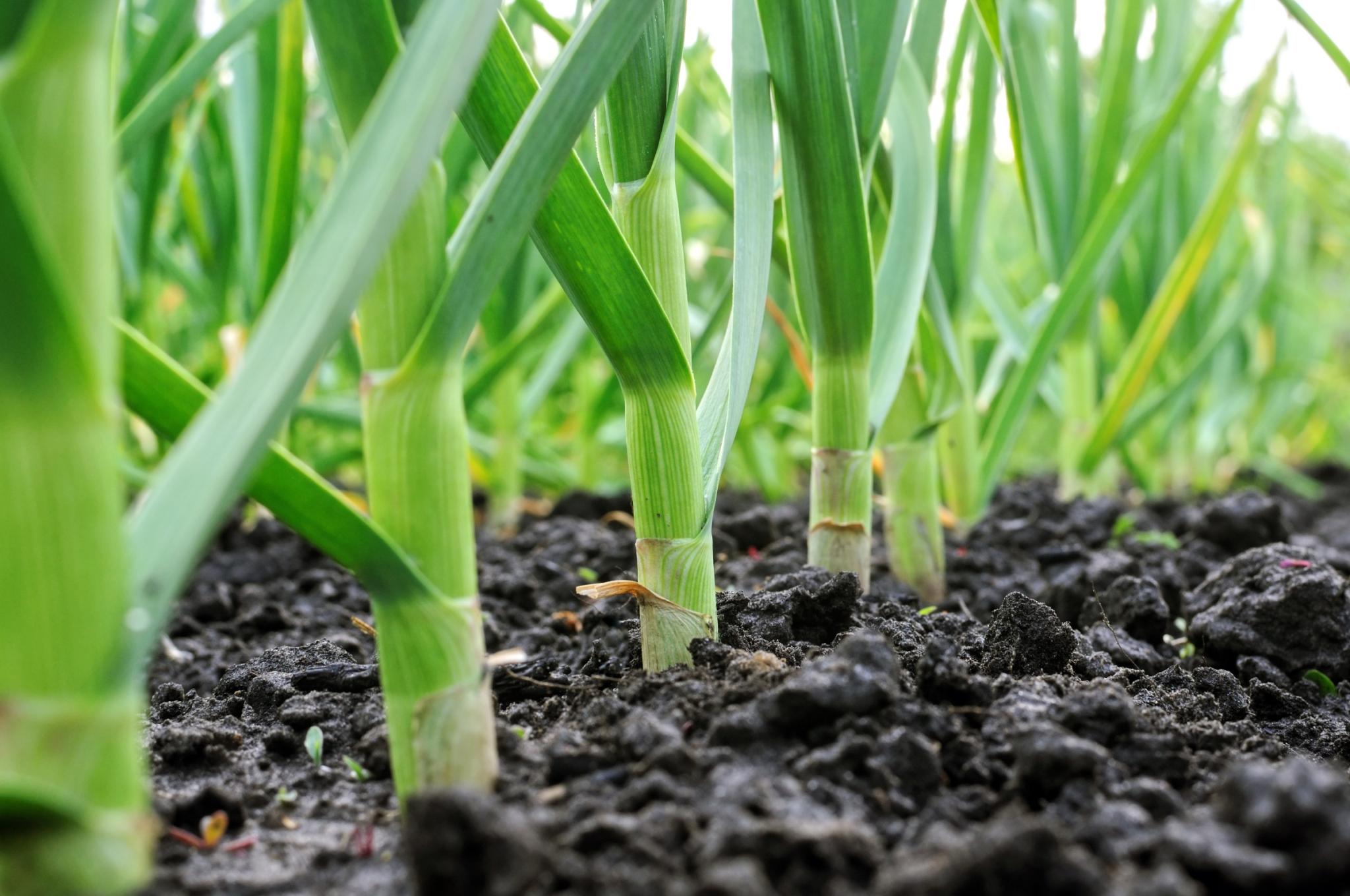
- In the spring, as warmer temperatures arrive, shoots will emerge through the ground.
- Cut off any flower shoots that emerge in spring. These may decrease bulb size.
- Garlic is a heavy feeder. In early spring, side-dress with or broadcast blood meal, pelleted chicken manure, or a synthetic source of nitrogen such as a pelleted fertilizer.
- Fertilize again just before the bulbs begin to swell in response to lengthening daylight (usually early May in most regions). Repeat if the foliage begins to turn yellow.
- Keep the planting site well weeded. Garlic doesn’t do well with competition—it needs all available nutrients!
- Water every 3 to 5 days during bulbing (mid-May through June). If May and June are very dry, irrigate to a depth of 2 feet every eight to 10 days. As mid-June approaches, taper off watering.
Types
Before you choose a variety of garlic, you need to consider your climate, which determines whether you plant a hardneck or softneck variety. Then you need to consider your cooking because different varieties have different taste profiles, from mild to sweet to bold to spicy!
Hardneck Garlic
Hardnecks are the best choice for Northern gardeners. This variety is extremely cold hardy for harsh winters. These grow one ring of fat cloves around a hard stem, with fewer but larger cloves per bulb than softnecks.
Bonus! Hardnecks produce flower stems, aka “scapes,” which must be cut to encourage the bulbs to reach their full potential. The scapes themselves are an early summer treat, delicious if chopped into salads or added to stir-fries.
Popular hardneck varieties: ‘Music’ (on the mild side yet rich and mellow); ‘Chesnok Red’ (mild and sweet, creamy texture when roasted); ‘Early Italian’ (sweeter flavor that won’t overpower dishes); ‘German Red’ (robust, classic garlic flavor which cooks love); ‘Spanish Roja’ (strong and hot, heirloom with classic garlic flavor).
Softneck Garlic
Softnecks are more common with Southern gardeners, growing well in warm climates with warm winters. They have more intense flavors and tend to grow bigger bulbs with smaller cloves per bulb because energy is not being diverted to top-set bulblets like hardnecks.
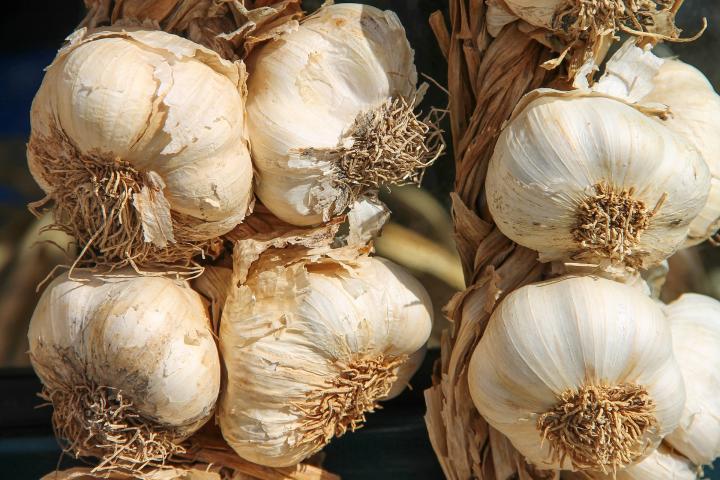
They do not have scapes, but they store better than hardnecks. Like their name suggests, they have necks that stay soft after harvest and, therefore, are the types that you see braided together.
Popular softneck varieties: ‘California White Early’ (classic moderate garlic flavor, most popular grocery store type, harvest in spring); ‘California White Late’ (harvest in summer); ‘Inchelium Red’ (wonderful but mild garlic flavor, superior storage life); ‘Silver White’ (classic garlic, great storage, excellent for beginner); ‘Lorz Italian’ (hot and zesty heirloom, popular with cooks).
Elephant Garlic
Elephant garlic isn’t a true garlic, but it is grown similarly to hardneck varieties, requiring a long, cool growing season in Zones 3 through 9. Most types take about 90 days to harvest once growth starts. Despite its size, it has quite a mild flavor, more similar to onion and shallots than traditional garlic. Bulbs and cloves are large (up to one pound each!), with just a few cloves to a bulb.
See our complete video that demonstrates how to grow and harvest garlic!
Harvesting
- Harvest from fall plantings will range from late June to August. If you planted in the spring, calculate your approximate harvest date based on the “days to maturity” of the garlic variety you planted.
- In general, the clue is to look for yellowing foliage, but this isn’t the case for all garlic varieties. Harvest when the tops begin to yellow and fall over, but before they are completely dry.
- Before digging up your whole crop, it’s a good idea to sample one bulb. Lift a bulb to see if the crop is ready. We often dig up a bulb before the tops are completely yellow (in late June or early July), as some garlic types will be ready earlier. The garlic head will be divided into plump cloves, and the skin covering the outside of the bulbs will be thick, dry, and papery.
- If pulled too early, the bulb wrapping will be thin and easily disintegrate.
- If left in the ground too long, the bulbs sometimes split apart. The skin may also split, which exposes the bulbs to disease and will affect their longevity in storage.
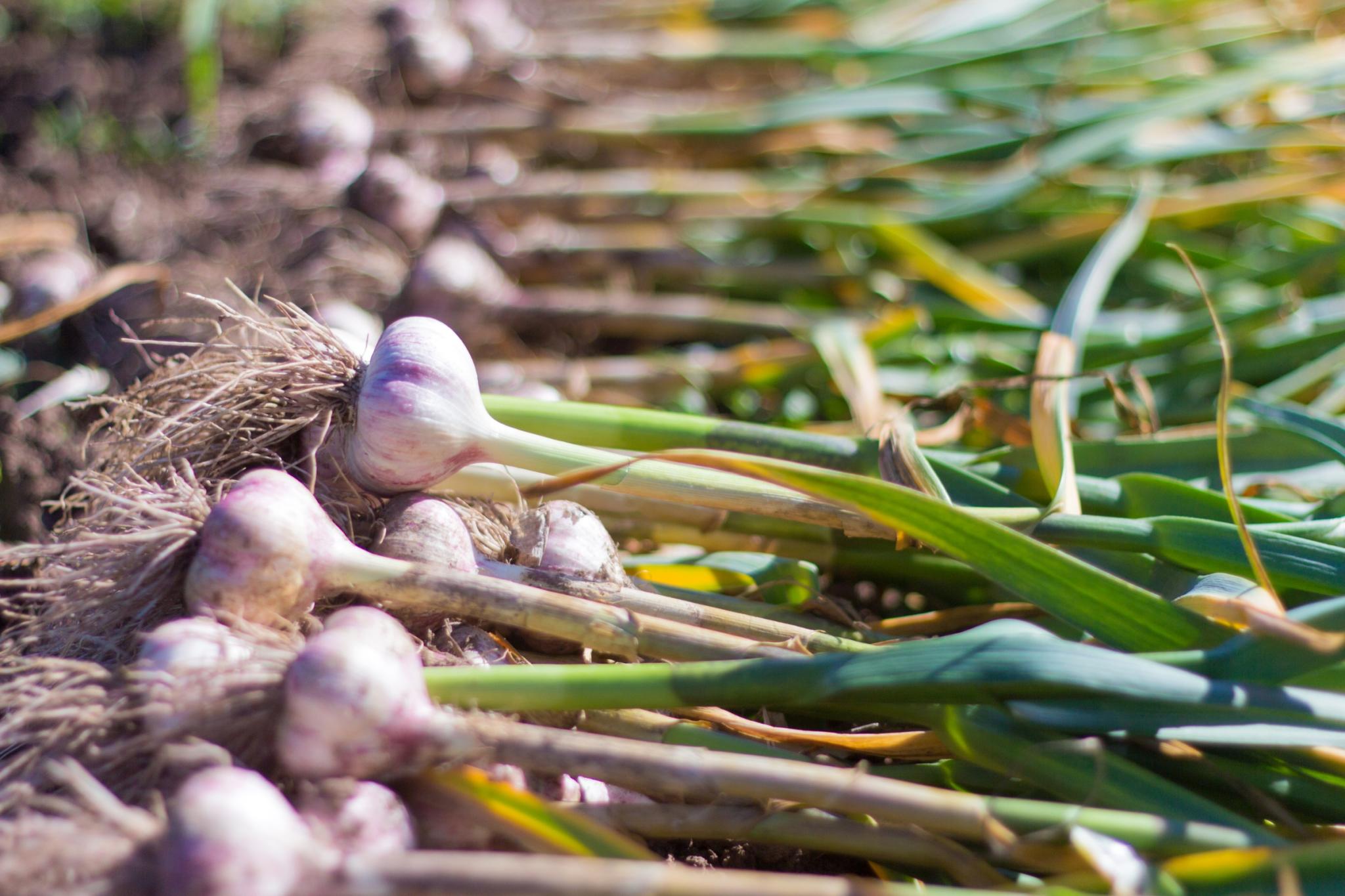
- To harvest, carefully dig (don’t pull or yank stems by hand) up the bulbs using a garden fork. Avoid damaging the roots, especially the root plate (where they attach to the bulb). Lift the plants and carefully brush off surplus soil, but do not remove any foliage or roots before putting them to dry thoroughly.
How to Store Garlic
- Let garlic cure in an airy, shady, dry spot for about 2 weeks. Hang them upside down on a string in bunches of 4 to 6, or leave them to try on a homemade rack made from chicken wire stretched over posts. Make sure all sides get good air circulation.
- After a few weeks, the garlic should be totally dry and ready to store.
- The bulbs are cured and ready to store when the wrappers are dry and papery, and the roots are dry. The root crown should be hard, and the cloves can be cracked apart easily.
- Once the garlic bulbs are dry, you can store them. Brush off (do not wash) dirt, remove only the dirtiest wrappers, trim roots to ¼ inch, and cut tops to 1 to 2 inches.
- Bulbs should be stored in a cool (55°F / 13°C), dark, dry place, and can be kept in the same way for several months. Don’t store in your basement if it’s humid. Do not store garlic in the refrigerator, either, as it will be too cold and too humid.
- The flavor will increase as the bulbs are dried. Properly stored, garlic should last until the next crop is harvested the following summer.
- If you plan on planting garlic again next season, save some of your largest, best-formed bulbs to plant again in the fall.
Gardening Products
Cooking Notes
- Learn how to make your own garlic powder to easily spice up a recipe.
- Roasted garlic bulbs are also a favorite of ours!
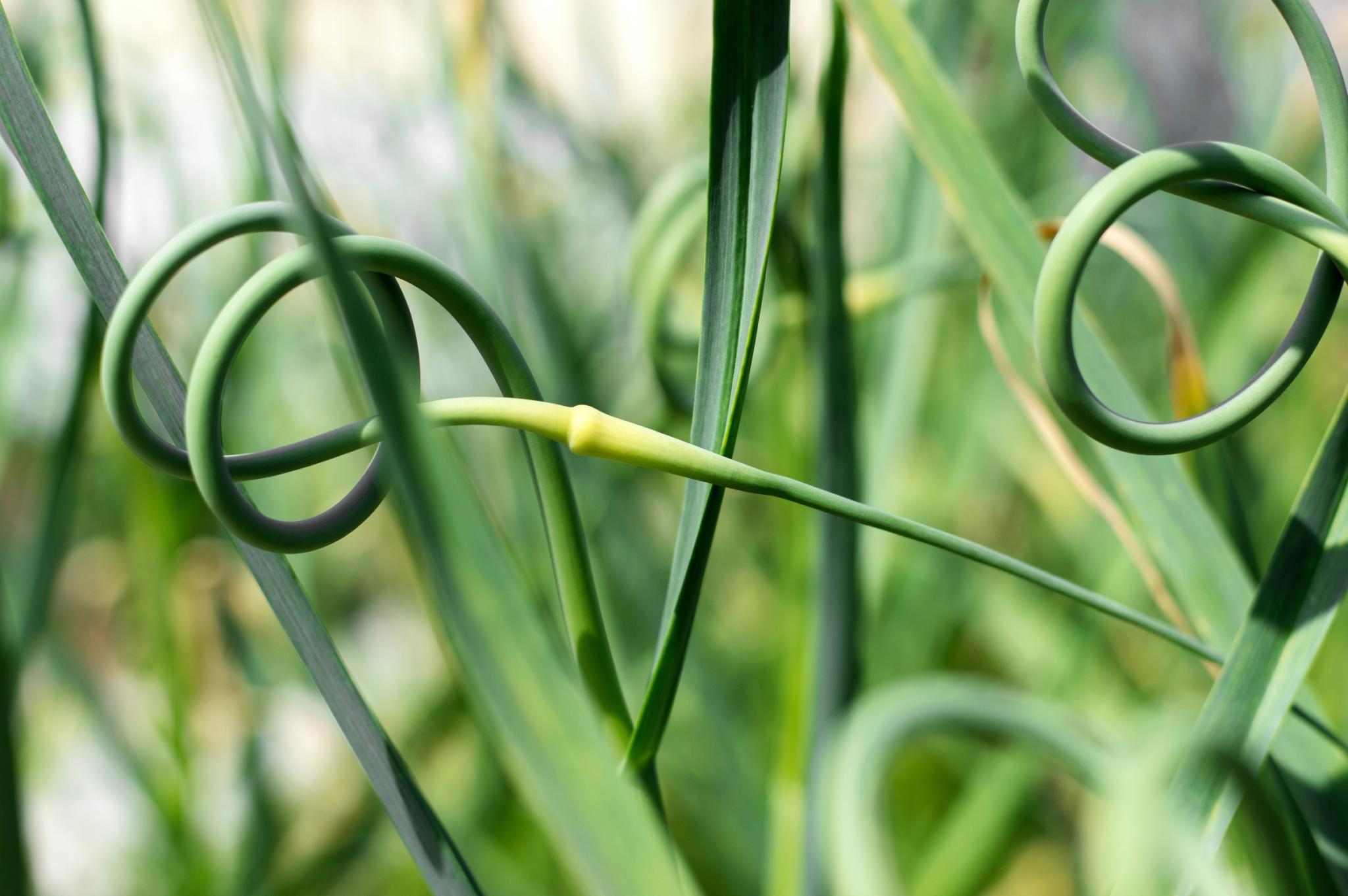
- Around the summer solstice (late June), hardneck garlic sends up a seed stalk or scape. Allow it to curl, then cut off the curl to allow the plant to put its energy into bulb formation. Use the scapes in cooking the same way you would garlic bulbs. We like to stir-fry scapes the way we cook green beans—similar, with a spicy kick! Note that they get more fibrous and less edible as they mature.



Comments

Check the soil moisture: too much or too little water may turn leaf tips yellow. Also, too little nitrogen (garlic likes soil rich in nitrogen when it starts to grow; less so as it matures). Temperature fluctuations can also cause yellowing tips. There are also a few pests and diseases that may cause yellowing leaves, such as onion maggots, nematodes, and various fungal rots. If there are just a few leaves that have yellow tips, then most likely you don't need to worry. If the situation progresses, however, probably something more serious is going on. For more information, see:
http://www.extension.umn.edu/garden/diagnose/plant/vegetable/garlic/leaveswilt.html
http://www.extension.umn.edu/garden/fruit-vegetable/growing-garlic-in-minnesota/#soils
http://www.southernexposure.com/growing-guides/allium-guide-web.pdf
In terms of planting, it really depends on where you live in Kentucky. The state is mostly in plant hardiness zone 6a. If you're looking for planting dates for your zip code, see our Best Planting Date chart by crop here:
http://www.almanac.com/gardening/planting-dates
Garlic plants are fairly hardy. If you are not expecting any severe frosts, it should be OK to plant them out. Or, you can wait until after the last expected frost, especially as they are already in pots.
Hi Michelle,
Yes, you are supposed to plant cloves and each clove will grow into a head of garlic. You can carefully dig up a few of the heads that you planted and see if you can divide them easily. Then replant the cloves in the garden.
- « Previous
- 1
- 2
- …
- 10
- Next »

Yes, Dave, what were you thinking? Hang on, it may not be so bad.
As we're sure you know: "To everything there is a season," and garlic, too, must have its own. We can find no substantiation for garlic growing/maturing faster in a greenhouse; most growers indicate that they remove it from the greenhouse to the outdoors in warm weather. If your "greenhouse setup" is a temporary cover, that would mean lifting if off the garlic.
It seems that you have a few options: Leave the garlic, harvest it, and sell, trade, or give away heads as starter cloves for next season. Trades might get you the fresh produce you seek, in this case from neighbors' beds. Sales of garlic heads for growing, especially unusual varieties, seems to be a booming business. It's easy to grow and (almost) everyone uses it. You could, depending on space and what else you want to grow, plant around the garlic. Shallow-root plants, like lettuce greens, might do. Possibly peas. You could enlarge your bed. Start a new one. Or plant in containers. Finally, we regret to suggest that you could pull some garlic up early to make space.
Just trying to help, Dave. Best wishes—