
Add a tropical splash to your space! Learn how to grow and care for crotons.

Read Next
Growing
How to Care for Croton
- Place croton in a sunny location such as an eastern, southern, or western window. If croton is getting too little light, its newer leaves will be less colorful.
- Keep the soil evenly moist, but let it dry out between waterings.
- If humidity is low in your home, mist around the leaves with water once a week or keep a tray of wet gravel near the plant.
- Croton leaves are dust magnets. Gently wipe the leaves with a moist cloth twice a month to keep them clean and dust-free.
- Fertilize the plant in spring and summer while the plant is actively growing. In fall and winter, fertilize more sparingly or refrain from fertilizing altogether.
- New croton plants can be started with 4- to 6-inch stem cuttings. Remove the bottom leaves and place the cutting in a glass of water. After roots have formed, plant them in a small pot.
- Repot the plant in the spring if it has grown too large for its current pot.
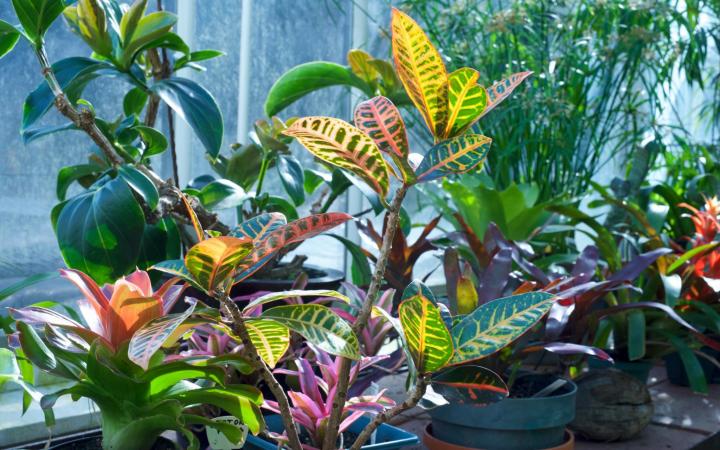
Types
- ‘Petra’ is a popular cultivar. It has green leaves with red, orange, and yellow veins.
- ‘Gold Star’ has green leaves that are splashed with bright gold “stars.”
- ‘Eleanor Roosevelt’ has skinny leaves that range in color from burgundy to lime green. The leaves are mottled with bright yellow as if they were spray painted.
- ‘Oakleaf’ has oak leaf–shaped dark green or bronze leaves with veins in yellow, orange, and red.
Gardening Products

More Like This



Hi Ana,
Croton plants like a lot of light. If they don't receive enough, the new leaves will be green/less colorful. As for the leaves drooping, that most likely means you need to increase the frequency (not amount) of water you give your croton. We hope this helps!
Hi Lewis,
Drooping leaves could indicate that the plant needs more water. Crotons like their soil to be consistently moist, but be careful of overwatering as well.
According to some sources, crotons can be a little more colorful if slightly pot bound. However, they don't do well if severely pot bound, showing signs such as slow/weak growth or being always thirsty. Check to see if roots are showing on top of the soil and/or through drainage holes. If so, it may be time to repot. Crotons usually don't take kindly to changing pots and may drop some leaves after repotting until they get used to their new home. Repot only during their growing season, in spring and early summer. Be very gentle to the roots and select a pot that is only slightly wider but at the same depth as the previous. Use a soil similar to the original and water using tepid water. Wait for about 1 or 1-1/2 months before fertilizing.
Leaf drop can be caused by a variety of issues. For example, plant shock from repotting or being pot bound. Temperature that is too low, too high, or too variable can cause brown leaf edges, and brown tips may indicate not enough air humidity or not enough watering. Overwatering can cause leaf drop as well. Be sure to mist your plant regularly, or keep the pot propped up on pebbles in a tray filled shallowly with water and keep it away from cold drafts. A consistently warm and moist environment is key. Make sure that it has enough light, and check for pests. If environmental conditions are the cause, after correcting them, it may take several weeks or a few months for the plant to recover.
- « Previous
- 1
- 2
- …
- 10
- Next »

Comments