
From Ground Covers to Garden Giants: Meet the Many Faces of Phlox

Read Next
Planting
Because there are so many different types of phlox, sunlight requirements vary. Tall garden phlox do best in full sun, while woodland species thrive in partial shade. (See Recommended Varieties, below, for more information!)
In general, phlox prefer soil that is nutrient rich and evenly moist. They do not like to sit in wet soil, however. Use a garden fork or tiller to prepare your garden bed prior to planting. Loosen the soil to about 12 to 15 inches deep, then mix in a 2- to 4-inch layer of compost to improve soil consistency and fertility.
When to Plant Phlox
- Plant phlox in the spring after the threat of frost has passed, or plant in the fall at least a month before your first frost.
How to Plant Phlox
- It is easier to grow phlox from cuttings/transplants than from seeds, although established plants will readily spread by seed in the garden.
- Space plants according to their mature size.
- If you are transplanting a plant from a pot, dig a hole about twice the size of the pot’s diameter and place the plant so that the top of the root ball is even with the soil’s surface. Fill in around the root ball, and remember to water it thoroughly.
Types
You just can’t go wrong with phlox! Here are some of the best species and varieties to try:
Low-Growing Phlox
- Creeping phlox or moss phlox (Phlox subulata) is a low-growing species that works excellently as a ground cover. It spreads slowly, growing in mounds that get 4–6 inches thick. The whole plant turns into a carpet of color in spring, when flowers cover every square inch of foliage. This phlox is particularly stunning when allowed to drape over a rock wall—imagine a waterfall of color! Creeping phlox grows best in well-draining soil and partial to full sun.
- ‘Candy Stripe’ is a popular variety with pink-and-white–striped flowers.
- ‘Emerald Blue’ produces a sea of lilac-blue flowers (perfect for that waterfall of color!).
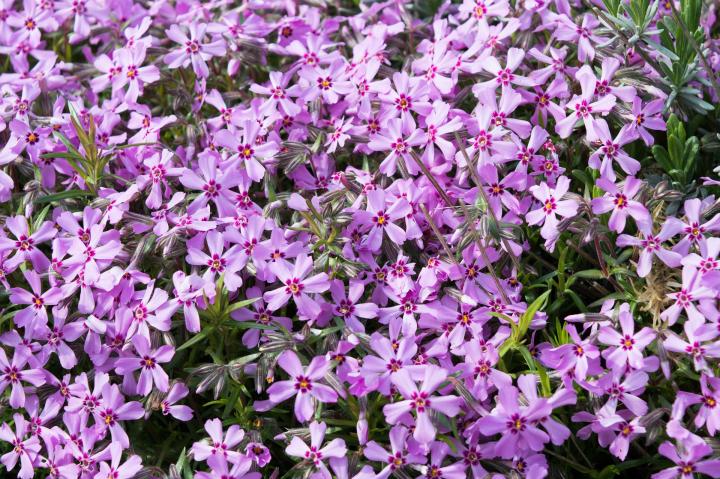
- P. stolonifera, which also goes by the common names creeping phlox and moss phlox, is similar to P. subulata in name only. The main differences between it and P. subulata are that its leaves are oval-shaped (rather than needle-shaped), and its flowers are produced on stems that rise 6–10 inches above the foliage (rather than directly on the foliage). It prefers a shadier growing site with rich, evenly moist soil.
- ‘Sherwood Purple’ is a delicate little phlox with purplish-pink flowers.
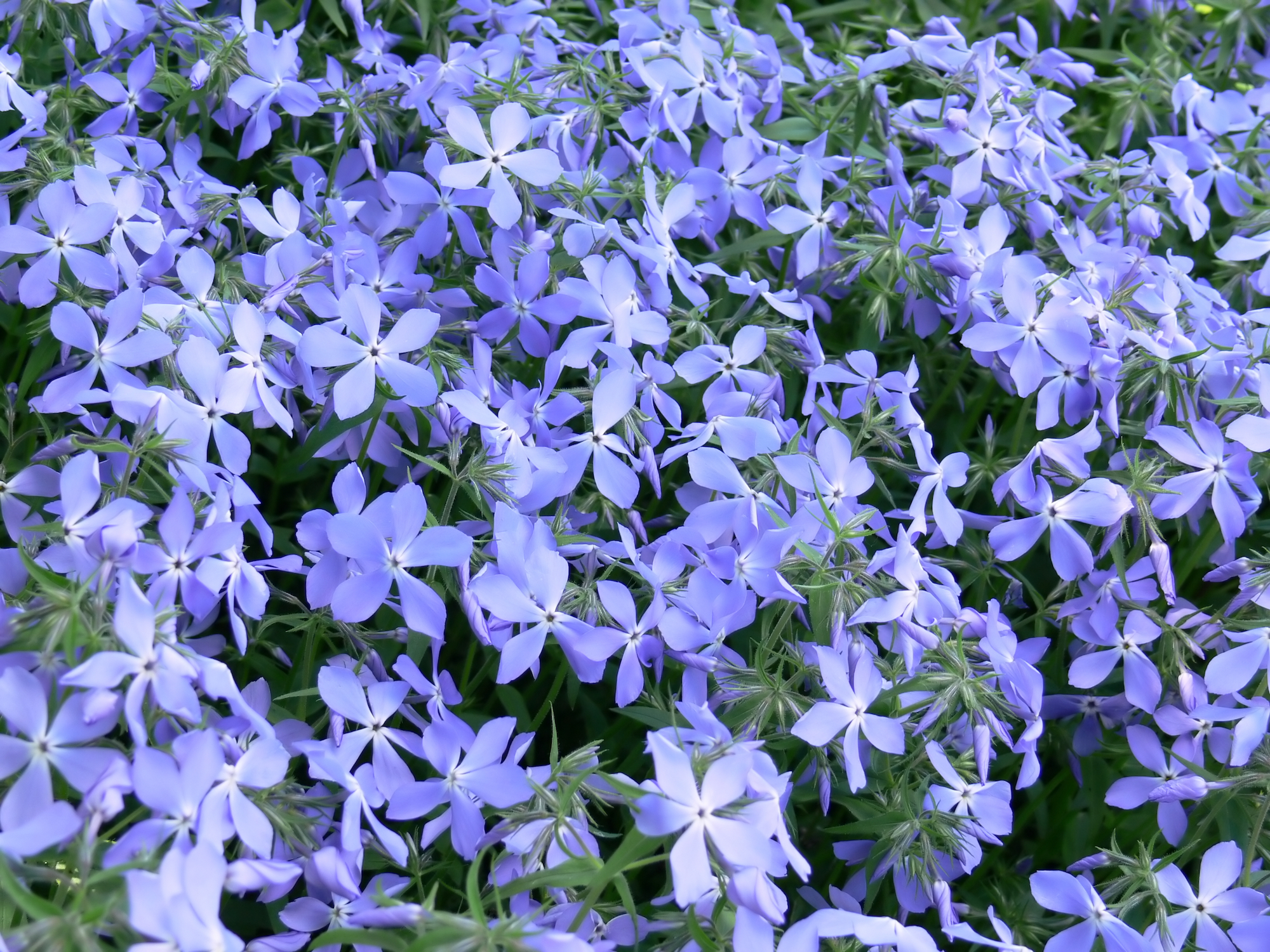
- Woodland phlox or blue phlox (P. divaricata) is another low-growing species. As its two common names suggest, it prefers partial to full shade and moist, rich soils and produces bluish flowers in early spring. Like P. stolonifera, its flowers bloom on stems that rise about a foot or so above the creeping foliage.
- ‘Chattahoochee’ and ‘Blue Moon’ are two great varieties with beautiful blue-to-violet flowers.
Medium-Height Phlox
- Annual phlox or Drummond’s phlox (P. drummondii) grows as an annual rather than a perennial, unlike most other phlox species. Annual phlox rarely grows taller than 2 feet in height. Most varieties are not very heat tolerant, but in warmer regions, you may find the heat-tolerant varieties for sale. Plant in well-draining soil in a site that gets partial sun and doesn’t stay too wet.
Tall Phlox
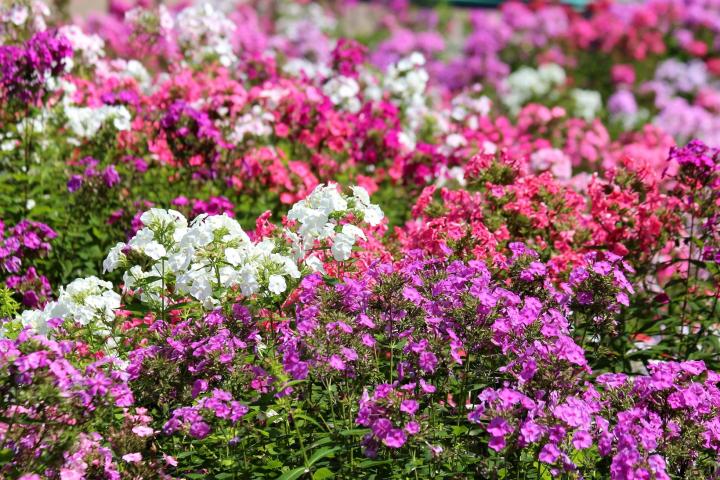
- Garden phlox or summer phlox (P. paniculata) is the tallest phlox in cultivation and is probably the species that most folks have in their gardens. It grows in clumps that reach between 3 and 5 feet in height and produces panicles of flowers in mid- to late summer. Though tolerant of most lighting, it grows and flowers best in partial to full sun. It has a reputation for being very susceptible to powdery mildew, but resistant varieties are available.
- ‘David’ has bright white flowers and is resistant to powdery mildew.
- ‘Jeana’, another mildew-resistant variety, produces panicles of petite purplish flowers—similar in appearance to a butterfly bush.
Other Phlox
The phlox listed above are just a few of the many species out there. Others of interest to gardeners may be Carolina phlox (P. carolina), meadow phlox or spotted phlox (P. maculata), and sand phlox (P. bifida).
Gardening Products

More Like This




Comments