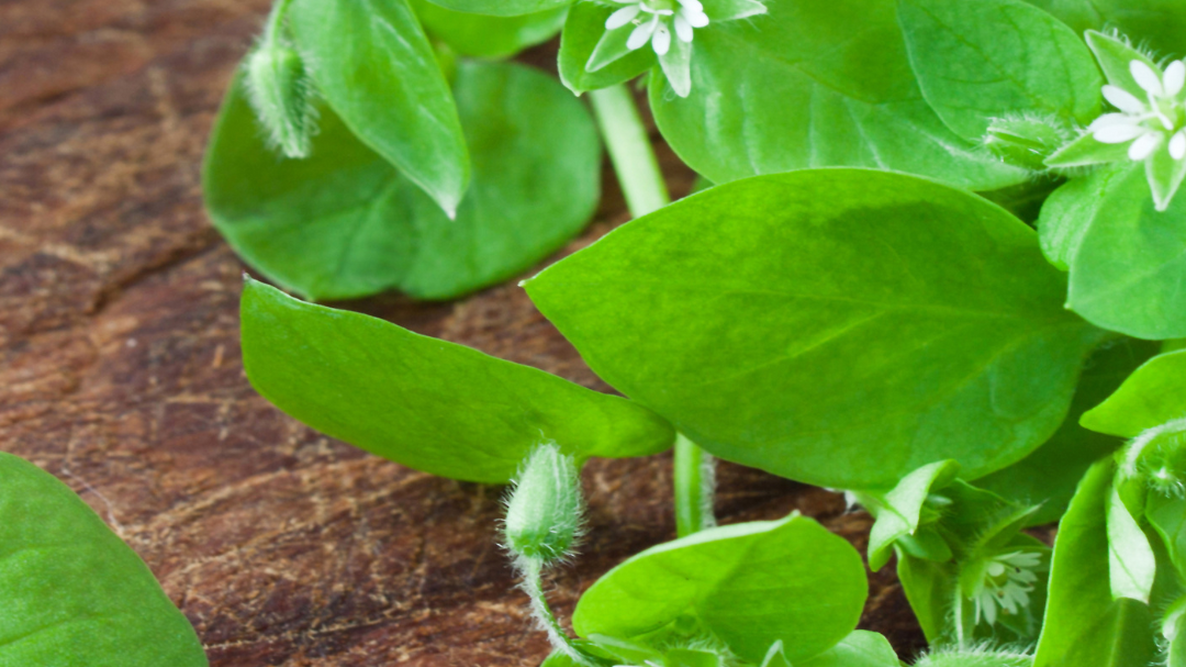

Chickweed (Stellaria media) is a nutritious edible weed that appears in early spring. Often dismissed as a garden weed, this wild herb has been used for centuries for its health benefits, skin-soothing properties, and mineral-rich leaves.
What is Chickweed?
In the carnation family, chickweed (Stellaria media) is also known as starweed, starwort, winterweed, and chickenwort. This herb is native to Europe but has since made its way to North, Central, and South America, as well as Africa, Australia, and Asia.
Chickweed can easily be overlooked, as it often grows low to the ground and, to the untrained eye, might be simply considered a weed. Many gardeners consider it a weed, but that is true of so many of our beautiful medicinal wild plants. The connection to our wild foods has been lost to many in the modern age. It’s time to connect back to the wild food and medicines our ancestors would have used.
Discover 20 edible “weeds,” i.e., wild plants in your backyard!
You can find chickweed growing wild in your garden, yard, parking lots, and even fields. You’ll see chickweed at the same time that nettles, chives, and spring ephemerals arrive. Once you learn to identify chickweed, you will notice it all over during the spring.
Benefits of Chickweed
Chickweed is known as a nutritive herb, meaning it can be eaten for food and used as medicine. It can be eaten raw in salads or sandwiches, made into a yummy pesto to use as a topping, or infused into tea. As a medicine, chickweed can be dried to make herbal oils and then salved for a soothing skin remedy.
Key Chickweed Benefits
- Anti-inflammatory herb
- Supports digestion
- Helps soothe skin irritation
- Rich in minerals like iron and zinc
- Supports detox and kidney function
- Mild, edible spring green
| Nutrient | Chickweed | Spinach | Kale |
|---|---|---|---|
| Iron | High | Moderate | Moderate |
| Zinc | High | Low | Low |
| Vitamin C | Moderate | Moderate | High |
How to Identify Chickweed
Chickweed grows in many environments, including gardens, lawns, fields, and disturbed soil. It thrives in cool, moist conditions and often appears in early spring as one of the first edible wild greens.
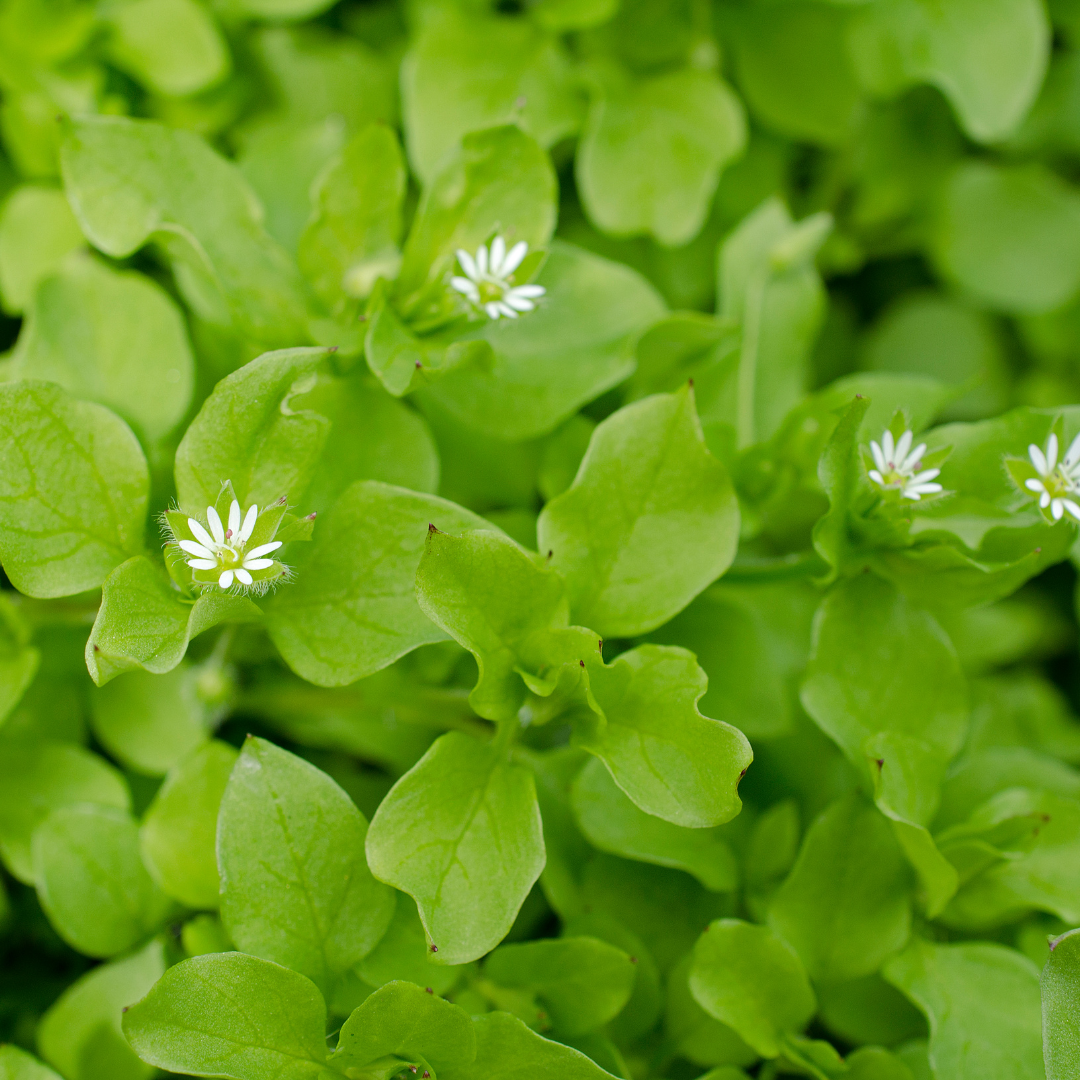
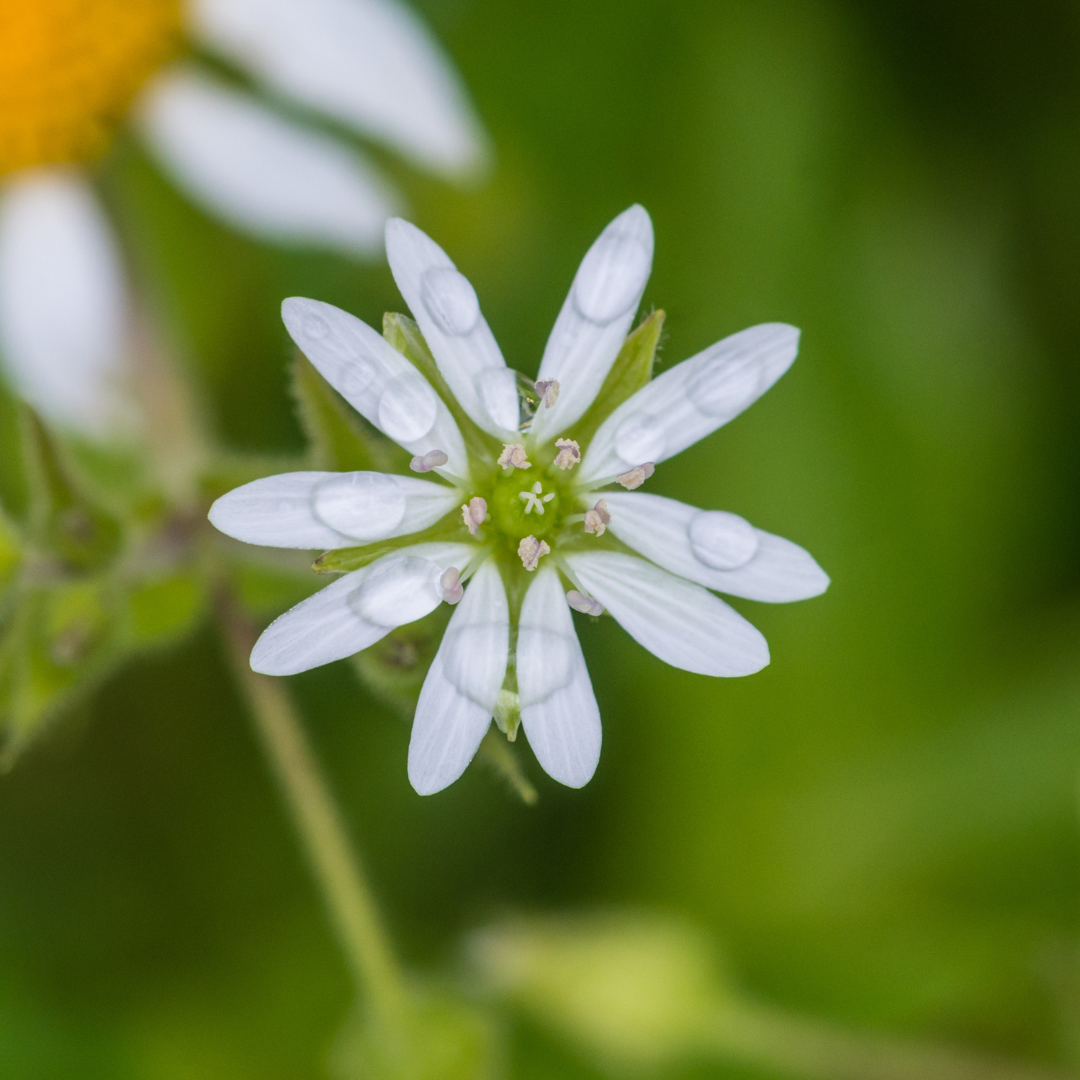
The tiny flowers look as if they have 10 thin petals; these are actually five petals that are deeply cleft.
Chickweed flowers are white, and its leaves grow opposite each other.
Chickweed is a sprawling herb, meaning it spreads out across the ground. When the plant is in flower, its stems can grow upward and get up to a foot tall, but most of the plant will still be growing along the ground. The leaves are smooth and neither toothed nor serrated.
If you look very closely and hold the stem up to the sun or a light, you can see one thin strip of tiny hairs along the stem.
This sweet, demure herb comes up in early spring, sprawling along the ground, producing sweet tiny white flowers, early spring through early summer.
I absolutely adore chickweed in the garden because it offers so many benefits to us, including in our gardens. It grows like a blanket on the soil, so I will allow the plant to grow between the rows of the garden or sometimes even in the garden beds along with other taller-growing garden veggies such as kale or Swiss chard.
In my gardens, chickweed keeps the garden soil covered and moist in the spring. It even helps bring nutrients up into the soil, benefiting the plants around it. When our warm-weather transplants, such as tomatoes and peppers, are ready for the garden, it is beginning to die back.
How to Harvest Chickweed
Chickweed is typically harvested in early spring through early summer, when the plant is young and tender. The top few inches of stems and leaves are the best parts to collect for eating or making herbal preparations.
Simply give the chickweed plant a haircut! Trim the top half of the leaves and stem when harvesting for food, as the younger leaves are more tender. When harvesting for medicine, you can trim a bit lower down. Don’t cut all the way down. Leave enough for the plant to grow, as you can receive multiple harvests in a season.
If you are harvesting in your own garden, you do not need to wash unless you feel it’s necessary. Rinsing and patting dry is a great idea when harvesting in other yards, parks, etc. Of course, always do what feels right to you.
How to Eat Chickweed
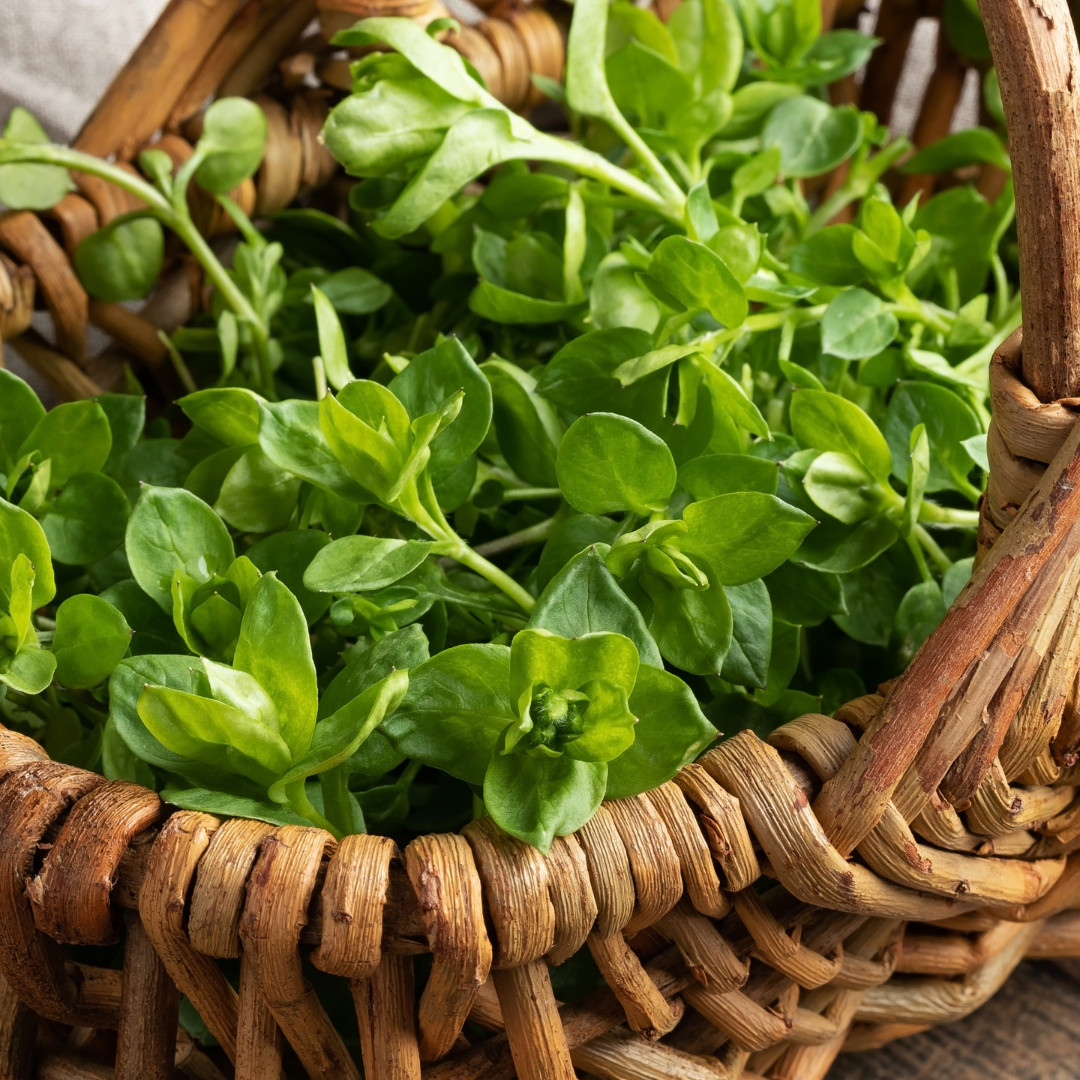
- Parts to eat include the tender leaves, tender stems, and flowers.
- You can eat chickweed just like any green, the top young leaves being the most tender and delicious. You can also add it to salads, wraps, sandwiches, or steamed greens.
- Chickweed also makes a fabulous pesto.
Using Chickweed as INTERNAL medicine
You can dry the leaves and flowers for use as a tea or an herbal infusion; fresh chickweed also works beautifully.
You can also make an herbal vinegar to add to foods or take straight. It’s best to use wilted or dried chickweed when making your vinegar to keep the water content low.
Using Chickweed as EXTERNAL medicine
Chickweed’s most notable claim to fame just might be it soothing nature for our skin.
It makes an amazing soothing herbal oil, which then can be made into a salve. You want to use dried chickweed when making your herbal oils to avoid introducing too much water. Chickweed is very moist.
Chickweed can also be used as a poultice on the skin for scrapes, bug bites, and stings.
Chickweed Vinegar
Vinegar is a beautiful way to preserve minerals. The acidity pulls the minerals into the vinegar and helps to preserve the medicine for months. When I say vinegar, I am speaking of apple cider vinegar—always organic.
Apple cider vinegar is said to help improve blood pressure, support healthy blood sugar levels, support digestion, and improve skin quality—and the list goes on.
Using dried herbs will mean a longer-lasting vinegar, although you can certainly use fresh. The water inside the fresh herbs will dilute the vinegar, which lowers its acidity and renders the vinegar less shelf-stable (the acidity of the vinegar is what keeps microbial growth at bay).
You can refrigerate vinegar made from fresh herbs for a longer shelf life. Although many people (including myself) still leave their vinegar at room temperature after straining, these herbal vinegars will inevitably have a shorter shelf life than vinegar made from dried herbs. Watch for signs of mold growth or fermentation to determine if your vinegar has spoiled. Things like bubbles, off or putrid smells, and visible mold are all signs that the vinegar has turned and it’s time to dump it in the compost. I find that my herbal vinegars last about 4 months unrefrigerated.
To Make Chickweed Vinegar
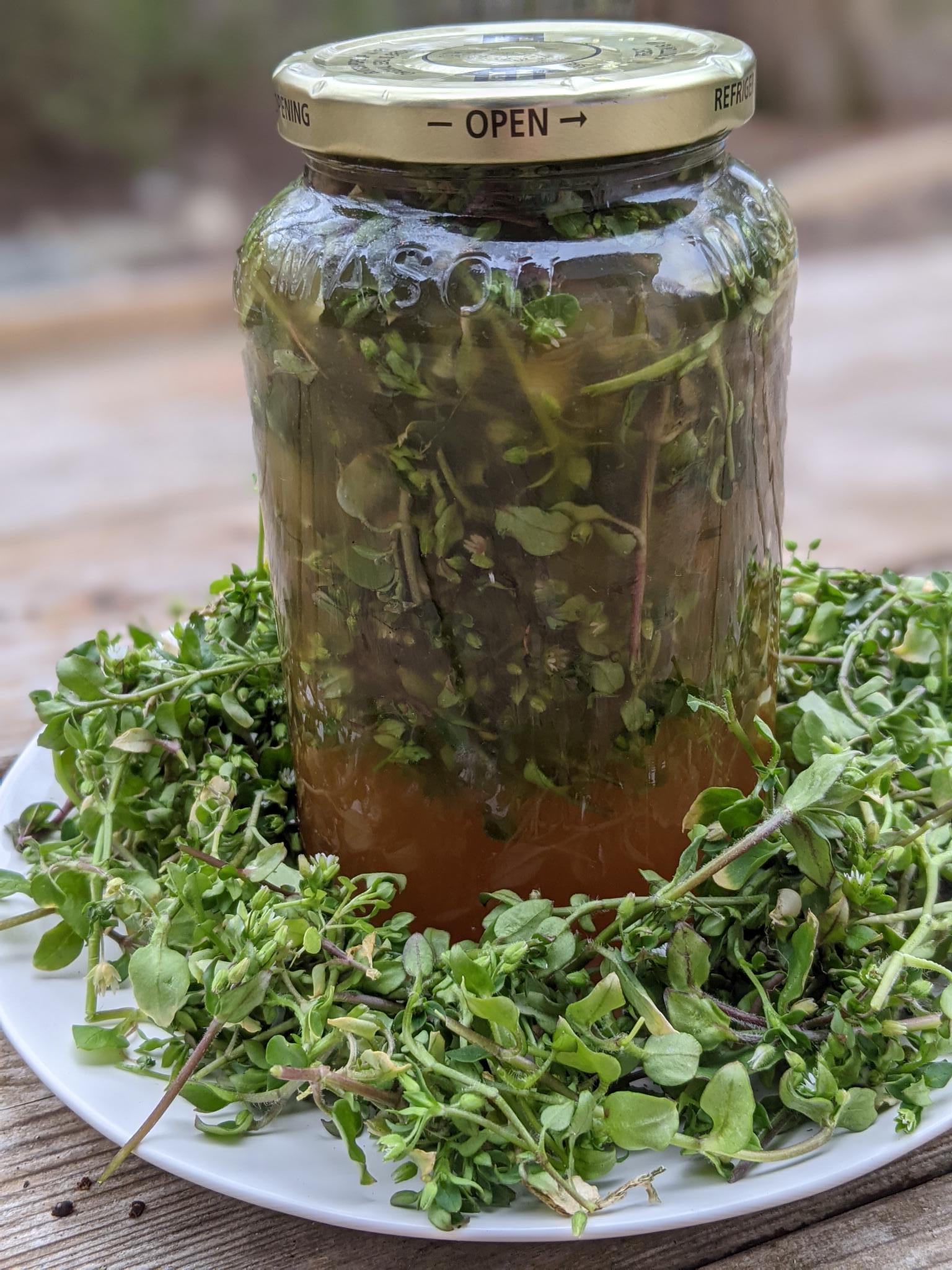
Add your chopped chickweed into your jar, filling loosely, 3/4 of the way. Use either dried or fresh chickweed. Dried is a great idea due to the high water content of chickweed.
Pour over your apple cider vinegar all the way to the top of the jar. Use parchment paper between the jar and lid.
Allow the vinegar to steep for 4 weeks in a cool, dry location.
Strain and use internally as medicine or to add to meals. I also love adding this vinegar to the bath for dry or inflamed skin, rashes, etc.
Chickweed Pesto
We always have pesto on hand at our house. We use it on our veggie bowls, as a dip for our potato fries or crackers, over eggs, you name it. Chickweed is the perfect wild herb to make pesto because it’s got such a mild taste. The pesto is super high in nutrients and minerals from the chickweed, and we’re keeping it cheese/dairy-free.
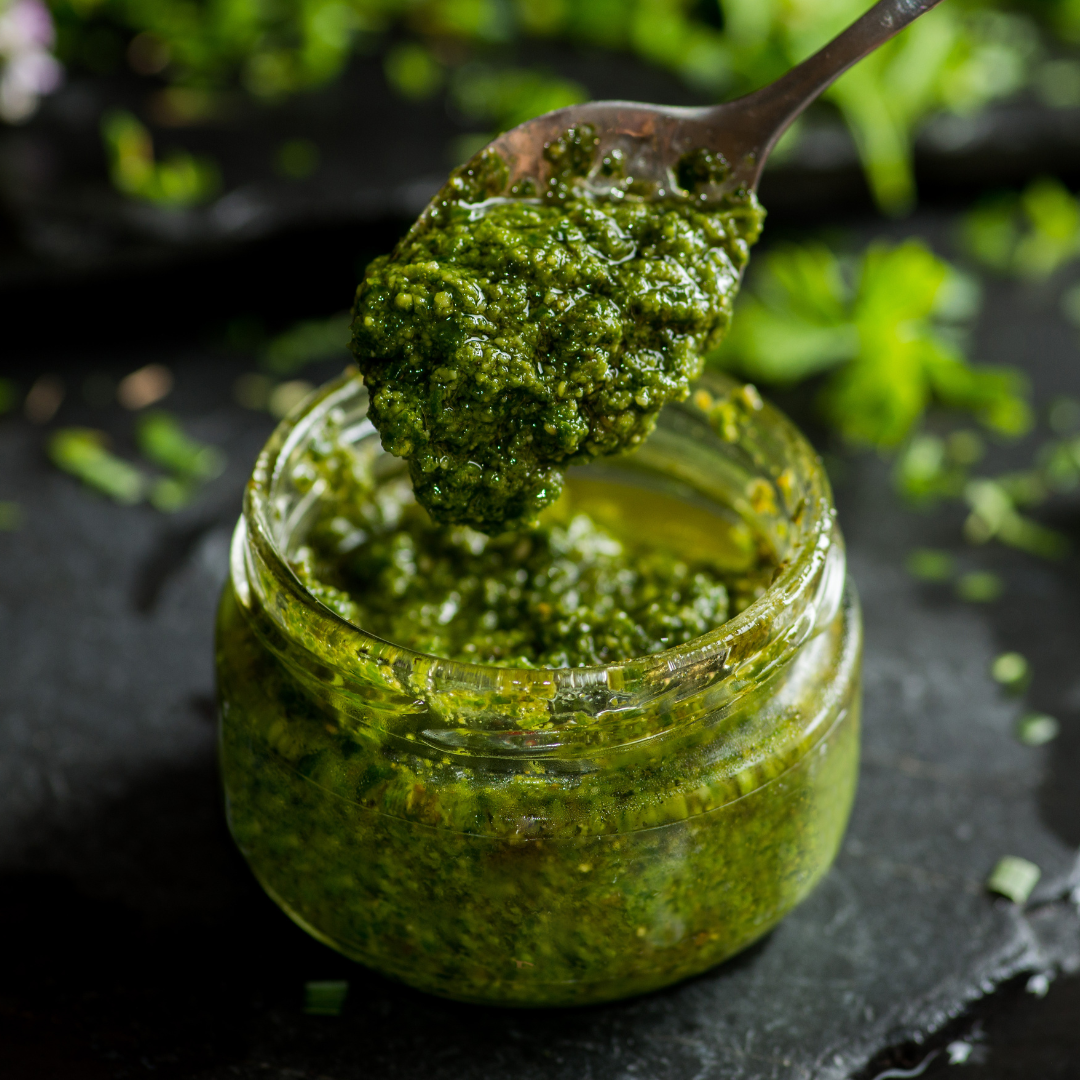
Chickweed Pesto Recipe
- 3 cups loosely packed fresh chickweed tops (tender stems and leaves)
- 2 cups loosely packed cilantro or basil, chopped
- 5 to 7 medium garlic cloves, chopped
- 1 1/2 – 2 cups extra-virgin olive oil
- 2 cups whole organic walnuts
- 1– 1 1/2 teaspoon sea salt (to taste)
Wash and drain the chickweed.
Combine all the ingredients in a food processor and process until smooth.
Refrigerate for up to a week.
For long-term preservation, freeze in ice cube trays. Feel free to add more olive oil if you want a thinner pesto.,You can also add Parmesan cheese for a more traditional pesto. We like to keep ours dairy-free at home.
Chickweed is known as an incredibly safe wild food. Of course, you always want to know for sure what herb you have before you ever ingest or use it as medicine. I recommend cross-referencing multiple sources, such as this article, perhaps an herb book, and a wild edibles guide for your area.
Frequently Asked Questions
Is chickweed safe to eat?
Yes, chickweed (Stellaria media) is widely considered a safe and nutritious wild edible when properly identified. It has been used for centuries as both food and herbal medicine. As with any wild plant, be sure of your identification before eating and try a small amount first to check for sensitivity.
What does chickweed taste like?
Chickweed has a mild, fresh, slightly grassy flavor similar to spinach or lettuce. Because of its delicate taste and tender texture, it works well in salads, sandwiches, pesto, or lightly cooked dishes.
What parts of chickweed are edible?
The tender leaves, stems, and small white flowers are all edible. Most people harvest the young tops, which are the most tender and flavorful.
What are the health benefits of chickweed?
Chickweed is rich in vitamins and minerals such as iron, zinc, and vitamin C. Traditionally, it has been used to support digestion, soothe inflammation, promote detoxification, and nourish the body after illness.
Can chickweed help skin problems?
Yes. Chickweed is often used in herbal oils, salves, or poultices for soothing irritated skin. It is traditionally used for conditions such as eczema, rashes, bug bites, and minor burns because of its cooling and anti-inflammatory properties.
Can you cook chickweed?
Yes, chickweed can be cooked, though it is most commonly eaten raw. It can be lightly sautéed like spinach, added to soups, blended into pesto, or mixed into omelets and stir-fries.
How can you tell chickweed apart from look-alikes?
True chickweed has small white flowers with five deeply split petals that appear like ten petals, smooth oval leaves, and a single line of tiny hairs running along the stem. Always confirm identification with a reliable plant guide before harvesting.
There are a few look-alikes of chickweed to note:
Mouse-eared Chickweed: more hairy and not as tender, looks very similar, edible but not as tasty.
Persian Speedwell: similar characteristics, but flowers are blue and have only four petals, with no line of hairs on the stem. Not edible.
Scarlet Pimpernel: bears a loose resemblance when not in flower—toxic in large doses!
As with any wild food, each person is unique in how their body will react to a new food, including allergic reactions. Start small and see how your body reacts. If you feel better consuming chickweed, that probably means it’s a great herb for you!
Enjoy learning about nature’s medicine? Now, learn about cleavers, another wonderful wild plant in springtime.

More Like This
- « Previous
- 1
- 2
- …
- 10
- Next »

Comments