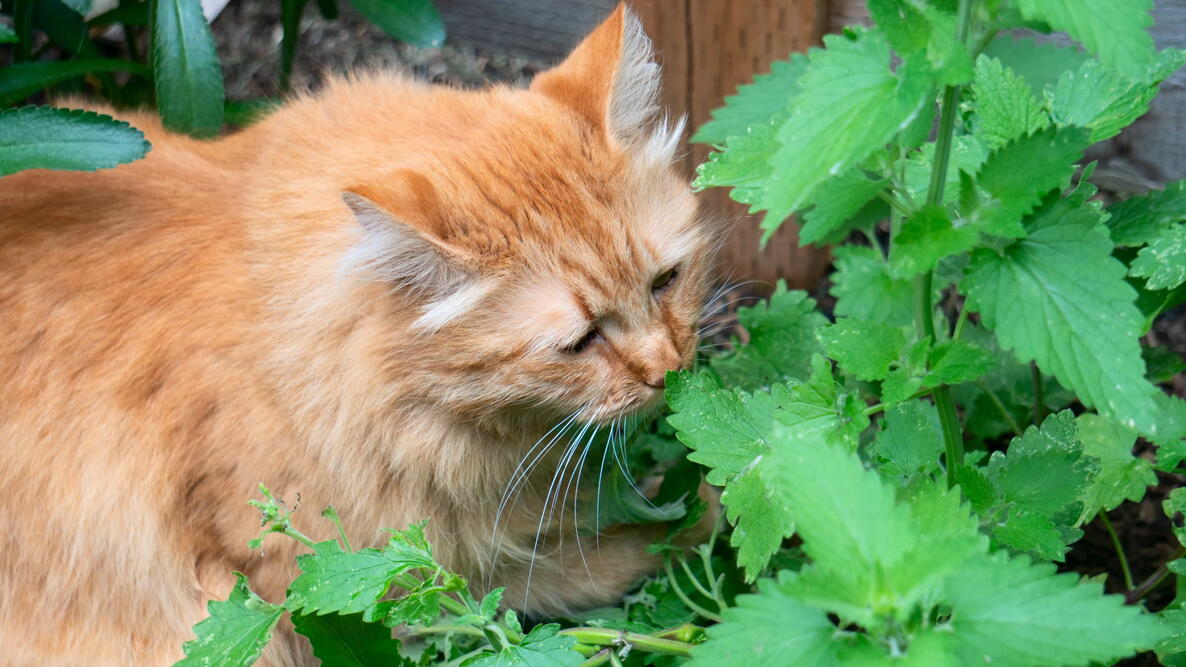
Catnip vs. catmint—trying to tell the difference might give you a case of cat-got-your-tongue.
Folks are often confused about the difference between the two, and it’s not surprising. Both belong to the genus Nepeta, and they look similar (both have square stems). But learning the difference between catmint and catnip will help you decide which one suits your garden best.
Part of the trouble is that all catnip is a catmint, but not all catmints are catnip.
The similarity of their common names is enough to cause confusion, and retailers frequently mix them up. When classified botanically, it gets a little clearer. While plants under both common names are members of the genus Nepeta (in the mint family), several distinct species are referred to by each name.
- Catnip commonly refers to Nepeta cataria, although it can also refer to Lemon catnip (N. citriodora), Camphor catnip (N. cataria ‘Camphorata’), and Greek catnip (N. parnassica).
- Catmint pertains to for N. racemosa, N. subsessilis, N. mussinii, and N. faassenii, and loosely for about two hundred other species of Nepeta.
The general rule is catmints are the more attractive ornamental plants (though beauty is in the eye of the beholder), and catnip is the more fragrant but weedy, cat-psychoactive plant.
Catnip vs. Catmint Comparison Table
| Feature | Catnip | Catmint |
|---|---|---|
| Scientific Name | Nepeta cataria | Nepeta faassenii and others |
| Main Use | Cats and herbal tea | Ornamental and pollinators |
| Flower Color | White | Lavender/purple |
| Effect on Cats | Strong | Mild |
| Growth Habit | Loose and weedy | Compact and tidy |
| Garden Use | Herb garden | Cottage garden and borders |
| Pollinator Friendly | Moderate | Excellent |
| Maintenance | Moderate | Low |
| Deer Resistant | Yes | Yes |
| Best For | Cat owners | Gardeners and pollinators |
What is Catmint?
The herbaceous perennial we call catmint is a group of many species and hybrids in the mint family (belonging to the genus Nepeta, as noted above). All of them are attractive to cats, some more than others. They’re native to Eurasia and eastern tropical Africa.
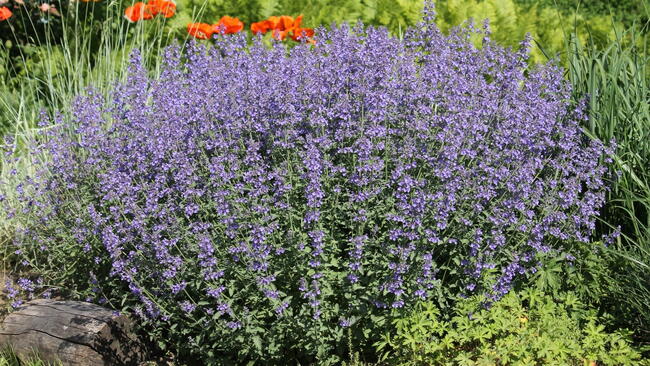
Catmint is a clumping plant that works very well in cottage gardens and meadows and as an anchor or backdrop plant in a shorter perennial bed. With lightly blue-green foliage and fine pale lavender blooms, it provides a splash of color and texture but won’t steal the show.

Photo: Kazakov Maksim
It likes full sun and excellent drainage and will tolerate almost any kind of soil as long as it isn’t soggy. You can read our Catmint guide for more help. The leaves are good for herbal teas and can act as an insect repellent in the garden, most effectively against aphids. I can attest that the rabbits and deer will walk right by it. As far as I can tell, they’ve never given it so much as a taste-test nibble.
While it doesn’t spread out of control, the plants themselves can get large and can be used for an effective and pollinator-friendly ground cover. Use catmint’s tolerance for scrubby soils to get some greenery and flower power in tough-to-grow areas like south-facing dry slopes, hot spaces next to a garage wall, or other problem areas. If you’re looking to provide pollinator habitat without a lot of work, a mass planting of catmint will be abuzz with bees all summer long.
But what about the cats? Catmint plants have some of the same aromatic volatiles as their cousin catnip, but not in the same concentration. Some varieties, like Walker’s Low, are less interesting to cats.
What is Catnip?
Catnip (Nepeta cataria) is a herbaceous perennial. It is somewhat short-lived and usually grows to a moderate 2 to 4 feet in height. It’s famous for its effect on cats, caused by a volatile oil containing nepetalactones. Like humans with other substances, individual cats react differently to catnip. Some become hyperactive and bounce around the room doing acrobatics, while others become chill and relaxed.

Photo: Nikki Yancey
When sniffed, catnip seems to provoke the crazy kitty response, but when eaten, it becomes a sedative. Most affected cats will exhibit altered behavior for 10 to 15 minutes before it wears off. Kittens are unaffected until they are several months old, and as many as half of all adult cats seem to be uninterested. Catnip is generally safe for cats, although imbibing too much can cause nausea.
The catnip plant is more loose and straggly than its catmint cousins and is more likely to spread. Due to its less well-kept appearance, catnip is often grown only as a herb for cats to eat. However, people use it in tea for medicinal purposes or as a mosquito repellent. It can be weedy and aggressive.
How to Tell Catnip and Catmint Apart
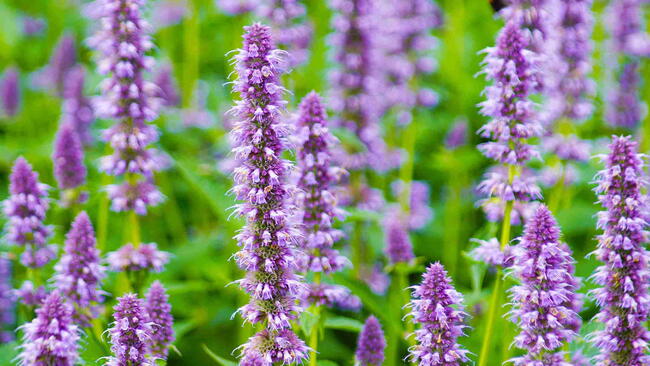
If you’re unsure which is growing in your garden, start by looking at the flowers to see if they’re blooming. Catnip flowers are white, while catmint flowers are lavender or light purple.
I find catnip foliage to be a brighter green than catmint in spring, which stays true well into summer. Catnip leaves are also often larger, although they are both serrated.
If you have two plants near each other, look at how the leaves are attached. Catnip often has longer petioles than catmint.
If you’re truly stumped, ask a neighborhood cat. Most catmints are not nearly as potent for our feline friends as catnip. If they prefer one to the other, you’ve got your answer!
Catnip vs. Catmint: Which Should I Grow?
Choose catmint if:
- You want pollinator plants
- You want low maintenance
- You want ornamental flowers
Choose catnip if:
- You have cats
- You want herbal tea
- You want mosquito-repelling herbs
Frequently Asked Questions
Is catmint the same as catnip?
No. Catnip is a specific species (Nepeta cataria), while catmint refers to several ornamental Nepeta species.
Do cats like catmint as much as catnip?
Most cats prefer catnip because it contains higher concentrations of nepetalactone.
Is catmint better for gardens than catnip?
Yes, catmint is usually more compact, attractive, and better for pollinators and landscaping.
Can you make tea from catmint?
Yes, some catmint species can be used in herbal tea, though catnip is more commonly used.
Does catnip repel mosquitoes?
Yes, catnip contains compounds that may help repel mosquitoes.
Which plant attracts more pollinators?
Catmint attracts more bees and butterflies due to its long-lasting flowers.

More Like This


Comments