Primary Image
Caption
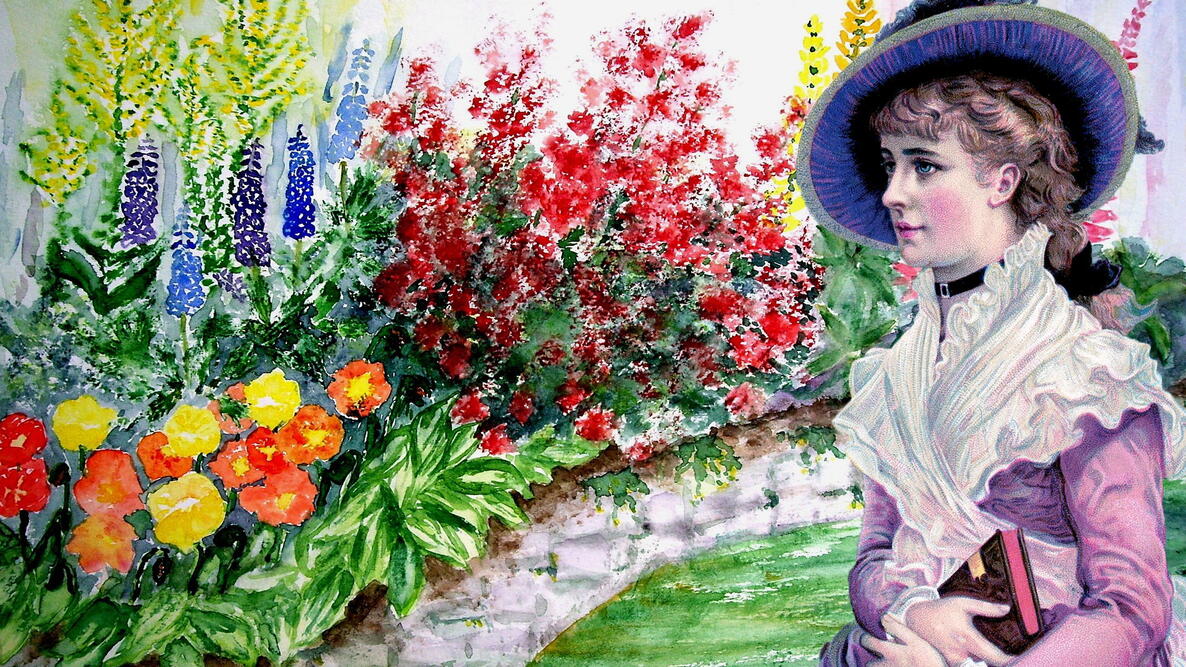
Women in the Victorian Era were careful to follow all social rules regarding manners and etiquette.


More Like This
It's ironic that on one hand, etiquette seems to be an anachronism, and yet there seems to be more people than ever looking for an excuse to be offended. I am bemused.
A man shouldn't shake a lady's hand at all. She offered her hand palm-down, and he air-kissed the back of her hand just above the knuckles, and that's only if they know each other, or upon introduction. Additionally, when offering her hand, the lady holds her fingers in a specific way depending on the relationship between the two, whether relatives, acquaintances, couples, etc. (This information comes from an acquaintance of mine whose family STILL practices those customs.)
Not mentioned in the rule that cosmetics should not be used is the fact that, at the time, the common belief was that any woman who "painted" her face was of loose morals. Even noblewomen, including the Queen herself, did not wear makeup.
When you meet people men can shake hands but a man should not shake a ladies hand unless she offers her hand first.
do you have sources for these quotes? I'd love to see the manual or whatever you got them from!
McKenzie, check gutenberg.org. They have some of those manuals available.
this helped a on on report on victorian london
I taught my child only husbands & wives kiss on the mouth. Fathers & mothers (or any adult ) shouldn't be kissing their daughters & sons ( or any children ) on the mouth.
I'm in violation of the rules. I am a flaming red head who married a blond!
In the Victorian era, if you were serving liqueur to a guest, you would serve it from an elegant decanter which had a stopper. You as the hostess would remove the stopper, pour your guest their drink then hand it to them. The key here is what you did with the stopper. If you replace the stopper back on the decanter, your actions are telling the guest that here is a drink, enjoy, but there will be no more. If you hand your guest their drink and place the stopper on the table next to the decanter, you are telling the guest, here is your first drink and you are welcome to have more if you wish.
At a high school in Cobourg, Ontario they had an etiquette list in a display for teachers from the 1880's (opened in the mid 1800's). Two or three I remember was that a teacher should never get a shave at the barber's (because it was expensive and you are showing off, by being seen there), they had to read good books, they could only court on Sundays with a chaperone, they had to bring their share of firewood to heat the school, among the many others.
There was a time when there was a sense of ethics, proper conduct and community togetherness. Now everyone thinks they succeed only by themselves and that is no repercussion for being vulgar.
- « Previous
- 1
- 2
- …
- 10
- Next »
📣The Gardening Club Just Got Better! 3 Deliveries, 10% Store Discount, and more!

Comments