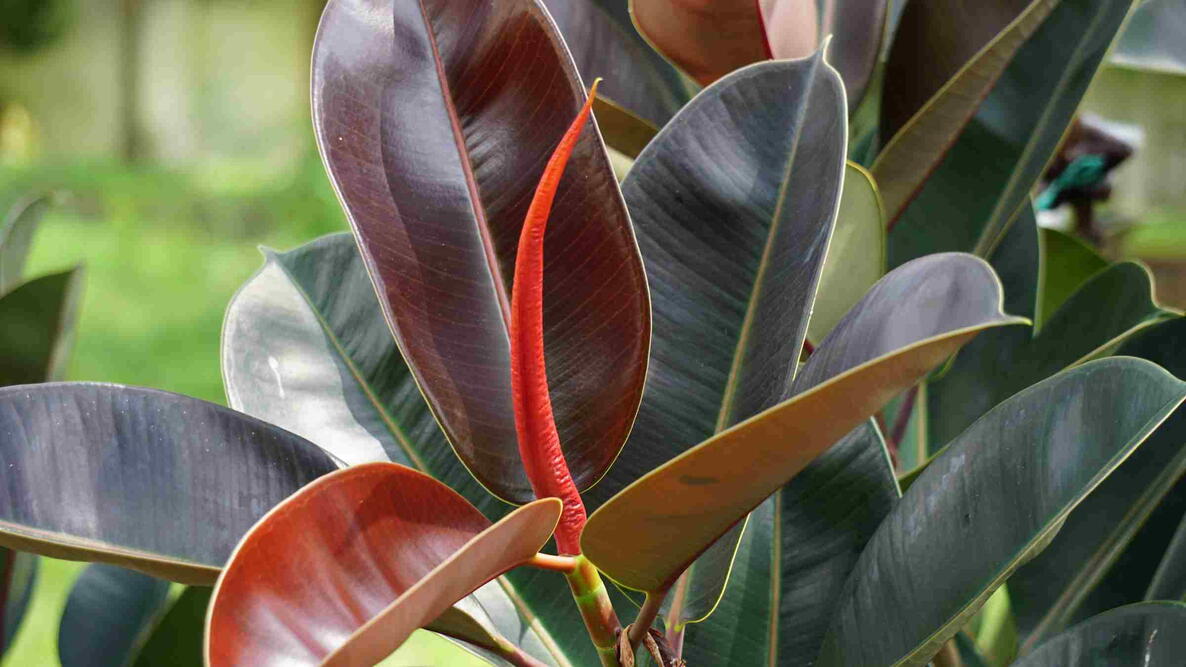
It’s not a stretch to say rubber trees (Ficus elastica) are one of the most popular houseplants around. These big-leafed beauties are right at home in living rooms, kitchens, and other spaces that receive bright, indirect light. But they can also grow outdoors in Zones 10 through 12 and tolerate the relatively low light conditions of malls and office buildings.
I’ve grown most common houseplants over the years, but the rubber tree plant is always at the top of my list of favorites. Its big, glossy leaves give it a bold look, it’s adaptable, and tall specimens can bring a delightfully lush, tropical vibe to any room you put them in. Whether you’re growing the classic green rubber tree or the showy variegated sort, here’s a rundown on all you need to know to keep them happy!
About Rubber Tree Plants
Rubber plants—also called rubber trees—get their name from the white latex sap they release when stems or leaves are cut or damaged. Historically, this sap was harvested to make natural rubber, though synthetics have since replaced it.
Native to Asia, these plants can grow up to 100 feet tall outdoors but usually stay under 6 to 10 feet inside. Their glossy oval leaves can reach over 12 inches long. Most rubber tree leaves are a deep dark green, but they produce a bright magenta leaf sheath when the leaves first emerge, and variegated varieties, like Ficus elastica ‘tineke’, have striking, white-and-pink-colored leaves year-round.

As houseplants, rubber trees are relatively undemanding, but they can take up a lot of space. My rubber plants all started out as small tabletop houseplants, but in a few years they were massive floor plants that required their own sunny corner to grow in. You can keep them smaller with pruning, but personally, I enjoy letting mine grow wild.
Please note: Rubber tree sap is toxic to pets and can be a skin and eye irritant. Always wear gloves when pruning these plants!
Planting
Just brought home a rubber tree (Ficus elastica) from the nursery? Here’s how to give it a strong start.
Step 1: Choose the Right Pot
Select a container with good drainage that’s no more than 30% larger than the root ball, or less than 3 inches wider than the current pot. Oversized pots can lead to soggy soil and root issues, especially for young plants.
For larger specimens, I use heavy terra-cotta pots or add stones to the bottom to prevent tipping—rubber trees can get top-heavy fast. If space is limited, regular pruning helps keep them manageable, or you can opt for compact varieties like Ficus elastica ‘Congesta’.
Step 2: Prep the Soil
Use a well-draining potting mix—something that holds moisture but doesn’t stay wet. A blend with peat, perlite, and compost works well.
Step 3: Remove and Inspect
Gently slide the plant out of its nursery pot. If the roots are tightly wound or circling the bottom, loosen them slightly. Trim away any mushy or dead roots.
Step 4: Plant It
Position the plant in the center of the new pot, keeping it at the same depth it was growing before. Fill in around the roots with fresh soil, press down lightly to eliminate air pockets, and water thoroughly until water drains from the bottom.
Step 5: Find Its Spot
Set your newly-planted rubber tree in a bright spot with indirect light. Avoid direct sun at first, which can scorch tender leaves. Let it acclimate for a few days before starting regular care.

Growing
Once rubber trees start growing, the hardest thing about maintaining them is providing them with enough space. If you’re growing houseplants in tight quarters, you can work around this by pruning down from time to time, or growing more compact varieties, like Ficus elastica ‘Congesta’. Both standard-sized and dwarf varieties require the same basic care.
Pruning (Stems & Branches)
Pruning your rubber tree isn’t just about keeping it tidy—it’s a great way to shape the plant, encourage bushier growth, and manage height.
When to Prune
Prune during spring or early summer, when the plant is actively growing. Avoid during dormancy or right after repotting unless necessary.
How to Prune
- Use clean, sharp shears to cut just above a leaf node (where a leaf meets the stem).
- To encourage branching, snip the top of a tall stem—this signals the plant to grow outward instead of upward.
- Remove any leggy, damaged, or crossing stems to improve airflow and appearance.
Tips
- Don’t be afraid to prune! Rubber trees are resilient and respond well to shaping.
- If you want a fuller plant, prune lightly and regularly rather than making drastic cuts.
- Always sanitize your tools before and after use to prevent disease.

Pests and Problems
Thanks to their tough leaves and sturdy nature, rubber trees usually don’t suffer from problems, but there are a few exceptions!
- Pests, like mealybugs and scales, can sometimes be an issue if the plants are kept outdoors in summer or are stressed by their environment. Check plants carefully for signs of pests. Treat with organic horticultural sprays.
- Yellowing or browning leaves may occur when rubber trees are over- or underwatered, or if they’re sun-damaged or don’t receive enough light.
- Leaf drop is usually caused by improper watering, but it can occur if the plant lacks sunlight or is too cold.

Types
Most rubber trees grow to about 6 feet high indoors and produce glossy, deep green leaves that are encased in pink leaf sheaths when they first emerge. But if you’re looking for a bit of variety, there are a few more unique types to try!
- ‘Yellow Gem’: This variegated rubber tree option has bright, golden yellow leaf margins surrounding splotchy green centers.
- ‘Tineke’: One of the most colorful rubber trees you can find, ‘Tineke’ has variegated leaves in shades of deep green, creamy white, and bright pink.
- ‘Congesta’: A fine choice for small spaces, ‘Congesta’ is a dwarf rubber tree option that usually stays under 4 feet high.
Whether you move rubber trees outside during summer or keep them indoors year-round is up to you. Care requirements don’t vary much for these plants through the seasons, but you’ll want to water them less in fall and winter, and withhold all fertilizer when they aren’t actively growing.
Propagation
Rubber trees can be propagated by air layering or stem cuttings. I personally use the stem cutting method and propagate my plants in soil as water propagation often causes rubber plants to rot before they root.
- Take a 6-inch long cutting from the end of a healthy rubber tree branch in spring or summer.
- Make your pruning cut at a leaf node and use a sharp, sterilized knife or pair of pruners to limit plant damage.
- Remove the lower leaves on the cut stem and dip the stem end in rooting hormone if you have some.
- Plant the stem end 1 to 2 inches deep in a pot filled with pre-moistened potting or seed starting mix.
- Move the cutting into bright, indirect light, cover the plant and pot with clear plastic to boost humidity, and water the cutting enough to keep the soil evenly moist.
- Rubber plant cuttings should root in about 3 weeks. Then, care for them just like the parent plant!

More Like This




Comments