
Caption
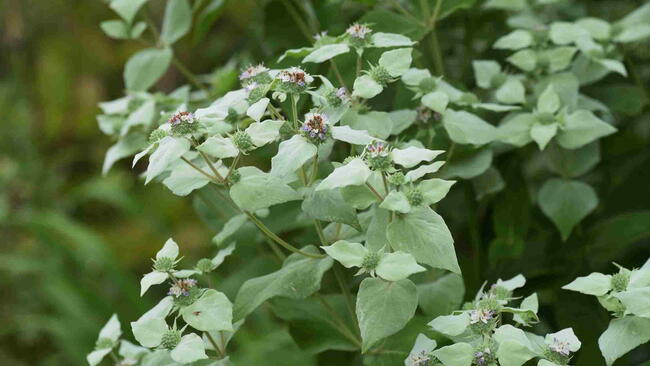
Savory’s white blooms.
Planting, Growing, and Harvesting Savory

A reader described summer savory as one of her favorite herbs, which smells “like lasagna mixed with ancient nostalgia.” If you’d like to savor the flavor of savory, you’ll likely need to grow it yourself since it’s not sold in grocery stores. Our step-by-step planting guide will teach you how to do just that!
Although this old-time herb has been cultivated as an edible since at least ancient Greece, it’s rarely sold in food markets and can be hard to find at plant nurseries, too. However, both winter and summer savory are easy to grow at home.
Growing Savory
There are around 30 species of savory, but summer savory and winter savory are the most common types grown in home gardens.
- Summer savory (Satureja hortensis) is most commonly grown. It’s a true annual herb with a slightly sweet and mild oregano-like flavor, described as a favorite all-around Italian seasoning. This tender herb typically grows to about 12 inches high and is often used in herbes de Provence blends, salami, sausages, lamb, poultry, soups, and stews.
- Winter savory (Satureja montana), or mountain savory, is a perennial, woody-stemmed herb that’s drought tolerant and winter hardy in Zones 5 and above. Growing up to 18 inches tall, winter savory is not as sweet as summer savory. It has a more pungent, peppery flavor with a slightly piney taste; it pairs well with meat and bean dishes.
Both types belong to the Lamiaceae family, native to Southern Europe and other regions. This plant family also includes other culinary herbs, like oregano, sage, and mint; however, unlike mint, savories are not aggressive growers and are well-behaved in pots, small spaces, and mixed veggie, herb, and flower beds.
Beyond their edible use, savories of all sorts attract bees, butterflies, and other beneficial insects with their summer-blooming flowers, and they make fantastic, pest-repelling companion plants. Just provide these fragrant herbs with plenty of sun, moderate amounts of water, and well-draining soil, and they’ll reward you with a flavorful harvest of herbs for drying, freezing, and fresh eating!

Read Next
Planting
One or two savory plants will usually provide you with all the savory you need, so you may just want to purchase pre-started plants from local nurseries. However, winter and summer savory can be grown from seed too!
Growing Savory from Nursery Plants
- Check savory plants carefully for signs of pests and disease before bringing them home.
- Plant nursery started savories outdoors after your last spring frost date. Sunny, well-draining beds or 6- to 12-inch pots are suitable for both summer and winter savory.
- Bury the plant’s root ball at the same depth the roots were growing in the nursery containers, firm the soil around your plant’s stems, add mulch, and water well.
- If you’re growing multiple savory plants together, space individual plants at least 10- to 12-inches apart.

Growing Savory from Seeds
- Start savory seeds indoors in spring, 6 to 8 weeks before your last frost date.
- Fill seed starting trays or pots with a pre-moistened seed starting mix and surface sow 2 seeds per pot or seedling cell.
- Cover the seeds with a light dusting of seed starting mix or vermiculite, water well, and place them under a grow light. Savory seeds usually germinate in 2 to 3 weeks.
- When the seedlings are 1- to 2-inches tall, thin out the weakest seedlings so that you’re left with one plant per pot. Continue to provide the seedlings with regular water and plenty of light.
- After your last spring frost date, harden indoor-started seedlings off for 1 to 2 weeks, and then transplant them outdoors using the steps above.
- If you want to extend your harvest of summer savory, succession sow additional plantings of savory seeds outdoors from late spring through midsummer at 3 to 4 week intervals!
Harvesting
Savories grown from seed can be harvested when 6 inches tall, while store-bought plants can be harvested immediately. You can harvest savories little by little as needed for recipes, or you can gather larger quantities of stems for freezing and drying. Don’t harvest more than 1/3 of your plant’s stems in one go.
Harvest savory in the morning to get the best flavor, just as the plant’s flower buds are starting to form. Cutting these plants back right before flowering and harvesting regularly encourages savories to produce a new flush of growth. You can harvest edible savory flowers if you allow your plants to bloom!

Storing Savory
Fresh savory lasts about a week in the fridge if you wrap the cut stems in a slightly damp paper towel and store them in a plastic container. You can also freeze savory whole or chopped, hang dry it in bundles, and store the dried leaves in spice jars until you need them.
Savory can be used, fresh or dried, in any recipe that calls for sage, marjoram, thyme, or rosemary. It’s an all-in-one Italian seasoning! Winter and summer savory can be used interchangeably in most recipes. While savory is usually added to meat and bean dishes, it can also be infused into oils, vinegar, or butter!
Gardening Products

More Like This



Comments