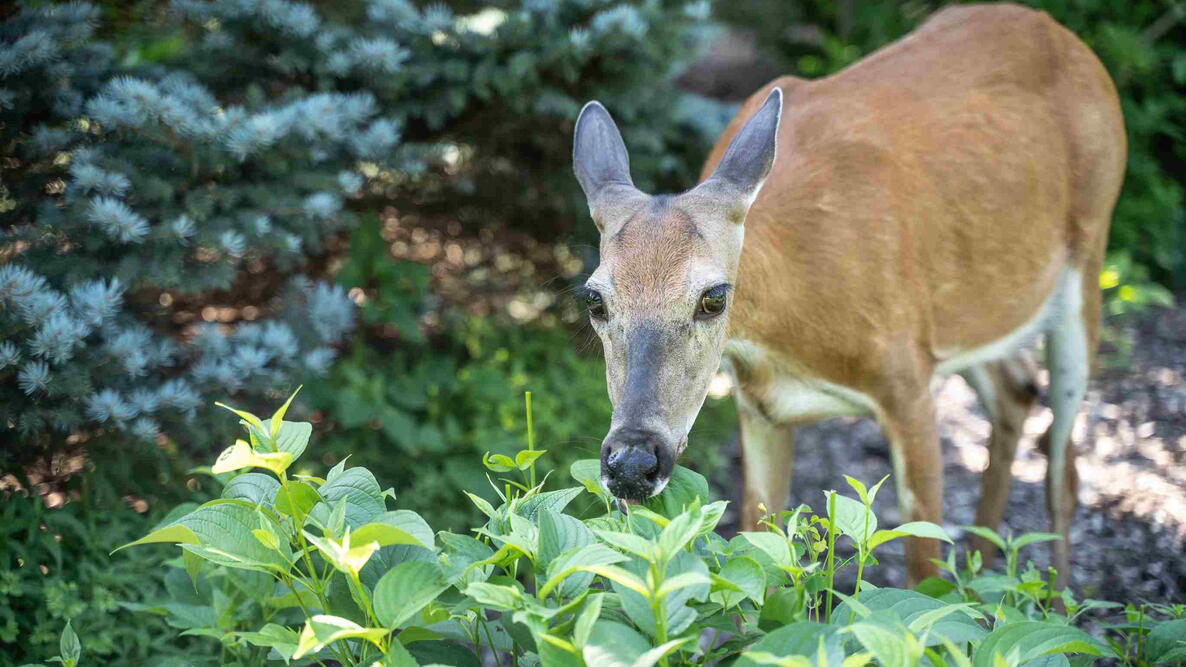
Caption
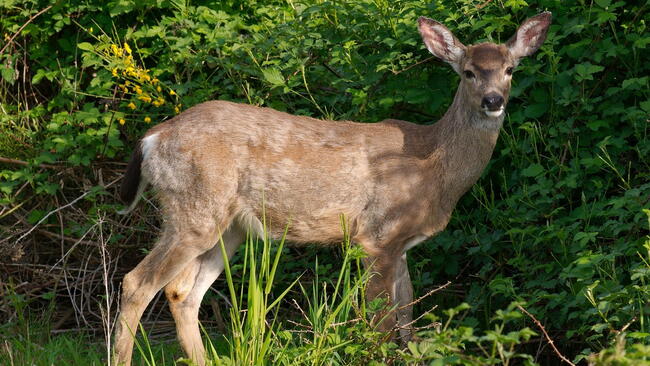
Deer may look harmless, but they can quickly strip leaves, buds, and shoots from garden plants.

Identification

Before you try to stop deer damage, it helps to confirm that deer are actually responsible. At first glance, deer browsing can resemble damage from rabbits or groundhogs, but several clear clues point specifically to deer.
- Sightings. Deer are most active at dawn and dusk. If they are visiting your yard, you may occasionally see them feeding along the edges of your property or moving quietly through the garden.
- Tracks and droppings. Deer droppings appear as small rounded pellets similar to rabbit droppings, but deer leave cloven hoofprints rather than pawprints in soft soil or mud.
- Ragged leaf damage. Deer tear plants as they browse, leaving ragged edges on leaves and stems. Rabbits, by contrast, usually leave cleaner cuts. Entire plants, buds, or fruits may disappear overnight.

- Height of damage. Deer stand about 3 to 4 feet tall at the shoulder. When stretching or standing on their hind legs, they can browse shrubs and trees up to about 6 or 7 feet high.
- Seasonal patterns. Deer damage can occur year-round. In spring and summer, they feed on tender shoots and vegetable crops; in autumn, they eat fallen fruit; and in winter, they may chew bark from young trees.
Control and Prevention
Deer are persistent visitors, so most gardeners find that no single tactic works on its own. The best results usually come from combining several strategies—such as fencing, repellents, motion deterrents, and careful plant choices.
Here are five practical methods gardeners use to protect flowers, vegetables, shrubs, and young trees from deer damage.
1. Garden Fencing (and Simple Fence Alternatives)
Fencing is the most reliable way for gardeners and farmers to keep deer away. Because deer can easily clear short barriers, fences generally need to be about 8 feet tall to prevent them from jumping over.

If a tall fence isn’t practical, some gardeners use a double-fence setup. Two shorter fences spaced a few feet apart can discourage deer because they struggle to judge the distance needed to jump both.
In my garden, I’ve installed a tall welded-wire fence attached to T-posts, which has been very effective. In the past, though, I tried a more budget-friendly solution: wooden stakes around the garden with fishing line strung between them. The nearly invisible barrier worked surprisingly well—deer don’t like bumping into something they can’t see.
2. Deterrent Sprays
Repellent sprays can help discourage deer from feeding on specific plants. Many commercial products rely on strong scents or unpleasant flavors that make plants less appealing.
Common ingredients include garlic oil, putrescent egg solids, blood meal, predator urine, or capsaicin (hot pepper). These products are widely available at garden centers and can be applied directly to vulnerable plants.
Because rain and snow can wash sprays away, they need to be reapplied regularly during the growing season.
- Egg-based spray: Mix 1 egg, ½ cup milk, and 1 tablespoon dish soap into 1 gallon of water and spray plants thoroughly.
- Hot pepper spray: Blend 2 tablespoons cayenne powder or hot sauce into 1 gallon of water and spray foliage.

Gardeners also experiment with traditional deterrents such as strongly scented soap, pet or human hair, or old shoes hung around the garden. Results vary, but these methods can sometimes help when combined with other strategies.
3. Motion-Activated Sprinklers and Lights
Deer often feed at night, at dawn, or at dusk when gardens are quiet. Motion-activated sprinklers or lights can startle deer and disrupt their feeding.
These devices work best when placed near the garden and moved occasionally so deer do not become accustomed to them.
Other simple scare tactics may help as well, especially when rotated from time to time:
- Hang wind chimes or metal objects that make noise.
- String old CDs or pie tins so they move and reflect light.
- Place a small radio nearby to add human sounds.
4. Tree Guards
Young trees are especially vulnerable to deer damage. Deer may chew bark during winter, which can girdle and kill the tree.

Tree guards made from plastic or wire mesh help protect trunks from browsing. Guards should extend to about 5 feet high—or to the lowest branches—and be checked regularly to make sure they are not restricting growth.
In snowy climates, adjust guards upward if snow buildup allows deer to reach higher on the trunk.
5. Deer-Resistant Plants
No plant is completely deer-proof, but some are far less attractive to browsing deer. Deer favorites include hostas, roses, arborvitae, and many vegetable crops. Hostas are sometimes called “deer candy” because deer browse them so readily.

In contrast, plants such as daffodils, foxglove, catmint, lamb’s ear, bee balm, and marigolds are often less appealing to deer.
Deer tend to avoid plants with fuzzy leaves, prickly stems, strong fragrance, or bitter taste. Choosing these plants can help reduce browsing pressure in gardens where deer are common.
- Daffodils
- Foxglove
- St. John’s wort
- Catmint
- Butterfly weed
- Lily of the valley
- Snapdragons
- Lamb’s ear
- Bee balm
- Marigolds
- Yucca
Planting these around vulnerable crops or ornamentals can help make the garden less appealing to deer.
Conclusion
When deer start damaging garden plants, it can feel frustrating. But by combining safe, sustainable sprays, fencing, and other deterrents, you can significantly reduce deer browsing damage while working with nature rather than against it.
Over the years, I’ve discovered a few additional tricks that can help reduce deer visits. For example, I overseed my grass lawn with clover—which deer love—so they sometimes graze there instead of heading straight for the garden.
A simple garden cleanup in autumn also helps. Removing fallen fruit, old vegetables, and plant debris eliminates easy food sources that may attract hungry deer.
If deer frequently browse your plants, companion planting scented herbs like rosemary, oregano, and lavender nearby may help. Planting deer-resistant species around garden beds or along the edges of your landscape can also help discourage browsing.
The key is to get creative and experiment with different strategies and find the mix that works best in your garden. Even small changes can make a big difference in protecting flowers, vegetables, fruit trees, and wildlife habitat.

More Like This

Perhaps a smaller mammal, such as a rabbit or groundhog/marmot, is the culprit. Could something that size fit through your fence?
- « Previous
- 1
- 2
- …
- 10
- Next »

Comments