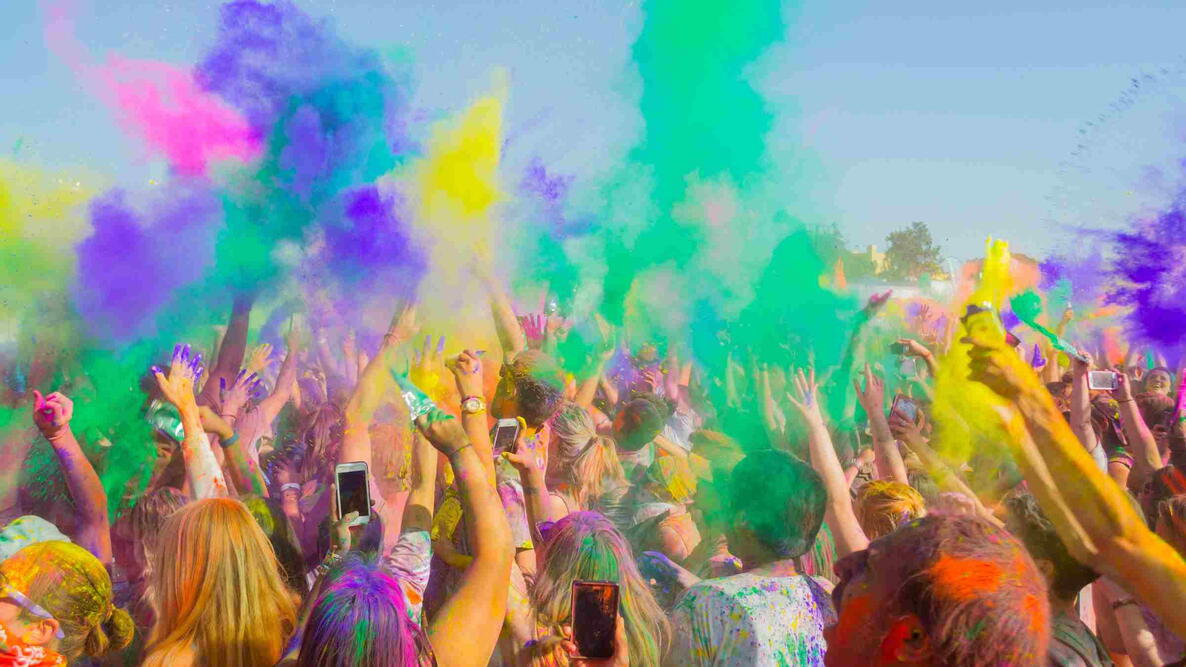
Caption
People celebrate during the color throw at the Holi Festival of Colors. Norwalk, California, USA.
A Festival of Colors That Marks Spring and New Beginnings
Holi, the vibrant “Festival of Colors,” is one of the most joyful celebrations in India and around the world. In 2026, it will be celebrated on March 3–4, marking the arrival of spring and the spirit of renewal. During Holi, people of all ages come together to throw bright colored powders, dance, enjoy festive foods, and celebrate friendship, community, and the energy of the new season. Whether you’re curious about its history, planning to join a local event, or simply want to learn about the traditions, this guide to Holi 2026 has everything you need to know to take part in the fun.
What Is Holi?
Holi—also known as the “Festival of Colors”—is a spring festival celebrated primarily by Hindus, though its themes of joy, renewal, and community resonate widely. It’s the biggest festival on the Hindu calendar after Diwali.
It’s a time for laughter, connection, and cultural celebration. People gather in open spaces, streets, and temple courtyards to throw colored powders (gulal), spray water, dance, and sing.
The festival also holds spiritual significance. According to cultural sources like the Hindu American Foundation (HAF), Holi symbolizes the triumph of good over evil, the arrival of spring, and the renewal of relationships. While its stories are rooted in Hindu mythology, the celebration’s playful, inclusive nature makes it accessible to everyone.

When Is Holi 2026?
Holi is celebrated over two days in most regions of India and around the world, with each day having its own traditions. In 2026, Holi falls on Tuesday, March 3, and Wednesday, March 4.
The festival is timed around the Full Moon (Purnima) in the Hindu month of Phalguna, which usually falls in late February or March. In Hindu tradition, each lunar day is called a tithi, and Purnima is the 15th tithi, or full moon day. Holi is celebrated on this day, which is considered especially auspicious for renewal, social gatherings, and joyous celebration. For those interested in astronomy, you can see the full moon calendar here: Full Moon Dates.
Tilak Dugar
The festival begins on the evening of the Full Moon night (March 3) with “Holika Dahan” and a bonfire to celebrate the burning of the demoness Holika.

Rangwali Holi
Then, on the day after the evening of the Full Moon (March 4), the main Holi festival, called Rangwali Holi, takes place. This is the Festival of Colors.

- Note for readers in North America and other countries: Holi dates are determined by the Hindu lunar calendar in India, not by local time zones around the world. That means even though the Full Moon may occur on March 3 at 6:39 A.M. (Eastern) in the U.S., Holi is still observed according to Indian local time (New Delhi), which places Holika Dahan on March 3 evening and Rangwali Holi on March 4.
| Festival | Date (2026) | Description |
|---|---|---|
| Holika Dahan / Chhoti Holi | March 3, 2026 (Tuesday) | The first day, also called Chhoti Holi, involves lighting a ceremonial bonfire. This ritual, referred to as Kama Dahanam in South India, symbolizes the triumph of good over evil. |
| Rangwali Holi / Dhulandi | March 4, 2026 (Wednesday) | Main day of celebration when people throw colored powders (gulal), play with colored water, dance, and enjoy festive foods. In many regions, colors are applied to friends’ and family’s faces, or in more enthusiastic celebrations, participants drench each other in buckets of colored water. |
2026 Holi Calendar: Festival Times
- Purnima Tithi Begins: 5:55 PM, March 2, 2026
- Purnima Tithi Ends: 5:07 PM, March 3, 2026
Note: Purnima Tithi marks the full Moon day in the Hindu lunar calendar. Each lunar day is called a tithi, and Purnima — the 15th tithi — is considered especially auspicious. Holi is celebrated on this day.
- Holika Dahan Muhurat: After sunset on March 3, 2026
- Rangwali Holi / Dhulandi: March 4, 2026, from morning onward
All timings are in local time of New Delhi, India, and the panchang day begins and ends with sunrise.
The Origin of Holi
Holi’s origins are rich in mythology, with two main stories explaining its significance:
- The Legend of Prahlada and Holika
- King Hiranyakashipu, a demon king who opposed devotion to Lord Vishnu, tried to kill his son Prahlada, for being a devoted worshipper of Lord Vishnu.
- Holika, his sister, had a magical cloak protecting her from fire. She attempted to kill Prahlada by sitting with him in a bonfire, but she perished while Prahlada survived.
- Holika Dahan, the night before Holi, celebrates the triumph of good over evil.
- Krishna and Radha
- Young Krishna, a Hindu god considered to be a manifestation of Lord Vishnu, had dark blue skin, and was worried about being different from Radha, a milkmaide he loved dearly, who had fair skin.
- In a playful response, he applied color to her face, inspiring the tradition of smearing colors on friends and loved ones.
- This story symbolizes love, joy, and playful connection.
These tales highlight the festival’s themes: moral triumph, renewal, and joyful celebration.
Why Holi Is Celebrated
Holi is more than throwing colors — it’s centered on themes about connection, renewal, and joy:
- Renewal & Forgiveness: A time to let go of grudges and restore relationships
- Good vs. Evil: Symbolized by Holika Dahan
- Divine Love: Celebrates playful devotion through the story of Krishna and Radha
- Social Unity: Temporarily blurs social divisions, creating equality in celebration
- Seasonal Celebration: Marks the arrival of spring, symbolizing new beginnings and vitality
Colors and Their Meanings in Holi

Colors are at the heart of Holi, and each shade carries meaning:
- Blue: Divine energy and devotion (associated with Krishna)
- Green: Renewal, growth, and fertility
- Red: Love, passion, and strength
- Yellow: Happiness, optimism, and health
- White: Purity, peace, and new beginnings
- Violet/Indigo: Spiritual awareness and transformation
Traditionally, these colors were made from plants, herbs, and flowers, making them safe for skin. Today, many eco-conscious festivals still use natural powders.
Rituals and Celebrations
Who Celebrates Holi
While Holi is a Hindu festival, its joyful and inclusive nature has made it popular worldwide. Communities across India and the diaspora—in the United States, UK, Canada, and beyond—host colorful public events, parades, and parties. The festival promotes forgiveness, renewal, and unity, values that appeal to people of all backgrounds.
How to Celebrate Holi
- Holika Dahan: On the eve of Holi, when bonfires are lit to honor the legend of Prahlada and Holika, people sing, dance, and offer grains or sweets into the flames.
- Rangwali Holi: The next day, communities gather to throw powders, spray colored water, and dance. Music, drums, and playful pranks are common.
What to Wear
- White clothing is traditional, highlighting the bright colors.
- Wear clothes you don’t mind getting stained.
- Apply oil or moisturizer to protect skin and hair. Sunglasses can help protect the eyes.
What Holi Powder Is Made Of
- Natural sources: Turmeric, henna, marigold, indigo, and pomegranate
- Modern powders: Some synthetic colors are used, but eco-friendly, non-toxic options are preferred
Traditional Foods and Drinks
Food is central to Holi celebrations:
- Gujiya: Sweet dumplings filled with dried fruits, nuts, or khoya
- Thandai: A spiced milk drink made with almonds, fennel, rose petals, and sugar; sometimes infused with bhang (a cannabis leaves preparation)
- Lassi and other beverages: Yogurt-based drinks, often flavored with fruits or spices
Sharing these foods reinforces the festive and communal spirit of the celebration.
Celebrating Holi Respectfully
If attending a Holi event, especially as a non-Hindu, keep these tips in mind:
- Learn the Meaning: Understanding the stories enhances respect and enjoyment
- Use Safe Colors: Choose eco-friendly, non-toxic powders
- Protect Yourself: Wear old clothes, cover sensitive skin, and use sunglasses
- Ask Permission: Check if it’s appropriate to throw colors in shared spaces
- Enjoy the Food: Respect cultural and dietary traditions
- Embrace the Spirit: Focus on joy, community, and inclusivity
Holi is a vibrant celebration of spring, color, and community. From the Holika Dahan bonfire to the playful color throwing of Rangwali Holi, it’s a festival of joy, renewal, and togetherness — a celebration anyone can enjoy. Have you ever experienced the colors of Holi? What do you think about this lively tradition? Share your thoughts and experiences below!
More Like This



Comments