The United States has experienced some of the most powerful and destructive earthquakes in recorded history. From the massive 1964 Alaska quake to the devastating Charleston earthquake of 1886, these historic U.S. earthquakes caused widespread destruction, reshaped landscapes, and changed communities forever. Here’s a look at three of the most famous earthquakes in American history—and the impact they left behind.
Are you a weather history buff? You won’t want to miss our listing of the Worst Hurricanes in American History.
Alaska’s Good Friday Earthquake (1964)
At 10:36 p.m., March 27, 1964, one hour and ten minutes after the Full Moon, which was crossing the equator from the northern hemisphere to the southern (a time of heavy earthquake probability), Anchorage and other cities of Alaska experienced a temblor of 8.2 to 9.2 magnitude. The known death toll was 129 lives and damage of some five hundred million dollars.
An accompanying tsunami smashed cities and towns rimming the Gulf of Alaska and on Kodiak Island. The seismic waves rushed on to swallow up many more individuals along the Pacific Coast from Canada to Southern California. In Crescent City, California alone, ten died, and fifty were missing. Tidal wave warnings went up, also, in Japan and Hawaii.
The 1959 Yellowstone / Three-State Earthquake
A mountain toppled, a new lake was made, 9 died, 19 were missing, 15 were injured, 250 vacationists barely escaped disaster, geysers were choked off while others were given new life—thus did the night of August 17, 1959, go out, and the morning of the 18th come in. The main shock of this quake occurred very near the junction of Montana’s Routes 187 and 191, a few miles south of the northwest corner of Yellowstone National Park.
The main shock started an avalanche of some 80 million tons of rock from one side of the Madison River Valley. Most of the quake’s victims were killed because of this rockslide. It also created a new lake called Earthquake Lake, which extends for about 5 miles up the Madison River and is over 100 feet deep.
This earthquake ranks as one of the six strongest to hit the continental U.S.
The 1886 Charleston Earthquake
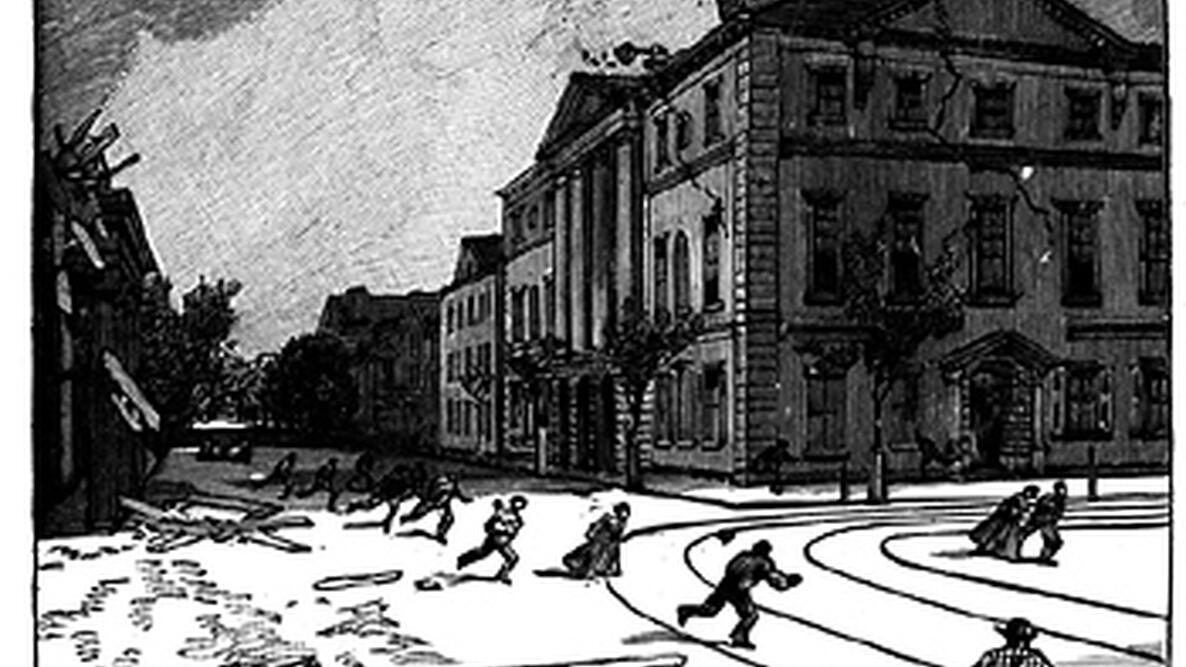
Charleston, South Carolina’s memorable Tuesday, August 31, 1886, began reasonably calm with a warm, still sunny morning. The evening failed to cool, the mellow brick walls retaining the day’s heat. The Ashley and Cooper rivers were dead calm, mirroring the constellations in the clear sky. Dance music drifted from the pavilion on James Island, where young people socialized. The heat had tired the aged, and they were either in bed or about to retire.
At 9:51 p.m., 12 miles below the surface and 16 miles west of New York City, the earth ruptured in a mountain system extending to within a few miles west of New York City. With vibrations racing at 3 miles a second, shock waves sped out over 2,800,000 square miles.
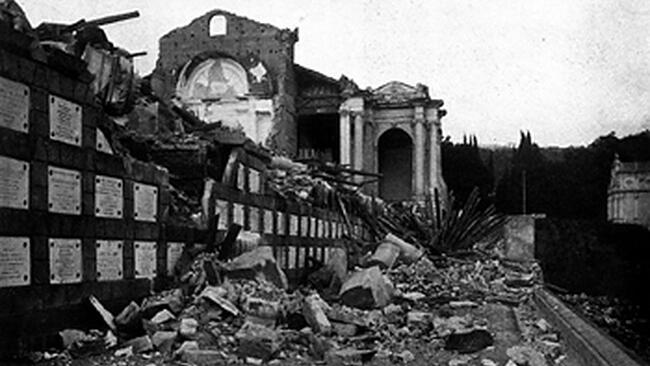
The quake lasted in Charleston for 3 days. A total of 17 shocks had destroyed over 100 buildings, 90% of brick structures, and caused about $5 million to $6 million in damage nationally. Astonishingly, only 40 people died; 27 were from Charleston.
Frequently Asked Questions
Can earthquakes trigger tsunamis in the U.S.?
Yes. Large earthquakes, especially those under the ocean or near coastal regions, can generate tsunamis, as seen after the 1964 Alaska earthquake.
Which U.S. states experience the most earthquakes?
Alaska experiences the most frequent and powerful quakes. Other seismically active areas include California, Nevada, and Hawaii, though significant quakes can occur elsewhere, like Charleston, SC.
How can I learn more about historic earthquakes in the U.S.?
You can explore resources like the USGS Earthquake Database, books on U.S. seismic history, or articles detailing major quakes such as the 1906 San Francisco Earthquake.



Comments