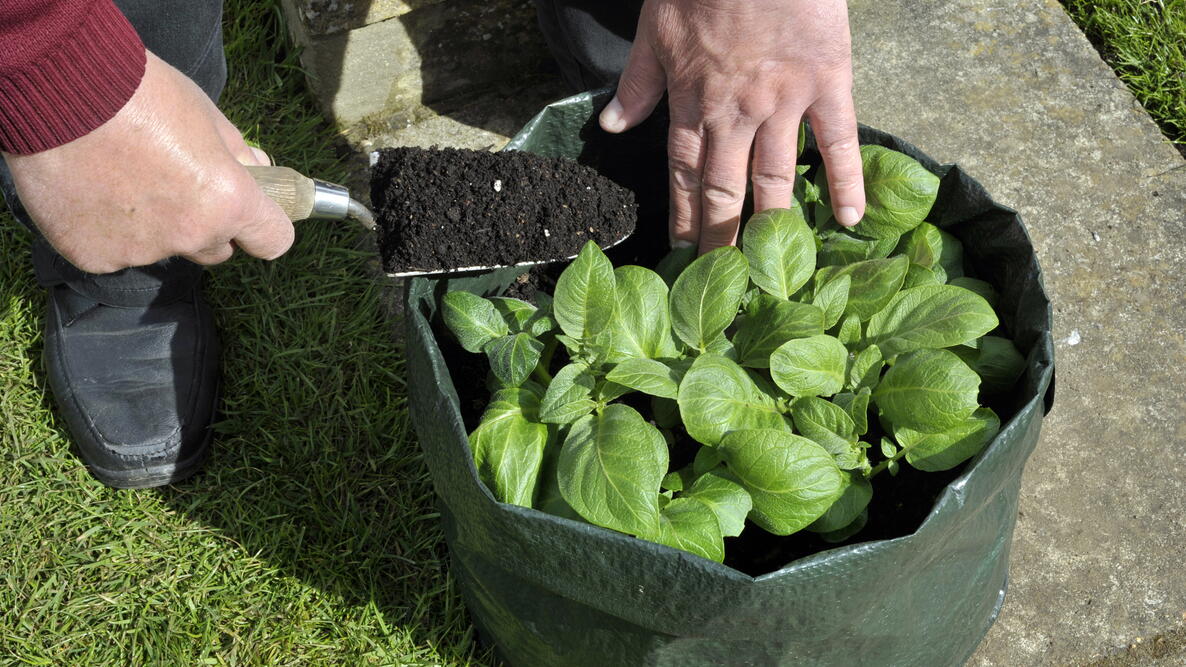
Caption
Topping up potatoes with compost growing in a space-saving vegetable grow bag. Variety ‘Charlotte’ is a waxy salad potato which thrives in containers.

If, like me, you sometimes rely on containers to grow your vegetables, consider trying a grow bag this season. Grow bags offer several advantages over traditional plastic pots or terra cotta containers. One of the most fascinating benefits is air pruning, which promotes healthy root growth and stronger plants. In this guide, we’ll cover why and when to use grow bags, the best plants to grow in them, and tips for choosing the right bag.
What Are Grow Bags and Why Use Them?
Grow bags aren’t a modern invention. In ancient times, people used woven baskets and bags to grow plants. Ancient Egyptians created plant baskets, and the Greeks placed woven containers on rooftop gardens for easy mobility. Many British gardeners have long relied on grow bags as an alternative to planting directly in greenhouse soil.
Today, grow bags are still ideal for greenhouse gardening, but they’ve gained popularity as a convenient container for patios, balconies, and rooftop gardens. Lightweight and portable, they’re perfect for spaces where traditional pots may be cumbersome or too heavy.
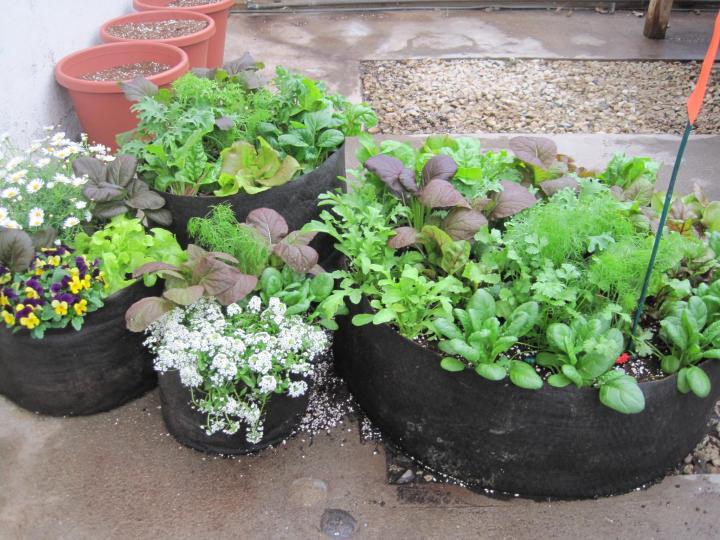
Advantages of Grow Bags Over Traditional Pots
Lightweight and Portable
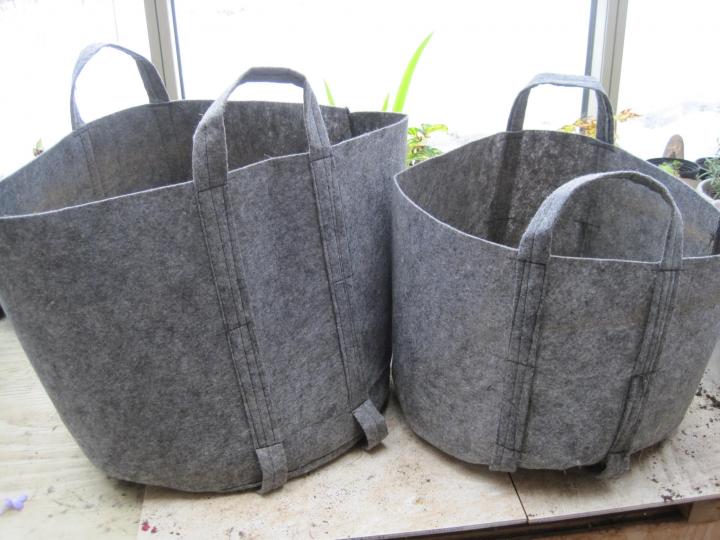
Unlike heavy ceramic or plastic pots, fabric grow bags weigh almost nothing when empty. This makes it easy to move plants around to catch sunlight, protect them from harsh weather, or simply rearrange your garden setup. The only weight you need to manage is the soil itself.
Better Drainage and Air Pruning
Grow bags are breathable, allowing air to circulate through the soil and prevent soggy roots. When a root reaches the side of a fabric bag, it comes in contact with drier soil and air. This stops the root from circling and encourages air pruning, which stimulates new root growth. More root tips mean the plant absorbs water and nutrients more efficiently, promoting healthier, stronger growth above ground.
Cooler Soil in Summer
Plastic pots can heat up in the sun, stressing plant roots. Grow bags’ breathable fabric allows heat to escape while providing insulation in cooler weather. Soil stays warmer in early spring and cooler during hot summer days, protecting your plants’ delicate roots.
Best Vegetables and Herbs for Grow Bags
Grow bags are ideal for vegetables that don’t have very deep roots. My favorites include:
- Tomatoes
- Sweet peppers & chili peppers
- Zucchini and summer squash
- Cucumbers
- Eggplant
- Potatoes
- Salad greens (lettuce, endive, arugula)
- Basil and other herbs
Planting Tips:
- Use 2–3 plants per bag for most vegetables.
- For salad greens, sow seeds in rows across the width of the bag.
- Check out our Almanac Grow Guides for detailed planting instructions for all these vegetables.
Choosing the Right Grow Bag
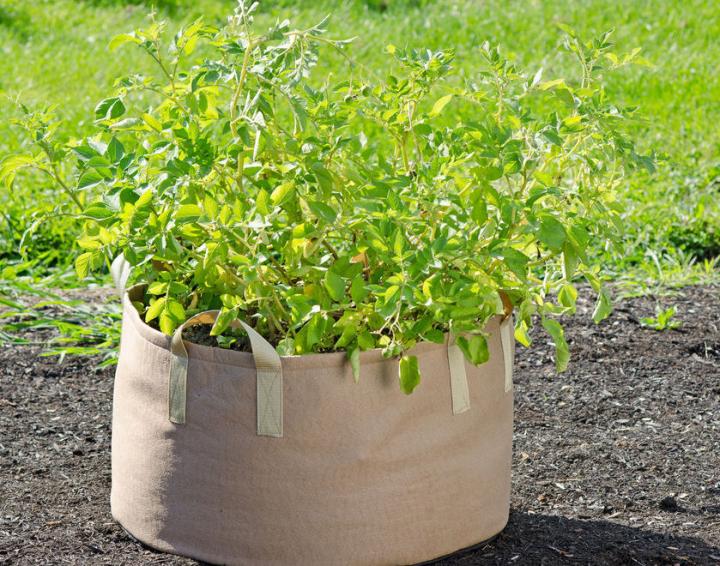
Not all grow bags are created equal. Some inexpensive options are essentially black plastic bags, which trap heat and moisture and do not support air pruning. Look for a polypropylene felt-like fabric, which is breathable, BPA-free, and food-safe.
Sizes and Styles:
- Small seedling bags for starting plants indoors
- 15-gallon potato bags with bottom flaps for easy harvesting
- Tall, skinny bags for small trees
- Large square bags (e.g., 4×4 feet, 12 inches deep) that hold 120 gallons of soil
Many growers report that plants thrive in high-quality grow bags, often outperforming those grown in plastic containers.
Tips for Growing Vegetables in Grow Bags
- Soil: Keep compost loose—shake and knead it gently like a pillow.
- Root Depth: Ensure the top of each root ball is just below the top of the bag.
- Watering: Grow bags drain fast, so water more frequently than in plastic containers. Indoors, use a large saucer to catch excess water.
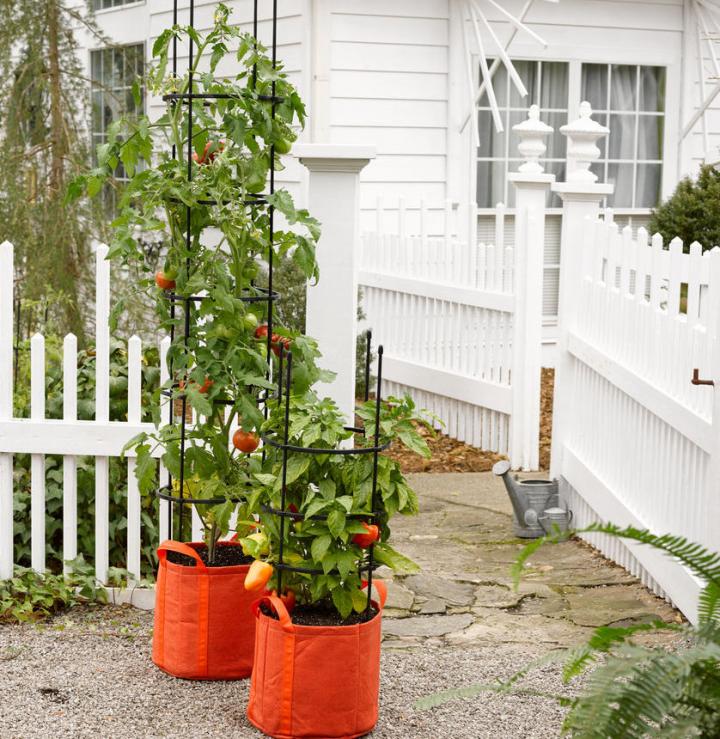
- Support: Taller plants like tomatoes need stakes or canes tied to a frame.
- Fertilizer: Feed flowering vegetables (aubergines, peppers, cucumbers, tomatoes) with a high-potash fertilizer when flowers appear.
- Longevity: High-quality grow bags can last 3–4 years. Store them folded and dry in winter.
- Bonus Tip: Fabric grow bags can be repurposed for compost, mulch, or harvest baskets when not in use.
DIY Grow Bags
For those who enjoy a hands-on approach, you can make your own grow bags from heavy-duty landscape fabric. Use nylon thread instead of cotton to prevent deterioration, and ensure the bags are durable enough to hold soil and plants.
Frequently Asked Questions
What are grow bags and how do they work?
Grow bags are breathable containers for vegetables and herbs that promote air pruning, improve drainage, and prevent root circling.
What vegetables grow best in grow bags?
Best choices include tomatoes, peppers, zucchini, cucumbers, eggplant, potatoes, salad greens, and herbs like basil.
Are fabric grow bags better than plastic pots?
Yes! They allow airflow, prevent root binding, regulate soil temperature, and are lightweight and portable.
How often should I water plants in a grow bag?
Because grow bags drain quickly, check soil daily and water more frequently than in traditional pots.
How long do grow bags last?
High-quality fabric bags can last 3–4 years with proper care and storage.
Can I make my own grow bags at home?
Yes! Use heavy-duty, durable landscape fabric and nylon thread to create custom containers for your garden.
Whether you’re growing on a balcony, patio, rooftop, or in a greenhouse, grow bags are a versatile, affordable, and effective solution for container gardening. Lightweight, breathable, and supportive of healthy roots, they allow you to grow flavorful vegetables that thrive all season long. Try them this year and see the difference for yourself!
Got a balcony, patio, or rooftop garden? See more about growing plants on a sunny patio or balcony!
More Like This

Great question, Josie!
Typically grow bags are made of a pervious material that excess water will slowly drain from, therefore, drainage holes are typically not required in grow bags.

The bags and cage in that image come from Gardener's Supply Company.
- « Previous
- 1
- 2
- …
- 10
- Next »

Comments