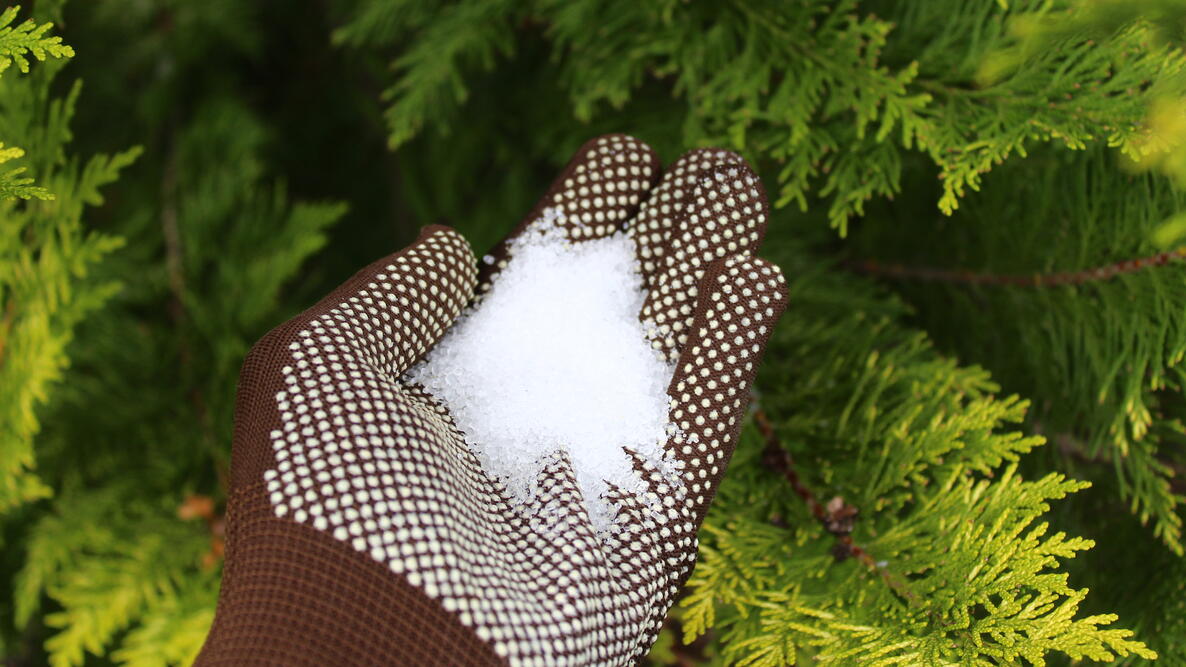

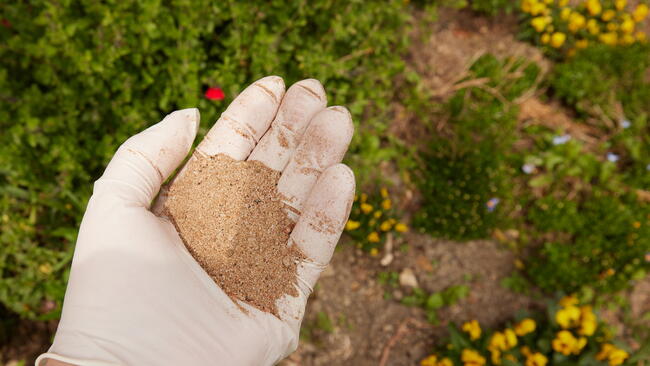
Some gardeners swear by Epsom salt as a gardening hack. We’re here to tell you that Epsom salt is good for neither plants, such as tomatoes or roses, nor the soil. Yes, it’s one of those gardening myths. Learn more—and let’s talk about alternatives.
Most gardeners love a reliable home remedy and are eager to embrace a magic bullet. This is the case with Epsom salt. It’s supposed to make flowering plants bushier and blossom more and make peppers and tomatoes more productive. But is it really a miracle cure-all? Can Epsom salt be harmful? Let’s separate fact from fiction.
Short answer: Epsom salt does not improve plant growth or fix nutrient deficiencies in most garden soils.
What Is Epsom Salt?
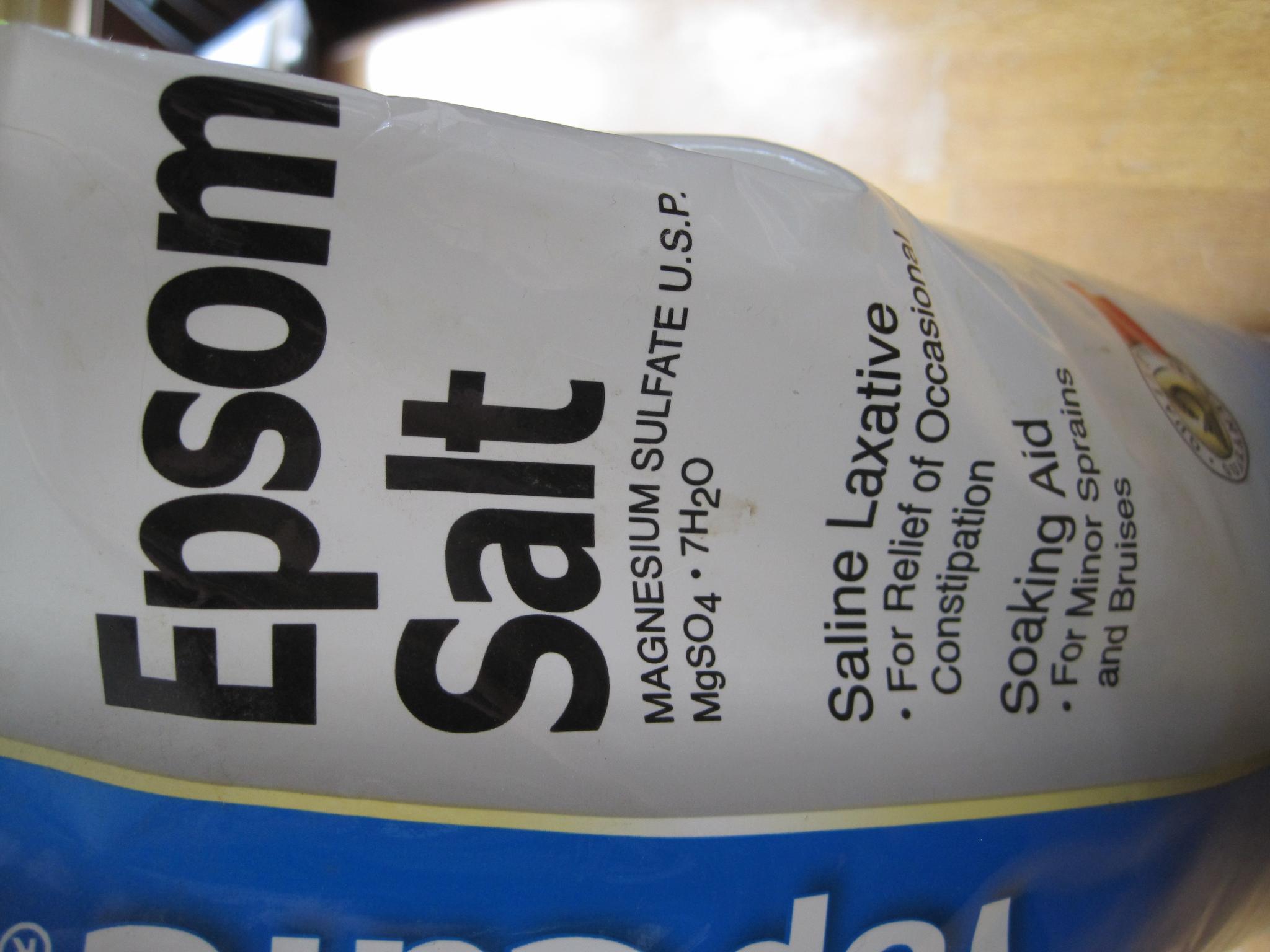
Epsom salt is the chemical magnesium sulfate (MgSO4)—which means both magnesium (about 10%) and sulfur (about 13%).
Magnesium
Magnesium is needed by plants to generate the chlorophyll needed for photosynthesis. On a plant lacking magnesium, the older leaves will turn yellow between the veins and along the edges, and growth will be stunted. Sandy, light, low pH soils are prone to magnesium deficiency. If your soil is quickly leached by rainfall and has a pH of 5.5 or less, it probably lacks sufficient magnesium. Adding compost to raise the level of organic matter in the soil will help.
Sulfur
Sulfur is needed to form some vitamins and plant proteins. If a plant lacks sulfur, its young leaves will turn yellow. Sulfur also gives vegetables such as broccoli, onions, and mustard greens their flavors. Sulfur is seldom deficient in garden soils in North America (deficiencies are rare). Plus, if sulfur is overdone, it will build up in the soil and make it hard for plants to use the other nutrients they need. If you are lacking sulfur, manure is a good organic source.
Is Epsom Salt Good for Plants?
Bottom line: No, Epsom salt is not beneficial for plants.
While many vegetables (leafy greens, beans, peas) can grow in soil with low magnesium levels, other plants, including tomatoes, peppers, and roses, need high magnesium levels.
What if Epsom salt is added to the soil to correct significant magnesium deficiencies? Unfortunately, horticultural studies (Auburn University, Delaware Valley College) prove that adding Epsom salt to the soil (directly or through watering) does not link to higher yield or healthier growth from peppers and tomatoes to roses. When it comes to your soil, do not rely on Epsom salt to adjust deficiencies in magnesium or sulfur!
The only real way to know if your soil is lacking magnesium or sulfur is to test your soil. Here are 3 simple DIY soil tests. (Or, there are soil tests provided by your cooperative extension.) If you add Epsom salt to soil that already has sufficient magnesium, this can harm plants and contaminate the soil.
Gardeners Use Epsom Salt
Some gardeners use Epsom salt to prevent blossom-end rot, but it does not work. In fact, Epsom salt can be harmful! Why? Blossom-end rot is caused by a calcium deficiency, not a magnesium or sulfur deficiency. Adding too much magnesium to your soil can actually prevent calcium uptake!
Problems With Using Epsom Salt in Soil
In addition, spraying Epsom salt solutions on plant leaves can cause leaf scorch. Excess magnesium can also increase mineral contamination in the water that percolates through the soil. Remember that Epsom salt is a highly soluble chemical.
When you use Epsom salt on plants, it will leach out of your soil fast, running into and polluting ponds and streams. The best practice is to avoid adding any extra chemicals to your soil—even things that seem “safe”—because you can easily do more harm than good.
Epsom Salt: Myth vs Fact
| Myth | Fact |
|---|---|
| Epsom salt makes plants grow bigger and healthier. | Most soils already contain enough magnesium and sulfur, so Epsom salt usually does not improve plant growth. |
| Epsom salt increases tomato and pepper yields. | Research shows no consistent increase in yield from using Epsom salt. |
| Epsom salt prevents blossom end rot. | Blossom end rot is caused by calcium deficiency, not magnesium or sulfur. |
| Epsom salt is a safe fertilizer alternative. | It can disrupt soil nutrient balance and should only be used if a soil test shows a deficiency. |
Alternatives to Epsom Salt in the Garden
Before heading to the drug store for some Epsom salts, look for a slow-release form of magnesium that will have longer-lasting effects, such as magnesium-enriched biochar or kieserite. If your soil is acidic, dolomitic limestone will raise the pH and add magnesium.
Frequently Asked Questions
Does Epsom salt help plants grow?
No. Research shows Epsom salt does not improve overall plant growth or yield in most garden soils.
Is Epsom salt good for tomatoes or roses?
No. Studies have not found consistent benefits for tomatoes, roses, or other garden plants when using Epsom salt.
What is Epsom salt made of?
Epsom salt is magnesium sulfate, which contains magnesium (about 10%) and sulfur (about 13%).
Can Epsom salt fix blossom end rot?
No. Blossom end rot is caused by calcium deficiency, not magnesium or sulfur deficiency.
Can Epsom salt harm plants?
Yes. Too much magnesium can interfere with calcium uptake and may damage soil balance over time.
What should I use instead of Epsom salt?
Compost, soil testing, dolomitic limestone (for acidic soil), or magnesium-rich soil amendments are better options.
Is sulfur in Epsom salt useful for gardens?
Sulfur is rarely deficient in garden soils, and excess amounts can disrupt nutrient balance.
Save the Epsom salts to soothe your tired, aching body after a day in the garden!
Read more about gardening myths!
Have you ever used Epsom salt in the garden? What was your experience?
More Like This

Thank you for bringing this to our attention. We have revised the text.
- « Previous
- 1
- 2
- …
- 10
- Next »

Comments