Primary Image
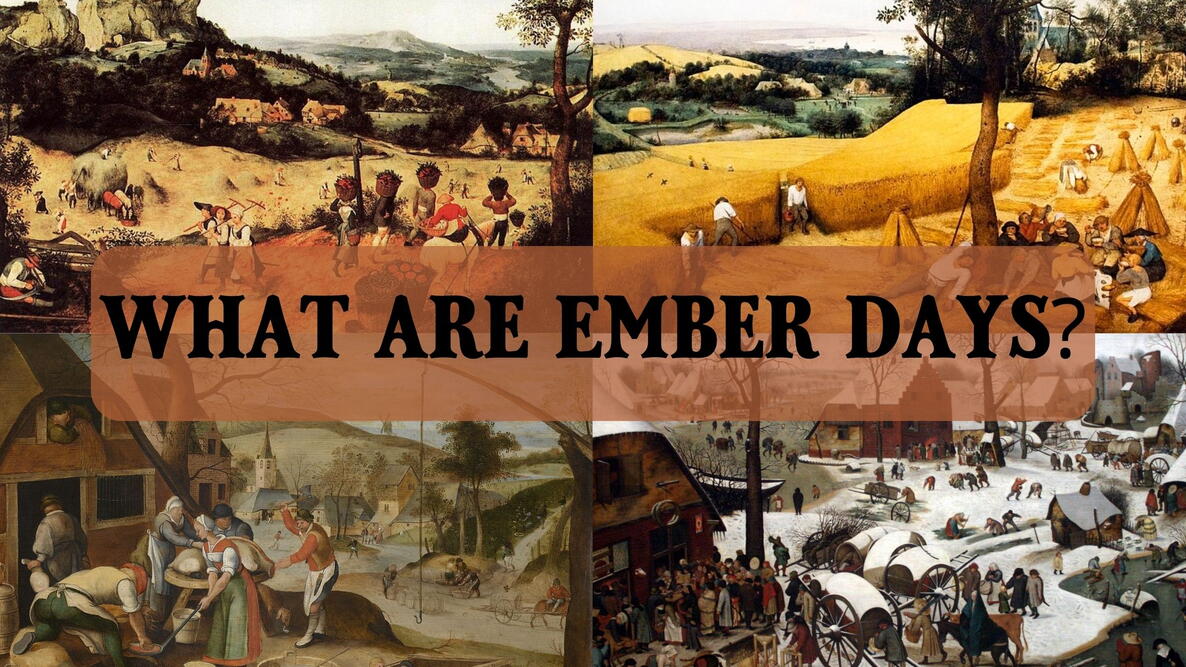
Image Credit:
Pieter Bruegel the Elder and Abel Grimmer


More Like This





We were always told that if you damaged a tree on an Ember day it would die.
This must be a Western Church practice. In the Eastern Orthodox Church, all 40 days of Lent and Advent are a time of strict fasting. There are also other fasts such as the Apostles’ Fast in summer and the Dormition of Mary Fast.
True, as I'm a RC that someone attends a local EO Church. I would need to take off from work the entire Lent and Advent though to observe strict fasting throughout both Liturgical Seasons. So, I stick with the required fasting days and have added Ember Days again, which I didn't learn about until quite recently.
Yes! I just heard about that today about the 40 days of Lent in the Eastern Orthodox Church. Beautiful !
Although I've read the term and some associations of Ember Days in historic and/or fantasy novels but had never run across anything concrete to explain them. Thank you! (I do love the Farmer's Almanac!)
How wonderful that several times a year days would be set apart to honor nature's gifts and help those in need.
Never heard of them. I don't think most Christians have ever heard of them.
I've heard of Ember Days since I was little- but only because I read The Old Farmer's Almanac!
I’m 74, grew up on the farm in the 50’s and I remember Grandpa and Dad regularly speaking of Ember Days as predicting weather. They both passed when I was in my 20’s and I haven’t heard that term since.
Ember days were more meaningful in the days when people lived more of an agrarian lifestyle. Nowadays, the Church has done away with set days and recommends that bishops establish particular "days of prayer" for current needs like for the fruits of the earth, prayer for human rights and equality, prayer for world justice and peace, and penitential observances outside Lent.
This was just a Roman Catholic practice, correct? THe Lenten Ember days were actually AFTER Ash Wednesday, so within Lent. We live in an LDS area now, and the LDS lawmakers are suggesting that people fast for peace both in our State and the whole world (2026).. I thought of moving their fast day (MArch 1, a Sunday) to the following Monday since the Ember Day fasting for LEnt wasn't meant for prayers for 'peace' necessarily. Admittedly, they are also praying for snow for our mountains esp since we're agricultural and will get many fires during Summer months without it(!). It's Ash Wednesday now, and we FINALLY woke up to snow this morning. Praise God!
- « Previous
- 1
- 2
- …
- 10
- Next »
📣The Gardening Club Just Got Better! 3 Deliveries, 10% Store Discount, and more!

Comments