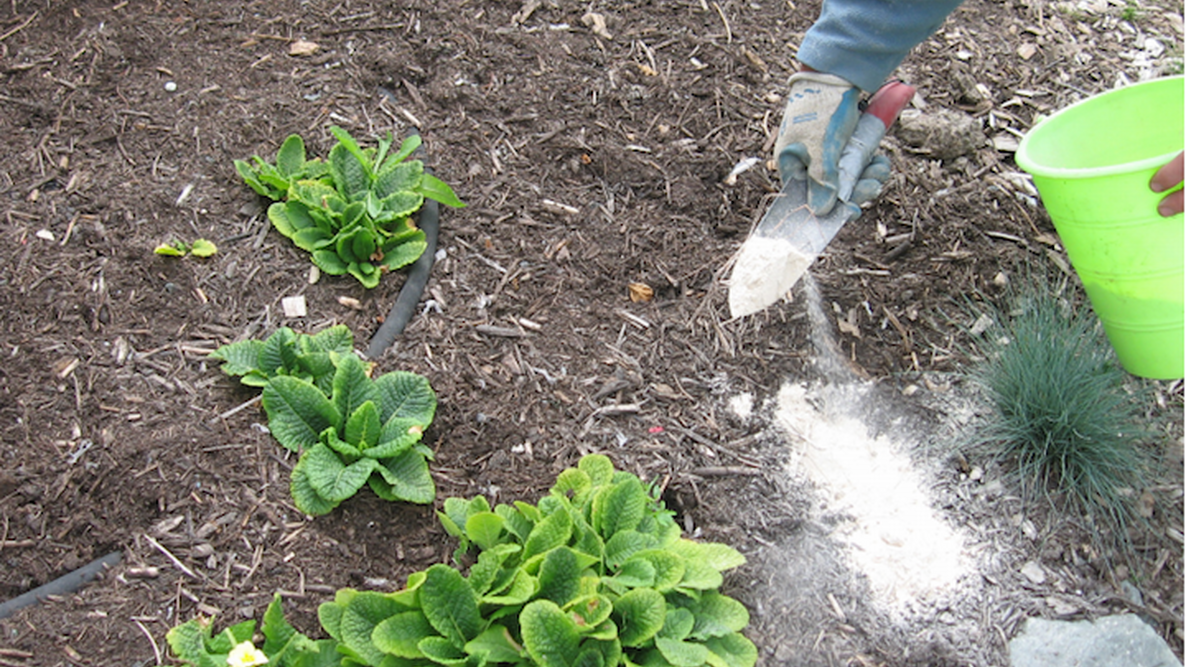

If you’ve ever searched for a natural way to control slugs, beetles, or aphids, you’ve probably come across diatomaceous earth (DE). This fine, powdery substance is made from the fossilized remains of microscopic aquatic organisms called diatoms. Though it feels soft like flour, diatomaceous earth is made of sharp silica particles that can damage insects’ outer layers, causing them to dehydrate.
Because it’s considered a non-synthetic pest control option, many gardeners use food-grade diatomaceous earth as part of an organic gardening strategy. However, while DE can be effective, it must be applied carefully to protect beneficial insects and pollinators. Here’s what you need to know before sprinkling it around your plants.
What Is Diatomaceous Earth?
Diatomaceous earth (DE) comprises the fossilized skeletons of microscopic, single-celled aquatic organisms called diatoms. Their skeletons are made of a natural substance called silica, which makes up 26 percent of the Earth’s crust by weight.
Deep deposits of diatomaceous earth are mined in the western United States, in places where lakes once covered the area millions of years ago.
How Does Diatomaceous Earth Kill Insects?
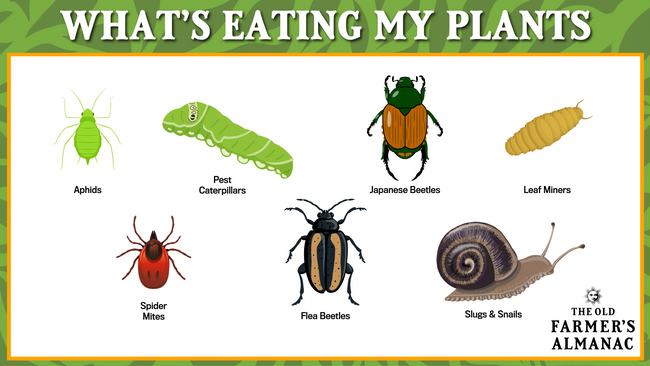
Slugs and snails do not like to crawl over DE because the silica skeletons are very sharp—like tiny pieces of broken glass. (Slugs and snails don’t like eggshells, either!) If their soft bodies do get cut, they eventually dehydrate and die. This process also works on other soft-bodied insects, including caterpillars and aphids, and those with hard shells, such as beetles, fleas, cockroaches, and even bed bugs. The tiny particles of DE get into the insects’ joints, causing irritation and dehydration.
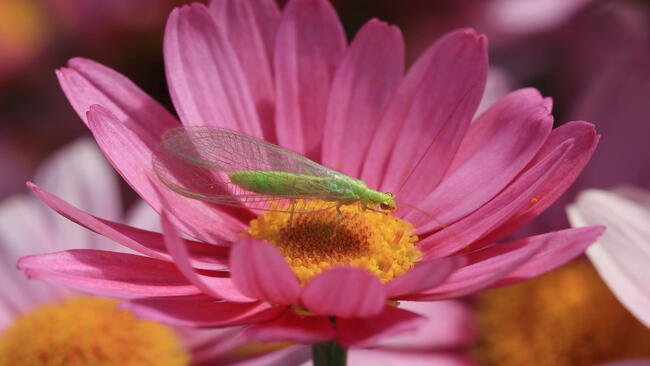
Caution: The downside to DE is that it does not discriminate between pests and beneficial insects. Ladybugs, green lacewings, butterflies, bees, and other “good guys” can also be killed by DE if they come into contact with it. For this reason, we recommend using DE with discretion on and around plants that beneficial insects may frequently visit. Avoid using it around flowers as well.
What Pests Does Diatomaceous Earth Kill?
| Pest | Effective? | Notes |
|---|---|---|
| Slugs & Snails | Yes | Works in dry conditions only |
| Aphids | Yes | Dust leaves lightly |
| Beetles | Yes | Affects joints & exoskeleton |
| Fleas | Yes | Common indoor/outdoor use |
| Bees & Ladybugs | Unfortunately yes | Use carefully to protect pollinators |
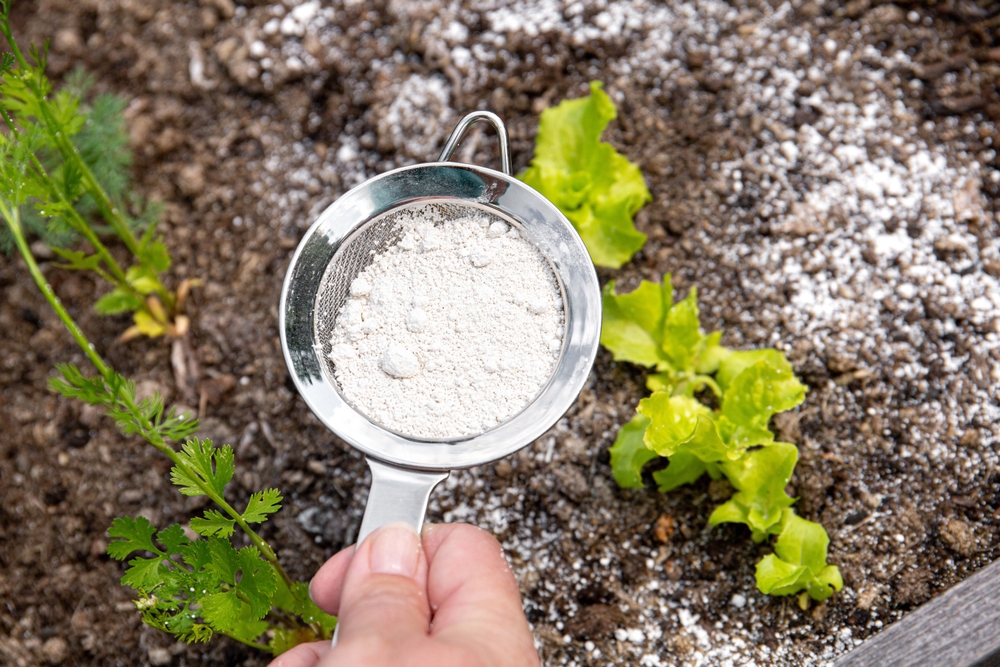
How to Use Diatomaceous Earth in the Garden
- When shopping for DE, look for food-grade quality. The DE used in pool filters is not effective against garden pests.
- Sprinkle bands of DE around the plants you are trying to protect. It’s important that the ring of DE does not have any gaps for pests to sneak through.
- If pests are eating the leaves of your plants, you can dust the leaves with DE, which should discourage further damage. However, you should avoid applying DE near the plants’ flowers, where pollinators might inadvertently come into contact with it.
- When using DE, wearing eye protection and a dust mask is recommended, as the small particles can be irritating.
- DE works best in dry conditions. It clumps together when wet, so reapply after it rains.
Is Diatomaceous Earth Safe for Humans and Pets?
Even though the industry states that this product does not cause lung damage, I would still refrain from inhaling it. Remember, it might feel soft to the touch, like talcum powder, but it still is an abrasive and can cause irritation to your eyes, nose, lungs, and throat. Wear a dust mask and eye protection when handling it just to be on the safe side.
Food-grade DE is not toxic if ingested in small quantities. In fact, we have probably been eating it unknowingly for years since it is often mixed with grain in storage to kill insects. It can also be found in toothpaste and skin care products. Some people take it a step further and use it to treat internal parasites! However, the DE commonly used in pool maintenance is not edible.
DE does not harm the soil since it is made from silica, like sand and many rocks. It does not break down when exposed to the sun. Rain can wash it into local water sources, but it is nontoxic to fish and other aquatic life. It is not harmful to birds or other wildlife, and it has been added to livestock feed for years.
If pests are enough of a problem that you’re tempted to resort to a chemical pesticide, give DE a try first. It is considered organic by the Organic Materials Review Institute (OMRI), and the National Organic Program considers it a non-synthetic and permits its use in crop production.
Pros and Cons of Using DE in the Garden
| Pros | Cons |
|---|---|
| Non-synthetic pest control option | Kills beneficial insects as well as pests |
| Effective against many crawling insects | Must stay dry to work |
| Low toxicity when using food-grade DE | Dust can irritate lungs and eyes |
| Does not harm soil health | Requires reapplication after rain |
| Long shelf life | Less effective for flying insects |
Frequently Asked Questions
How does diatomaceous earth kill insects?
DE works mechanically, not chemically. Its microscopic sharp edges damage insects’ outer layers and joints, causing them to lose moisture and dehydrate.
What pests does diatomaceous earth control?
It can help control slugs, snails, aphids, beetles, fleas, cockroaches, caterpillars, and even bed bugs—when applied in dry conditions.
Does diatomaceous earth kill beneficial insects?
Yes. DE does not discriminate between pests and beneficial insects such as ladybugs, lacewings, and bees. Avoid applying it to flowers or areas frequently visited by pollinators.
Does diatomaceous earth work when wet?
No. DE must remain dry to be effective. Reapply after rain or irrigation.
How long does diatomaceous earth take to work?
Insects may begin to dehydrate within hours, but it can take a day or more for visible results.
See the Almanac’s Pests and Diseases Library for more advice on solving gardening problems.
Diatomaceous earth is a powerful, non-synthetic option for controlling garden pests when used carefully and in dry conditions. While effective against slugs and insects, it should be applied thoughtfully to protect pollinators and beneficial insects.
Have you ever used DE in the garden? Tell us about your experience in the comments below!
More Like This

Hi Susan,
Sorry to hear about the issues with your blue spruces. Sawfly larvae typically emerge in the spring/early summer, depending on what type they are.
Diatomaceous earth can be used to help with sawfly larvae. When insects/larvae crawl through it, diatomaceous earth damages the outer layer of their bodies and will kill them quickly.
You will want to spread it around the base of your plants when you see the first signs of them, but since it is a powder, it will need to be reapplied after it rains or during humid weather.
You can also apply it to the directly to the plant as a secondary approach.
Hope this helps! And good luck with getting rid of you pest issue.
- « Previous
- 1
- 2
- …
- 10
- Next »

Comments