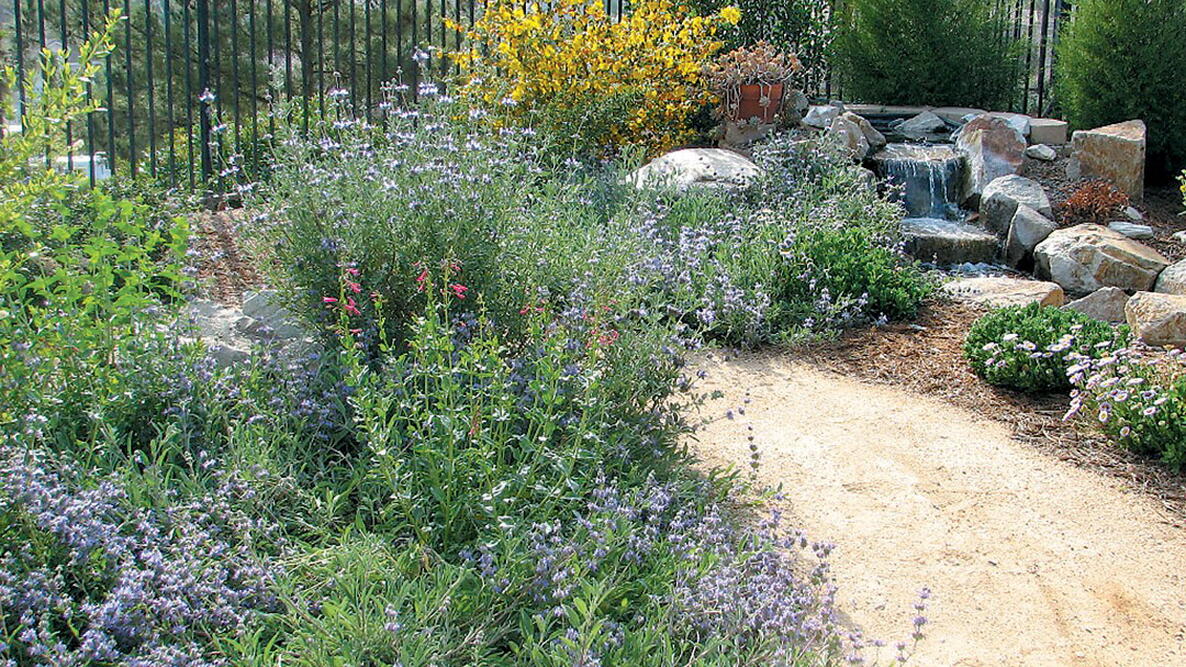
Caption
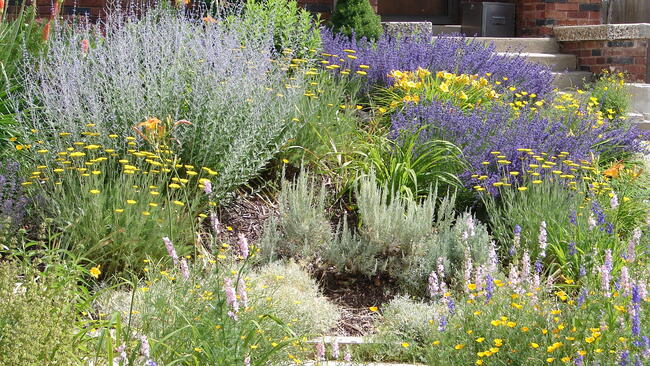
This small garden features a variety of Salvia.

Native plants is a surefire route to a stable, low-maintenance, carefree garden. Here are our 10 native landscaping tips. Go native!
Why Choose Native Plants?
Besides the “feel good by doing good” benefit of supporting nature, native landscaping saves money and time.
- Spend less time on maintenance activities like mowing, raking, watering, and trimming. Native plants even suppress weeds!
- Spend less money with reduced irrigation needs, less chemicals, and less need to buy new plants. Native plants have a much higher rate of survival since they’re married to the soil and and local climatic conditions, plus they self-seed!
- Native landscaping is safer for you, your family, your neighbors, and your pets since less chemicals means there’s cleaner runoff and safer water supplies.
- Pollinators need native plants! More pollinators means more flowers and fruits are produced, which is great news for the vegetable garden. Without native plants, we won’t have the bees, butterflies, birds, dragonflies, beneficial bugs, and animal and plant life.
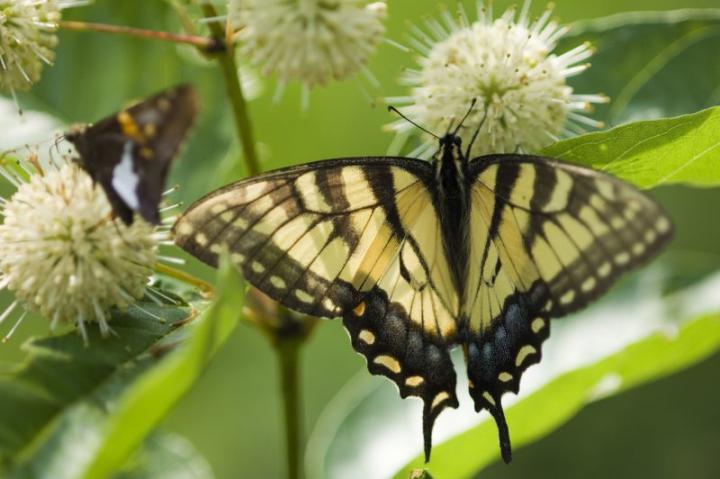
Image: Butterflies on Buttonbush (Cephalanthus occidentalis). Credit: Cornell University.
How to Follow Nature’s Lead
As you plan your landscape or garden, follow nature’s lead! See what percentage of your yard you can transform into native planting. Even a small percentage can make a difference! Here are 10 tips to get started:
-
Before you begin to play with garden design, take a long look at the hand that nature has dealt you. Let nature hardscape your garden. Are the landforms soft or jagged? Bright or subtle? Is the topography flat or varied? Take notes, then take the hint.
-
Remove all invasive shrubs, trees, and plants or they’ll simply take over any area. See more about stopping invasive plants from spreading.
-
Consider how to reduce the size of your lawn, which is a high-maintenance, low-value environment. Try a wider plant border. In the fall, you can smother areas with newspaper and mulch, and then plant natives in the spring. Or, you could try planting “native lawns” with grasses such as Red fescue (Festuca Rubra), Seashore bentgrass (Agrostis pallens), St. Augustine grass (Stenotaphrum secundatum), Buffalograss (Bouteloua dactyloides) and Blue grama (Bouteloua gracilis). It’s important to match your local area and soil. See this page for more details about native lawns.
-
Match the soil and the plantings. If your soil is acidic and your chosen plants need alkaline soil, you’re in for a struggle. See our pH preferences chart.
-
Take note of natives that grow in your yard or areas, especially plants that grow in clumps or groups as this will provide an important example of what will succeed and look wonderful. Grow what already grows, or a variant of it. Not sure how to ID the plant? There are many field guides as well as online apps such as Leafsnap and Garden Answers. Another great resource is the Ladybird Wildflower Johnson Center.
-
Never remove native plants from the wild; it’s a sort of shoplifting. “Ecologically correct” nurseries have spring up in every region of the country. To find native plants that work in your area and native plant nurseries, see Cornell University’s Local Resource Tool. Buy propagated wild plants from a reputable nursery, not a big box store.
-
Look to re-create natural elements on a smaller scale. If you’re considering walls or walkways, use natural stone in natural patterns (unless there is no stone, for then it will look out of place).
-
Blur the garden’s edges. Unlike conventional gardeners, who may end plantings with an edge or a nice, tidy line, consider blurring the edges by gradually reducing the plant’s density toward the perimeter of the garden. Perhaps float a few islands of plants toward or into the wilder landscape, if possible, to lead the eye outward.
-
Don’t fertilize when you plant. Most native communities thrive in areas of low soil fertility. Giving native plants a big meal of nitrogen when you set them out usually is of tremendous benefit to surrounding weeds. Take it slow and easy at first.
-
Weed and mulch frequently, and wait until the plants are established before you decide to give them supplements. Root growth should come first, so don’t be disturbed if plants seem to be making a slow start.
When man demands of nature a change so great and so unnatural, she rebels and refuses to submit.
–The Old Farmer’s Almanac, 1895
See our page on growing wildflowers with a list of widely-adaptable native plants.

More Like This

Comments