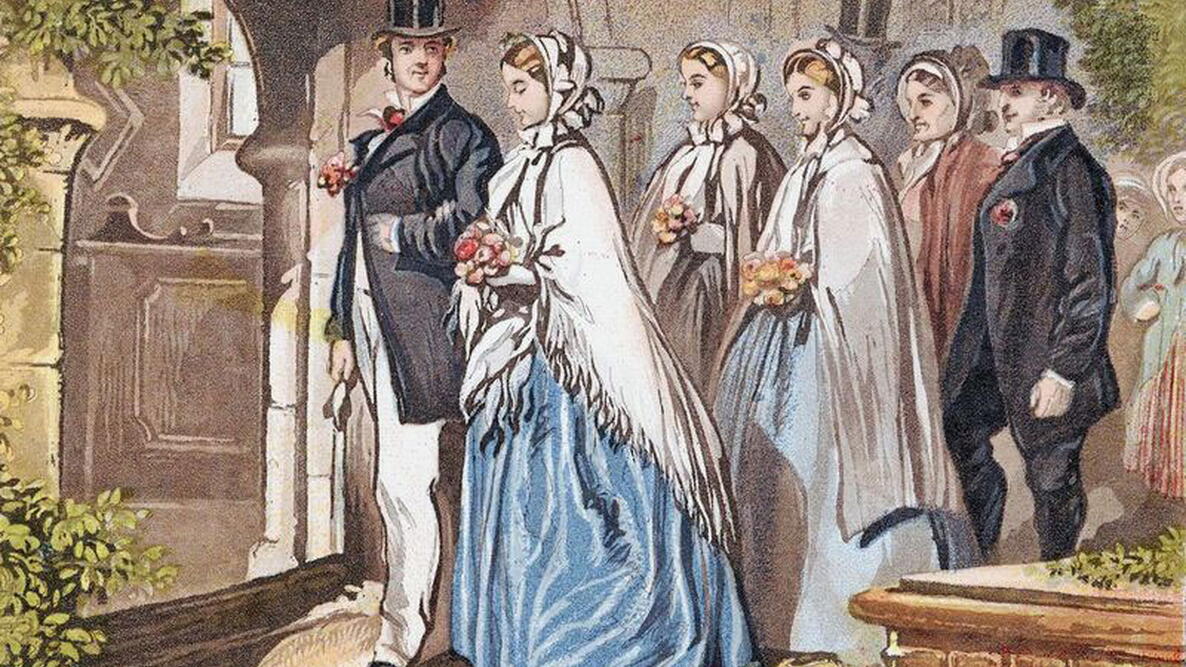

Why are wedding dresses white—and has it always been that way? From symbolic colors and old rhymes to royal fashion moments that shaped modern traditions, wedding dresses carry centuries of meaning. Let’s explore the history behind bridal attire, what different wedding dress colors symbolize, and how the iconic white gown became a timeless classic.
Wedding Dress Color Meanings
Until the 1900s, brides hardly ever bought a special wedding dress, opting simply for their best outfit instead.
Green was always avoided, as it was thought to be unlucky. White symbolized purity and virginity and was also thought to ward off evil spirits.
Married in White, you have chosen right
Married in Grey, you will go far away
Married in Black, you will wish yourself back,
Married in Red, you will wish yourself dead,
Married in Green, ashamed to be seen,
Married in Blue, you will always be true,
Married in Pearl, you will live in a whirl,
Married in Yellow, ashamed of your fellow,
Married in Brown, you will live in the town,
Married in Pink, your spirit will sink.
The Origin of the White Wedding Dress
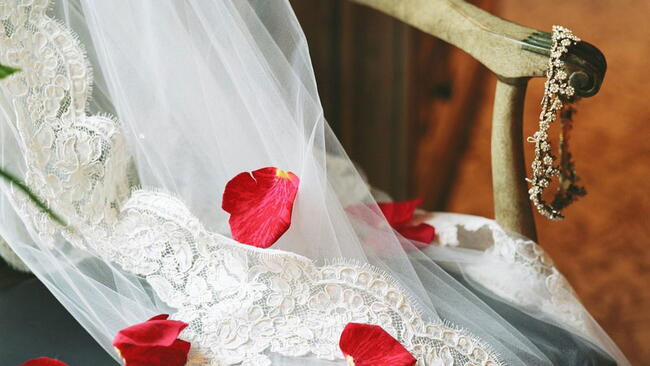
The white wedding dress, now a common tradition in the Western world, originated with Anne of Brittany on the occasion of her marriage to Louis XII of France in 1499. But it wasn’t until 1840, when Queen Victoria married Prince Albert, that the white dress was made popular. Now the white wedding dress is a classic.

What Does the Groom Wear to the Wedding?
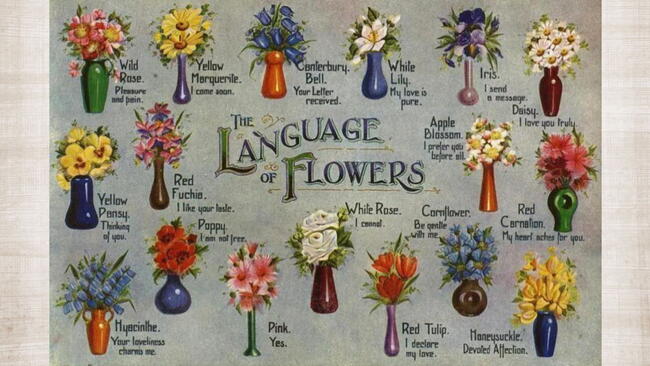
To cut a dashing figure, the groom should match the bride. For a formal afternoon wedding, he should have a cutaway and, after six, a black tie. There is no symbolism in his clothes, as there is in the bride’s. But there can, in fact, be symbolism in the boutonniere he chooses. A red chrysanthemum means “I love you,” a white rose means “I am worthy of you,” and a sweet William represents gallantry. Find out more about the meaning of flowers.
Are you ready for your wedding? Use our tools to plan for wedding weather! Plus, find out more about wedding customs and traditions and wedding folklore.
Frequently Asked Questions
Why are wedding dresses traditionally white?
White wedding dresses became popular after Queen Victoria wore one in 1840. The color symbolized purity, wealth, and celebration—and helped set a lasting fashion trend across the Western world.
Did brides always wear white wedding dresses?
No. Before the 1800s, brides usually wore their best dress, regardless of color. White was impractical and expensive, so it was reserved for the wealthy and special occasions.
What do different wedding dress colors mean?
Wedding dress colors carry symbolic meanings. White represents purity, blue symbolizes fidelity, red was once associated with bad luck, and green was traditionally avoided as unlucky.
What is the origin of the white wedding dress?
The earliest recorded white wedding dress was worn by Anne of Brittany in 1499, but the tradition didn’t take hold until Queen Victoria’s wedding popularized it centuries later.
Are white wedding dresses still considered traditional today?
Yes, but modern brides often choose colors that reflect personal style or cultural traditions. Ivory, blush, blue, and even patterned dresses are now common.
Is there symbolism in what the groom wears?
While the groom’s outfit doesn’t carry the same symbolism as the bride’s, his boutonniere can. Different flowers traditionally represent love, devotion, or gallantry.
While the white wedding dress became popular thanks to royalty and tradition, today’s brides have the freedom to choose colors and styles that reflect who they are. Whether you follow centuries-old customs or create your own, what matters most is celebrating love in a way that feels true to you. After all, traditions may guide us, but personal stories are what make weddings unforgettable!
What color was your wedding dress? Tell us about it below!

More Like This


Comments