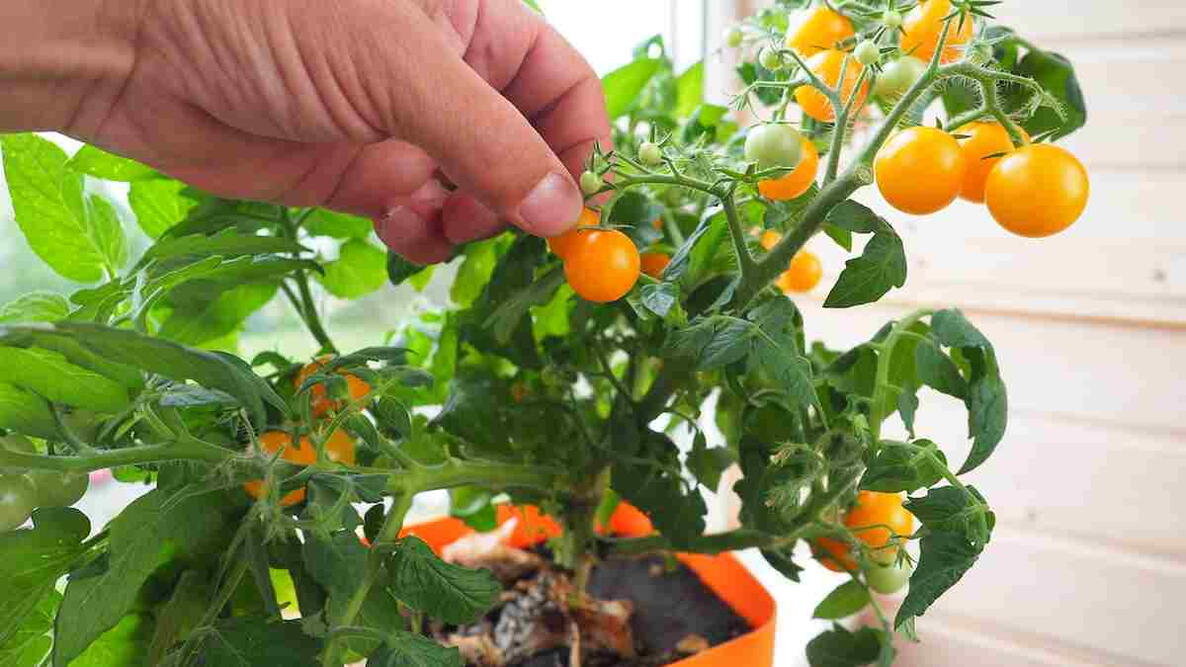
Caption
Harvesting sweet cherry tomatoes from a compact patio container plant.

No plot? No problem! If you don’t have space for an in-ground garden, tomatoes grow surprisingly well in pots, containers, and even simple buckets. After years of growing tomatoes in containers, I’ve found that choosing the right variety, pot size, and watering routine makes all the difference. Here’s everything beginners need to know to grow a productive patio tomato harvest.
1. Choosing the Right Container
Compared to radishes, carrots, lettuce, and many other vegetables, tomato plants grow relatively large and need plenty of room for their roots. Unless you are growing a dwarf variety, bigger containers almost always produce healthier, more productive plants.
- Small cherry tomatoes can grow in 2- to 3-gallon containers, while most tomatoes need at least a 5-gallon pot. Larger varieties perform best in containers that hold 10 gallons or more.
- Grow only one tomato plant per container unless you are using an exceptionally large raised planter. Overcrowding reduces airflow, increases disease risk, and limits production.
- Containers should also be at least 12 inches deep to give tomato roots enough space to spread out and support healthy growth.
Tool: If you are unsure what size planter to use, try our handy pot size calculator.
Any container you use should be sturdy and have drainage holes in the base to prevent waterlogged roots. Barrels, terracotta pots, ceramic planters, plastic containers, and grow bags can all work well for tomatoes.
Personally, I like using grow bags because they drain well and make it harder to overwater plants. They are also lightweight and available in a wide range of sizes.
2. Tomato Varieties for Container Gardening
All varieties of tomatoes can technically be grown in containers, but after years of trial and error, I’ve found that not every tomato thrives in a pot.
Determinate or bush-type plants are usually the easiest tomatoes to grow in containers. These compact plants stay relatively small, require less support, and are generally more forgiving in pots than larger varieties. Their fruit also ripens over a shorter period, which is useful if you plan to make sauce, salsa, or canned tomatoes.
Indeterminate tomatoes can also be grown successfully in containers, but they typically need larger pots, sturdier supports, and more frequent watering. With the right setup, however, many indeterminate varieties can be just as productive in containers as they are in the garden.
I’ve successfully grown many of my favorite tomatoes in containers over the years, including:
- Cherokee Purple
- San Marzano
- Principe Borghese
- Sungold
- Roma
If you’re just getting started, here are some determinate slicers and salad tomatoes that we’ve grown with good results:
| Variety | Best For |
|---|---|
| Patio Princess | Productive all season long, and it looks right at home on a sunny balcony or deck. |
| Window Box Roma | A perfect choice for sauce lovers. |
| Tumbler | Ideal for hanging baskets or small pots. These tiny plants yield cascades of cherry tomatoes. |
| Tiny Tim | Ideal for balconies or even indoor sunrooms. |
If you can’t find these tomato varieties, look for cultivars with “Bush” or “Patio” in the name—such as ‘Patio’, ‘Better Bush’, ‘Bush Early Girl’, and ‘Bush Goliath’. These names usually indicate the plants stay compact and are ideal for growing in pots.
3. Preparing the Soil and Potting Mix
The success of container-grown tomatoes depends heavily on the potting mix you use. It pays to be choosy about the potting mix you use.
One of the joys of container gardening is the control you have over the soil you use. While it can be tempting, do NOT fill your pot with garden soil; it is too heavy and may harbor insect eggs and soilborne diseases that can harm the health and growth of your plants.
Use a soilless potting mix (which will contain peat, compost, or coir blended with perlite or vermiculite for good aeration). If you can’t find a sterile potting mix with compost or aged manure, add it yourself to give the soil life and trace nutrients. I like to blend about 1 part compost with 2 parts potting soil for my potted tomatoes, then add some worm castings for extra nutrients.

4. Picking a Location
Container plants can be moved as needed to catch more sun or avoid shading.
Your tomato pot will need as much sun as it can get, at least 6–8 hours of direct sunlight a day. One good thing about container growing is that you can move the plant to take advantage of your sunniest spots. Put it on casters to make it easier to move.
If you place your pot in a position that gets full sun (south or southwest in many regions), you’ll get better fruit set and ripening. If you’re growing tomatoes on your driveway or another solid surface, elevate the pots on bricks or a plant caddy to ensure the pots drain well.
Avoid shady spots or places with too much wind or cold drafts because pots can cool or warm more quickly than the ground soil.
5. Planting Tomatoes
Tomatoes are heat-loving plants that don’t tolerate cold weather well. Timing is everything. Don’t start too early unless you are prepared to protect your plant on a cold night; otherwise, wait until night temperatures are reliably above 55°F before moving your pots outdoors.
Many gardeners extend their growing season by starting seeds indoors or growing tomatoes from nursery starts. If you’re unsure when to plant tomatoes in your area, check our Tomato Planting Guide.
When planting, I always bury the tomato deeply—up to the first set of leaves. Tomatoes grow new roots along their buried stems, creating a stronger plant.
Locate the tomato in the planter, then backfill the pot with soil until the soil line is about 1 inch below the rim, and 2/3 of the leafless section of the tomato stem is buried. This planting depth creates a stronger root system and plant!
After potting up your tomatoes, add an inch of mulch around the base of your plants and water them deeply until water trickles from the pot’s drainage holes.
This is also the best time to add a tomato support system so you won’t disturb your plant’s roots later. I’ll often use wooden stakes or tomato cages for smaller tomato varieties but netting or larger trellises for my indeterminate plants.
6. Watering
This is where most people struggle. Tomatoes in pots or containers dry out much faster than those grown in the ground. I check mine daily in warm weather and water deeply whenever the top inch of soil feels dry.
Regular watering is important for most veggies, but it’s essential for preventing a number of common tomato issues.

Cracked tomatoes, blossom-end rot, and premature fruit drop can all result from watering tomatoes too much, too little, or inconsistently. To avoid this, stick to a regular watering schedule as best you can, or consider installing an automated drip irrigation system to water your plants for you.
7. Fertilizing
Tomatoes love nutrients—especially in containers, where watering can wash them away. I provide this by blending compost and a slow-release organic fertilizer into my potting mix before planting tomatoes. Then, I supplement every 1–2 weeks with a diluted liquid fertilizer like fish emulsion.
A simple, stage-based feeding plan will help beginners grow strong plants and a bountiful harvest without confusion.
| Stage | Fertilizer | Notes |
|---|---|---|
| At planting | Slow-release tomato fertilizer (e.g., Espoma Tomato-tone 3-4-6, or another balanced tomato fertilizer) | Mix into potting mix to give seedlings a nutrient boost |
| 2–3 weeks after planting | Liquid fertilizer (e.g., fish emulsion, seaweed extract, or other mild liquid tomato feed) | Apply every 1–2 weeks; helps plants grow strong leaves and stems |
| Flowering & fruiting | Slow-release tomato fertilizer (same as above) | Side-dress or sprinkle every 2 weeks to support healthy fruit production |
You don’t need to buy three different products. One slow-release tomato fertilizer plus an optional liquid feed covers all stages. You can use other balanced liquid or granular fertilizers on tomatoes, but it’s important to follow the instructions on fertilizer packaging, as application rates and schedules vary.

8. Harvesting Tomatoes in Containers
For determinate container varieties, harvesting is typically concentrated over a short period. Harvesting tomatoes at the right time ensures the best flavor and texture. Here’s how to determine when your tomatoes are ready:
- Ripe tomatoes exhibit their characteristic color—red, yellow, or orange—depending on the variety.
- Gently squeeze the tomato; it should yield slightly to pressure, indicating ripeness.
- Ripe tomatoes should come off the vine easily.
During peak season, check your plants every few days and harvest tomatoes as they ripen. Regular harvesting encourages continued production and helps prevent overripe fruits from cracking or attracting pests.
Don’t worry if frost threatens before all of your tomatoes have fully ripened. Tomatoes that have started to change color can usually finish ripening indoors on a countertop, and even mature green tomatoes can often be ripened after harvest.

Common Issues
While growing tomatoes in containers gives you more control over the growing environment and can help reduce common plant problems, you may still run into a few issues from time to time:
- Blossom end rot: This common issue is often caused by inconsistent watering rather than a lack of calcium. To prevent it, water regularly whenever the top inch of soil feels dry.
- Leggy plants: Tomatoes can become stretched and weak in low light or when plants are not pruned regularly. Pinching tomatoes back from time to time encourages bushier, more productive growth.
- Yellow leaves: Lower leaves may yellow naturally as plants mature, but widespread yellowing can indicate overwatering, underwatering, or a lack of nutrients. Check soil moisture before watering and fertilize regularly throughout the growing season.
- Blossom drop: Tomato flowers sometimes fall off before setting fruit during periods of extreme heat, cold, or drought stress. Keeping plants consistently watered and protected from temperature extremes can help improve fruit set.
- Wilting during hot weather: Tomatoes often wilt temporarily during the hottest part of the afternoon, especially when grown in containers. If plants recover by evening, this is usually normal. Persistent wilting may indicate the plant needs water.
- Pests: Potted tomatoes are often less prone to pests, but aphids, spider mites, and tomato hornworms may still appear. Companion planting with scented herbs can help deter some insects, along with regular applications of organic insecticidal soap.
New to growing vegetables in pots? Read our Container Gardening for Beginners Guide for more tips on watering, feeding, and choosing the right containers.

More Like This

Comments