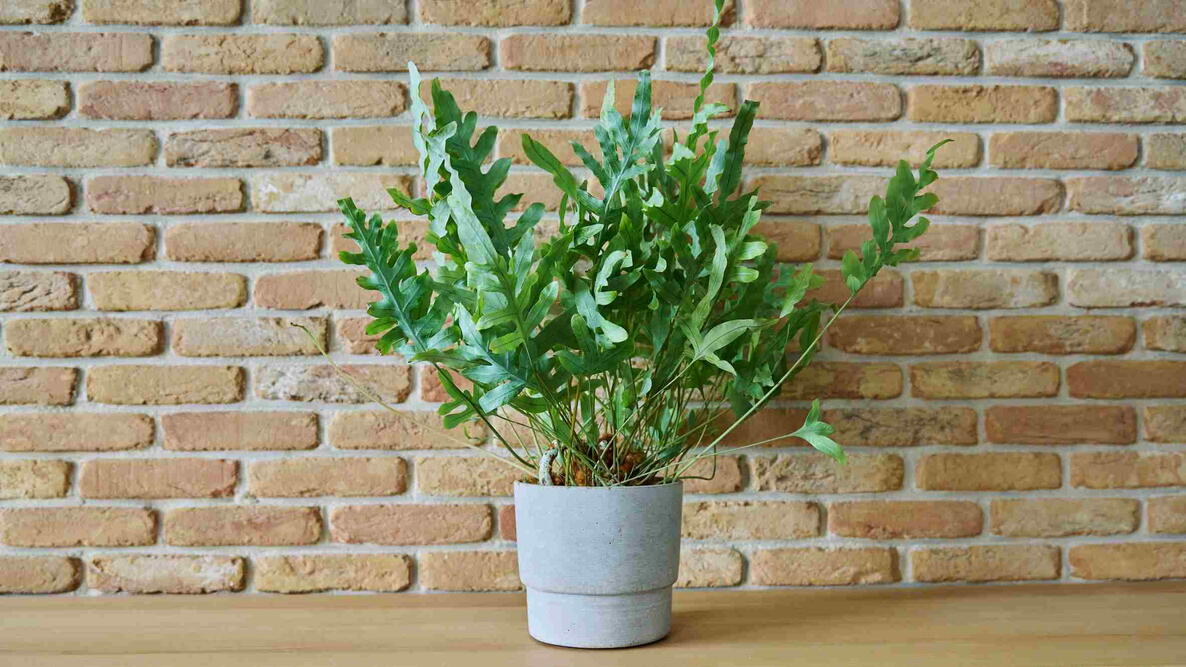
Caption
Blue star fern rewards good care with bold, bluish-green fronds and long-lasting growth indoors.

Ferns can be fussy to keep as houseplants, but you don’t need to wish on a star to keep this one happy. Blue star fern care is refreshingly straightforward compared to many other fern species. These resilient ferns handle low humidity and dry soil better than most. They can be grown in pots or wall mounts, and their bluish-green fronds offer a striking contrast to the bright green leaves most ferns are known for. If you love the look of ferns but have struggled to grow them in the past, here’s why blue star ferns are hard to beat and simple care tips for growing your own!
When compared to other fern species, blue star ferns have a bold look with bluish-green to greyish-green, deeply lobed fronds that can grow up to 50 inches long. As long as these plants are watered regularly and provided with low to medium light, they are relatively easy to keep in homes and aren’t that particular about humidity. Still, blue star ferns prefer slightly humid conditions and will grow even better on a pebble tray or near a humidifier.

Over the years, I’ve had a hard time keeping ferns alive in my home, but I’ve always had success growing blue star ferns. I personally grow these plants in pots filled with a well-draining potting mix, but they can be wall-mounted like staghorn ferns or grown in a roomy terrarium or grow cabinet. Best of all, blue star ferns are non-toxic to cats, dogs, and other pets, making them a safe choice for animal-friendly homes.
If you’re growing blue star ferns in a bark-based orchid mix, soak the plant’s pot and roots in a sink or bowl of water for 15 to 20 minutes once or twice a week in summer and a little less in winter. Allow the pot to thoroughly drip dry before returning it to its saucer.
If you’re growing blue star ferns in a potting mix that holds onto water well, water the plants from the top down when the top 1 inch of substrate feels dry to the touch. Just don’t water into the plant’s crown, as this can lead to rot!
Indoor plants may become leggy in poor light, and their fronds may naturally turn brown as they age. To improve the look of your plant, remove these damaged leaves in early spring and avoid pruning ferns during their winter dormancy. You’ll also need to water blue star ferns less and withhold all fertilizer from late fall to early spring.
Propagation
The easiest way to propagate blue star ferns is by dividing mature plants when they get large or begin to outgrow their pots.
- Time it right: The best time to propagate blue star ferns is in spring.
- Remove the pot: Free your plant from its pot and lay it sideways on your work space.
- Separate the divisions: Use your fingers to tease apart the fern’s rhizomes until you’ve separated the plant into clumps that each have leaves and rhizomes. If needed, use sterilized scissors or a knife to cut through entangled roots, but do your best to minimize root damage.
- Replant ASAP: Replant the plant divisions in their own pots with a well-draining potting mix or orchid bark. Then, water consistently until you see new growth.

More Like This

Comments