Caption
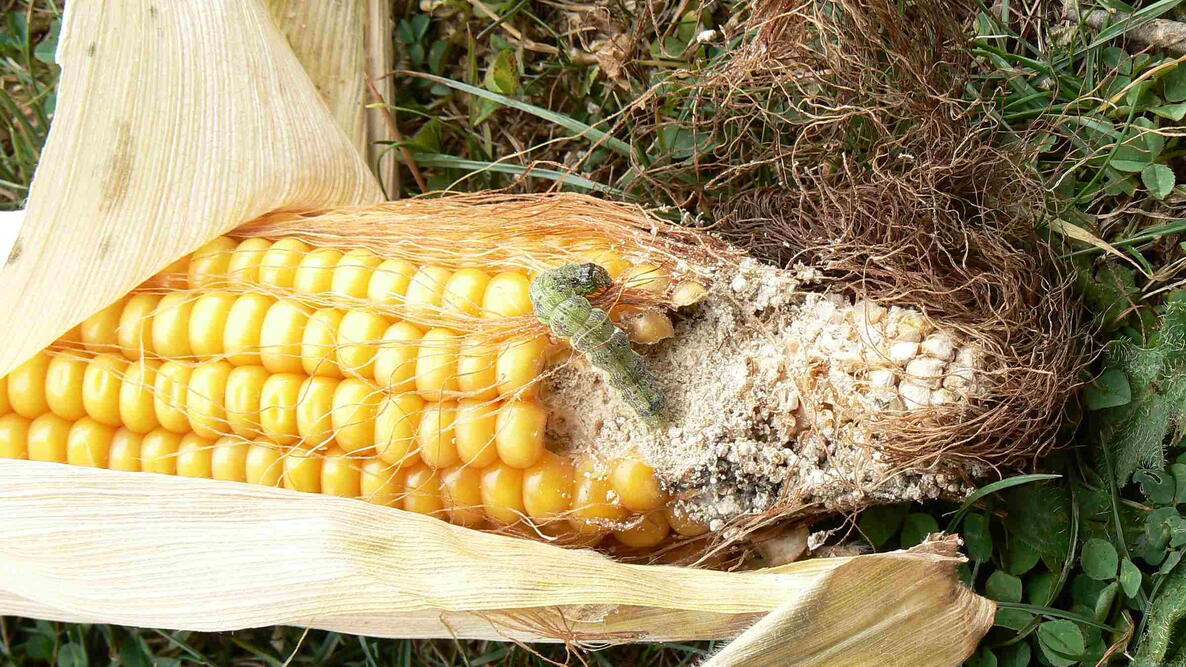
Corn earworms feed at the tip of sweet corn ears.

There seems to be lots of competition for our sweet corn from the critter side of things. Deer love corn, raccoons will turn a sweet corn patch into a disaster overnight, and corn earworms are just waiting for your sweet corn. Find out how to identify a corn earworm and what you can do about it.
What Are Corn Earworms?
Corn earworms are one of the most serious pests of sweet corn in our gardens. They’re the larval stage of the corn earworm moth (Helicoverpa zea). While they are indeed pests in our ears (of corn), they can also damage other crops like beans, cabbages, and tomatoes. When attacking tomatoes, they’re sometimes called tomato fruitworms. But, for gardeners, it’s usually our sweet corn they bother.

These pests can attack the corn whorl, but are a bigger problem when they get into the ear. If you’ve seen a few rows of munched kernels at the tips of your ears and found a worm under the husk, it was likely the corn earworm.

Female corn earworm moths prefer to lay their eggs on fresh corn silk, but will use the tassels or whorls if the silks aren’t yet available. Females can lay up to 1,000 eggs in their lifetimes. Corn earworm larvae are cannibalistic, which is good news for us, I suppose. Older, larger larvae will eat younger instars to protect their feeding area. It’s why you usually only find one at a time.
Identification
How to Identify Corn Earworms
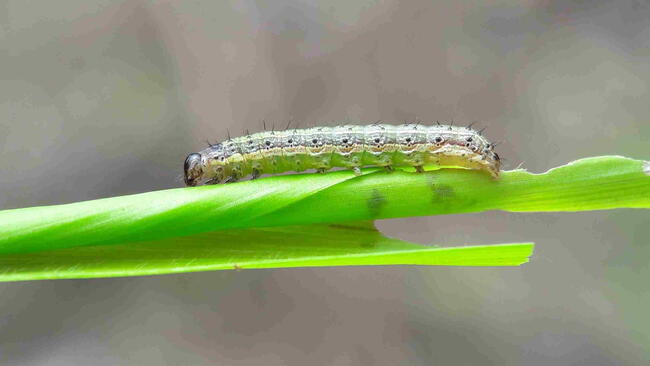
The biggest identifier for gardeners is that corn earworms are a soft-bodied, mostly smooth caterpillar on our corn plants. They can be found on tassels and whorls early in the growing season and are usually on corn ears in late summer, as the silks have browned and the ears have started to form.
Corn earworm larvae
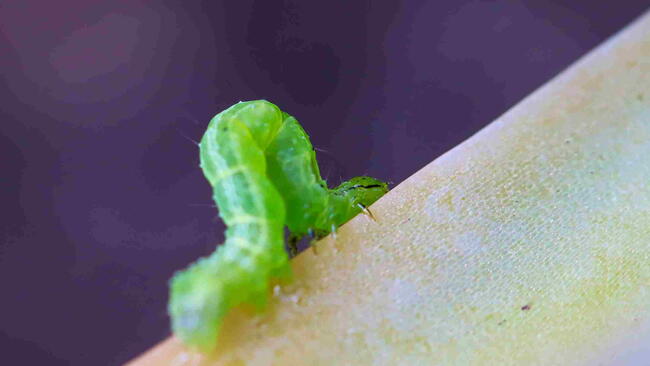
The larvae of corn earworms (the actual worm we’re concerned about) go through six instars, or stages, on their way from newly hatched to ready to pupate. Larvae at the first couple of stages are small and creamy white; at the later stages, they get larger and darker colored. At the last instar, larvae are about 1.5–2 inches long, and can be several colors, including black, dark green, or even red and pink. They have several lateral lines running down their backs.
Corn earworm eggs
Corn earworm eggs are very small, about the same width as a single strand of silk on an ear of corn. They are creamy yellow, round, and laid singly, not in groups, most often on the silk.
Corn earworm adult moths
The corn earworm moth looks rather nondescript to me, sort of tan and dusty colored. If you said light-brown moth, these are what I’d picture.
Adults typically have a wingspan of about 1.5 inches. Think of a moth the size of a postage stamp when it is sitting with its wings folded. Like many moths, corn earworm moths are most active at night.

What Corn Earworm Damage Looks Like
Early-season corn earworm damage may be found as feeding holes on leaves, tassels, and the whorl, but in late summer, it’s the ears that are the problem. Corn plants can handle a few holes in the leaves, but when corn earworms start chewing on our ears of tasty, sweet corn, that’s the problem for gardeners. Damage to the whorl (the tight spiral of forming leaves at the top of a young corn plant) will look like leaves peppered with holes as they unfurl.
Later in the season, corn earworm larvae feed on the silks, then work their way down into the ear and begin feeding on the kernels, often devouring the top 1–2 inches of the ear. Not only will they eat several rows of kernels, but you’ll likely find excessive amounts of worm frass (insect droppings) near the tips of the ears. Corn earworm larvae will keep feeding until they mature, then drop off the plant into the soil to pupate (become moths).
Fortunately, if you can get past the ick factor of finding a worm in your ear of corn, or the signs of their past presence, the rest of the untouched corn on that cob is still fine to eat. Just cut off the damaged tip.


Comments