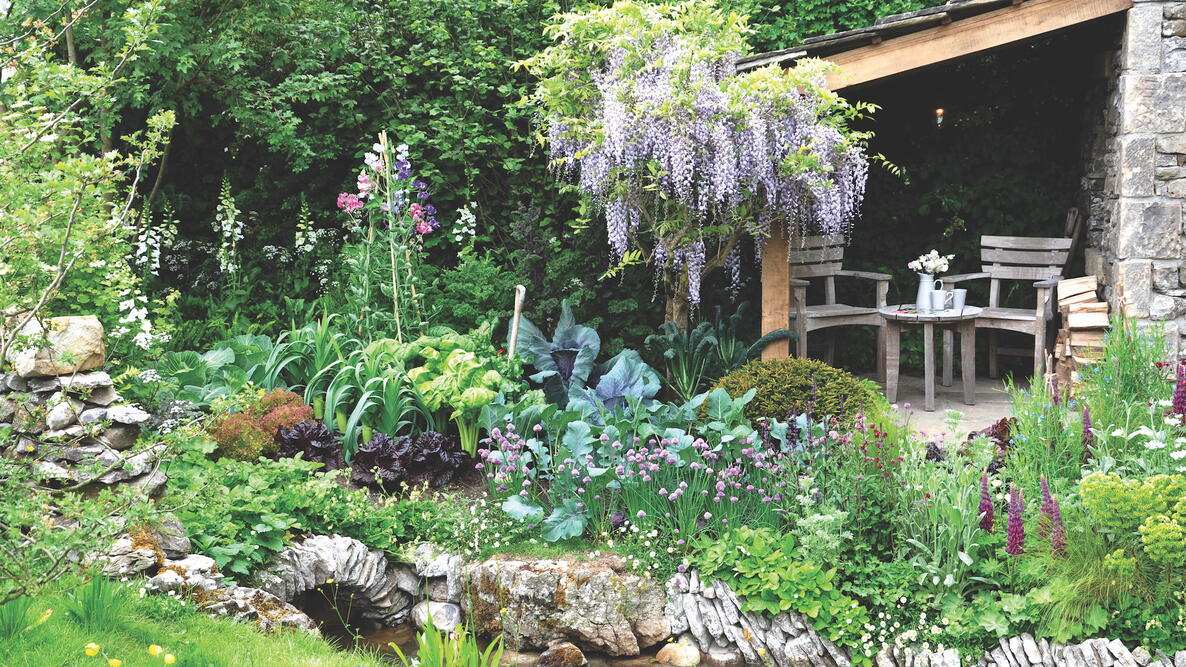

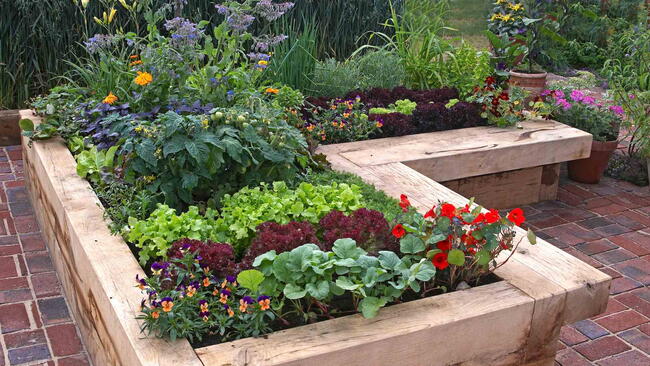
Grow a garden that looks—and tastes—great with edible garden plants by mixing flowers with herbs and vegetables! Nothing is more rewarding than picking vegetables and herbs from your own garden. They couldn’t be fresher, and you have peace of mind knowing just how they were grown. If you already have a garden, you can easily add some edible garden plants to your flower bed or home landscaping. Discover edible landscaping to make your yard more of a livable retreat.

What is Edible Landscaping?
Edible landscaping incorporates fruit-bearing plants, culinary herbs, vegetables, and flowers that you can eat! You can start small by choosing one or two plants that are both attractive and edible (versus the fleeting bloom of a spring shrub, more lawn, etc.).
Gardeners have been growing flowers in their vegetable plots for years, so we know that the two types of plants not only peacefully co-exist but that they also can benefit each other. From the Egyptians to medieval monks, all plants worked together. Herbs and edible flowers can be planted inside hedges; luscious grape vines can spill over an arbor, and berry shrubs can form a border. Don’t be afraid to mix things up!
Benefits of Growing Edible Garden Plants
Edible landscaping also happens to be good for your yard and the planet. Think of all the work, energy, water, and chemicals that go into a lawn or the brief beauty of cultivated azaleas or peonies. There’s little reward beyond looks when the space could be both beautiful and useful.
You can start simple. There are many creative ways to sneak more edible plants into landscaping without sacrificing good looks. The technique is also a great way to maximize production in a limited space.
Edibles come in many shapes and sizes. Some make perfect edging plants, others are good ground covers. Most vegetable plants need to form a blossom to bear fruit while others, including kale, lettuce, or rainbow chard, are grown for their greens. Shrubs such as blueberries and currants offer flowers and berries, and blueberries have colorful fall foliage as well. Grow what you have space for and what you like to eat. These garden-friendly edible plants can maximize your yard’s beauty and productivity.

8 Edible Garden Plants to Grow
It’s important to choose edible plants that are ornamental, but not especially appealing to wildlife. Rainbow chard or strawberry plants add color to a flower border. A short-blooming peony or azalea could be replaced with a blueberry bush or rosemary plant. If you have bright orange or yellow bulbs, mix in salad greens to fill in the ground space.
1. Pole Beans
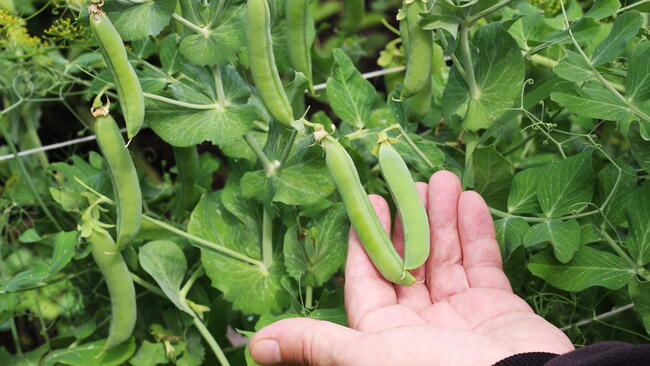
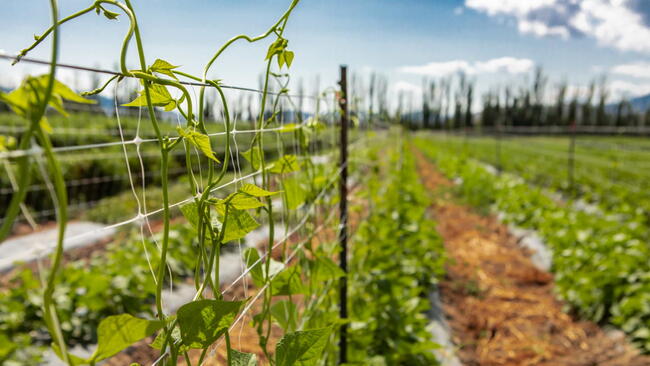
Pole beans are tops in my book since they are a versatile and nutritious veggie that can be served in many ways. If you have a fence around your garden or a trellis they can climb, just a few plants will give you plenty of beans for the table and some to freeze for later. There are many varieties to choose from. They can have colorful flowers, and the pods themselves can be yellow, purple, red, or spotted. Simply clear a spot at the base of their support and poke the beans 1 inch deep in the soil and about 4 inches apart. They will pop up in no time and reach for the sky.

2. Cucumbers
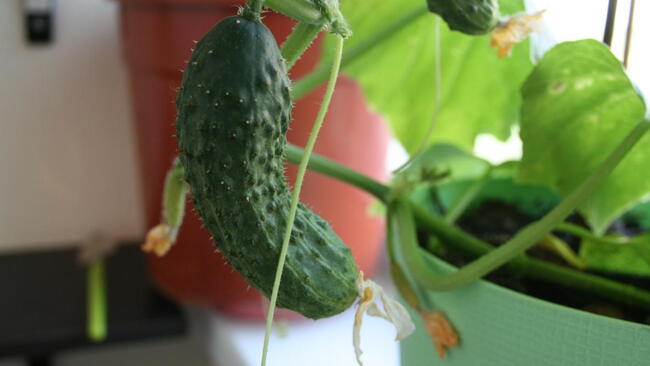
Cucumbers are another culinary climber that will grow up any type of support they can wrap their tendrils around. Keeping them up off the ground lessens their exposure to soilborne diseases and makes them easier to pick. With many types to choose from, you can grow small picklers, long burp-less ones, or tender slicers for salads. Buy plants for a head start or direct seed them where you want them to grow.

3. Lettuce
Lettuce makes a decorative and edible edging. Alternate frilly leaf lettuces such as dark red ‘Lollo Rossa’ and green ‘Salad Bowl’ for a colorful effect. Snip the outer leaves as you need them for salads and the center will continue to grow. Lettuce is one edible that doesn’t need full sun and actually prefers a location with dappled shade. Buy starter plants in the spring or grow your own from seed.
4. Alpine Strawberries
Alpine strawberries are another great edging plant. The fruits are small but extremely flavorful and appear on the plants throughout the growing season. Unlike regular strawberries, they do not make runners, and the plants grow as neat clumps. It may be a challenge to find starter plants for sale, but they are easily grown from seed.

5. Tomatoes
Taller plants such as tomatoes, peppers, and eggplants will need a sunny clear spot in the garden where you can easily tend, water, and pick their fruits.
Look for determinate varieties of tomatoes. (One hint is that they often have the word bush in their name.) They will give you plenty of fruit on a smaller plant and won’t need as much support. ‘Bush Early Girl’ grows to be only 18 inches tall, bears 4-inch-wide tomatoes, and has good disease resistance. If you have room for a bigger plant, try ‘Bush Blue Ribbon’. Also a determinate, it grows 3 to 5 feet tall and bears large, 8- to 10- ounce fruits.
6. Eggplants
Eggplants have attractive purple-veined leaves and stems, and their glossy fruits can be purple, green, white, pink, or striped. The plants will need a cage or stake, especially if they become laden with fruit. My favorite is slender, bright purple ‘Ping Tung’. These produce eggplants that are great sliced in half and grilled. For growing advice, go to the Almanac eggplant guide.

7. Peppers
Pepper plants come in a range of sizes, so be sure to pick one that will fit in the space you have. My earliest bell peppers are ‘New Ace’, which matures to red, and ‘Chablis’, which starts out pale green, turns orange, and then turns red. Both plants are about 2 feet tall. Hot peppers will spice up your life and offer not only heat but colorful fruits as well.

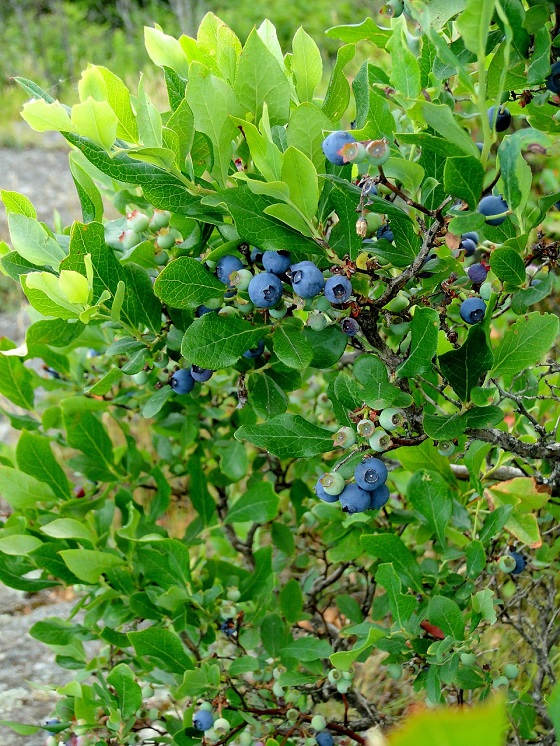
8. Blueberries
If you have room for another shrub or two, try planting highbush blueberries. These tidy shrubs have pretty, bell-like flowers in the spring, tasty fruit in the summer, fall foliage colors ranging from gold to deep red, and twisty branches with interesting bark in winter—making them a year-round delight.
Fresh Herbs to Grow
Fresh herbs make an ordinary meal special, so try adding a few of your favorites to the garden.
1. Cilantro
Cilantro is a must-have annual herb for salsa lovers. Seeds can be direct-sown in spring where you want them to grow. Plant them half an inch deep, 1 inch apart in a sunny spot, and keep them moist until they germinate, which only takes about a week. Once plants are established, clip fresh leaves as needed but avoid taking more than a third of the plant at a time, so it can rebound. Look for a variety that is slow to bolt in summer heat such as ‘Calypso’. When temps cool down again, plant more to get you through to frost. For detailed growing info, look at the Almanac cilantro guide.

2. Dill
Dill is another annual herb that plays well with others. Sow seeds directly 1/4 inch deep and 2 inches apart; keep moist until they germinate in 1 to 2 weeks. Make several successive sowings if you want fresh leaves all summer long. Taller varieties make handsome architectural statements in the garden while giving you plenty of delicious dill to use. Dill is the host plant for black swallowtail butterflies, and the flowers will draw in lots of pollinators.

3. Chives
Chives are handy to have, since they can be snipped into any dish that needs a touch of mild onion flavor. The round purple blossoms are also tasty and are great for making colorful vinegars. If you have a friend who grows chives, ask them for a clump to plant in your garden when they divide their plants next spring. Check out the Almanac’s advice on how to grow chives at home.
Tips for Mixing Edibles with Flowers
When adding edibles to your existing garden, plan ahead to avoid these pitfalls:
- Make sure your soil is well-draining and can handle the extra demand for nutrients by enriching the location with plenty of compost.
- Be mindful of the mature height and size of the plants. Climbers such as pole beans and cucumbers will cast a lot of shade so make sure to grow them on the north edge of the garden or where you already have shade-loving plants.
- Provide support for sprawling plants or those that may break under a heavy load of fruit.
- Some edibles, such as lettuce and cilantro, prefer cooler weather and do better if they have some protection from hot midday sun. Pair them with taller plants.
- Some herbs, if allowed to go to seed, will return in the same spot next year. If you do not want them taking over your garden, deadhead them after the blossoms fade as you would with your other flowering plants.
- Try not to crowd your existing perennials. Their established root systems will out-compete those of the new plants you are adding and lessen your chances of success.

More Like This

Comments