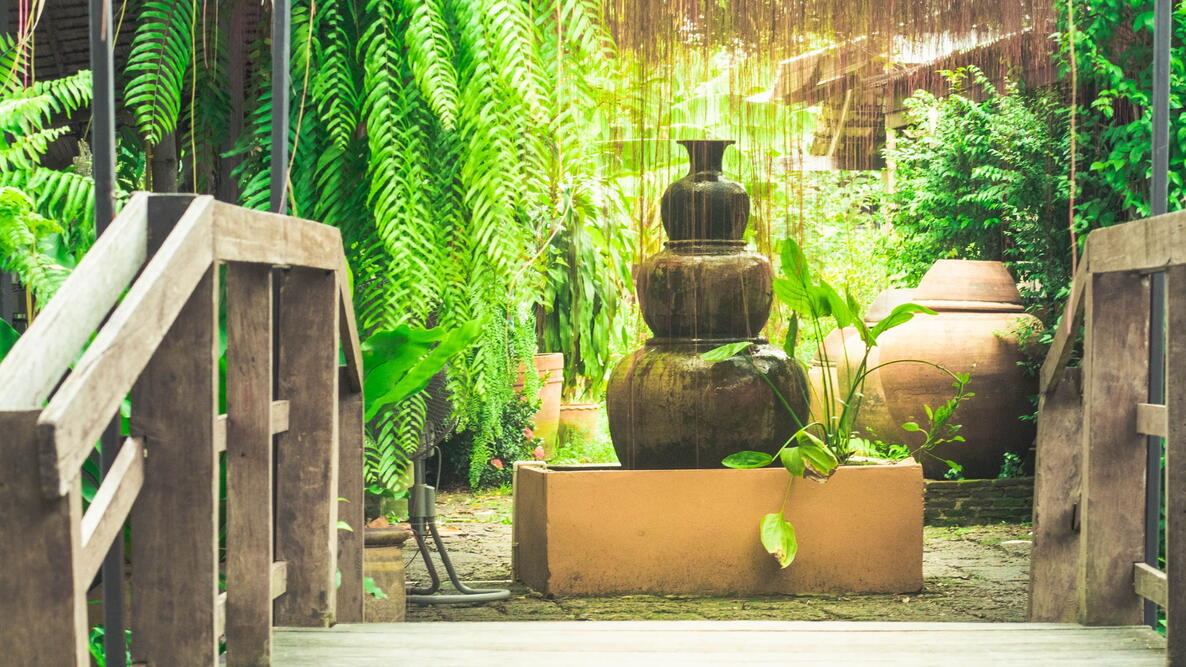

Gardening is good for you in so many ways. Sunshine, exercise, and homegrown foods—it has many benefits. But did you know that your garden can be a magnet for success, love, and luck? The secret: Feng Shui.
What is Feng Shui?
Feng Shui is an ancient Chinese practice centered around placement. Practitioners believe that how you arrange your environment has a direct influence on your luck. The goal is to create positive energy by organizing your surroundings in a peaceful, balanced way. We could all use a little good fortune these days!
According to Feng Shui expert Amanda Gibby Peters of Simple Shui, ”Originally, Feng Shui was used for the sole purpose of locating auspicious burial spots for Chinese royalty.” She adds, “Emperors were known to have philosophers whose one job was to observe and make correlations between the cosmos or heaven and earth. Essentially, they were watching for patterns.”
Over time, these observations evolved into a complex, holistic system that has continued to grow in popularity. A Feng Shui practitioner believes that living spaces can have a positive or detrimental effect on the inhabitants. For example, if the home is cluttered, the energy becomes stagnant. When you declutter your house, it allows positive “chi” or “life force” to flow unimpeded. (Looks like I’d better get on top of this bookshelf soon!)

What Is Feng Shui Gardening?
Outdoor spaces are just as important as indoor spaces. Think of it this way: if your outside is a mess, filled with garbage and weeds, how might this affect your property value? But if you have a clean, well-tended yard, even the most modest home can look upscale.
When you apply Feng Shui principles, it’s the same. An orderly, well-maintained garden is not only visually pleasing, but it also adds value to your home and attracts positive energy. A Feng Shui–aligned garden can bring peace, prosperity, and health to your space. Even if you are skeptical, you must admit it’s lovely to see a beautiful garden! It’s a mood lifter!
Amanda states, “It’s important to note that landscape provides clues to how the occupants will experience life there, so while we often focus on what we can within our home, as a practitioner, I will often take note of what is happening around the home first.” Before we tackle the garden, let’s go over the Feng Shui basics.
The Five Feng Shui Elements
Feng Shui is aligned with nature, specifically the five elements: Earth, Wood, Water, Fire, and Metal. These five elements come from Taoist philosophy, which acknowledges nature’s cycles and seeks to find balance between the elements. Each element has specific qualities.
Earth: stability, security, nourishment
Wood: expansion, vitality, growth, healing
Fire: passion, inspiration
Metal: beauty, precision
Water: wisdom, flowing, connection
When these elements are in balance, the energy flows in a positive manner, leading to luck.

Image credit: Alexander Stein
Understanding the Five Elements in Feng Shui Garden Design
So, how do these elements manifest in the garden? Amanda shares these correlations:
Soil (Earth Element)
Ideally, it should be rich in color, delicately moist, and slightly alkaline, reflecting the vitality of both the land and the physical body. Earth governs stability and nourishment, so the more fertile the ground, the more fortifying its energy.
Vegetation (Wood Element)
A vibrant orchestration of green conveys growth and resilience. Land that was depleted, rocky, or overly shadowed wasn’t deemed auspicious. In Feng Shui, Wood is the element of renewal, and a thriving landscape mirrors a thriving life.
Wildlife (Fire Element)
The presence of birds, bees, butterflies, and small animals is considered auspicious. Their presence signals the land is healthy and thriving.
Wind (Metal Element)
Wind carries chi across the land. Gentle breezes are ideal, softly distributing life force throughout the garden. However, strong or erratic winds can scatter chi, making it harder for supportive energy to take root.
Water (Water Element)
While not always visible, water is a crucial factor, even in how moisture is retained in soil or how rainfall nourishes the land. In Feng Shui, water governs flow, ease, and prosperity. The garden’s ability to hold and direct water wisely impacts the abundance it generates.
First Steps to a Feng Shui Garden
It’s essential to start by determining the type of garden you want to create, as well as the amount of space you have to work with. For example, if you have a large plot of land, you have room to be as elaborate as you wish. But if you live in an urban setting with a small balcony, you will need to be strategic.
You’ll also want to prep your garden before incorporating Feng Shui principles. Amanda suggests “starting with what you have.” Begin by fertilizing your soil so it’s ready for growth. Then, clean up your environment. “If anything is rotting or dying, remove it. If something is overgrown, know that it is consuming life chi from you, and consider pruning it,” she adds. Amanda also recommends installing lighting, such as solar lights, along a pathway. “Not only does this amplify your garden chi, but light reliably eliminates negative energy.” (I have solar lights in my garden because I have lousy night vision.)
Next, consider what you want to enhance. Do you want to attract career opportunities? Better health? A loving home life? All of the above? Consult the Bagua map to plan your garden.
The Bagua Map
The Bagua map is an important tool in Feng Shui. Basically, it’s a “blueprint” divided into nine spaces, each correlating to different areas of your life. For example, one area is associated with wealth, while another is associated with children, and so on.
A Feng Shui practitioner places the Bagua map over the home and uses that to determine where to place “cures” to dispel bad energy and specific items to elevate good luck. For example, the wealth section of my home is the bathroom. This is considered inauspicious because it’s essentially “flushing your money down the toilet.” I have many plants in the bathroom to symbolize growth, and I keep the lid down to prevent my money from disappearing!

How to Use the Bagua Map in Gardening
Amanda recommends imposing the map over your entire property. “Standing at the curb or street, apply the map (think of a tic-tac-toe board / nine equal squares or rectangles) to your property.” She adds, “Look for the spots that correlate to areas of your life that could use a little sprucing, growth, or TLC.”
For example, suppose you want to enhance your career. In that case, Amanda recommends locating the “career and life journey” space in your property and then adding a “meandering pathway” or “water features,” such as a fountain. This will get the chi flowing—and your career moving.
Here are her best suggestions for the other areas of the Bagua map:
Wealth and Prosperity: Wind is a natural phenomenon, so use a bird feeder or shrubs/plants to attract birds and insects. Flags, mobiles, or wind chimes that capture the wind are also good here. This part of my garden is where the garbage containers are kept, which isn’t great for attracting money. I keep a chime here to help money flow in rather than out.
Fame and Reputation: If you want to be “known” for something, look for a way to acknowledge that in your garden. For example, if you want to be a renowned chef, a herb garden would be a good idea. A writer, a little “she shed” might be the perfect addition!
Love and Relationship: Since this area aligns with the female head of household (or “Mothering” energy), any feminine statue would do well here. Think: Lakshmi, Kuan Yin, or Brigid. Likewise, since this area speaks to partnership, anything suggesting “pairs” is welcome, too. So, you could add a bench or a porch swing for two.
Creativity and Children: The kiddos’ loot—play equipment, toys, trampoline, etc.—would work well here.
Helpful People and Travel: Since this area aligns with the male head of household (or “Father” energy), any masculine deity statue would do well here. Think: Buddha, St. Francis. Since this area speaks to creative heaven, you could set up the telescope here or create a meditation spot. Also, plants or foliage from other countries will pull in that travel energy. Example: Japanese Maple.
Career and Life Journey: Any meandering pathway would be fabulous here. Water features would also do well.
Self-Cultivation, Wisdom and Spirituality: A rock garden would be a welcome addition. A meditation spot or spiritual statue here would serve this energy well.
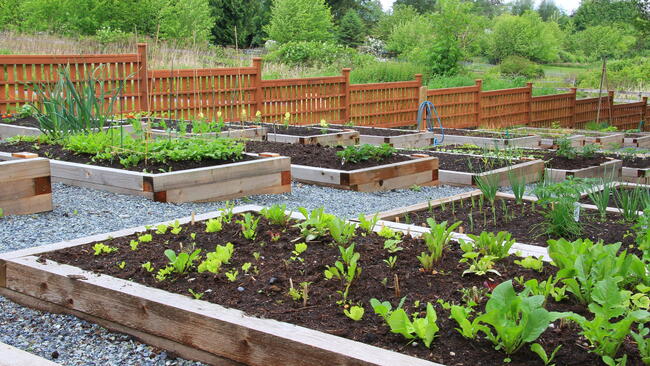
Family and New Beginnings: If the space supports it, a vegetable garden is highly suggestive of abundant health. Also, a garden that encourages the family to work is a great way to enhance family bonds.

Color in the Garden
Color is also an important component of Feng Shui. Gardens naturally pop with lots of colors, so this is an easy way to add positive energy! Amanda states: “In Feng Shui, color is more than a design choice—it’s a vibration because each hue carries a specific frequency that activates certain moods, intentions, and elements in your environment. When used intentionally in the garden, color becomes a tool for balance, harmony, and personal expression.”
The colors are also attributed to the five elements. Amanda provides this quick glimpse at an “energetic color profile”:
Red / Pink / Orange (Fire Element)
Bold, passionate, and energizing. This color (particularly red) can activate attention, confidence, or fame. For instance, a few red blooms at the front of your home can spark visibility.
Yellow / Earth Tones (Earth Element)
Grounding, nourishing, and stabilizing. These colors invite a sense of home, ease, and contentment. Think marigolds, rudbeckia, clay pots, or golden grasses.
White / Silver / Pastels (Metal Element)
Discernment, elegance, and precision. These colors help refine energy, making space for focus or creativity. Use white flowers or silvery foliage in areas where you want a sense of simplicity or quiet beauty.
Blues / Blacks / any ‘inky’ hues (Water Element)
Depth, mystery, and flow. These shades support introspection, emotional healing, and prosperity. Water features or shady retreat spots also work!
Greens (Wood Element)
Growth, renewal, and vitality. Green is the color of fresh starts, new chapters, and things taking off! Since gardens typically flourish with this color on their own, no notes here.
Clear Garden Clutter
If you study Feng Shui, you’ll often hear a lot of talk about the role of clutter and luck. Practitioners frequently emphasize the importance of clearing space to allow chi to flow correctly. (Book clutter is my problem, but that’s another story for another time.) That same theory applies to gardens.
Amanda has this to say about garden clutter: “When plants and trees crowd out sunlight from your grass, cover over the house, or touch the house, their living energy begins to drain the house and block the occupants from thriving. This is a case of too much of a good thing.” She adds, “Well-maintained trees and shrubs keep the house energized and not blocked and drained.”
It’s best to maintain a tidy garden with regular weeding and pruning. You’ll also want to make sure that you do not allow overgrowth.

Wild Gardens
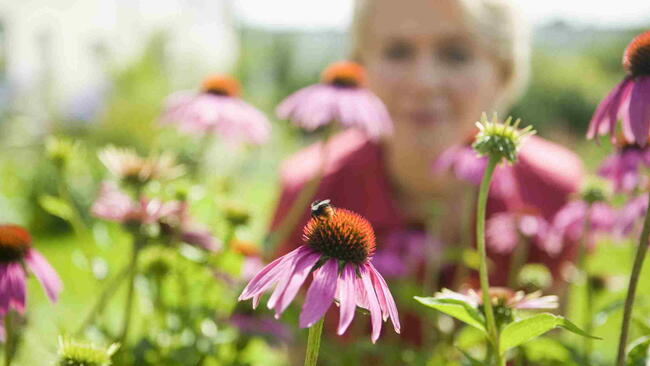
But what about wild gardens? Can they be harmonious? This was a question I posed to Amanda because I happen to have one! Our yard is filled to the brim with coneflowers, daisies, and raspberries. She had this to say about that: “I think wild gardens and native plants are even more in alignment with the principles of Feng Shui because harmony isn’t beholden to strict symmetry or manicured rows. In fact, when a garden is allowed to express its natural character, especially through native plantings, it often pulses with resilience and biodiversity.
“Also, native plants are perfectly adapted to their environment, which means less effort to thrive and a more balanced relationship with local wildlife, pollinators, and the elements, as long as the space feels intentional and not neglected.
“At its best, a wild garden reminds us that nature, left to its own rhythms, often knows exactly what it’s doing.”

Small Spaces - Big Opportunities
If you live in an apartment in an urban area, you can also create your own Feng Shui garden. Amanda says, “You don’t need sprawling acreage to apply Feng Shui. If you have a balcony, access to a window box, or even a container garden, you have the potential for powerful energy within reach. In Feng Shui, it is intention that cultivates chi, not size.”
For example, she suggests that you “choose plants that feel vibrant and easy to care for. Arrange them in a way that feels open and welcoming (and not cramped!).” Even the smallest space can be a magnet for positive energy!
Whether you have a large plot of land or a tiny windowsill, try these tips out and see how your space feels. Remember, bringing Feng Shui into your garden doesn’t need to be complicated. Even applying a few principles can create harmony and enhance your luck. As any seasoned gardener knows, what you tend to will grow and give back.
What’s the first Feng Shui touch you’ll add to your garden? Share your ideas in the comments!

More Like This


Comments