Growing Oleander Shrubs: Plant, Care, and Bloom Tips for Stunning Privacy Hedges

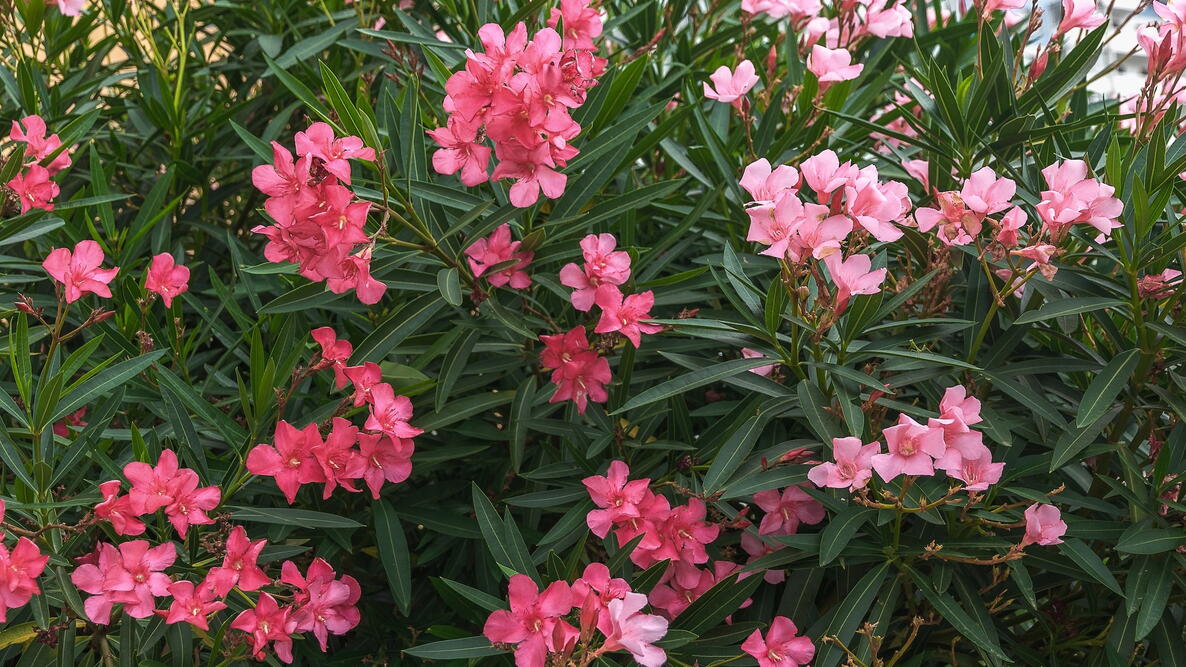
A flowering pink oleander shrub in the garden.
Photo Credit
vit-vit
Botanical Name
Nerium oleander
Plant Type
Sun Exposure
Soil pH
Bloom Time
Flower Color
Hardiness Zone
Subhead

Your Complete Guide to Planting, Growing, and Caring for Oleanders

Written By: Andy Wilcox Master Gardener and Gardening Contributor

Looking for a plant that’s basically the diva of the garden world—showy, tough, and impossible to ignore? Meet the oleander! With star-shaped blooms and evergreen leaves, this shrub not only dazzles your eyes but also gives your backyard the privacy of a VIP lounge. Tough enough to handle drought and salt spray, oleanders make both a stunning specimen and a colorful, living fence. Let’s dive into planting, growing, and caring for these floral show-stoppers.

About Oleander

Oleander (Nerium oleander) is a beautiful ornamental shrub with attractive star-shaped flowers. It can have a shrubby, open-growth form or be trained into a small single or multi-trunked tree. It’s also called Rose Bay or Rose Laurel. 

These shrubs are drought-tolerant, deer-resistant, and do well in salt spray. They’re a relatively rapid-growing flowering shrub, often putting on 2 feet per year, and are hardy in USDA zones 8 to 10. However, there are also more cold-hardy varieties (see below). An early spring cold snap can damage oleander, so protect it with 2 to 5 inches of mulch. 

Oleanders bloom from late spring through late summer, and they have loads of five-petaled flowers in pink, white, red, magenta, and salmon. Their foliage is mostly dark green, frequently with a pale stripe down the center. The leaves are spear-shaped and usually 4 to 6 inches long but less than an inch in width.

While oleanders are pretty on their own as a specimen planting, they really shine as a privacy screen. Their evergreen nature, dense foliage, and growth after pruning make them perfect for closer plantings to form a hedge, natural privacy fence, or visual block. If they’re hardy where you live, planting oleander can significantly add to your yard’s privacy and serenity while providing a boost of color.
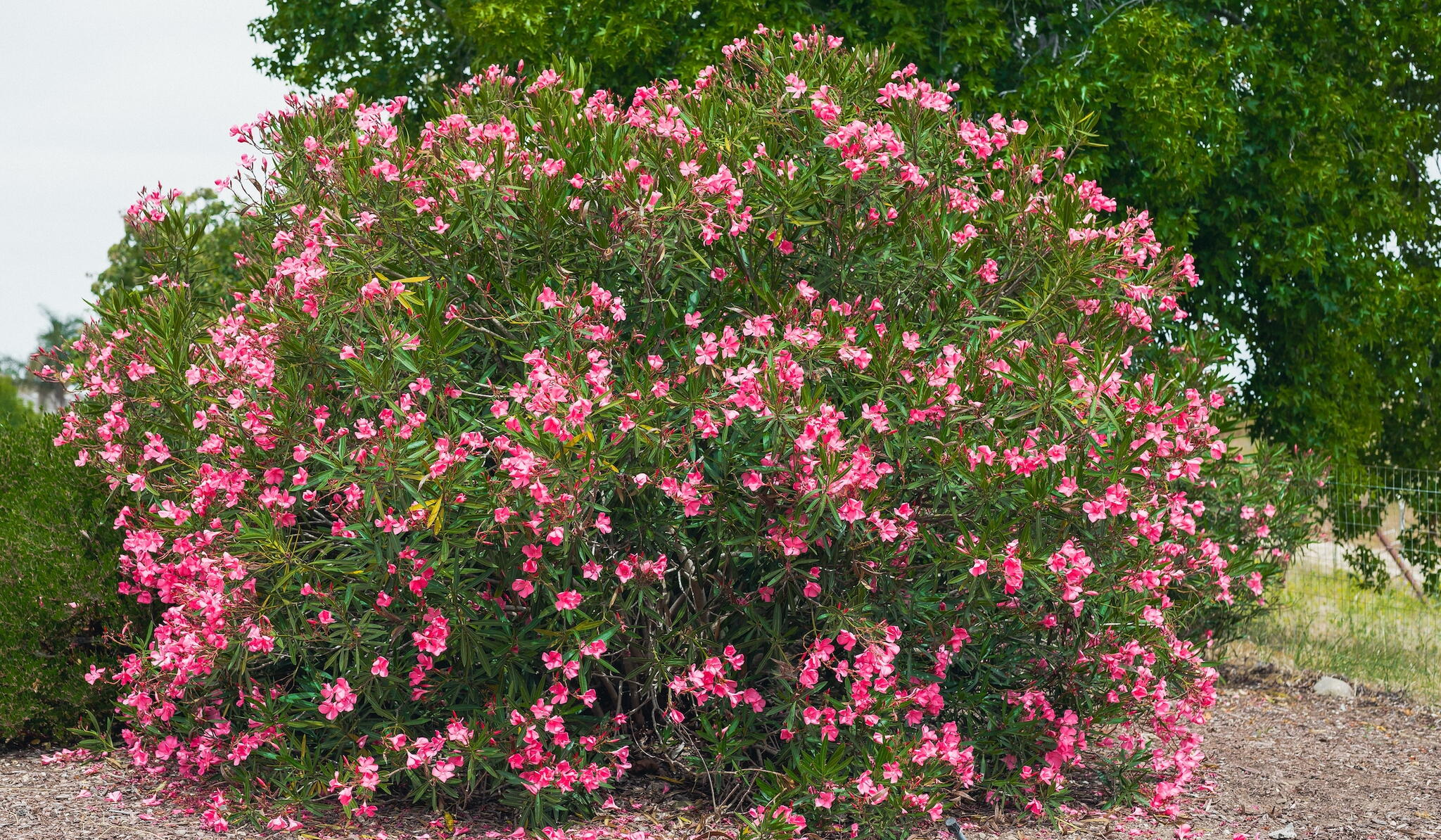
Oleander shrub with pink flowers
Oleander (Nerium oleander) in full bloom.

Planting

When to Plant Oleander

Oleanders are only suitable for planting outdoors in frost-free areas. But planting in spring or fall is still the best practice. Plant anytime in spring when the weather and soil have warmed, but before the heat of summer. In the fall, plant once daytime highs have dropped, and you’re thinking about needing a flannel shirt before going outside. 

Where to Plant Oleanders

Oleanders grow most rapidly in full sun but will also do well in partial sun. They are quite heat-tolerant and can grow in poor soil as long as drainage is good. While they prefer alkaline soil pH, they’re a tough plant and will do well in most places. 

Remember that the oleander you bought in a pot at the nursery is going to get larger. Their size makes them well-suited for screening or privacy, but less so for small spaces and tight locations. Dwarf oleanders do well in large urns and pots, which can be brought indoors to shelter over winter.

How to Plant Oleanders

Oleanders are usually purchased from garden centers in 1- to 3-gallon containers. They’re easy to plant and easy to care for, and you’ll be done in a few minutes.

  • Remove all sod, mulch, and weeds from an area twice as large as the hole you will make.
  • Dig a bowl-shaped hole a little deeper than the root ball and two to three times as wide.  Loosen the soil on the sides and bottom of the hole–compacted soil makes it difficult for roots to penetrate and can cause poor drainage.
  • Remove the oleander from its container. Prune any circling or girdling roots. Score the root ball to stimulate new growth if the shrub is root-bound.
  • Test fit the oleander in the hole, checking the depth. The top of the root ball should rest at ground level. Enlarge the hole if necessary, or fill it in a bit for the proper fit.
  • Backfill the hole using the native soil you removed, keeping the shrub vertical.
  • When the hole is halfway refilled, tamp the soil lightly but firmly around the roots to remove air pockets–don’t smash it. Give it a good drink of water, then keep filling the soil around the roots and firming it with your hands, watering again when complete.
  • Apply mulch around the shrub, about 3-4 inches thick. Spread it evenly in a circle extending over the area you cleared and at least two feet from the base. Don’t let the mulch touch the trunk. The final mulch job should look like a flat disk, not a volcano. See how much mulch you should buy.

Growing

How to Grow Oleanders

While oleanders are drought-tolerant once established, they’ll still need watering weekly for the first growing season. They don’t need fertilizer and can do well in poor soil conditions.

Prune oleanders to remove any winter injury, dead branches, or for size. They bloom on new wood, so pruning in late winter works perfectly. 

Taking Cuttings

When summer pruning oleanders to remove a wayward branch, you may wish to use some of the twigs as cuttings. Oleanders grow well from cuttings, and it can be a great way to create enough stock to plant a longer privacy screen without spending a fortune. 

  • Cuttings from mature wood work best. Avoid soft, green, springy material.
  • Take cuttings in midsummer for easiest rooting. Six-inch-long pieces work well.
  • Scrape the bark from the bottom inch of the cutting along two sides.
  • Dip the cutting in any rooting hormone.
  • Stick the cutting in a premoistened potting mix or root it in water. Place the cuttings in bright but indirect light.
  • If in a potting mix, keep the media moist but not soggy.

When new growth has started to pop, gently tug on the cutting. If it resists, it has started to grow roots. If rooting in water, you’ll see white roots start to pop out from the cutting. Pot them up once the roots are an inch long. 

Pests/Diseases

FAQ

Are oleanders toxic?

Yes, all parts of the oleander plant—leaves, flowers, and stems—are toxic if ingested by humans or pets. Always handle with gloves and keep children and animals away from pruning clippings.

How fast do oleander shrubs grow?

Oleanders are relatively fast-growing, often putting on 1–2 feet of growth per year under ideal conditions. Growth rate can vary based on climate, soil, and care.

When do oleanders bloom?

Oleanders typically bloom from late spring through late summer. Depending on the variety, flowers can be pink, white, red, magenta, or salmon.

Can oleanders survive cold winters?

Most oleanders thrive in USDA Zones 8–10. However, there are cold-hardy varieties for slightly cooler climates. Protect young plants with mulch or frost cloth during early spring freezes.

How do I prune oleanders?

Prune after flowering or in early spring to shape the shrub and encourage dense growth. Remove dead or damaged branches, and thin out crowded stems for better air circulation.

Are oleanders good for privacy hedges?

Absolutely! Oleanders’ dense foliage, evergreen nature, and fast growth make them perfect for privacy screens or natural fences. Plant them 3–5 feet apart for a solid hedge.

How often should I water oleanders?

Oleanders are drought-tolerant once established. Water deeply during the first year, then reduce frequency. During extreme heat, supplemental watering helps maximize flower production.

Can oleanders grow in salty soil or near the coast?

Yes! Oleanders are highly tolerant of salt spray and coastal conditions, making them ideal for seaside gardens.

Wit and Wisdom

  • If growing in a tree form, you’ll need to remove suckers that grow at the base of the plant.
  • Plant oleanders a bit closer together, about 5-7 feet apart, for a privacy fence or dense hedge. 

About The Author
Andy Wilcox

Andy Wilcox

Master Gardener and Gardening Contributor

Andy Wilcox is a freelance writer, flower farmer, and master gardener with over 25 years of experience in gardening, horticulture, and forestry. He is the co-owner of Stone’s Throw Flowers, a business...