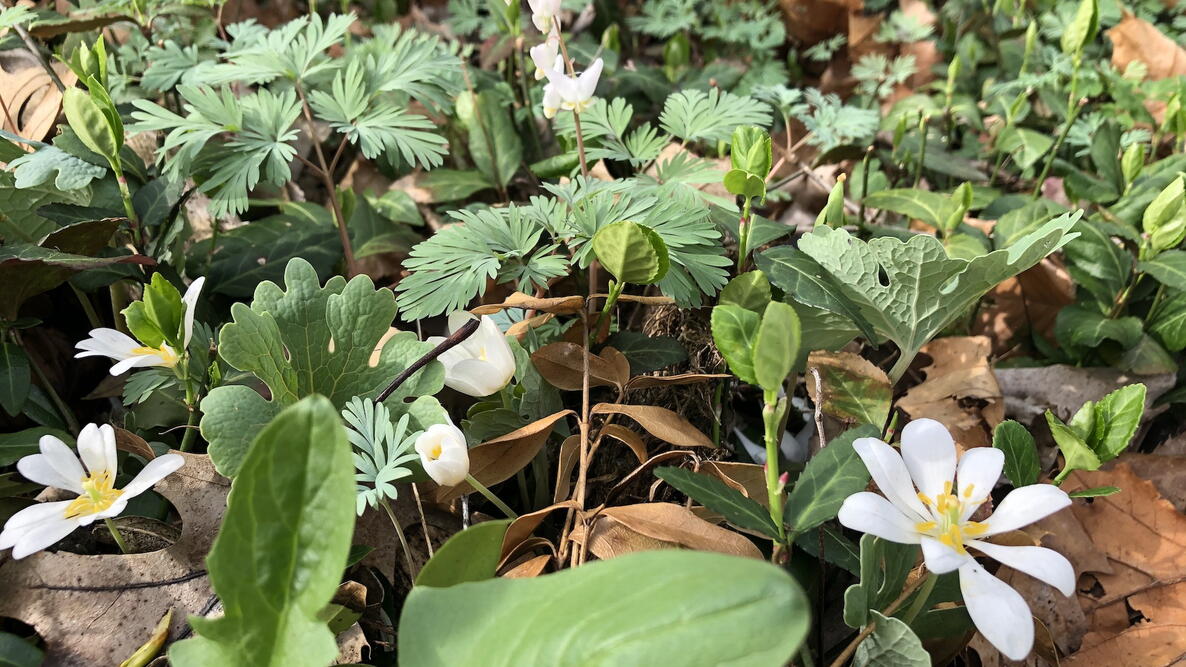
Caption
The larger white flowers are Bloodroot. The feathery leaves and white flowers in background are Dutchman’s Breeches.

Spring ephemerals are the first wildflowers to bloom in early spring woodlands. These delicate native plants—like trillium, bloodroot, Dutchman’s breeches, and Virginia bluebells—emerge before trees leaf out, taking advantage of the brief sunlight that reaches the forest floor. Learn how these early spring wildflowers grow, how they’re pollinated, and why they disappear by summer.
A sure sign of spring in my area is when the bloodroot blooms. Like other spring-blooming ephemerals, this tiny wildflower makes use of the short time before trees leaf out and block the sun on the woodland ground. They fit most of their above-ground life into a few weeks in April and May, then fade away until next spring.
What are Spring Ephemerals?
We call these early wildflowers ephemerals because most, if not all, of their growth dies back when temperatures start to warm. They are perennials that grow from underground corms or rhizomes. They can put on such an early show because they have stored food in their bulbs from the previous year’s growth.
Don’t let their small, delicate appearance fool you. These lovely wildflowers are tough. They are perfectly adapted to the harsh growing conditions of early spring, utilizing the high levels of moisture and nutrients in the soil of deciduous forests at this time of year. Moist soil helps moderate the extreme difference between day and night temperatures; and by growing low to the ground, they are out of the range of cold, drying winds.
Why Do Spring Ephemerals Bloom So Early?
Spring-blooming ephemerals bloom for only a few precious weeks; they need to complete most of their life cycle in the early spring before the trees, shrubs, and plants leaf out and take the available light.
How Are Spring Ephemerals Pollinated?
Since there are not too many flying insects active this early in the spring, many ephemerals are pollinated by specialized beetles or ants. Others have evolved to look or smell like rotting meat to attract any flesh-eating flies that might be out early. Ants not only pollinate some of the plants but also disseminate the seeds.
10 Common Spring Ephemerals Found in the Woods
When you are walking in the woods, keep an eye out for some of these delightfully delicate wildflowers and assume the proper attitude of reverence by getting down to their level to observe them up close and personal.
| Common Name | Scientific Name | Bloom Color | Bloom Time | Pollinators | Special Feature |
|---|---|---|---|---|---|
| Virginia Bluebells | Mertensia virginica | Pink buds turning sky blue | Mid-spring | Bumblebees, butterflies, hummingbirds | Tubular flowers perfect for long-tongued bees |
| Dutchman’s Breeches | Dicentra cucullaria | White | Early–mid spring | Female bumblebees | Upside-down “pantaloons” protect pollen |
| Bloodroot | Sanguinaria canadensis | White | Early spring | Bees, flies | Red sap in stems and roots |
| Eastern Spring Beauty | Claytonia virginica | Pale pink with dark veins | Early spring | Small bees | Grass-like leaves; delicate striped petals |
| Trout Lily | Erythronium americanum | Yellow | Very early spring | Bees | Spotted leaves resemble brook trout |
| Red Trillium | Trillium erectum | Deep red | Mid-spring | Flies | Smells like rotting meat to attract pollinators |
| Starflower | Trientalis borealis | White | Late spring | Small bees | Often has seven petals and leaves |
| Wood Anemone | Anemone quinquefolia | White | Early spring | Wind | Flexible stems survive strong winds |
| Round-Lobed Hepatica | Anemone americana | Violet, pink, white | Very early spring | Self-fertile, early insects | Hairy buds provide insulation |
| Cutleaf Toothwort | Cardamine concatenata | White to pale pink | Early spring | Bees | Spicy edible roots (“pepper root”) |
Virginia Bluebells
Virginia Bluebells (Mertensia virginica) are gorgeous native wildflowers found in moist woodlands and river floodplains. This ephemeral perennial plant comes up early in the spring. Purplish pink buds open to sky-blue flowers with a delicate, sweet fragrance. The tubular flowers are beloved by pollinating bumblebees and other long-tongued bees but are visited as well by several types of butterflies, moths, and hummingbirds.
They are also one of our favorite blue flowers!
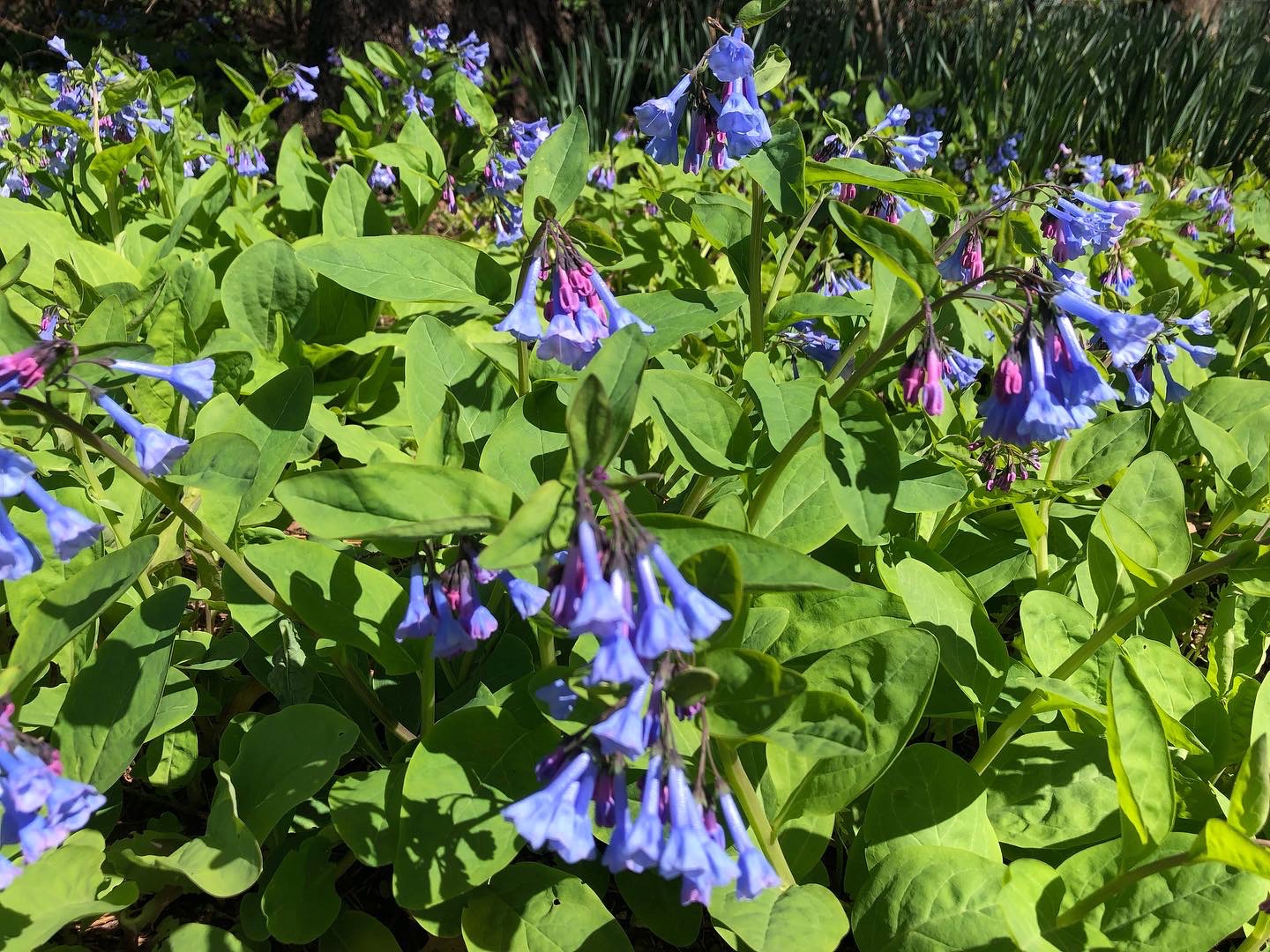
Photo: C. Boeckmann
Dutchman’s Breeches
Dutchman’s breeches (Dicentra cucullaria) look just like white pantaloons hanging upside down to dry. They are also called soldier’s cap or butterfly banners and are related to bleeding hearts. The upside-down blossoms protect the pollen from wind and rain. Only the female bumblebee, with her long tongue, can reach the nectar deep inside the long spurs and pollinate the flower in the process.
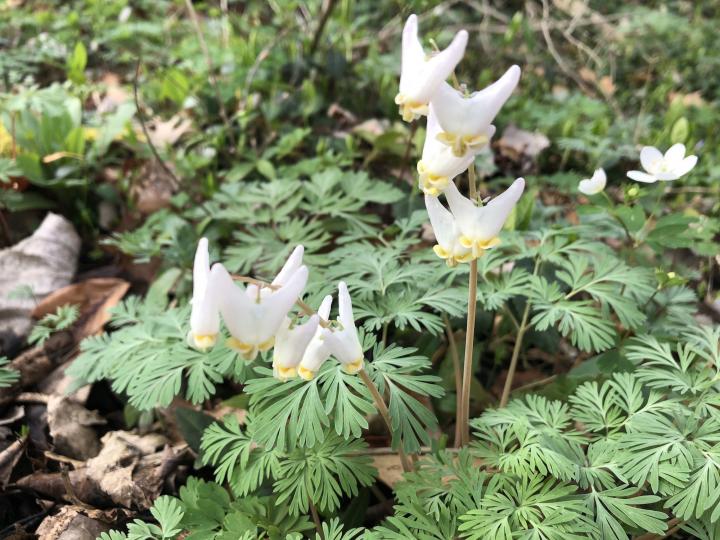
Credit: Catherine Boeckmann
Bloodroot
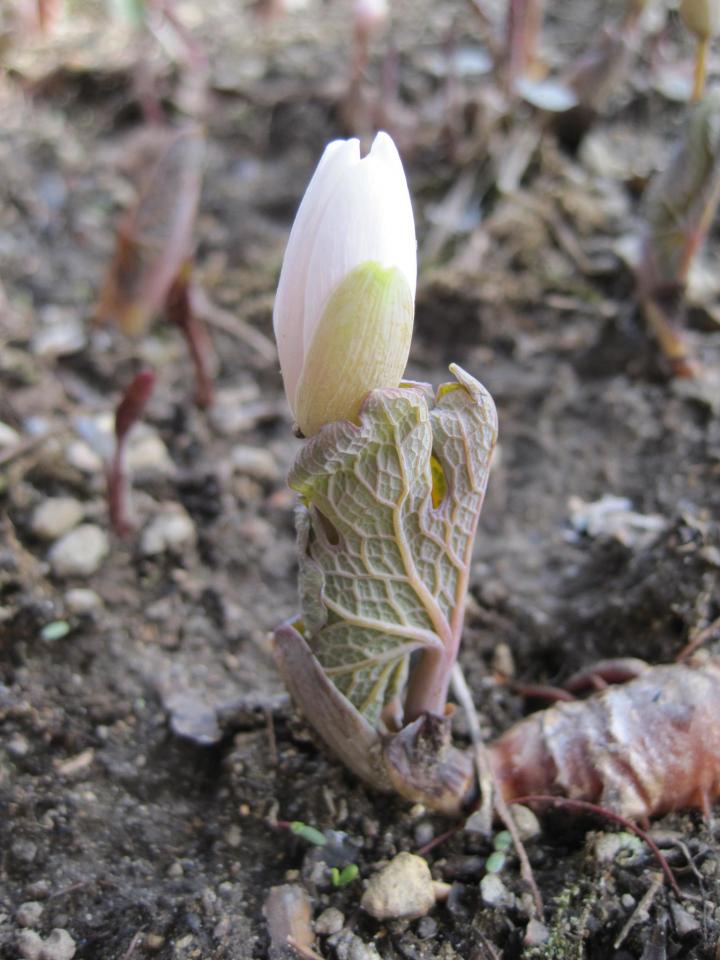
Bloodroot (Sanguinaria canadensis) has pure white flowers with leaves that wrap around the stem and bud, trapping warm air. Bloodroot gets its name from the red sap the leaves, stems, and roots exude when broken.
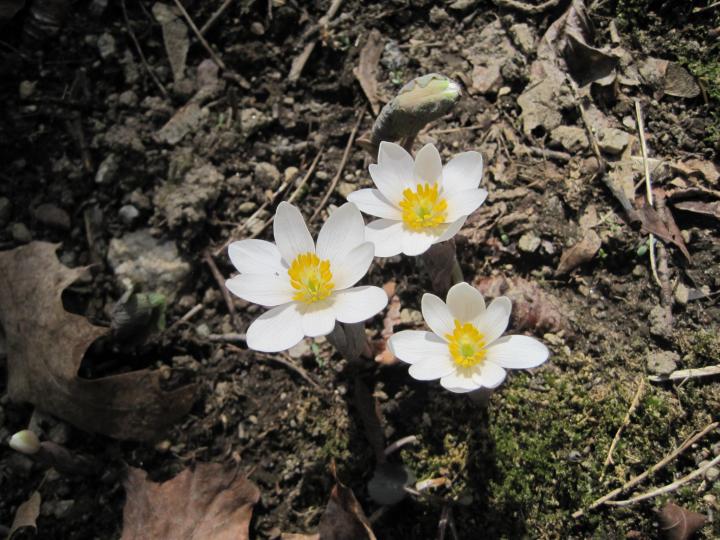
The petals appear before the leaves unfurl, and at night, they close up to protect the center from rain or frost.
Eastern Spring Beauty
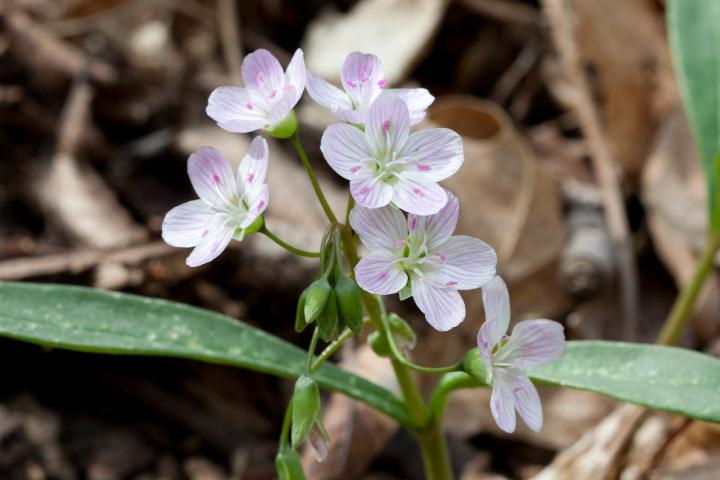
Eastern spring beauty (Claytonia virginica) has five-petaled flowers with dark pink veins and long, succulent leaves. Below is a light pink spring beauty.
Trout Lily
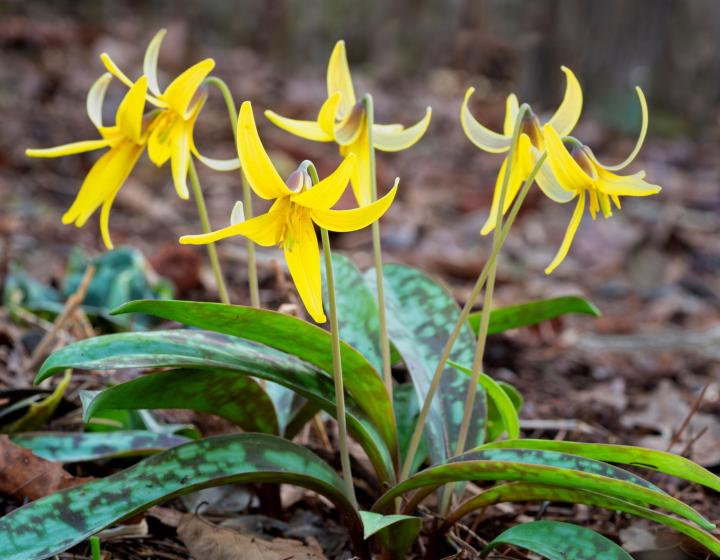
Trout lily (Erythronium americanum) is the earliest blooming lily, bearing small yellow trumpets with recurved petals. The purple splotches on its leaves resemble the markings on a brook trout, giving it its name.
Credit: Gerry Bishop.
Red Trillium
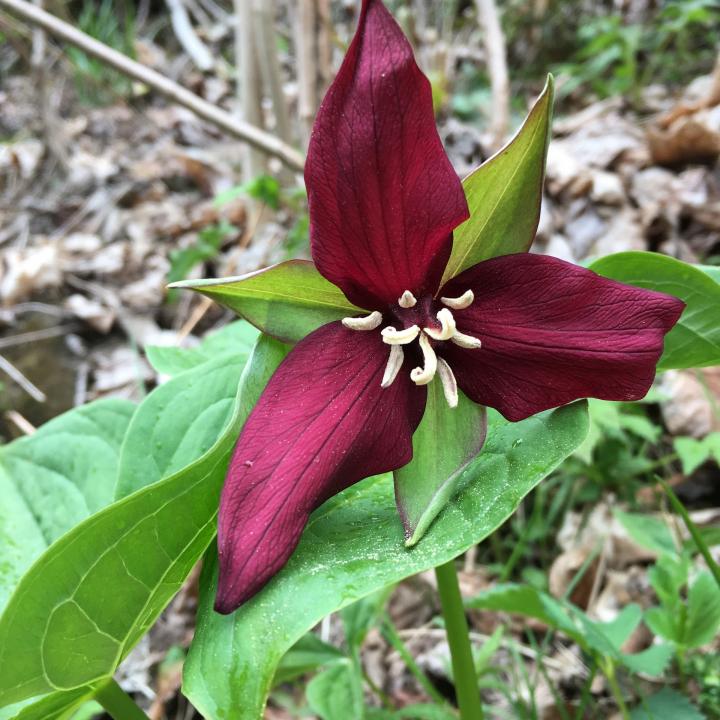
Red trillium (Trillium erectum) is all about threes. The plant has three heart-shaped leaves, three large red petals, and three green sepals. This has earned it the name trinity flower, but it goes by many common names, including stinking Benjamin, for its repulsive odor of rotting flesh meant to attract the flies that pollinate it and the name wake robins since it usually blooms around the time the robins return.
Starflower
Starflower (Trientalis borealis) is a plant of sevens—seven leaves, seven petals, seven stamens, and even seven seeds in each capsule. These bright white flowers spread by underground runners and will form a nice carpet if undisturbed.
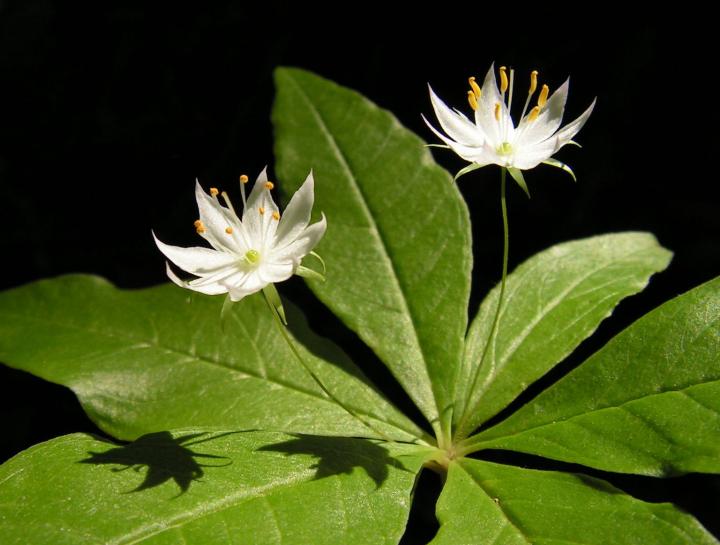
Credit: Matthieu Gauvain
Wood Anemones
Wood anemones (Anemone quinquefolia) have a pliable stem that can survive strong winds. Its white blossoms have no nectar or scent, and the plant is wind-pollinated, giving it the common name windflower.
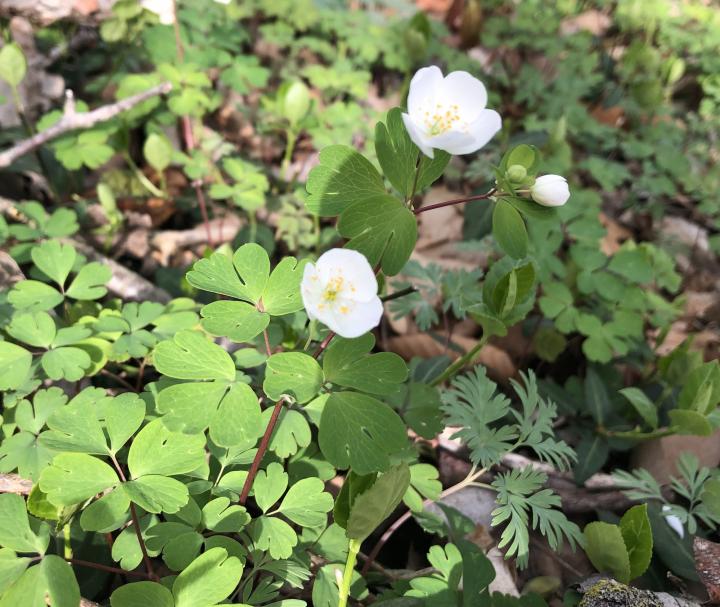
Credit: C. Boeckmann.
Round-lobed Hepatica
Round-lobed hepatica (Anemone americana) is an early bloomer; its buds have hairs that act as insulation. It is easy to miss because its tiny flowers appear among last year’s withered leaves. The blossoms can be dark violet, white, or a range of pastel colors, including pink, lavender, and pale blue. Its flowers are self-fertile and don’t need an insect to pollinate them.
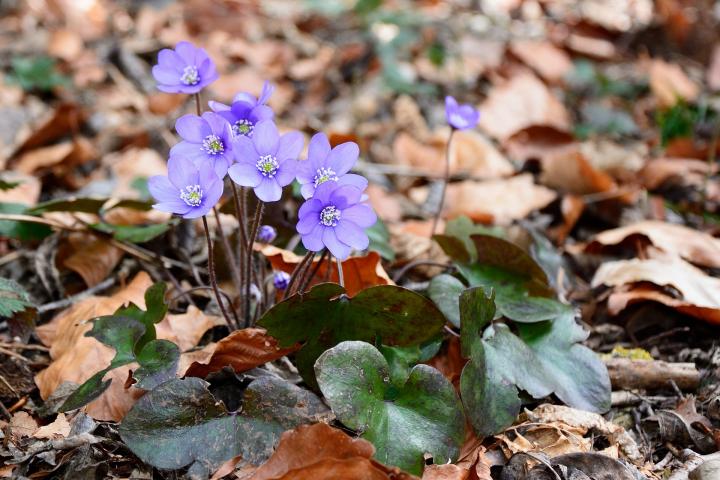
Cutleaf Toothwort
Cutleaf toothwort (Cardamine concatenata) is one of the earlier spring wildflowers of moist forests and woods; the name refers to the tooth-like projections on the underground stems (actually leaf scars from the previous season’s growth). The leaves and rhizomes are edible (with a spicy flavor inspiring the common name of pepper root).
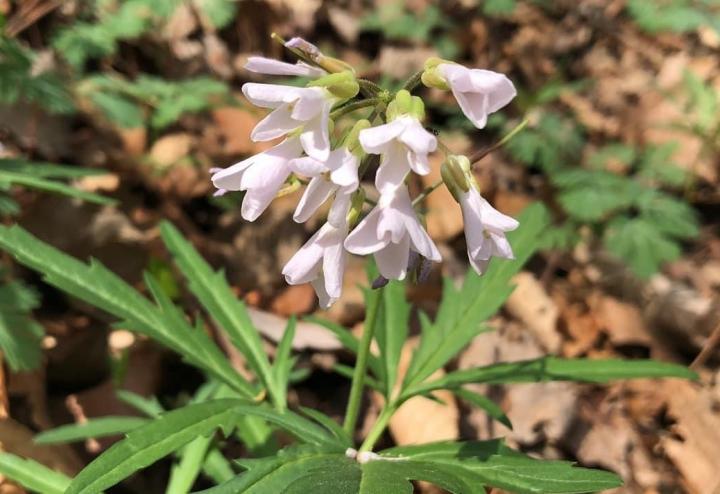
Photo: C. Boeckmann
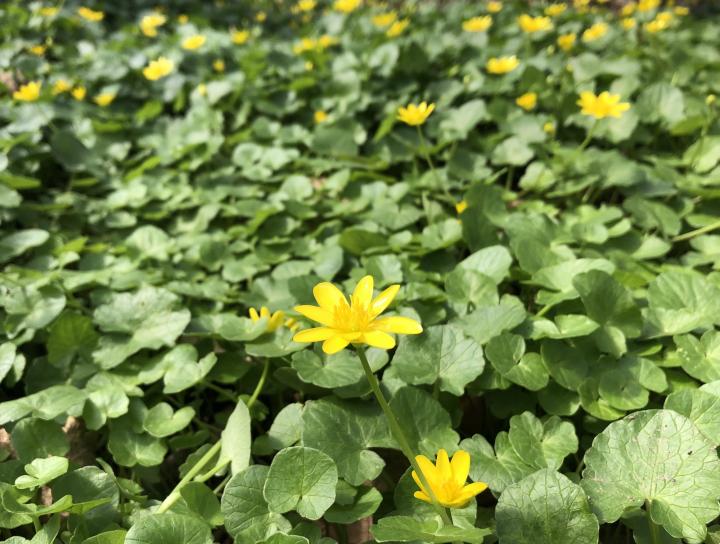
Lesser Celandine: An Invasive Threat to Native Wildflowers
This brings us to an invasive, non-native species that you’ll probably come across: Lesser Celandine. This yellow flower looks pretty, and it’s great in its original habitat (on other continents), but it really causes problems in North America, choking out all other native wildflowers.
The early spring wildflowers are what our native insects need to survive; many of them require a specific plant species, similar to how the monarch needs milkweed. Lesser Celandine out-competes the native wildflowers; when insect populations decline, bird populations decline, and the ecosystem falls apart in the geography. This invasive really causes problems where it’s out of place, spreading very rapidly and far from where it was originally planted, especially when rivers wash seed down from locations upstream.
Don’t be fooled. Lesser Celandine seems to “disappear” in a few weeks. However, this invasive is working underground to spread, so next year, it will infest a bigger area. If you just see a handful, the best action is to dig it up right away! Don’t just pull the flower or leaves. You need to dig out the entire root and bulbils attached to the plant, or it will return. If you have large amounts, we’re afraid the only solution is to spray with a glyphosate-based herbicide every year (which is what’s done at our local parks); it can only be sprayed in uplands and terraces, not floodways or near water, where it’s essentially uncontrollable. Talk to your local park or garden center.
Credit: C. Boeckmann
Now, let’s go back to our lovely wildflowers! Enjoy them in their natural surroundings. Never dig them up and try to transplant them into your own garden. Many species, like trout lilies, take upwards of 8 years to flower.
Just enjoy a walk in the woods and the chance to see these wildflowers during the few short weeks that they flower. As the name “ephemeral” suggests, their beauty is fleeting.
Frequently Asked Questions
What are spring ephemerals?
Spring ephemerals are early-blooming perennial wildflowers that grow in deciduous forests and complete most of their life cycle before trees leaf out.
Why do spring ephemerals disappear in summer?
They die back above ground once tree canopies block sunlight, storing energy underground until the next spring.
Can I grow spring ephemerals in my garden?
Yes, but only purchase nursery-propagated native plants. Never dig wildflowers from natural habitats.
Are spring ephemerals good for pollinators?
Yes. They provide early nectar and pollen for bees, beetles, flies, and emerging insects.
Is Lesser Celandine invasive?
Yes. In North America, it aggressively outcompetes native wildflowers and should be removed carefully.
Love wildflowers? See how to grow wildflowers in your yard!
More Like This

Comments