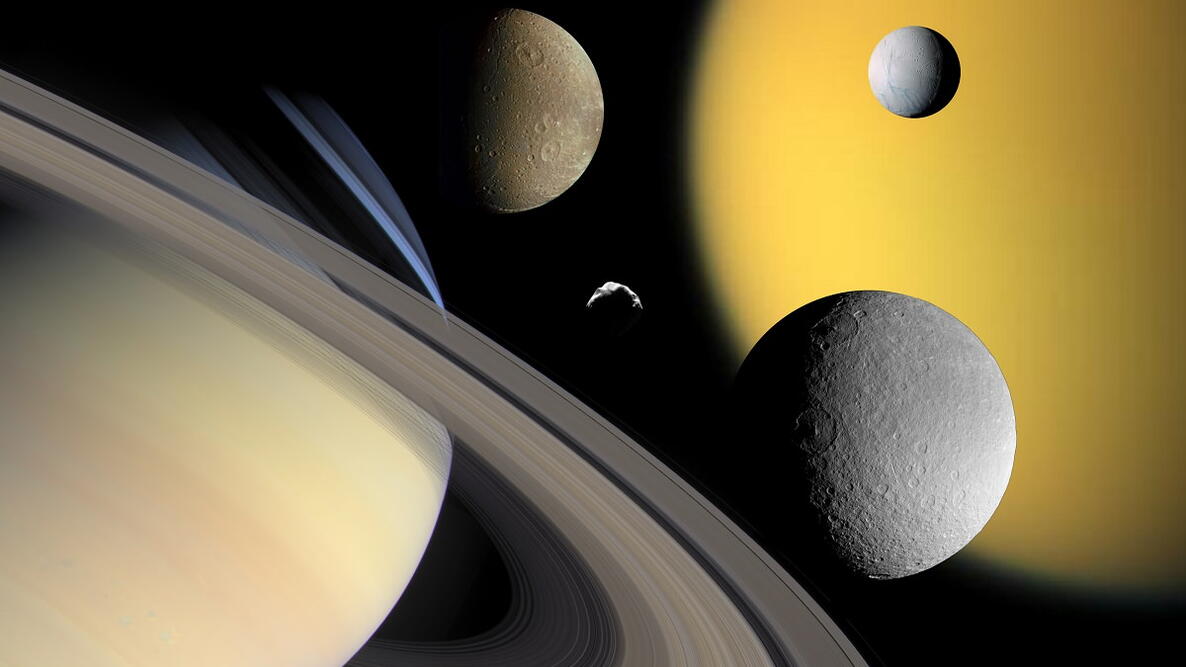

Earth’s magnificent Moon isn’t the only one in the solar system. Let’s take a tour through some of the other lunar landscapes that inhabit our space. Which is your favorite?
Our System’s Many Moons
There are at least 214 known natural satellites, or “moons,” that orbit planets, dwarf planets, and asteroids in our solar system. Most of the planets in our system have at least one moon, except for Mercury and Venus (and Pluto), but Saturn and Jupiter have dozens of moons in their orbits. Here on Earth, we’ve just got our one Moon—but she is a beautiful one!
What’s your favorite moon? I’ll tell you mine first.
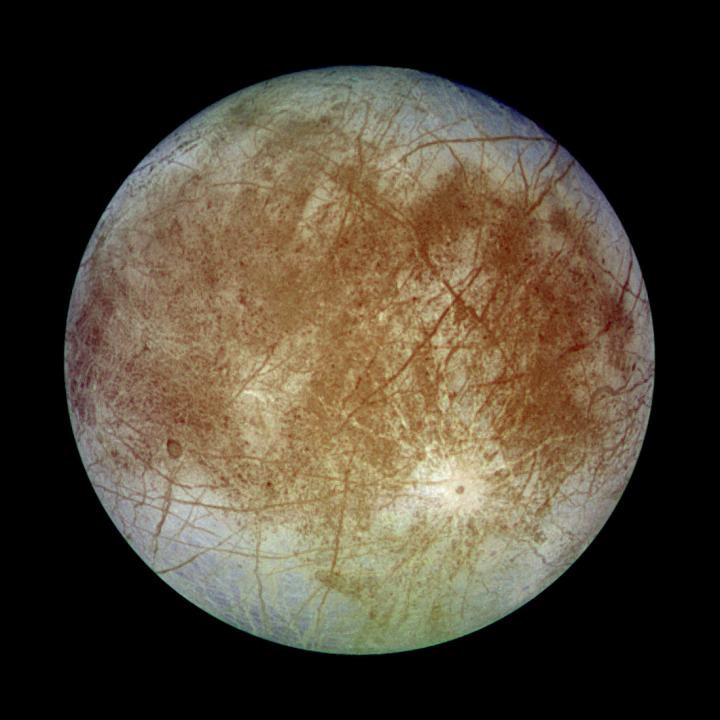
Europa
In the most intriguing department, it’s Jupiter’s moon Europa. It’s got vast, warm, saltwater oceans under its ice sheets. And since life began in Earth’s oceans, this has got to be the closest place that we might reasonably expect to find extraterrestrials.
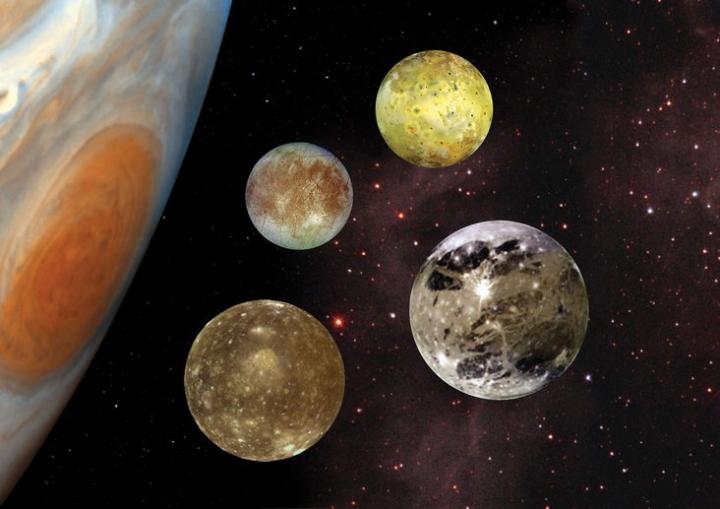
Europa was one of the first moons discovered (other than our own) in the early 1600s. Galileo Galilei first saw the four largest moons of Jupiter (and the solar system): Io, Europa, Ganymede, and Callisto. Jupiter’s moons are named after lovers of Zeus, the Greek equivalent of Jupiter.
Ganymede
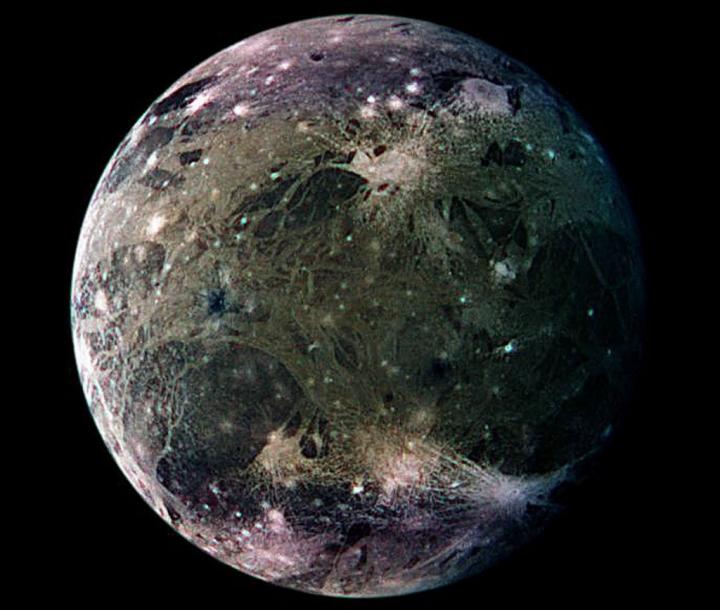
Europa is not the only water park attraction. There seems to be a saltwater ocean beneath the surface of Jupiter’s Ganymede, sandwiched between layers of ice. Ganymede also has polar caps that extend to 40° latitude, likely composed of water frost. And it’s the only satellite in the solar system known to possess a thin oxygen atmosphere, though it’s far too thin to support life as we know it.
Since Ganymede is the largest moon in the entire solar system, nobody could be blamed for choosing it as their favorite.
Titan
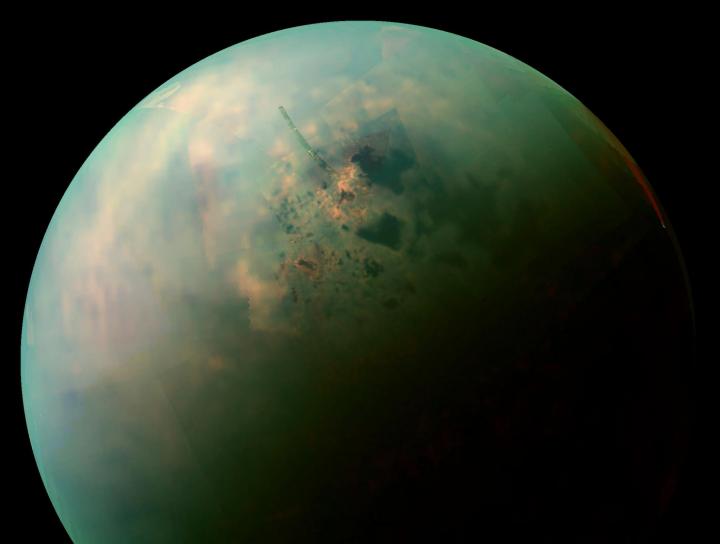
The second-largest moon in the solar system—and Saturn’s one truly big moon—is Titan. This ocean world is the only moon in our solar system with a dense atmosphere.
Titan is the most comparable to very early Earth. Its air is mostly made of nitrogen, just like ours, and it even rains there, giving Titan’s surface enormous lakes. But the liquid raining from those clouds is not water; it’s methane—natural gas, but in liquid form. You could barbecue forever and never run out. Too weird!
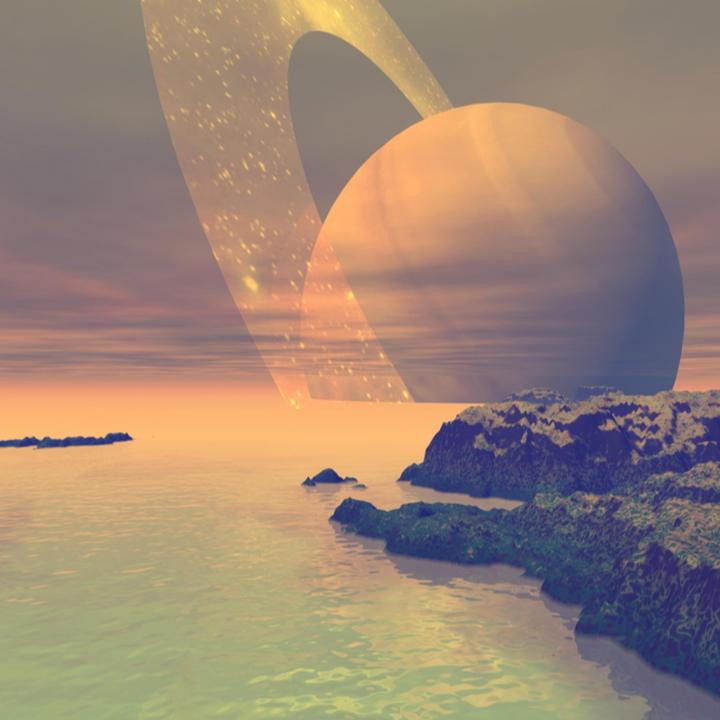
Titan was discovered long ago, after Jupiter’s four moons, in the mid-1600s. All of Saturn’s regular moons are named after Titans or other figures associated with the mythological Saturn, the Roman god of agriculture and wealth. Saturn also has many small, irregular moons, which are mainly named after Inuit and Gallic gods and after Norse ice giants.
Enceladus
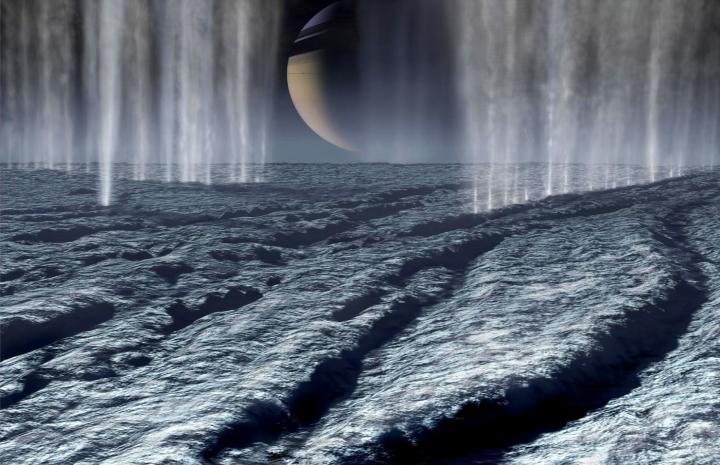
Hold on. What about Saturn’s Enceladus? It’s got volcanoes that shoot not fire but ice chunks dozens of miles into space! These powerful plumes seem to originate from vents connected to a huge saltwater ocean. This suggests an internal source of heat and pressure deep within.
Enceladus, the sixth-largest moon of Saturn, has been called a “cosmic graffiti artist,” pelting the surfaces of at least 11 other moons of Saturn with its ice particles. By sandblasting neighboring moons with ice, it’s constantly changing their appearance. Enceladus is continually changing, too, as its geysers spew ice and liquid water.
Because of its icy surface, Enceladus has the highest surface reflectivity of any body in the solar system. And by icing its neighbors, it makes other moons more reflective and among the brightest bodies in the solar system. Enceladus also creates a visible cloudy ring around Saturn because of the ice plumes that escape into its orbit.
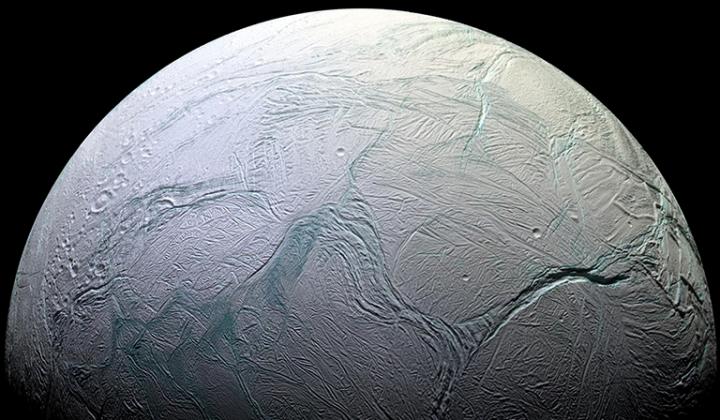
Not discovered until 1789 by William Hershel, Enceladus is named for a Roman and Greek mythological giant who was thought responsible for volcanic fires on Mt. Etna in Sicily. How fitting.
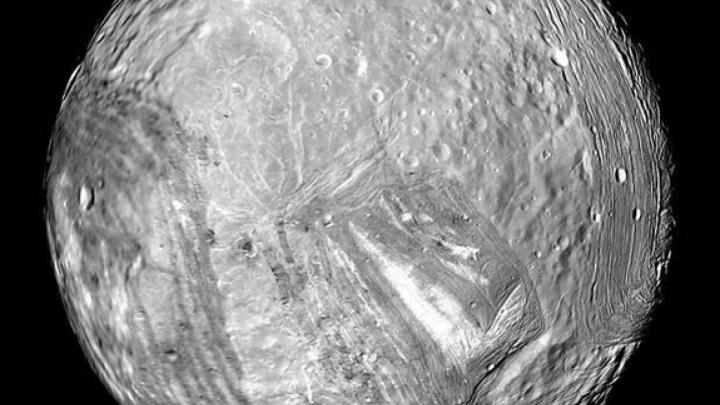
Miranda
With all these competitors, you’ve still got to love the Uranus moon Miranda. Google it and you’ll see what I mean. Like Frankenstein’s monster, Miranda looks like it was pieced together from parts that didn’t quite merge properly.
Planetary experts still can’t figure out what’s going on there. It looks like someone cut-and-pasted five different types of geological features that really don’t go together, including an enormous chevron or V shape.
Miranda, discovered by Gerald Kuiper in 1948, is the smallest of Uranus’s five major moons. Unlike the other moons in the solar system, which are named after Greek and Roman mythological figures, the moons of Uranus are named after characters from classic literature. Miranda was named after the daughter of the magician Prospero in Shakespeare’s The Tempest.
Phobos and Deimos
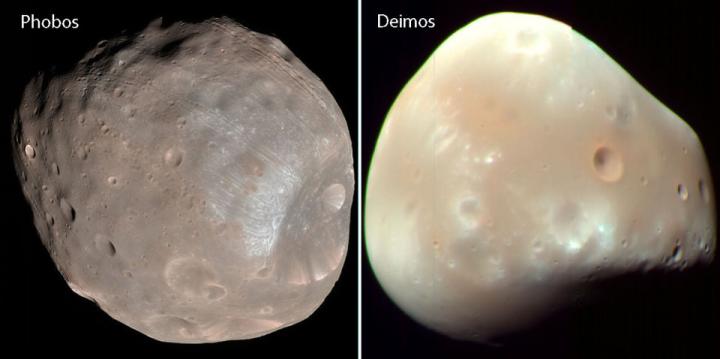
We can’t finish up the “weird moon” conversation without coming back to our own neighborhood and considering the Martian satellites, which have the most morbid names in the cosmos: Halloween names. Fear and Dread. Or, more properly in Latin, Phobos and Deimos.
Mars’s only moons are asteroid-sized and misshapen in appearance. Phobos is smaller than Brooklyn, while Deimos is the only satellite in our solar system that will die soon. It’s spiraling closer and closer and is 6 feet closer to Mars each century. Eventually, it’ll crash into the Martian surface—one more reason for cowards like me not to go there.
Phobos and Deimos were attendants of Ares, the Greek god of war, equivalent to the Roman Mars.
Dwarf Planets
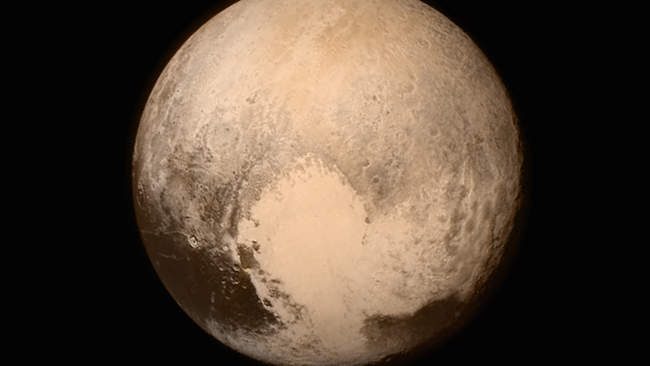
All of the dwarf planets except one (Ceres) have moons, too. Pluto, a perennial favorite, has five moons. These are Charon, Nix, Hydra, Kerberos, and Styx. Charon is by far the largest of Pluto’s moons.
Haumea, a dwarf planet, has two moons: Hi’iaka and Namaka, named after Hawaiian goddesses.
Dwarf planet Eris has one moon—named Dysnomia. Eris is the Greek goddess of strife and discord, and her daughter, Dysnomia, is the Greek goddess of lawlessness.
“The” Moon
With all these choices, I’m sticking with our own satellite as the most unique.
Its name is “Moon” because people didn’t know other moons existed until Galilei’s discovery of Jupiter’s moons.
“Moon” comes from the word ”month” (Greek mene “moon,” men “month”; Latin mensis “month”). We can also trace “Moon” back to the Breton miz “month” from root me, which meant “to measure.” Remember that many cultures would refer to the Moon’s phases as a measure of time.
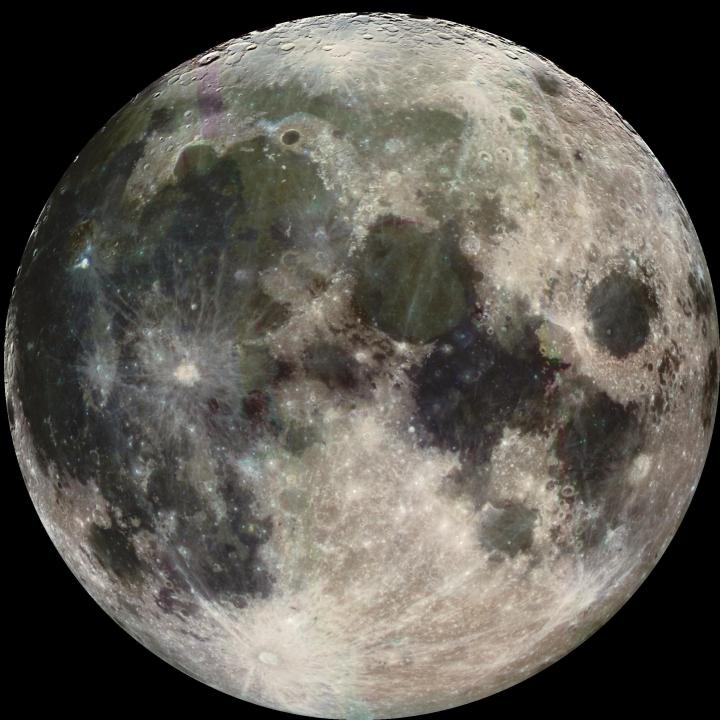
Why is the Moon unique? First, it’s the only major satellite that does not orbit around its parent planet’s equator. It ignores our tilt and circles us in the same flat plane in which the planets go around the Sun.
The Moon wasn’t formed with Earth nor captured by our gravity like many other moons. It was born from a massive collision between a smaller proto-Earth and another planetoid about the size of Mars.
It’s also proportionally one of the largest moons relative to its parent planet’s size. The diameter of the Moon is about 25% of that of Earth. For reference, Ganymede, which is the largest moon in our solar system, is only 6% the size of Jupiter. Charon, which is Pluto’s largest moon, is about 50% of the dwarf planet’s size!
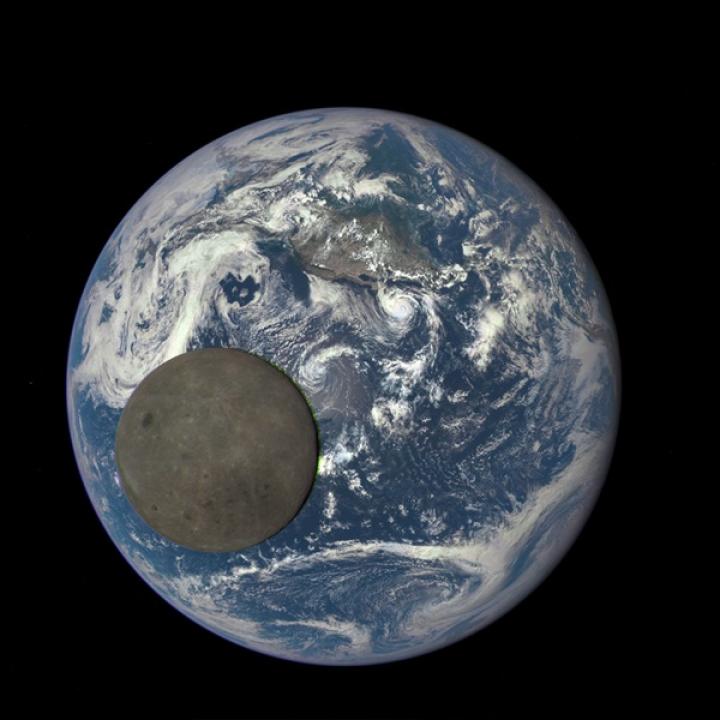
Earth’s Moon is its only companion; we are the closest thing to twin planets in the entire solar system (unless you count the dwarf planet pairing of Pluto and Charon). The friction of the tides caused by the Moon actually slows down Earth’s rotation, and the Moon has been moving farther away from Earth. Our planet would be a very different place if our companion did not exist.
But don’t write in and say that I missed its greatest oddity, that it always keeps one face aimed toward Earth, thanks to its rotation and revolution periods being the same right down to the second. No, we can’t give the Moon that one because almost every moon in the solar system also does that. She’s special enough as is!
Frequently Asked Questions
How many moons are in the solar system?
As of now, astronomers have confirmed at least 214 natural satellites orbiting planets, dwarf planets, and asteroids. Jupiter and Saturn have the most, while Mercury and Venus have none.
What is the largest moon in the solar system?
The largest moon is Ganymede, one of Jupiter’s moons. It’s even bigger than Mercury and has a magnetic field along with a possible underground ocean.
Which planet has the most moons?
Saturn currently holds the record with more than 140 confirmed moons, including Titan and Enceladus.
Why is Europa important in the search for life?
Europa, one of Jupiter’s Galilean moons, has a hidden ocean beneath its icy crust. Scientists believe it could have the right conditions to support microbial life.
What makes Titan different from other moons?
Titan, Saturn’s largest moon, is the only moon with a thick atmosphere. It has rivers, lakes, and rain—but made of liquid methane instead of water.
Do Mars’s moons really look like potatoes?
Yes! Mars’s tiny moons, Phobos and Deimos, are irregularly shaped, giving them a potato-like appearance. Phobos is slowly spiraling toward Mars and may eventually crash into the planet.
Which moon fascinates you most? Share in the comments below!

More Like This

Thank you for the feedback! We have made a few edits to the page.

Comments