
Learn how to grow asparagus from crowns or seed

Read Next
Planting
Given that asparagus is a perennial plant that comes back year after year in the same spot, it’s important to select a proper planting site where it will thrive.
- Choose a site that gets full sun (6 to 8 hours of direct sunlight).
- Place the asparagus bed toward the edge of your garden, where it will not be disturbed by the activity of planting and replanting in other areas.
- Ensure the bed will drain well and not pool with water. Asparagus does not like to have its roots get too wet. If you do not have a site with good drainage available, consider growing asparagus in raised beds instead. Learn how to make a raised garden bed here.
- Asparagus thrives in neutral to slightly acidic soil (pH of about 6.5).
- Eliminate all weeds from the planting site, digging it over and working in a 2- to 4-inch layer of compost, aged manure, or soil mix. (Learn more about soil amendments and preparing soil for planting.)
- The soil should be loosened to 12 to 15 inches in depth to allow the asparagus crowns to root properly and not be disrupted by rocks or other obstacles.
When to Plant Asparagus
- Asparagus is usually grown from 1-year-old plants called “crowns,” planted about 2 to 4 weeks before your last spring frost date. Many gardeners plant them at about the same time as potatoes.
- We do not recommend growing from seed; it takes about three years to mature enough to harvest. If you plant crowns, you can shorten the wait time by a year and eliminate one year of tedious weeding. However, if you’re truly eager to experiment and have a lot of patience and time, our colleague Robin wrote about planting asparagus by seed.
How to Plant Asparagus
- Plant crowns deeply to protect them from the cultivation needed for annual weed control.
- Dig a trench about 12 to 18 inches wide and 6 to 8 inches deep. If digging more than one trench, space the trenches at least 3 feet apart.
- Soak the crowns briefly in lukewarm water before planting.
- Make a 2-inch-high ridge of soil along the center of the trench. Place the asparagus crowns on top of the mound, spreading out their roots evenly.
- Space asparagus crowns 12 to 18 inches apart (measured from root tip to root tip) within the trench.
Once you get to this point, you can follow one of two planting methods: the traditional “little-by-little” method or the easier “all-at-once” method.
“Little-by-Little” Method:
Once the trenches are dug and the crowns are set out:
- Cover the crowns with compost and topsoil, burying the crowns 2 inches deep. Water in.
- As the season progresses and spears grow to be 2 to 3 inches tall, add 2 more inches of soil to the trench, being careful not to bury the spears completely.
- Once the spears again grow through the layer of soil, add an additional 2-inch layer of soil. Repeat this process until the trench has been filled to ground level. Depending on how deep you dug your trench, you may need to add soil 1 to 2 more times throughout the season.
- After you’ve filled the trench completely, mound the soil slightly to prevent water from pooling around the emerging spears.
“All-at-Once” Method:
- Some gardeners simply fill in the trench with soil and compost all at once. While it’s thought that the traditional method results in stronger plants overall, gardeners don’t typically have any issues resulting from the “all-at-once” method. As long as the soil is fairly loose, the spears won’t have a problem pushing through to the surface.
Learn how to plant and grow an asparagus bed in our video:
Types
Asparagus plants are either male or female. Female plants produce berries; males plants do not expend energy on berries so they can be up to three times more productive than female plants. For this reason, growing male asparagus plants is often preferred.
- Gardeners in Zones 4 to 6 have a wider selection of varieties, including ‘Jersey Giant’, ‘Jersey King’, and ‘Jersey Knight’. Older varieties ‘Mary Washington’ and ‘Martha Washington’ may produce female plants, which are not as productive as the males.
- In colder climates, ‘Guelph Millennium’ and other varieties that emerge late often escape damage from spring freezes.
- In warmer climates, early and heat-tolerant varieties such as ‘Apollo’ and ‘UC-157’ produce well before the weather turns hot.
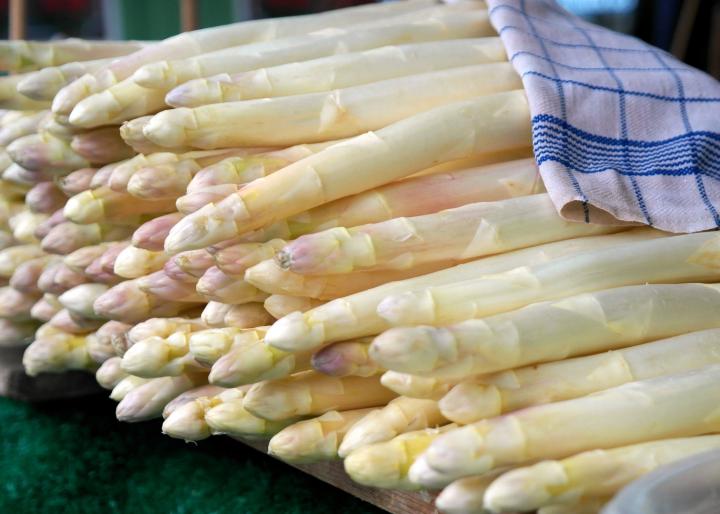
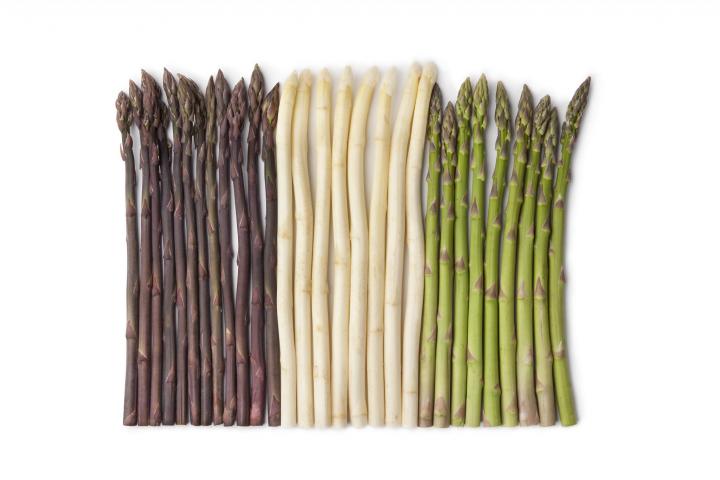
White asparagus is not a variety, but simply asparagus grown in the absence of sunlight to prevent chlorophyll from developing. White asparagus is slightly sweeter but has less fiber than green asparagus.
Purple asparagus is bred to be purple in color but turns green when it is cooked. Purple varieties tend to have thicker spears, but fewer of them. ‘Purple Passion’ is tasty but is not an all-male variety.
Harvesting
- Skip the harvest in the first year and the second year, if possible. Ideally, wait three growing seasons before harvesting in order to allow the crowns to become fully established.
- If you have young plants, the season may last 2 to 3 weeks. However, established plants produce longer—up to 8 weeks.
- Check your plant every other day for harvest-ready spears. Spears grow quickly and may become too woody before you know it! Once an asparagus spear starts to open and has foliage, it’s too tough for eating.
- Harvest spears when they reach 8 to 10 inches in height and between 1/2 and 3/4 inch thick. (Bear in mind that younger, thinner spears will be more tender, so harvest according to your own taste.)
- To harvest asparagus, simply cut the spears with a sharp knife or scissors at ground level.
- Stop harvesting spears when the diameter of the spears decreases to the size of a pencil.
- After harvest, fertilize your asparagus patch in the early summer. You can top-dress with a balanced organic fertilizer or scatter another inch of rich, weed-free compost over the decomposing mulch.
- Do NOT cut down the remaining ferns in summer or you will ruin your asparagus bed. Allow the ferns to grow and mature; this replenishes the nutrients for next year’s spear production. Always leave at least two or three spears on the plant through the growing season.
- Only cut back asparagus ferns AFTER the foliage has died back and turned brown or yellow. This is usually in early winter after several hard freezes. Cut the ferns back to the ground.
- Fertilize the bed with a 1-inch layer of rich, weed-free compost or manure topped with 3 inches of straw, rotted sawdust, or another weed-free mulch. Clean spears will push up through the mulch in spring.
How to Store Asparagus
- Plunge just-cut spears into cold water immediately to preserve their sugar content.
- Asparagus does not keep for very long after it’s picked, so be sure to eat it within 2 or 3 days from harvest.
- To store, bundle the spears together, wrap the stem ends of the spears in a moist paper towel, and place the bundle in a plastic bag. Store in the crisper drawer of your refrigerator.
- If you have enough space in your fridge, you can also store asparagus by placing the spears in a cup of water. Keep about an inch of clean water in the cup.
Gardening Products
Cooking Notes
A simple and easy favorite when it comes to asparagus is asparagus soup.





This is not an easy fix. Pull out as much as you can, making sure that you get as many little pieces as possible. (Some advise screening the soil to be sure you have those bits, but this would be a project.) Then smother the mint, but not the asparagus tips, with layers of newspaper. This will eventually break down, so be ready to add more. And be ready to water the asparagus, if the newspaper seems impervious.
This process wll weaken the mint. In a few weeks, lift some of the newspaper. Remove any pale, sun-deprived mint. You can return the newspaper and keep it there for a while longer; it won't hurt the 'grass. Just be prepared to do it again next season. It may take few attempts to clear.
In the meantime, remove the mint from the surrounding area.
Many gardeners top-dress by adding 1or 2 inches of compost onto a bed in fall and the crowns rise through it.
In the winter, a mulch of 4 to 6 inches is advisable, but is often removed.
So, a foot or so of coverage could be too much at one time for the spears to survive. We suggest that contact your local extension service for more details.
* One of the most important things to do is to remove plant debris in the garden, including spent asparagus fronds, in the fall, since the beetles overwinter in plant debris.
* Asparagus beetles are said to be repelled by petunias, marigolds, and basil, so you might try planting those nearby.
* Cover the asparagus with row covers during the growing season.
* Handpick the beetles and larvae when you see them; you can shake the fronds over a bucket of water to knock the pests off.
* Chickens help to remove the pests, if that's an option.
* Ask a garden nursery about insecticide options.
* Harvest the spears as early as you can.
* The spotted asparagus beetle is similar to the common asparagus beetle, but lays its eggs near the asparagus berries, so male-only asparagus cultivars will help to deter this species.
- « Previous
- 1
- 2
- …
- 10
- Next »

Comments